English हिन्दी
Connect with us

Latest world news

ASEAN Summit: PM Narendra Modi presents India as an attractive investment destination

Published

on

ASEAN Summit: PM Modi presents India as an attractive investment destination

[vc_row][vc_column][vc_column_text]Inviting ASEAN countries to ramp up investment in India, Prime Minister Narendra Modi on Monday spoke of the economic reforms undertaken in the country to boost trade and investment.

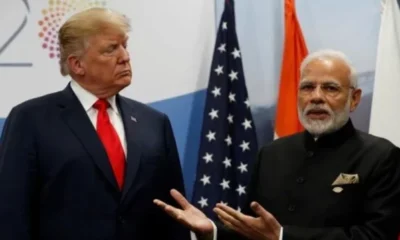
Earlier in the day, PM Modi met US President Donald Trump on the sidelines of the 31st ASEAN Summit in Manila, Philippines. Trump reportedly congratulated the Indian leader for “a lot of good reports coming out of India”.

Modi arrived in Philippines on Sunday for a three-day visit during which he will also attend the 12th East Asia meet on Tuesday.

Addressing the ASEAN meet, the PM said the task of transforming India is proceeding on an “unprecedented scale”. Speaking at the ASEAN Business Forum in Manila, the Philippines capital, the Prime Minister said most sectors of the Indian economy were opened up for foreign direct investment, adding the country’s economy is now “globally integrated.”

The trade ties between India and ASEAN are on an upswing and both sides want to further boost the trade and investment cooperation.

The ASEAN region, along with India, together comprises a combined population of 1.85 billion people, which is one fourth of the global population and their combined GDP has been estimated at over $3.8 trillion.

Investment from ASEAN to India has been over $70 billion in the last 17 years accounting for more than 17 per cent of India’s total FDI. India’s investment in ASEAN during the same period has been more than $40 billion.

Modi sought to highlight India’s economic reforms to woo investors. “The task of transforming India is proceeding on an unprecedented scale. We are working day and night to ensure good governance which includes easy, effective and transparent governance,” he said, noting that more than 90% FDI sectors are on automatic approval route.

Modi listed major economic reform measures taken by his government, including rolling out of the Goods and Services Tax (GST) and new laws and institutions for bankruptcy and insolvency proceedings. He said 1,200 out-dated laws have been repealed in the last three years as part of reform measures.

“India has climbed 30 places in the World Bank Ease of Doing Business Index this year. It is the biggest jump by any country this year and a recognition of India’s long term reform trajectory. And, the world is taking notice. We have moved up 32 places in the last two years in the Global Competitiveness Index of the World Economic Forum,” said Modi.

He said various reform measures coupled with demonetisation of high-value notes have resulted in formalising a large part of the Indian economy.

On trade with ASEAN countries, Modi said India wants to build land, sea and air connectivity to this dynamic region and that work is already on in the construction of the tri-lateral highway through Myanmar and Thailand to connect to other countries in South East Asia.

“We are working on the early conclusion of the Agreement on Maritime Transport between India and ASEAN and are exploring coastal shipping services with countries that are our immediate maritime neighbours,” he added.

“The ‘Act East’ policy of my government puts this region at the centre of our engagement. We have exceptionally good political and people-to-people relations with each and every country in the ASEAN region,” he said.

Modi said his government wants to make India a global manufacturing hub and at the same time it wants the youths of the country to be job creators and not just job seekers.

The Prime Minister said 36 “white industries” have been taken out from the requirement of environmental clearance. Incorporating a company is now just a one day affair, he said.

The PM also talked about the open auction policy for natural resources including telecom spectrum, coal mines and other minerals and even private radio channels, which he said has together contributed about $75 billion in revenue.

“Using technology, we are enhancing responsibility and reducing discretion and corruption. We are using our Unique ID system in financial transactions and taxation for this purpose and the results are already visible. These steps, coupled with demonetisation of high-value notes, have resulted in formalising a large part of our economy,” he said.

Modi said the number of new tax payers filing income tax returns has more than doubled and that digital transactions have increased by 34% in one year, as “we march towards a less-cash economy.”

“We have used technology to reach out to people. An online citizen engagement platform, MyGov has harnessed ideas, suggestions and inputs on policies and programmes from 2 million pro-active citizens,” he added.

On GST, he said it has done away with a vast range of State-level and Central-level taxes through-out India. “This is no small achievement given the vastness and diversity of our country and the federal nature of our polity,” he added.

Prime Minister Narendra Modi said a “very large part” of India’s population had no access to banking services and launch of the Jan Dhan Yojana resulted opening of 197 million bank accounts in one year, adding till August this year, 290 million such accounts have been opened in Indian banks. He said more than 146 million people are receiving direct cash subsidies through bank accounts on cooking gas alone.

“Today, the government is using Direct Benefit Transfers for 59 different schemes. Subsidies worth nearly $10 billion are being directly transferred to the bank accounts of the intended beneficiaries,” he added.

“For the first time in India, collateral-free loans have been disbursed to more than 90 million small entrepreneurs under the Mudra scheme. Very near to the population of Philippines,” the PM said.

He said India is organising an ASEAN-India Connectivity Summit in New Delhi next month with Ministers, officials and business representatives from all ASEAN countries. India is also organising an ASEAN-India Commemorative Summit of ASEAN leaders in January next year.[/vc_column_text][/vc_column][/vc_row]

Latest world news

Israel-Lebanon ceasefire to begin within hours as Trump announces 10-day truce

Israel and Lebanon may begin a 10-day ceasefire within hours after a proposal announced by Donald Trump amid ongoing tensions.

Published

on

Donald Trump

A temporary halt in hostilities between Israel and Lebanon is expected to begin within hours after US President Donald Trump announced a proposed 10-day ceasefire between the two sides, amid ongoing tensions in the region.

According to his statement, the ceasefire is likely to take effect around 5 p.m. Eastern Time, although independent confirmation from both sides is still awaited.

The development follows discussions involving Israeli Prime Minister Benjamin Netanyahu and Lebanese President Joseph Aoun, with mediation efforts led by the United States.

Officials indicated that the proposed truce is aimed at creating a limited window to reduce violence and potentially pave the way for broader diplomatic engagement. The situation along the Israel-Lebanon border has remained tense in recent weeks, with escalation linked to the activities of Hezbollah.

Diplomatic efforts have intensified in recent days, with discussions facilitated by the United States, including the involvement of US Secretary of State Marco Rubio. However, details of the agreement and the extent of coordination between the parties remain unclear.

The situation remains fluid, and the success of the ceasefire will depend on adherence by all sides involved. The conflict has already led to significant humanitarian and geopolitical consequences, including displacement and disruption in affected areas.

While the proposed ceasefire is being seen as an important step toward de-escalation, broader negotiations involving regional stakeholders are expected to be necessary for any lasting resolution.

Continue Reading

Latest world news

US ends oil sanctions waiver for Iran and Russia, impact likely on India’s energy imports

The US decision to end the Iran and Russia oil waiver may impact India’s oil imports, fuel prices and global energy markets.

Published

on

US oil tanker

The United States has decided not to extend a temporary sanctions waiver that allowed limited trade in Iranian and Russian oil, marking a shift towards stricter enforcement of economic restrictions.

The waiver, introduced in March 2026, had permitted the sale of oil already loaded on ships to stabilise global supply during heightened geopolitical tensions. However, it is now set to expire around mid-April without renewal.

US officials have indicated that the move is part of a broader strategy to increase pressure on both Iran and Russia amid ongoing conflicts and geopolitical tensions.

What the waiver did and why it mattered

The short-term waiver allowed millions of barrels of oil—estimated at around 140 million barrels—to enter global markets, helping ease supply shortages and prevent sharp price spikes.

It also enabled countries like India to purchase discounted crude oil from Russia and resume limited imports from Iran after years of restrictions.

Impact on India

India, one of the world’s largest oil importers, is expected to feel the impact of the decision in several ways:

  • Reduced access to discounted oil
    India had been buying cheaper Russian crude and recently resumed Iranian imports under the waiver. Its end may limit these options.
  • Potential rise in fuel costs
    With fewer discounted supplies available, India may need to rely more on costlier sources, which could increase domestic fuel prices.
  • Supply diversification pressure
    India may need to explore alternative suppliers in the Middle East, Africa, or the US to maintain energy security.
  • Geopolitical balancing challenge
    The move adds pressure on India to align with US sanctions while managing its own economic interests.

Global energy market concerns

The end of the waiver comes at a time when global oil markets are already under stress due to conflict in West Asia and disruptions in key routes like the Strait of Hormuz.

Analysts warn that tightening sanctions could:

  • Reduce global oil supply
  • Increase price volatility
  • Intensify competition among major buyers like India and China

Bigger picture

The US decision reflects a broader shift from temporary relief measures to stricter enforcement of sanctions, even if it risks tightening global energy markets.

For India, the development highlights a recurring challenge—balancing affordable energy access with geopolitical realities.

Continue Reading

Latest world news

Sanctioned tanker fails to breach US blockade, turns back near Strait of Hormuz

A US-sanctioned tanker failed to cross the Hormuz blockade and turned back, underscoring rising tensions and disruption in global shipping routes.

Published

on

A US-sanctioned oil tanker failed to break through a newly imposed American naval blockade and was forced to turn back near the Strait of Hormuz, highlighting growing tensions in the region.

The vessel, identified as the Rich Starry, reversed its course after attempting to exit the Gulf, according to shipping data. The development comes just days after the United States enforced restrictions on ships linked to Iranian ports.

The blockade was announced by Donald Trump following the collapse of recent diplomatic talks with Iran. The move aims to restrict maritime traffic associated with Iranian trade.

Officials said that during the first 24 hours of enforcement, no vessel successfully crossed the blockade. Several ships, including the sanctioned tanker, complied with instructions from US forces and turned back toward regional waters.

The tanker is reported to be linked to a Chinese company previously sanctioned for dealing with Iran. It was carrying a cargo of methanol loaded from the United Arab Emirates at the time of the incident.

The situation underscores the rising risks in one of the world’s most critical oil transit routes. The Strait of Hormuz typically handles a significant share of global energy shipments, but traffic has sharply declined due to ongoing geopolitical tensions.

The blockade, which applies specifically to vessels travelling to or from Iranian ports, has added further uncertainty for shipping companies, insurers and global energy markets.

Continue Reading

Trending

© Copyright 2022 APNLIVE.com