
Latest world news
Assam: 19 million citizens verified, 13.9 million remain unsettled


The dawn of 2018 has brought a major relief for the genuine citizens who facing uncertain future in Assam for several decades. National Register of Citizens (NRC) assigned with the job of weeding out the illegal migrants in Assam has released the names of 19 million people out of the 32.9 million applicants at midnight.
Shailesh Kumar, the Registrar General of India, held a press conference at midnight in Guwahati for releasing first NRC draft. However, he said that people whose names were missing in the first draft will have to wait longer.
He said, “This is a part draft of the updated NRC. The verification process for the rest 1.39 crore applicants is still on. There’s no need to panic. Everybody should be patient to wait for the release of the final draft.”
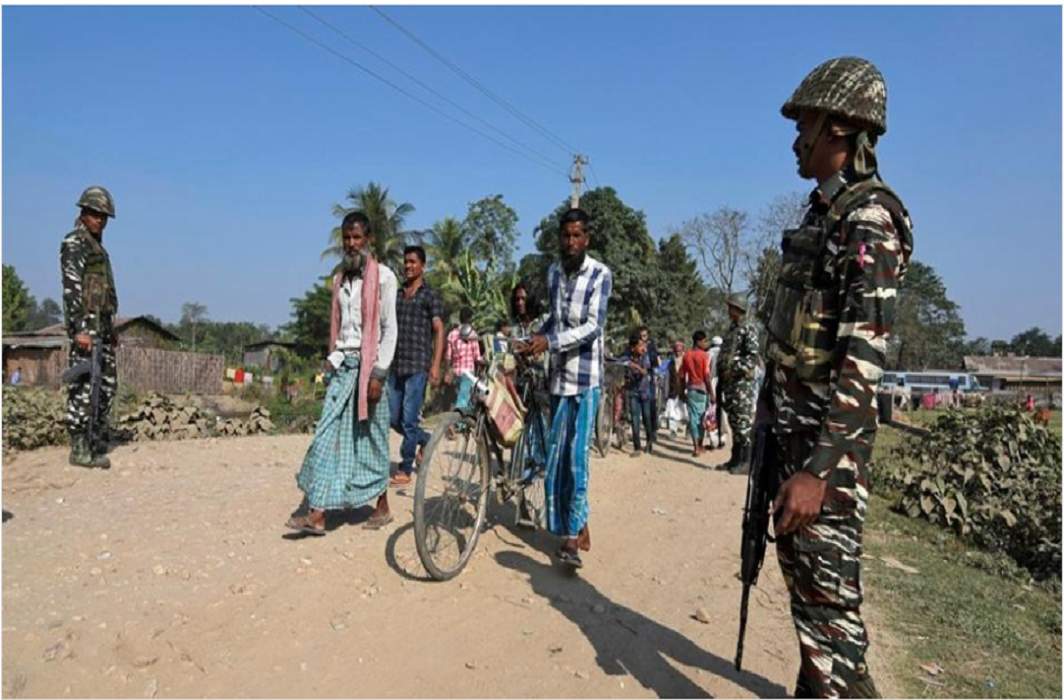 Though no timeline has been fixed for completion of the draft but officials say the process could take a few more months. The whole process is being monitored by the Supreme Court of India.
This is the first time after 1951 when NRC is being updated in Assam with the aim of identifying those who may have illegally entered the state from Bangladesh after 1971.
Under the present process, individuals, who can prove their connection with family members having their names included in 1951 NRC or listed in the electoral rolls before March 25, 1971, will be included.
Before the announcement of the first draft NRC the state government had tightened security apprehending violence from those whose names will be found mission. But, since the registrar’s cautious approach no violence or untoward incident has been reported yet.
Mukesh Sahay, the DG of state police told journalists on Monday morning, “There is no report of any incident related to NRC from across the state. But we will be watchful for few days. Since the draft was released online, it would take some days for people to reach NRC offices and physically verify if their names are in the list.”
There was apprehension of violence from people from minority community who have been struggling to prove their credentials for last several years. But announcement of further verification process and possibilities for verifying their credentials has developed a sense of relief.
The process of physical verification for updating the first draft began at over 4,200 NRC centres across Assam. Long queues of people were seen at several centres since early morning throughout the state.
The applicants would be able to check their names in the NRC through text message or by calling a 24/7 toll-free helpline. Online and physical verification of the drafts will remain open till January 31,
In 1995, Assam accord was signed after a six year long mass agitation led by All Assam Students Union (AASU) against illegal immigrants.
As part of the Assam accord, state government had decided to update the 1951 NRC to prepare a comprehensive list of bona fide Indian citizens in the state in 2005.
However, updating was accelerated in 2015 after the BJP came to power in Assam for the first time with the promise of sending back illegal immigrants.









Latest world news
Magnitude 7 earthquake strikes Tibet after floods
A magnitude 7 earthquake struck northern Tibet on Thursday, October 22. The tremor came weeks after deadly flash floods and landslides hit the mountainous region near the Nepal-China border. Initial reports did not confirm casualties or damage from the earthquake.


Latest world news
Macron rejects Trump’s immigration claims over France riots
French President Emmanuel Macron criticised Donald Trump and other foreign leaders over their comments on France’s recent unrest. Macron rejected claims that the country was being overrun by migrants and Islamists, calling such assertions false.

Latest world news
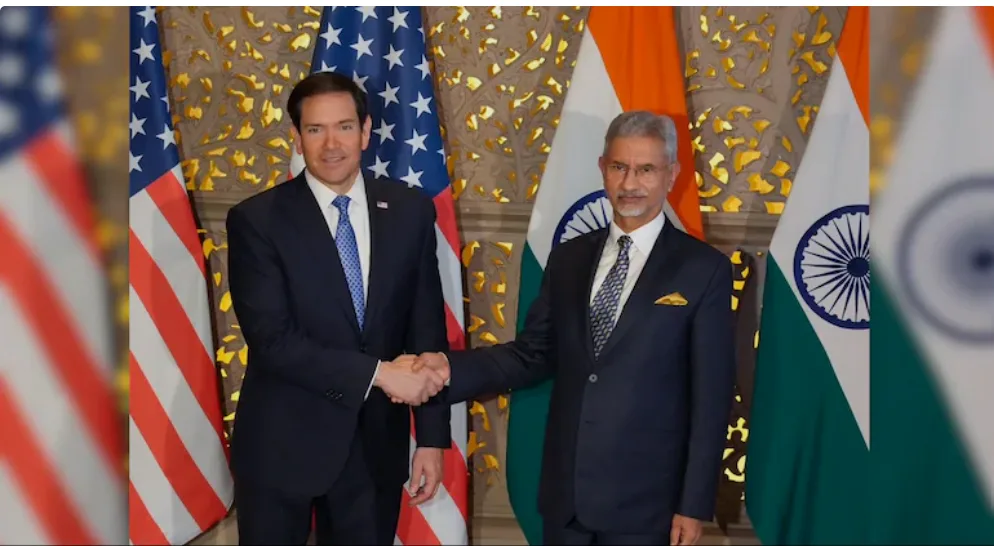
Marco Rubio says India and US share extraordinary alignment on key issues
US Secretary of State Marco Rubio said India and the United States share an extraordinary alignment on core issues, even though disagreements between the two countries may arise.

Punjab strike hits public services as 3 lakh employees and roadways workers protest

Two election commissioners complained against senior poll officer, RTI reveals

Om Prakash Mathur sworn in as Keralam Governor

PM Modi to inaugurate Rs 169-crore RBI data centre in Odisha on October 25

Delhi High Court rejects Neha Bora’s plea against peace bond notice

MEA responds after ITBP chief flags ongoing face-offs with China in Arunachal
Delhi High Court rejects Neha Bora’s plea against peace bond notice
PM Modi to inaugurate Rs 169-crore RBI data centre in Odisha on October 25
Om Prakash Mathur sworn in as Keralam Governor
Two election commissioners complained against senior poll officer, RTI reveals

Afghan Men Try To Hang With The Jet Engine Of The Aircraft in Kabul- Afghanistan News – Kabul News
Trending Top 10 News: 10000 Crore Fine on Flipkart, Apple to Launch Unique Feature, Hdfc Bank Job Ad

Trending Top 10 News: Nokia 6310, Apple sales, Bachpan ka Pyar Video Kid, Dainik Bhaskar IT Raid

Trending Top 10 News: Canada bans Indian flights, Rain in Delhi NCR, AIMIM Twitter hacked, Raj Kundra case

Trending Top 10 News: Shein India, Apple New Service, Pocket Oxygen, Oppo Launched New Phone
-
 India News20 hours ago
Punjab strike hits public services as 3 lakh employees and roadways workers protest
-
 India News19 hours ago
Two election commissioners complained against senior poll officer, RTI reveals
-
 India News9 hours ago
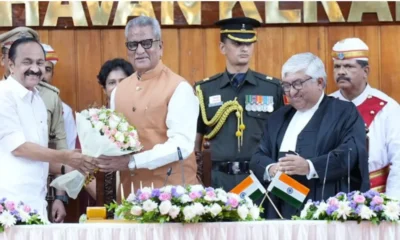
Om Prakash Mathur sworn in as Keralam Governor
-
 India News8 hours ago
PM Modi to inaugurate Rs 169-crore RBI data centre in Odisha on October 25
-
 India News7 hours ago
Delhi High Court rejects Neha Bora’s plea against peace bond notice
-
 India News7 hours ago
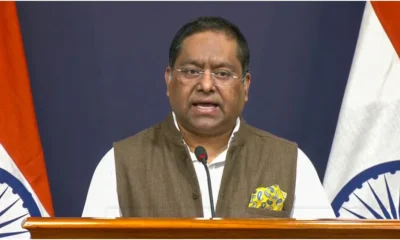
MEA responds after ITBP chief flags ongoing face-offs with China in Arunachal
