
Latest world news
Erdogan re-elected as President, with more executive powers


Turkey may slip into a state under dictatorship, Haaretz fear
Turkish President Recep Tayyip Erdogan has won more than half the votes in the key presidential election, in a result that will allow him to keep his seat with increased powers and become Turkey’s first executive president. State-run Anadolu news agency has reported that Erdogan’s share of the vote stood at 52.5 percent.
Erdogan has ruled the country for 15 years as PM and then President. He won the last presidential election in 2014 after completing two terms as prime minister.
According to reports from Ankara, Sadi Guven, the head of country’s Supreme Election Committee (YSK) has said that with 97.7 percent of ballots counted, Erdogan received on Sunday more than half the votes required to secure an outright victory.
Immediately after the election result announcement, Erdogan told his enthusiastic supporters in capital Ankara, “Our democracy has won, the people’s will has won, Turkey has won,” and thanked citizens who cast their ballots with a record turnout of 87 percent.
 Moreover, President Erdogan also declared victory for the People’s Alliance, a bloc between his ruling Justice and Development Party (AK Party) and the Nationalist Movement Party (MHP), saying they had won a parliamentary majority in the legislative elections, also held on Sunday.
Before going to the capital Ankara, Erdogan had addressed a crowd of cheering, flag-waving supporters from the top of a bus in the country’s largest city of Istanbul.
Erdogan’s closest rival, Muharrem Ince, of the main opposition Republican People’s Party (CHP), received 30.8 percent of the votes. Ince was followed by Selahattin Demirtas, of the pro-Kurdish Democratic People’s Party (HDP) with 8.1 percent, while right-wing IYI (Good) Party’s Meral Aksener could get only 7.4 percent of total votes.
All three major opposition parties have accused s Anadolu of manipulating the results, a claim dismissed by the government. Erdogan said in his speech, “I hope nobody will try to cast a shadow on the results and harm democracy in order to hide their own failure.”
Read More: Turkey orders 104 opponents life imprisonment for failed 2016 coup
More than 56 million voters were eligible to cast their ballots in the elections, which were advanced by more than 18 months by the AK Party-controlled parliament in April. Official results are expected to be announced a few days later.
The Sunday voting marked the first time Turkish voters cast their ballots in simultaneous presidential and parliamentary elections, in line with the constitutional changes approved in a referendum last year that will transform the country’s parliamentary system to an executive presidential one.
In accordance to the modified constitution, new system is set to hand the next president significant executive powers as well as abolish the prime ministry and remove the monitoring role of parliament, among others.
In the new era, the presidential office will have the power to appoint vice presidents, ministers, high-level officials and senior judges. The president will also be able to dissolve parliament, issue executive decrees, and impose a state of emergency.
In April 2017, 51 percent voters endorsed constitutional changes backed by Erdogan which granted new executive powers to the president and scrap the post of prime minister. The constitutional overhaul would also mean that Erdogan could stay in power to another two terms until 2029. A majority of 360 votes in parliament are required to take a constitutional change to referendum in the new executive presidential system.
In the parliamentary elections, Erdogan’s AK Party got 42.4 percent of the votes, while its far-right MHP secured 11.2 percent. The two parties are predicted to claim 293 and 49 seats in the 600-member parliament respectively with almost all of the ballot boxes opened. Erdogan was their joint presidential candidate.
The state of emergency has been in place since July 2016 following a failed deadly coup blamed by the government on the movement of Fethullah Gulen, a US-based self-exiled religious leader.
Read More: OIC Summit: Erdogan call Muslim leaders to confront Israel
Meanwhile, Israel’s leading newspaper Haaretz, published an analysis written by Zvi Bar’el on Monday saying that with Erdogan’s re-election Turkey faces a future as a purely autocratic state, persecuting political rivals and settling scores.





Latest world news
Magnitude 7 earthquake strikes Tibet after floods
A magnitude 7 earthquake struck northern Tibet on Thursday, October 22. The tremor came weeks after deadly flash floods and landslides hit the mountainous region near the Nepal-China border. Initial reports did not confirm casualties or damage from the earthquake.


Latest world news
Macron rejects Trump’s immigration claims over France riots
French President Emmanuel Macron criticised Donald Trump and other foreign leaders over their comments on France’s recent unrest. Macron rejected claims that the country was being overrun by migrants and Islamists, calling such assertions false.

Latest world news
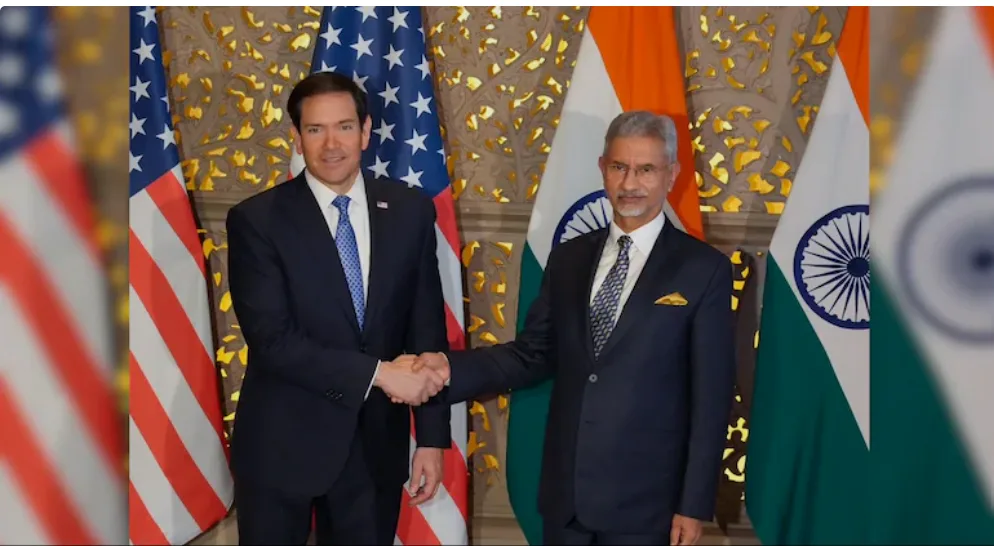
Marco Rubio says India and US share extraordinary alignment on key issues
US Secretary of State Marco Rubio said India and the United States share an extraordinary alignment on core issues, even though disagreements between the two countries may arise.

Om Prakash Mathur sworn in as Keralam Governor

PM Modi to inaugurate Rs 169-crore RBI data centre in Odisha on October 25

MEA responds after ITBP chief flags ongoing face-offs with China in Arunachal

Delhi High Court rejects Neha Bora’s plea against peace bond notice

Thousands bang utensils, beat drums in Manipur protest over continued killings

Congress seeks 175-200 seats in UP, Samajwadi Party stresses on winnability
Thousands bang utensils, beat drums in Manipur protest over continued killings
MEA responds after ITBP chief flags ongoing face-offs with China in Arunachal
Delhi High Court rejects Neha Bora’s plea against peace bond notice
PM Modi to inaugurate Rs 169-crore RBI data centre in Odisha on October 25

Afghan Men Try To Hang With The Jet Engine Of The Aircraft in Kabul- Afghanistan News – Kabul News
Trending Top 10 News: 10000 Crore Fine on Flipkart, Apple to Launch Unique Feature, Hdfc Bank Job Ad

Trending Top 10 News: Nokia 6310, Apple sales, Bachpan ka Pyar Video Kid, Dainik Bhaskar IT Raid

Trending Top 10 News: Canada bans Indian flights, Rain in Delhi NCR, AIMIM Twitter hacked, Raj Kundra case

Trending Top 10 News: Shein India, Apple New Service, Pocket Oxygen, Oppo Launched New Phone
-
 India News22 hours ago
Om Prakash Mathur sworn in as Keralam Governor
-
 India News21 hours ago
PM Modi to inaugurate Rs 169-crore RBI data centre in Odisha on October 25
-
 India News20 hours ago
MEA responds after ITBP chief flags ongoing face-offs with China in Arunachal
-
 India News20 hours ago
Delhi High Court rejects Neha Bora’s plea against peace bond notice
-
 India News7 hours ago
Thousands bang utensils, beat drums in Manipur protest over continued killings
-
 India News6 hours ago
Congress seeks 175-200 seats in UP, Samajwadi Party stresses on winnability
