
Latest world news
Indonesian quake-tsunami toll could reach thousands, mass burials begin


The death toll from the earthquake that sent five metre-high tsunami waves travelling at speeds of up to 800kph crashing into the Indonesian island of Sulawesi on Friday evening, has crossed 840.
Indonesian vice-president Jusuf Kalla warned it could reach into the thousands.
Thousands of homes, hotels, shopping malls and several mosques collapsed as the disaster left Sulawesi island devastated. Over 821 fatalities were reported from the city of Palu, with 11 casualties so far recorded in Donggala, the worst-hit area, which is home to 300,000 people. Hundreds of bodies have been found on beaches and authorities fear many may have been washed out to sea.
The bodies are being disposed of in mass graves, the authorities explaining they want to prevent an outbreak of disease caused by decomposing bodies. A BBC report said bodies wrapped in orange, yellow and black body bags were carried in trucks to the grave, dragged into the pit and motorised diggers poured earth on top.
Speaking at a press conference, Sutopo Purwo Nugroho, the spokesman for the BNBP disaster agency, said the area affected was much bigger than originally thought and some remote areas have yet to be contacted.
A lack of heavy lifting equipment is hampering rescuers’ attempts to reach people who remain alive in the ruins of collapsed buildings, said media reports.
“Communication is limited, heavy machinery is limited… it’s not enough for the numbers of buildings that collapsed,” said Sutopo Purwo Nugroho, spokesman for the National Disaster Mitigation Agency, according to a BBC report.
Yenni Suryani, of Catholic Relief Services, said aid agencies were struggling to get staff into affected areas as the main airport at Palu was damaged, landslides had cut road links and “power is out almost everywhere”, the report said.
Some survivors have been looting shops for food, water and fuel, telling reporters they have run out of supplies.
Reuters news agency reports that police are escorting aid convoys to prevent supplies being stolen.
President Joko Widodo has welcomed offers of international help.
Several jail breaks reported
Meanwhile, government officials say some 1,200 inmates escaped from three prisons in the region as the quake struck. One prison in tsunami-struck Palu city saw most of its 581 inmates storm past guards and escape to freedom through walls collapsed by the massive 7.5 magnitude shake.
Inmates had fled from another overcapacity facility in Palu by breaking down its main door and another in Donggala, an area also hit by the disaster.
The Donggala jail was set on fire and all 343 inmates were now on the run, Utami said. The arson was thought to have been sparked by angry detainees demanding to see their families. “They panicked after learning that Donggala was badly hit by the earthquake,” Utami said, according to media reports.
The quake
The 7.5 magnitude quake, which struck in the early evening, was centered along the coast of the island of Sulawesi about 50 miles north of Palu. The earthquake was powerful but shallow and with more lateral than vertical movement, not typically the kind of tremor that sets off tsunamis.
A sophisticated tsunami warning system was put in place across the whole Pacific region after the 2004 disaster, which killed nearly a quarter of a million people.
A tsunami warning was issued after the earthquake hit on Friday, but many people in Palu did not receive alerts because of power cuts caused by the tremor. There were also no sirens located along the coast.
Indonesia, one of the world’s most disaster-prone countries, lies on the Pacific “Ring of Fire” where tectonic plates collide and many of the world’s volcanic eruptions and earthquakes occur.










Latest world news
S Jaishankar says India is a natural option for Russia amid Europe tensions
External Affairs Minister S Jaishankar said India remained a natural option for Russia as Moscow increasingly turned towards Asia amid strained relations with Europe. He highlighted the continuity of India-Russia ties and their significance for the balance of power in Asia.


Latest world news
Putin praises PM Modi, says he has very good ideas on Ukraine war
Russian President Vladimir Putin has praised Prime Minister Narendra Modi for repeatedly raising the need to end the Ukraine war, describing his ideas for a settlement as “very good”.

Latest world news
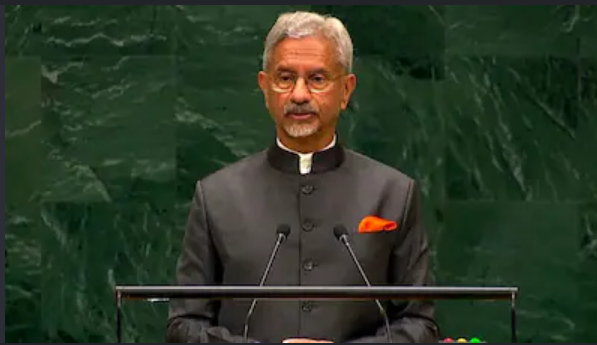
S Jaishankar calls Pakistan a “serial practitioner of terrorism” at UN
S Jaishankar criticised Pakistan at the UN General Assembly, referring to a “serial practitioner of terrorism” and warning against attempts to normalise terrorism.

Rahul Gandhi hosts high tea for INDIA bloc after Gyanesh Kumar protests

L Murugan quits Union ministry to strengthen BJP in Tamil Nadu

Amit Shah attacks Rahul Gandhi over Congress poll losses, questions SIR row

BJP focuses on religion as opposition pushes BDM strategy in UP

CJP leaders Saurav Das, Ashutosh Ranka, Ajinkya Shinde sent to 5-day judicial custody

PM Modi speaks to Mark Carney as India and Canada push to strengthen ties

S Jaishankar says India is a natural option for Russia amid Europe tensions
CJP leaders Saurav Das, Ashutosh Ranka, Ajinkya Shinde sent to 5-day judicial custody
BJP focuses on religion as opposition pushes BDM strategy in UP
L Murugan quits Union ministry to strengthen BJP in Tamil Nadu

Afghan Men Try To Hang With The Jet Engine Of The Aircraft in Kabul- Afghanistan News – Kabul News
Trending Top 10 News: 10000 Crore Fine on Flipkart, Apple to Launch Unique Feature, Hdfc Bank Job Ad

Trending Top 10 News: Nokia 6310, Apple sales, Bachpan ka Pyar Video Kid, Dainik Bhaskar IT Raid

Trending Top 10 News: Canada bans Indian flights, Rain in Delhi NCR, AIMIM Twitter hacked, Raj Kundra case

Trending Top 10 News: Shein India, Apple New Service, Pocket Oxygen, Oppo Launched New Phone
-
 India News16 hours ago
Rahul Gandhi hosts high tea for INDIA bloc after Gyanesh Kumar protests
-
 India News16 hours ago
L Murugan quits Union ministry to strengthen BJP in Tamil Nadu
-
 India News16 hours ago
Amit Shah attacks Rahul Gandhi over Congress poll losses, questions SIR row
-
 India News15 hours ago
BJP focuses on religion as opposition pushes BDM strategy in UP
-
 India News4 hours ago
CJP leaders Saurav Das, Ashutosh Ranka, Ajinkya Shinde sent to 5-day judicial custody
-
 Latest world news4 hours ago
S Jaishankar says India is a natural option for Russia amid Europe tensions
-
 India News3 hours ago
PM Modi speaks to Mark Carney as India and Canada push to strengthen ties
