English हिन्दी
Connect with us

Latest world news

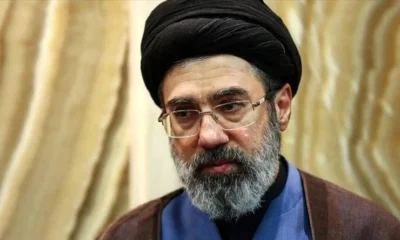
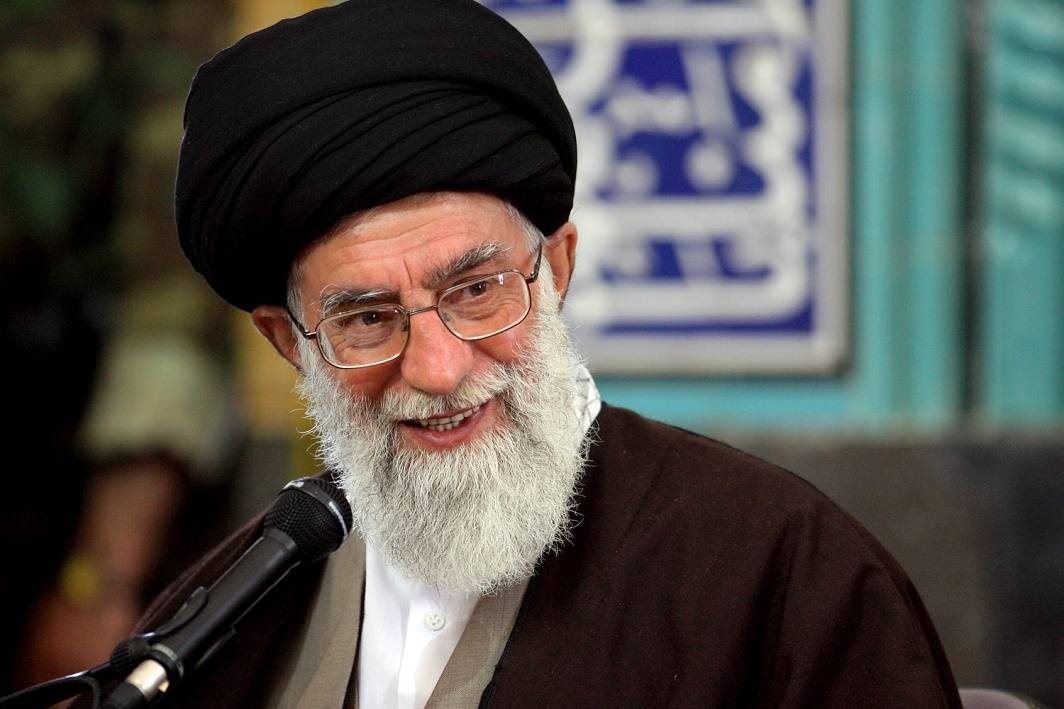
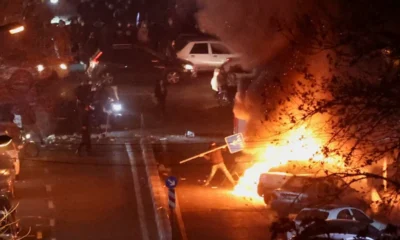
Iran set to execute anti-Khamenei protester as Trump warns of strong US action

Iran is preparing to execute a protester linked to anti-regime demonstrations as US President Donald Trump warns of strong action amid a deadly crackdown.

Published

on

unrest in iran

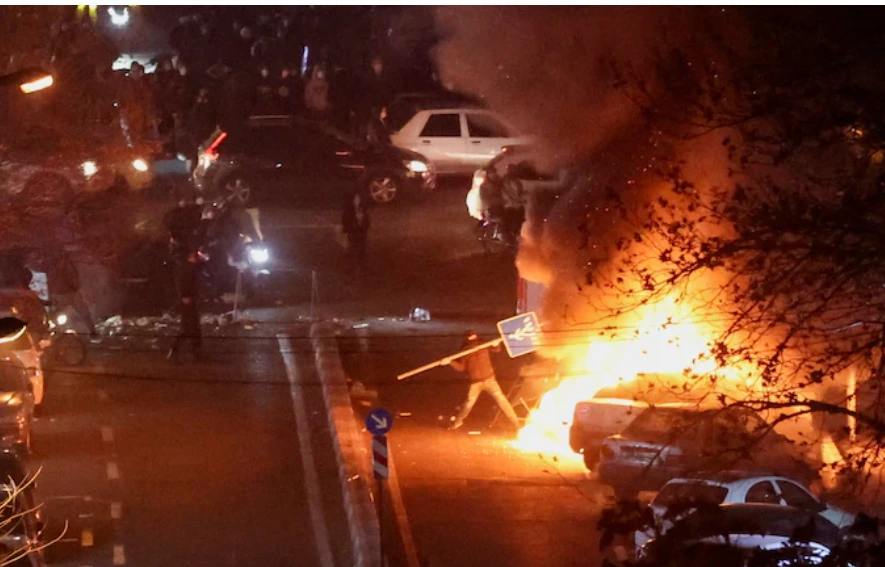
Iran is reportedly preparing to execute an anti-government protester on Wednesday, triggering sharp warnings from US President Donald Trump, who said Washington would take “very strong action” if the hanging goes ahead. The development comes amid a sweeping crackdown on nationwide protests that rights groups say has killed more than 2,000 people.

According to human rights groups, 26-year-old Erfan Soltani, arrested last week during protests in Karaj near Tehran, has been sentenced to death and faces execution without a proper trial. Iranian authorities have not publicly detailed the charges or judicial process in his case.

Trump urges Iranians to keep protesting

Trump has publicly encouraged Iranians to continue protesting, saying “help is on its way”, while warning Tehran against executing demonstrators. Speaking to media, the US president said the United States would respond forcefully if Iran began hanging protesters arrested during the unrest.

Earlier, Trump posted messages urging people in Iran to continue demonstrations and said he had cancelled meetings with Iranian officials until the killing of protesters stops. He did not specify what assistance the US might provide or which meetings had been cancelled.

Iranian prosecutors have reportedly threatened capital punishment under charges of “moharebeh”, or waging war against God, for some detainees linked to the protests.

Rising death toll and reports from morgues

Rights groups say the crackdown has been one of the deadliest in recent years. According to activist organisations, the death toll has crossed 2,500, including civilians and members of the security forces. Iranian officials, however, have blamed what they described as “terrorists” for the deaths and have not provided a clear breakdown.

Videos circulating on social media show bodies lined up at the Kahrizak mortuary near Tehran, wrapped in black bags, as families search for missing relatives. Authorities have declared national mourning for security personnel killed during the unrest and announced mass funeral ceremonies in the capital.

Internet blackout and Starlink access

Iran has imposed a widespread internet blackout, now extending beyond five days, limiting communication and information flow. Amid the restrictions, SpaceX has reportedly waived subscription fees for its Starlink satellite service in Iran, allowing users with receivers to access the internet without payment, according to groups working to restore connectivity.

Some international phone links were partially restored, but reports indicate services remain unstable and limited.

Political tensions and international reaction

Iranian leaders have insisted that control has been restored following days of protests described as one of the biggest challenges to the clerical leadership since the 1979 revolution. Supreme Leader Ayatollah Ali Khamenei has hailed pro-government rallies as evidence that the protest movement has failed.

Senior Iranian officials have accused Trump and Israeli leadership of responsibility for violence in Iran. Meanwhile, Western leaders have condemned the use of force against protesters, with some warning that sustained repression could further destabilise the country.

Analysts note that while the protests represent a serious challenge to Iran’s leadership, the government retains powerful security and enforcement mechanisms, making the outcome uncertain.

India News

Markets surge as Nifty jumps 750 points after India-US trade deal

Indian equity markets rallied sharply with Nifty and Sensex posting strong gains after the India-US trade agreement announcement.

Published

on

Sensex

The Indian equity markets opened sharply higher on Tuesday morning, buoyed by optimism following the announcement of a trade agreement between India and the United States.

In early trade, the Nifty jumped around 750 points, while the Sensex surged nearly 2,400 points, reflecting strong investor confidence hours after the deal was made public.

The rally came after US President Donald Trump announced that Washington would slash tariffs on Indian goods to 18 per cent from 50 per cent, as part of a broader trade agreement with New Delhi. In return, India agreed to halt purchases of Russian oil and lower trade barriers, according to the announcement.

President Trump shared the development in a post on his social media platform, calling it a major trade breakthrough. The announcement was followed by a message from Prime Minister Narendra Modi, who thanked the US President on behalf of the people of India for the decision.

Rupee opens stronger against dollar

The positive sentiment was also reflected in the currency market. The Indian rupee opened stronger at 90.40 against the US dollar, gaining 1.10 rupees in early trade, supported by expectations of increased foreign investor inflows following the deal.

Asian markets rebound

Asian markets also traded higher, adding to the positive global cues. Japan’s Nikkei rose about 2.5 per cent, recovering from previous losses, while South Korea’s KOSPI climbed nearly 4 per cent. Market sentiment was further supported by signs of improved US factory activity overnight.

Futures indicated a recovery in Hong Kong markets, while S&P 500 futures were up around 0.3 per cent, as investors tracked upcoming corporate earnings.

With global cues turning favourable and optimism surrounding the India-US trade agreement, Indian markets are expected to remain buoyant, with investors closely watching further developments during the trading session.

Continue Reading

Latest world news

Trump announces trade deal with India, claims New Delhi will stop buying Russian oil

Donald Trump announces a trade deal with India, reducing US tariffs to 18 per cent and claiming New Delhi will halt Russian oil purchases.

Published

on

US President Donald Trump on Tuesday announced that the United States and India have agreed to a trade deal that will reduce American tariffs on Indian goods from 25 per cent to 18 per cent. The announcement was made through a post on Trump’s social media platform, Truth Social.

According to Trump, the decision was taken “out of friendship and respect” for Prime Minister Narendra Modi and at the Indian leader’s request. He stated that the revised tariff would take effect immediately, with remaining formalities to be completed in the coming days.

Prime Minister Modi, in a post shortly after Trump’s announcement, thanked the US President for what he described as a significant step, expressing appreciation on behalf of India’s population.

Tariff reduction to be finalised soon

While neither government initially shared detailed terms of the agreement, the US ambassador to India later indicated that further clarity would follow. In an interaction with media, he confirmed that the overall tariff on Indian goods entering the US market would stand at 18 per cent once the deal is formally concluded.

He added that some procedural aspects are still pending, but the tariff rate itself has been agreed upon and is not expected to change.

Trump also claimed that India would move to reduce its own tariffs and non-tariff barriers on US goods to zero, though no official statement from the Indian side has detailed such measures so far.

Claim on Russian oil purchases

In his post, Trump further asserted that India has agreed to stop buying Russian oil and instead increase its energy purchases from the United States and potentially Venezuela. He linked this claim to broader geopolitical developments, stating that such a move would contribute to ending the war in Ukraine.

There has been no official confirmation from New Delhi regarding any commitment to halt Russian oil imports.

Timing linked to wider trade developments

The announcement comes soon after India concluded a major free trade agreement with the European Union following prolonged negotiations. That agreement provides India with expanded access to the EU market, particularly in pharmaceuticals and medical devices, and is expected to support manufacturing, employment and MSMEs.

The tariff reduction by the US was also announced a day after India presented its annual budget, which included measures aimed at addressing challenges arising from higher US tariffs imposed earlier.

Background of stalled negotiations

Trade talks between India and the US had slowed in recent months after Washington imposed a steep tariff on Indian goods over continued energy purchases from Russia. Negotiations resumed following renewed engagement between the two sides, including high-level discussions between the two leaders.

Officials had earlier indicated that progress was being made toward a trade agreement, with cooperation expanding across areas such as technology, energy, defence and trade.

Continue Reading

Latest world news

India rejects Hague court proceedings on Indus Waters Treaty

India has reiterated it will not participate in Hague arbitration proceedings under the Indus Waters Treaty, stating the agreement remains in abeyance following the Pahalgam attack.

Published

on

Indus Water Treaty

India has reiterated its refusal to recognise or participate in proceedings initiated by a Court of Arbitration in The Hague under the Indus Waters Treaty framework, asserting that the treaty itself remains in abeyance following the Pahalgam terror attack last year.

Despite the arbitration court moving ahead with fresh hearings and procedural orders, New Delhi has made it clear that it does not consider the panel legally constituted and will not respond to its communications.

India dismisses court orders as illegitimate

The latest development centres on an order issued by the Court of Arbitration directing India to submit operational pondage logbooks of the Baglihar and Kishanganga hydroelectric projects. The documents were sought as part of what the court described as the “second phase on the merits” of the dispute.

Hearings have been scheduled for February 2 and 3 at the Peace Palace in The Hague. The court has noted that India has neither filed counter submissions nor indicated its participation in the process.

However, government sources said the arbitration panel was “so-called and illegally constituted” and accused it of conducting parallel proceedings alongside the neutral expert mechanism prescribed under the treaty. According to the sources, India does not acknowledge the court’s authority and therefore does not engage with its directions.

They further stated that since the Indus Waters Treaty has been placed in abeyance, India is under no obligation to respond to such requests, describing the move as an attempt by Pakistan to draw New Delhi back into the process.

Treaty placed in abeyance after Pahalgam attack

India’s decision to suspend the treaty dates back to April 23, 2025, a day after a terror attack in Pahalgam claimed the lives of 26 civilians. The government formally placed the six-decade-old water-sharing agreement in abeyance, linking cooperation under the treaty to Pakistan’s continued support for cross-border terrorism.

The move marked a significant shift in policy, signalling that bilateral arrangements could not operate independently of security considerations.

Pakistan escalates international outreach

Since the decision, Pakistan has stepped up diplomatic and legal efforts, approaching international forums, sending delegations abroad and initiating multiple legal actions to challenge India’s stance.

The Indus river system remains critical for Pakistan’s economy, with a large share of its agriculture dependent on its waters. Limited storage capacity and stressed reservoirs have further heightened Islamabad’s concerns, turning what was once a technical dispute into a strategic issue.

Neutral expert versus arbitration court

Under the treaty’s dispute resolution mechanism, technical disagreements are to be examined by a neutral expert, while legal disputes may be referred to a Court of Arbitration. India has consistently maintained that the current issues fall within the technical domain and has accused Pakistan of forum shopping by activating arbitration proceedings.

The arbitration court has, however, proceeded with the case, stating that India’s position on suspending the treaty does not affect its competence. It has also warned that adverse inferences could be drawn if India fails to comply with its directions.

New Delhi rejects this interpretation and continues to recognise only the neutral expert process, viewing attempts to link the two mechanisms as illegitimate.

Strategic standoff continues

Officials believe the ongoing proceedings in The Hague, conducted without India’s participation, are unlikely to result in binding outcomes. Instead, they see the situation as part of a broader strategic contest, with India choosing disengagement and Pakistan seeking internationalisation of the dispute.

India has consistently maintained that treaties cannot function in isolation from ground realities and that cooperation will remain suspended until what it describes as persistent hostility is addressed.

Continue Reading

Trending

© Copyright 2022 APNLIVE.com