English हिन्दी
Connect with us

Latest world news

Iran rejects US proposal to end war, sets five conditions for ceasefire

Iran has rejected the US proposal to end the war and said ceasefire will depend on five key conditions including safeguards, compensation and recognition of Strait of Hormuz sovereignty.

Published

on

Iran Rejects us proposal

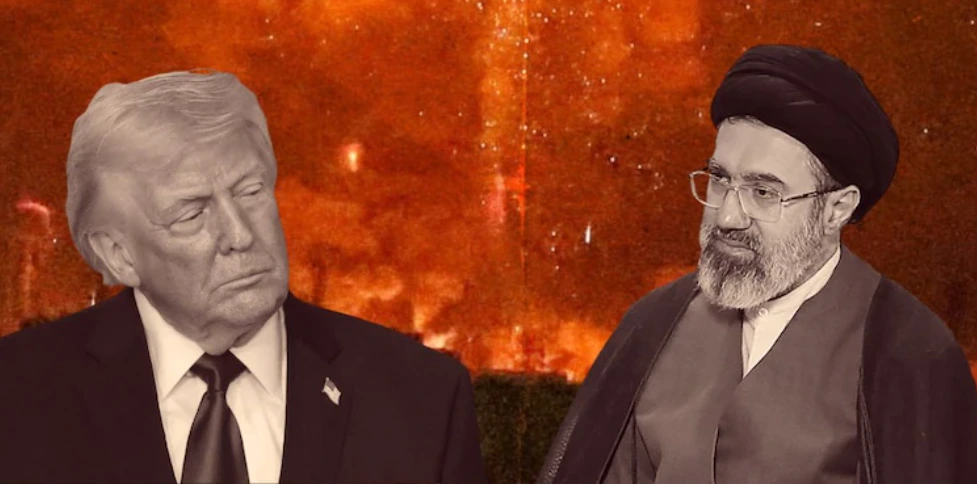
Iran has rejected a proposal from the United States aimed at ending the ongoing conflict, stating that it will only consider ending the war on its own terms and after its conditions are fulfilled.

A senior Iranian official familiar with the proposal said that Tehran considers Washington’s offer “excessive” and reiterated that Iran will continue its defence actions until its demands are met. The official also warned that Iran would continue to inflict “heavy blows” until the situation changes in its favour.

According to the official, Iran does not trust the United States due to past negotiations that allegedly failed to result in meaningful agreements. Tehran cited two previous instances where it claimed Washington did not show genuine intent for dialogue, alongside what it described as military aggression.

Iran has outlined five key conditions under which it would consider ending the war. These include a complete halt to what it called aggression and targeted killings by the US and Israel, concrete guarantees to prevent future military action against Iran, and clear compensation for damages caused by the conflict.

Tehran has also demanded that the war must end across all fronts, including involving resistance groups operating in the region. Another key condition is formal recognition of Iran’s sovereignty over the Strait of Hormuz, which it described as a longstanding legal right that must be acknowledged to ensure compliance with any agreement.

Iran said these demands are in addition to conditions it had already presented during earlier talks held in Geneva before the strikes launched on February 28 that killed Supreme Leader Ayatollah Ali Khamenei along with senior military and government officials.

Iran has maintained that any ceasefire will depend entirely on whether its conditions are accepted, adding that no negotiations will take place until then.

Latest world news

US, Nigerian forces kill ISIS global deputy chief Abu Bilal al-Minuki, says Trump

Donald Trump announced that US and Nigerian forces had eliminated Abu Bilal al-Minuki, described as ISIS’s global second-in-command, in a joint Africa operation.

Published

on

trump

US President Donald Trump on Friday announced that American and Nigerian forces had killed Abu Bilal al-Minuki, whom he described as the global second-in-command of the Islamic State group (ISIS), during a joint military operation in Africa.

According to Trump, the operation was conducted under his direction and involved US forces working alongside the Armed Forces of Nigeria in what he called a “meticulously planned” and “very complex” mission.

In a statement posted on Truth Social, Trump said Abu Bilal al-Minuki believed he could remain hidden in Africa, but intelligence sources had tracked his movements. He also claimed the ISIS leader had been among the “most active terrorists in the world.”

Trump thanked the Nigerian government for cooperating in the operation and said the killing would weaken ISIS’s global activities. However, officials did not immediately release details about the exact location or timing of the mission.

There has been no independent confirmation yet from Nigerian authorities regarding the operation or al-Minuki’s role within the terror organisation.

Continue Reading

Latest world news

PM Modi arrives in Netherlands to strengthen bilateral cooperation

PM Modi has reached the Netherlands for high-level talks aimed at expanding India’s cooperation with the European nation in trade, technology, defence and renewable energy sectors.

Published

on

PM Narendra Modi

Prime Minister Narendra Modi arrived in the Netherlands on Friday as part of his ongoing five-nation diplomatic visit aimed at strengthening India’s partnerships across Europe and West Asia.

The Prime Minister is expected to hold bilateral discussions with Dutch Leadership in The Hague, with talks likely to focus on trade, investment, technology, defence cooperation and renewable energy.

During the visit, PM Modi will also meet King Willem-Alexander and Queen Máxima of the Netherlands. He is additionally scheduled to interact with members of the Indian community and Dutch business leaders.

The Netherlands visit follows PM Modi’s brief stop in the United Arab Emirates, where discussions were held on energy and strategic cooperation.

According to officials, India and the Netherlands have expanded cooperation in recent years beyond traditional sectors such as agriculture, water management and healthcare. Collaboration has increasingly grown in areas including semiconductors, innovation, maritime security, renewable energy and advanced technologies.

The Netherlands remains one of India’s major trade partners in Europe. Bilateral trade between the two countries was valued at around USD 27.8 billion in 2024-25, while the Netherlands is also among the top foreign investors in India.

PM Modi’s Europe tour also includes visits to Sweden, Norway and Italy as India seeks to strengthen economic and strategic engagement with European nations.

Continue Reading

Latest world news

Trump returns from China as report claims US preparing major new Iran strikes

Donald Trump’s return from China has intensified speculation over possible new US military action against Iran as diplomatic efforts remain uncertain.

Published

on

donald-trump

Donald Trump, Iran strikes, US Iran tensions, Epic Fury 2.0, Trump China visit, Strait of Hormuz, Iran nuclear issue, US foreign policy, Xi Jinping, Middle East tensions

US President Donald Trump has returned from his China visit amid reports claiming his administration could be preparing a new phase of military action against Iran, described in some reports as “Epic Fury 2.0”.

The development comes as tensions between Washington and Tehran continue over Iran’s nuclear programme and the security situation around the Strait of Hormuz, a key global oil shipping route. During his Beijing visit, Trump said both the United States and China agreed that Iran should not possess nuclear weapons and that the Strait of Hormuz must remain open.

According to reports, the Trump administration has shown increasing frustration with stalled negotiations involving Iran. Trump recently said he was “losing patience” with Tehran while also hinting at possible further military action if a deal is not reached.

The phrase “Epic Fury 2.0” appears linked to the earlier “Operation Epic Fury”, a large-scale US military campaign launched earlier this year targeting Iranian military infrastructure. US officials previously claimed the operation significantly weakened Iran’s defence capabilities.

Trump’s China visit itself was dominated by discussions around the Iran conflict, trade issues and regional stability. Reports said the US President sought support from Chinese President Xi Jinping on preventing escalation in the Middle East and ensuring free movement through the Strait of Hormuz.

However, no official announcement has yet been made by the White House regarding any fresh military operation against Iran. The reports have emerged amid continuing uncertainty over diplomacy and ceasefire efforts in the region.

Continue Reading

Trending

© Copyright 2022 APNLIVE.com