Latest world news
Iran Shells mortars in Pakistan’s Balochistan


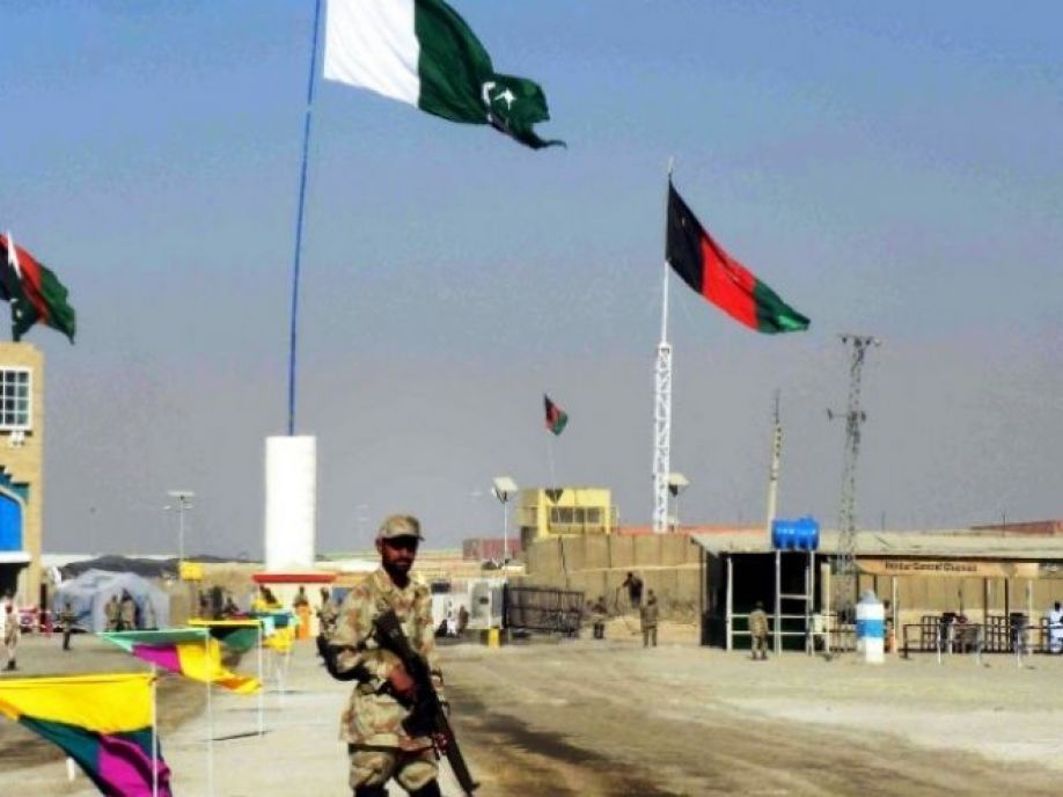
In a rare hostility on Iran-Pakistan border, Iranian forces have fired about half a dozen mortar shells into Pakistani territory near the Panjgur in Balochistan province on Saturday. No casualty is reported yet.
Pakistan’s leading newspaper Dawn quoted official sources saying that the shells were fired by Iranian border guards without provocation. They landed and exploded in an open space in the Parako area, a small village in Panjgur district in early hours of the day.
No casualty was reported. However, panic gripped the people of the area when they woke up to loud explosions.
The Panjgur Deputy Commissioner informed the concerned officials in provincial capital Quetta that the Levies and Frontier Corps personnel rushed to the site where the shells had landed to collect evidence.
Dawn further claimed that Iranian forces have violated Pakistani territory with frequency in recent months and Islamabad has repeatedly lodged protests with Tehran over border violations.
Pakistan shares a 900km porous border with Iran and the two countries decided in 2014 to boost intelligence coordination to wipe out terrorists from the region.
Iranian media has not reported the incident of shelling mortars by its border guards into Pakistani territory till Sunday morning.
 Earlier on March 13, Maleeha Lodhi, Pakistan’s permanent representative at UN had reportedly told Iran’s official news agency IRNA at New York that Iran and Pakistan have great relations that is going to be better in the future.
She was quoted saying, “Iran is a very important neighbor of Pakistan, and Pakistan and Iran have always enjoyed very good relations; and we are trying now to strengthen that relationship through [not only] trade [and] economic relationship but also at the political leadership level.”
“We’ve had recently many meetings; these have always helped to cement the relationship,” she added as Iranian Foreign Minister Mohammad Javad Zarif is visiting Pakistan heading a high-ranking economic and trade delegation.
Lodhi also said that the people of Pakistan have great admiration for the people of Iran. “They have great admiration for Iran’s history, its civilization, and its culture. We have so much in common. We are bound together by a common faith and therefore our relationship is one of brother and sister.”
Read More: Iran invites Pakistan to participate in Chabahar, connect with Gawadar






Latest world news
Trump waives Russia-related sanctions, tariffs in relief for India
Donald Trump has waived several Russia-related sanctions, restrictions and duties under a new US law, potentially easing tariff pressure on India and China, two major buyers of Russian energy.


Latest world news
Magnitude 7 earthquake strikes Russia’s Kamchatka Peninsula
A magnitude 7 earthquake struck Russia’s Kamchatka Peninsula region on Friday. The initial report placed the earthquake at a depth of 140 kilometres.

Latest world news
S Jaishankar says India is a natural option for Russia amid Europe tensions
External Affairs Minister S Jaishankar said India remained a natural option for Russia as Moscow increasingly turned towards Asia amid strained relations with Europe. He highlighted the continuity of India-Russia ties and their significance for the balance of power in Asia.


Anirudh Ravichander to marry Kavya Maran in November, reception on November 21

Delhi court orders release of CJP founder Abhijeet Dipke

Journalist files police complaint against Rahul Gandhi over push allegation
Journalist files police complaint against Rahul Gandhi over push allegation
Delhi court orders release of CJP founder Abhijeet Dipke
Anirudh Ravichander to marry Kavya Maran in November, reception on November 21

ED summons Pinarayi Vijayan in money laundering case

LK Advani, 98, hospitalised in Delhi with chest infection

Afghan Men Try To Hang With The Jet Engine Of The Aircraft in Kabul- Afghanistan News – Kabul News
Trending Top 10 News: 10000 Crore Fine on Flipkart, Apple to Launch Unique Feature, Hdfc Bank Job Ad

Trending Top 10 News: Nokia 6310, Apple sales, Bachpan ka Pyar Video Kid, Dainik Bhaskar IT Raid

Trending Top 10 News: Canada bans Indian flights, Rain in Delhi NCR, AIMIM Twitter hacked, Raj Kundra case