English हिन्दी
Connect with us

Latest world news

Iraqi Army liberates Mosul

Published

on

Iraqi Army liberates Mosul

[vc_row][vc_column][vc_column_text]Fight with IS terrorists still on in a few pockets of the city

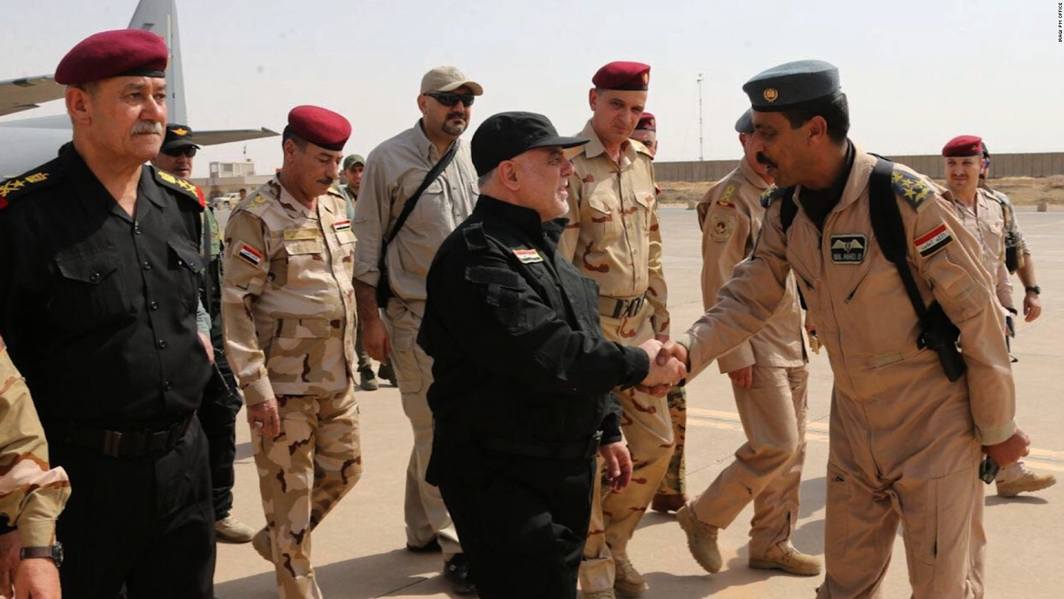
At the end of an eight-month-long street-to-street fight, Iraqi Prime Minister Haider al-Abadi has on Sunday evening announced a “final victory” over the Islamic State forces in Mosul, 400 km north of Baghdad. Once considered the financial capital of Iraq and situated closer to Syria and Turkey than Baghdad, Mosul is now a city of ruins.

A statement from the prime minister’s office in Baghdad said, “The commander-in-chief of the armed forces (prime minister), Haider al-Abadi, arrived in the liberated city of Mosul and congratulated the heroic fighters and the Iraqi people on the great victory. Al-Abadi said the battle is settled and the remaining pockets of the IS are encircled in the last inches of the city.” The operation was launched in October last year.

Locally known as Daesh, the Arabic acronym of Islamic State of Iraq and Syria, the IS is known for its hardline Wahabi ideology and considers all Muslims not subscribing to it to be kafir or unbelievers. Hence they are also known in Arab streets as the takfiri (people who call others kafir).

Just before the fall of Mosul, the IS terrorists had vowed to fight to death. They sent out veiled women bombers among thousands of wounded, malnourished and fearful civilians, who were fleeing heavy clashes between government troops and the terrorists.

Brigadier General Yahya Rasool, spokesperson for the Iraqi Joint Operations Command, said on Sunday that soldiers from Nineveh Liberation Operation had killed 30 militants attempting to get away by swimming across the Tigris. Mosul happens to be the capital of Iraq’s Nineveh province.

Just before the announcement of victory, Iraqi Army soldiers and volunteer fighters from popular mobilisation units, known in Arabic as the Hashd al-Sha’bi, had made sweeping gains against the IS.

According to an estimate, some 8.62 lakh people have been displaced from Mosul since the Iraqi Army commenced operations. However, about two lakh civilians have returned to liberated areas in eastern Mosul.

In 2014, Abu Bakr al-Baghdadi had declared his self-styled Caliphate during a Friday sermon at the Al-Nuri mosque in Mosul. That was the first and only time the terrorist leader spoke publicly to his followers. The historic mosque and a landmark tilting minaret were devastated by IS terrorists days before their defeat.[/vc_column_text][/vc_column][/vc_row]

Latest world news

S Jaishankar defends Russian oil imports, says it won’t end Ukraine war

S Jaishankar defended India’s Russian oil purchases, saying the Ukraine war can only be resolved through dialogue, diplomacy and negotiations

Published

on

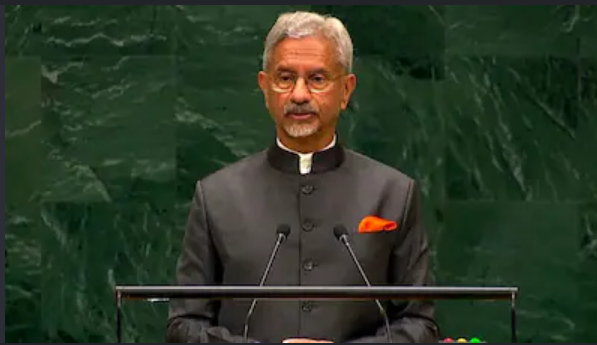
External Affairs Minister S Jaishankar has defended India’s continued purchase of Russian crude oil, saying that stopping the trade would not bring an end to the war in Ukraine.

Speaking to the media during his official visit to Kyiv, Jaishankar said the conflict, now in its fifth year, can only be resolved through dialogue, diplomacy and negotiations. He was responding to questions about Western pressure on India to reduce its purchases of Russian energy.

“This conflict, which is today in its fifth year, will not be solved because somebody is buying or not buying oil or alumina or minerals or metals or fertiliser,” Jaishankar said. He added that dialogue, diplomacy and negotiation were the way to resolve the conflict.

Jaishankar stresses India’s energy security

Jaishankar also highlighted the challenge of ensuring energy security for India’s 1.4 billion people amid difficult global energy conditions.

He said India respects Ukraine’s perspective on the issue but expects other countries to respect New Delhi’s position as well.

India imports around 88 per cent of its crude oil requirement from overseas. According to the report, about one-third of those imports currently come from Russia.

Western pressure over Russian oil

Jaishankar’s comments came amid continued pressure from Western countries over India’s purchases of Russian crude.

The United States and the United Kingdom have backed the argument that restricting Russia’s energy revenues could reduce the funds available to support its military operations in Ukraine.

Last month, the US Senate passed a bipartisan bill that could allow President Donald Trump to impose tariffs of up to 100 per cent on goods from countries, including India and China, that continue importing Russian oil and gas.

India remains a major buyer of Russian crude

Russia has remained India’s largest source of crude oil despite pressure from Washington. However, Indian imports of Russian crude declined in August after reaching record levels in June and July.

Before Russia’s invasion of Ukraine in February 2022, Russian crude accounted for only around 0.2 per cent of India’s crude imports. After Western countries moved away from Russian oil following the invasion, India emerged as the largest buyer of discounted Russian crude.

India imported around 2.1 million barrels of Russian crude per day in August, according to data cited in the report. That represented more than 40 per cent of India’s crude imports, down from around 2.6 million barrels per day in June and July.

Russian exporters increasingly rely on Asian buyers

Russia has also become more dependent on Asian markets after European sanctions disrupted its traditional energy trade.

Countries such as India and China have emerged as important buyers of Russian crude. Continued demand from Indian refiners has helped Russian exporters maintain significant volumes despite restrictions affecting Western shipping, insurance and financial services.

Jaishankar, meanwhile, maintained that the Ukraine conflict requires a diplomatic solution rather than an attempt to resolve it through decisions by individual countries over oil purchases.

Continue Reading

Latest world news

Nepal seeks climate compensation from India, China and US for deadly floods

Nepal has sought climate compensation from India, China and the US after a devastating flash flood killed more than 1,100 people and left nearly 4,500 missing.

Published

on

Nepal has sought climate-related compensation from India, China and the United States following the devastating flash floods that struck the country last week.

Nepal Foreign Minister Shishir Khanal said the country wants its diplomatic approach to move beyond conventional disaster aid towards what he described as justice and compensation. He argued that major greenhouse gas emitters have a responsibility towards vulnerable countries facing severe climate-related losses.

The flash flood struck the Bhotekoshi River basin on August 26 after a high-altitude glacial collapse along the Tibet-Nepal border. The disaster sent water, rocks and debris downstream, affecting villages across at least three districts.

More than 1,100 bodies have been recovered, while nearly 4,500 people remain missing, according to the report.

Nepal seeks accountability from major emitters

Khanal said Nepal’s contribution to global greenhouse gas emissions is “virtually negligible”, yet the country is facing severe consequences associated with global warming, including glacier melt and extreme mountain disasters.

He said Nepal considers the response to such climate-related losses a matter of “legal and moral liability” rather than charity.

According to Khanal, Nepal intends to raise the issue at international forums and seek compensation for climate-related losses suffered by vulnerable countries.

He also highlighted the importance of Himalayan glaciers for South Asia’s water security, saying their disappearance could have consequences for billions of people dependent on rivers including the Ganges and Trishuli.

Nepal’s finance ministry has also sent a formal climate compensation claim letter to its international partners, Khanal said.

India has backed climate equity

India has consistently highlighted the principle of climate equity and pointed to its relatively low per capita greenhouse gas emissions.

New Delhi has argued that climate responsibilities should consider countries’ historical emissions, development requirements and respective capacities. India has also supported efforts to address loss and damage suffered by vulnerable developing countries.

India maintains that developed nations should provide financial resources to countries dealing with the effects of climate change.

Nepal approaches loss and damage fund

Nepal has formally approached the board of the Fund for Responding to Loss and Damage for urgent financial assistance following the August 26 flash flood.

The fund was established at COP27 in 2022 and operationalised at COP28.

A letter jointly signed by Nepal’s Finance Minister Swarnim Wagle and Forests and Agriculture Minister Geeta Chaudhary sought an urgent response to the disaster, citing extensive loss of life, displacement and destruction of homes and critical infrastructure.

The letter said the full extent of the economic and non-economic losses was yet to be determined, but preliminary information indicated that the impact had exceeded Nepal’s immediate response capacity.

Continue Reading

Latest world news

Bank of America VP Erin Piacenti killed in New York stabbing

Bank of America vice-president Erin Piacenti, 32, was fatally stabbed in an apparently random attack in New York’s Times Square.

Published

on

Bank of America vice-president Erin Piacenti was fatally stabbed in New York City’s Times Square in what authorities described as a random and unprovoked attack.

Piacenti, 32, was among two people stabbed in the incident near West 42nd Street and Seventh Avenue on August 31. She was taken to a hospital but later died from her injuries. The other victim, a 68-year-old man, survived and was reported to be in stable condition.

Who was Erin Piacenti?

Piacenti worked as a vice-president at Bank of America in its business selection and conflicts unit. She was also a graduate of the University of Pennsylvania and Fordham Law School.

According to reports, Piacenti was a new mother and had recently returned to work following maternity leave. She had also recently marked her second wedding anniversary with her husband.

Bank of America expressed shock and sadness over her death, describing Piacenti as a valued colleague and extending condolences to her family and loved ones.

What happened in Times Square?

The stabbing took place at around 4:24 pm local time, according to the New York Police Department.

Police identified the alleged attacker as 49-year-old Pamela Cisneros. Authorities said she was carrying two large knives and attacked two people before confronting responding officers.

Police attempted to stop Cisneros, including using Tasers, but she continued advancing towards officers with the knives. Officers then opened fire, and Cisneros was later pronounced dead.

New York Police Commissioner Jessica Tisch said the attack appeared to be random and unprovoked. Police also said Cisneros had a documented history of mental health issues. The motive remains under investigation.

Bank of America reacts to employee’s death

Bank of America said it was “shocked and deeply saddened” by Piacenti’s death and said she would be greatly missed.

The bank’s security teams are also supporting the police investigation and addressing security concerns involving its offices and employees.

Piacenti’s death has left her family, colleagues and friends mourning the loss of a young professional who had recently returned to work after becoming a mother.

Continue Reading

Trending

© Copyright 2022 APNLIVE.com