
Latest world news
Ceasefire goes into effect in Southwest Syria

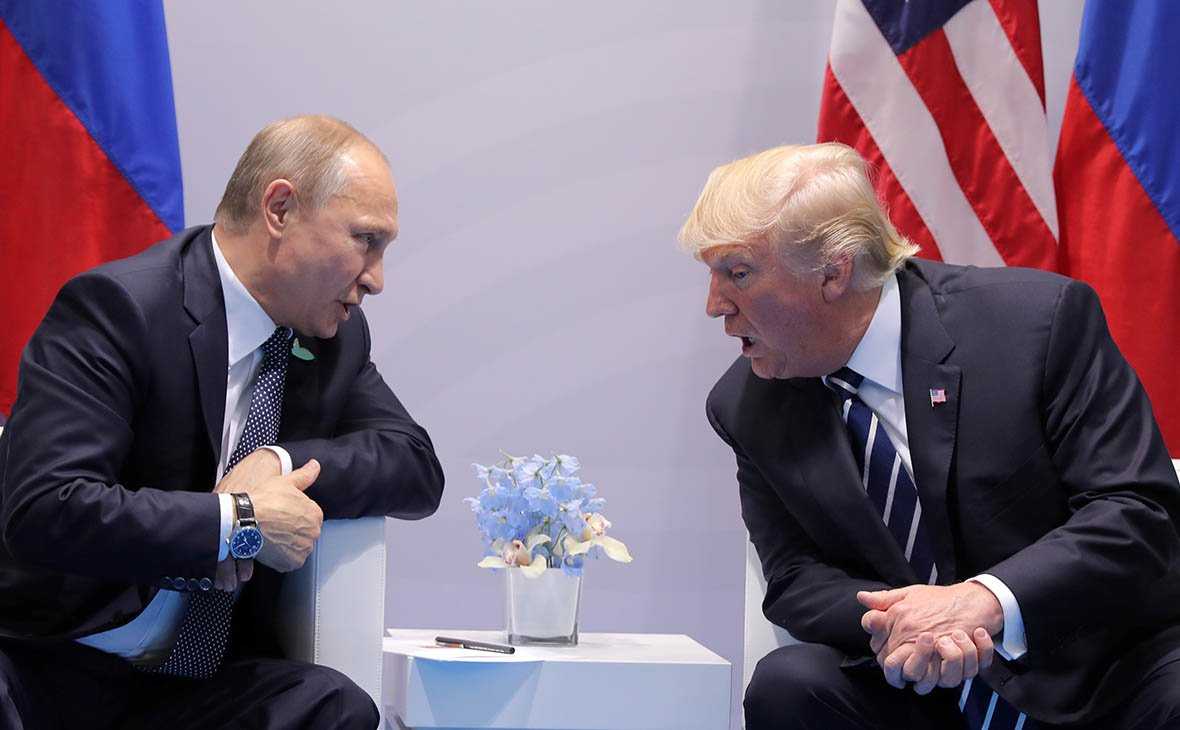
[vc_row][vc_column][vc_column_text]First positive result of Trump-Putin meeting
A ceasefire brokered by Russia, US and Jordan has gone into effect in the Southwest region along the Jordanian border. The trilateral agreement was announced on Friday after a meeting between Russian President Vladimir Putin and US President Donald Trump at the sidelines of G-20 Summit at Hamburg, Germany.
The truce began at midday (local time) on Sunday. There has been no air strike or clashes since the ceasefire started. The UK based Syrian Observatory for Human Rights said “calm was prevailing” in the area.
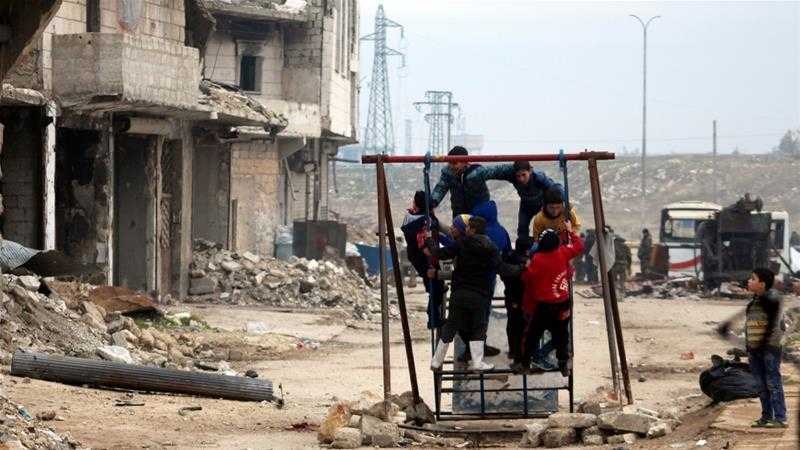
According to Aljazeera, the focus of the southern region is to down the worries expressed by US allies in the region. Natasha Ghoneim, journalist with the network said, “The southwestern portion of Syria is a very geopolitically sensitive area. To the west you have Israel and to the south you have Jordan. Both of those countries have been very worried about violence spilling over their borders.”
The US Secretary of State Rex Tillerson also confirmed that the area covered by the ceasefire effects Jordan’s security and is a “very complicated part of the Syrian battlefield.”
The US National Security Advisor HR Mc Master, in a statement said on Saturday, “US was encouraged by the progress made to reach this agreement”. It further said, “The US remains committed to defeating IS, helping to end conflict in Syria, reducing suffering, and enabling people to return to their homes.”
Syrian government forces have also announced a halt in their operations in Deraa, Suweida and Quneitra provinces.
Meanwhile, UN Deputy Special Envoy Ramzy Ezzeldin Ramzy, hailed the truce deal as positive, saying it could help efforts to reach permanent peace in the Syria.
Separately, Russia, Turkey and Iran were negotiating for establishing four de-escalation zones. The talks were broken in Astana, the Kazakh capital, last week. Representatives from Russia, Iran, Turkey and US were participating along with UN Special envoy Staffan de Mistura.
Syrian rivals were also expected to meet for the seventh time in Geneva shortly.[/vc_column_text][/vc_column][/vc_row]








Latest world news
S Jaishankar says India is a natural option for Russia amid Europe tensions
External Affairs Minister S Jaishankar said India remained a natural option for Russia as Moscow increasingly turned towards Asia amid strained relations with Europe. He highlighted the continuity of India-Russia ties and their significance for the balance of power in Asia.


Latest world news
Putin praises PM Modi, says he has very good ideas on Ukraine war
Russian President Vladimir Putin has praised Prime Minister Narendra Modi for repeatedly raising the need to end the Ukraine war, describing his ideas for a settlement as “very good”.
Latest world news
S Jaishankar calls Pakistan a “serial practitioner of terrorism” at UN
S Jaishankar criticised Pakistan at the UN General Assembly, referring to a “serial practitioner of terrorism” and warning against attempts to normalise terrorism.


CJP leaders Saurav Das, Ashutosh Ranka, Ajinkya Shinde sent to 5-day judicial custody

S Jaishankar says India is a natural option for Russia amid Europe tensions

PM Modi speaks to Mark Carney as India and Canada push to strengthen ties

Meerut murder: Muskaan Rastogi and Sahil Shukla get death sentence

Rahul Gandhi joins India Gate protest by Ankita Bhandari’s parents

Supreme Court questions EC over missing records in Sringeri election dispute
Rahul Gandhi joins India Gate protest by Ankita Bhandari’s parents
Meerut murder: Muskaan Rastogi and Sahil Shukla get death sentence
PM Modi speaks to Mark Carney as India and Canada push to strengthen ties
S Jaishankar says India is a natural option for Russia amid Europe tensions

Afghan Men Try To Hang With The Jet Engine Of The Aircraft in Kabul- Afghanistan News – Kabul News
Trending Top 10 News: 10000 Crore Fine on Flipkart, Apple to Launch Unique Feature, Hdfc Bank Job Ad

Trending Top 10 News: Nokia 6310, Apple sales, Bachpan ka Pyar Video Kid, Dainik Bhaskar IT Raid

Trending Top 10 News: Canada bans Indian flights, Rain in Delhi NCR, AIMIM Twitter hacked, Raj Kundra case

Trending Top 10 News: Shein India, Apple New Service, Pocket Oxygen, Oppo Launched New Phone
-
 India News21 hours ago
CJP leaders Saurav Das, Ashutosh Ranka, Ajinkya Shinde sent to 5-day judicial custody
-
 Latest world news20 hours ago
S Jaishankar says India is a natural option for Russia amid Europe tensions
-
 India News20 hours ago
PM Modi speaks to Mark Carney as India and Canada push to strengthen ties
-
 India News10 hours ago
Meerut murder: Muskaan Rastogi and Sahil Shukla get death sentence
-
 India News9 hours ago
Rahul Gandhi joins India Gate protest by Ankita Bhandari’s parents
-
 India News8 hours ago
Supreme Court questions EC over missing records in Sringeri election dispute
