English हिन्दी
Connect with us

Latest world news

Israel targets Isfahan nuclear facility again amid escalating tensions with Iran

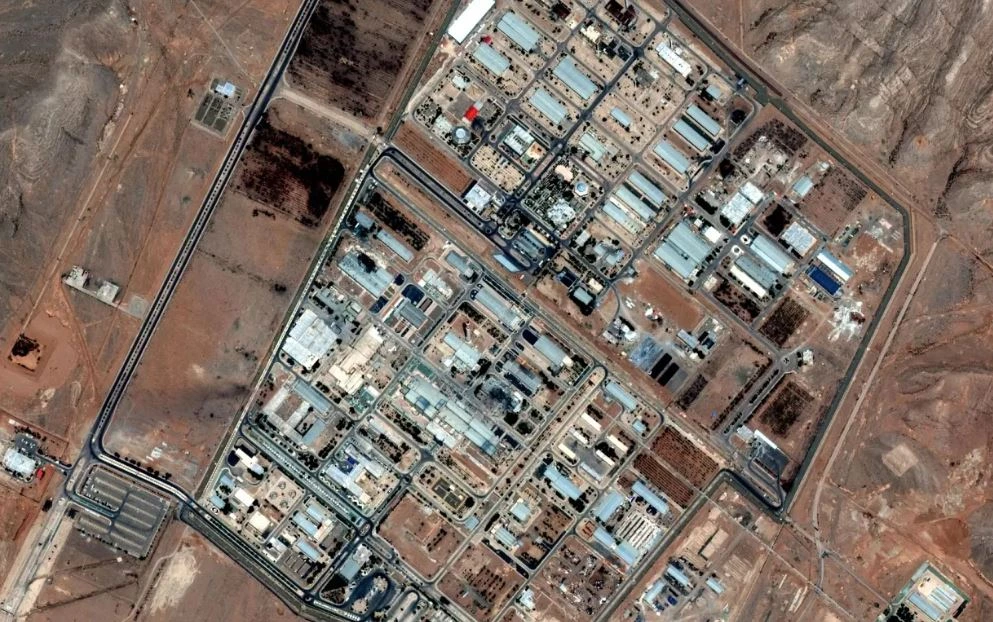
srael has intensified its military operations by targeting Iran’s Isfahan nuclear facility in a second wave of airstrikes, following Iran’s missile attack on central Israel.

Published

on

irans nuclear facility

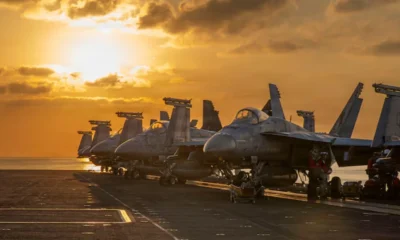
In a sharp escalation of the ongoing conflict between Israel and Iran, the Israeli Air Force launched a fresh wave of airstrikes on Iran’s Isfahan nuclear facility, striking additional infrastructure sites just hours after Tehran fired five ballistic missiles at central Israel. This marks the second round of attacks following the June 13 strikes, intensifying regional volatility.

Isfahan remains a central target in Israeli strategy

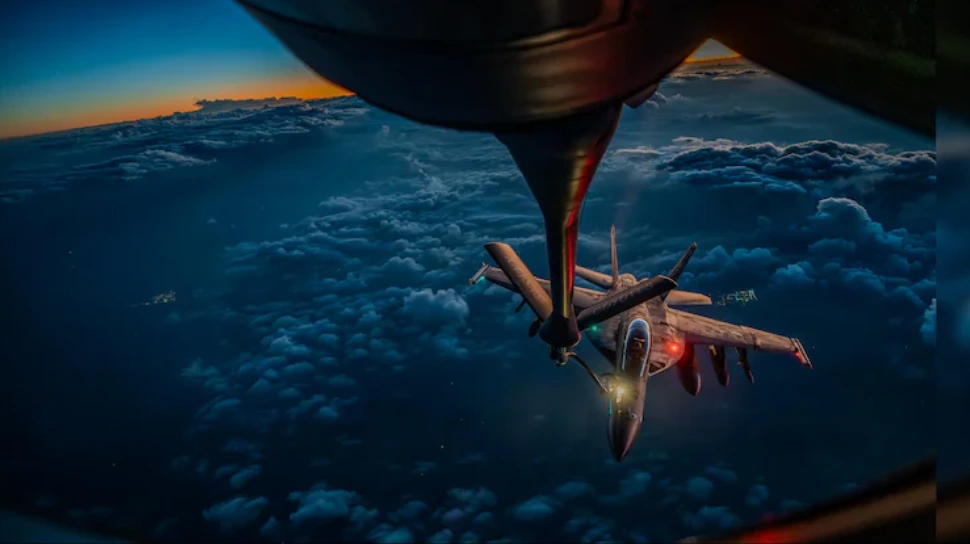
According to Israeli officials, nearly 50 fighter jets were mobilized to hit strategic Iranian positions. Among the primary targets was Isfahan’s uranium conversion facility—critical to Iran’s nuclear development—and adjacent centrifuge production sites. These strikes, according to a senior Israeli official, were intended to “advance the damage” already inflicted and deliver a “severe blow to Iran’s centrifuge production capabilities.”

Centrifuges are vital to uranium enrichment, as they separate isotopes in uranium hexafluoride (UF6) gas. Disruption of these facilities directly undermines Iran’s ability to continue nuclear fuel development.

Iranian media confirmed the attack but stated that no hazardous material had leaked from the facilities.

Iran retaliates with ballistic missile volley

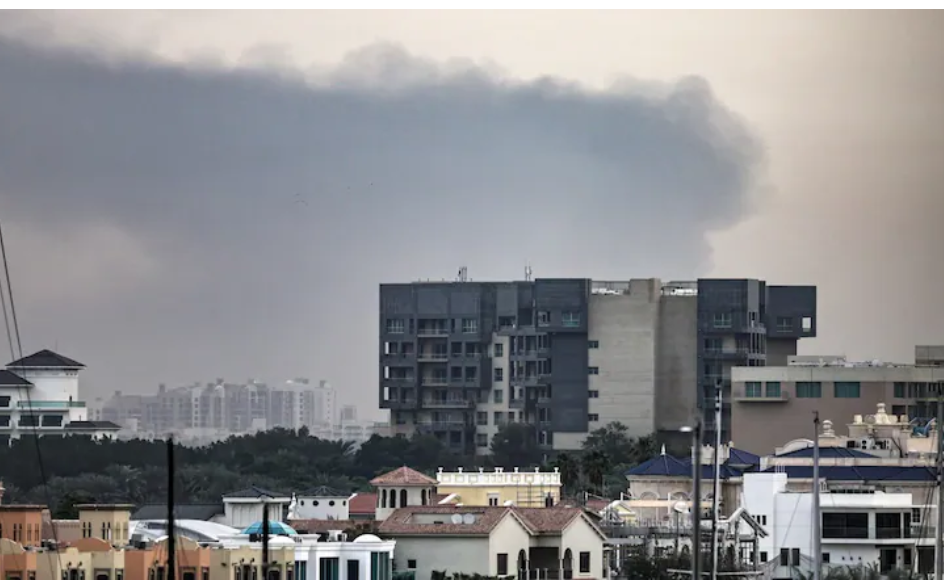
Shortly after the airstrikes, Iran retaliated by firing five ballistic missiles toward central Israel in the early hours of the morning, activating air raid sirens across Tel Aviv and nearby cities. All missiles were intercepted by Israeli air defence systems. However, falling debris sparked a rooftop fire on a residential building. Emergency services swiftly controlled the blaze, and no injuries were reported.

Israeli authorities revealed that Iran has so far launched over 470 ballistic missiles and about 1,000 drones toward Israeli territory since June 13.

Israeli Air Force intensifies counterstrikes

In response to ongoing Iranian aggression, the Israeli Air Force launched further operations Saturday night. Guided by intelligence from the Israel Defence Forces (IDF) Intelligence Directorate, airstrikes were executed on missile launchers and a dual-barrel UAV launcher in Isfahan, all of which were reportedly poised to fire on Israel.

Additionally, 40 UAVs aimed at Israeli targets were intercepted overnight. Israel claims these operations are part of a broader effort to neutralize immediate threats and curb Iran’s military capabilities.

Latest world news

Bangladesh president Shahabuddin accuses Yunus of conspiracy to unseat him

Bangladesh President Mohammed Shahabuddin has accused former chief adviser Muhammad Yunus of attempting to unseat him unconstitutionally and destabilise the country during the interim period.

Published

on

Days after the Tarique Rehman-led government assumed office in Bangladesh, President Mohammed Shahabuddin has levelled serious allegations against former chief adviser Muhammad Yunus, accusing him of attempting to remove him from office through unconstitutional means and destabilise Dhaka.

In an interview to a Bengali daily at Bangabhaban, the President claimed that during Yunus’s tenure, efforts were made to create a constitutional vacuum and disrupt the country’s stability.

Allegations of constitutional breach

Shahabuddin alleged that he was excluded from key state matters for nearly one and a half years. According to him, the former chief adviser did not maintain the constitutionally mandated communication with the President.

He claimed that Yunus undertook 14 to 15 foreign visits but did not brief him upon return or provide written updates, which he described as a constitutional obligation. The President also said he was not informed about major state decisions, including agreements signed with the United States ahead of elections.

Responding to questions about ordinances issued during the interim period, Shahabuddin noted that while some may have been necessary, there was little justification for promulgating as many as 133 ordinances.

‘Palace prisoner’ claim

The President further alleged that he was effectively reduced to a “palace prisoner” during the interim government. He said two of his proposed foreign visits — to Kosovo and Qatar — were blocked by the administration at the time.

He also referred to a purported attempt to replace him with a former chief justice through unconstitutional methods, claiming that the proposal was declined on constitutional grounds.

Recalling events of October 22, 2024, Shahabuddin described protests outside the presidential residence as a “terrifying night,” alleging that mobs were mobilised and attempts were made to storm the premises. He said the situation was brought under control following deployment of the military.

Support from armed forces and BNP

Shahabuddin stated that the chiefs of the three armed services assured him of their support, reiterating that he remained the supreme commander of the armed forces. He also credited the leadership of the Bangladesh Nationalist Party (BNP) for helping maintain constitutional continuity during the period of tension.

The allegations come amid political shifts in Bangladesh following the formation of the new government, adding a fresh dimension to the country’s evolving political landscape.

Continue Reading

Latest world news

India studying implications after US Supreme Court strikes down Trump’s global tariffs

India said it is studying the implications of a US Supreme Court ruling that struck down Donald Trump’s sweeping tariffs, even as a new 10% global duty has been announced under an alternate law.

Published

on

Donald Trump

India on Saturday said it is closely examining the implications of a recent ruling by the US Supreme Court that struck down former US President Donald Trump’s sweeping global tariffs.

In its initial response, the Commerce Ministry said it has taken note of both the court’s judgement and subsequent announcements made by the US administration.

“We have noted the US Supreme Court judgement on tariffs yesterday (Friday). US President Donald Trump has also addressed a press conference in this regard,” the ministry said.

“Some steps have been announced by the US administration. We are studying all these developments for their implications,” it added.

What did the US Supreme Court rule?

On Friday, the conservative-majority court ruled 6–3 that a 1977 law relied upon by Trump to impose sudden tariffs on individual countries does not authorise the President to impose such sweeping duties.

The judgement marked a significant setback to Trump’s tariff policy, which had reshaped trade relations with several countries.

Responding to the ruling, Trump criticised members of the court, saying he was “ashamed” of certain justices and describing the verdict as disappointing.

Fresh tariffs under Section 122

Following the court’s decision, Trump announced new tariffs using Section 122 of the Trade Act of 1974. The provision allows the US President to impose temporary tariffs of up to 15 per cent for a maximum period of 150 days to address large and serious balance-of-payments deficits.

Under this route, a new 10 per cent global tariff has been imposed on imports into the United States. Trump said the revised order would be effective almost immediately.

US Treasury Secretary Scott Bessent, speaking at the Economic Club of Dallas, said the alternative mechanism would result in virtually unchanged tariff revenue in 2026.

Impact on India

Under the revised order, India faces a tariff rate of 10 per cent, reduced from the earlier 18 per cent under Trump’s broader tariff framework.

The new duty is scheduled to take effect from February 24 for a period of 150 days. Exemptions will continue for sectors subject to separate investigations, including pharmaceuticals, as well as goods entering the US under the US-Mexico-Canada Agreement framework.

India has not announced any retaliatory measures and has indicated that it is currently assessing the trade and economic implications of the US decisions.

Continue Reading

Latest world news

PM Modi meets Sri Lankan President Dissanayake at AI summit, reviews connectivity agenda

PM Modi and Sri Lankan President Anura Kumara Dissanayake reviewed connectivity, AI cooperation and regional stability during talks at the AI Impact Summit in New Delhi.

Published

on

PM Modi meet sri lanka president

Prime Minister Narendra Modi on Friday held talks with Sri Lankan President Anura Kumara Dissanayake on the sidelines of the AI Impact Summit in New Delhi, reviewing the progress of bilateral initiatives and reaffirming their commitment to deepening connectivity and development cooperation.

President Dissanayake was in India to attend the India-hosted AI Impact Summit. The visit marked his second trip to India since assuming office, following his State Visit in December 2024.

Focus on connectivity and development

According to the Ministry of External Affairs, the two leaders assessed developments stemming from recent high-level engagements, including Prime Minister Modi’s State Visit to Sri Lanka in April 2025. They emphasised fast-tracking cooperation across three key pillars — physical, digital and energy connectivity — which remain central to India-Sri Lanka relations.

Both sides reiterated that improved connectivity would not only enhance economic integration but also contribute to long-term stability and prosperity in the region.

AI collaboration and inclusive growth

Technology-driven development also featured prominently in the discussions. The leaders exchanged views on leveraging artificial intelligence for developmental purposes and improving service delivery.

They agreed that responsible deployment of AI can help advance inclusive growth, particularly in developing countries, and support public service systems.

India’s support during crisis

President Dissanayake expressed appreciation for India’s assistance following Cyclone Ditwah, which caused significant damage in Sri Lanka. India, acting as a First Responder, provided emergency relief supplies and supported search and rescue operations under ‘Operation Sagar Bandhu’.

The leaders also reviewed progress under India’s USD 450 million assistance package aimed at reconstruction and infrastructure restoration in Sri Lanka. The support is intended to aid long-term recovery and strengthen economic resilience.

Cultural ties and regional cooperation

Beyond economic and strategic matters, the meeting underscored the civilisational and cultural bonds between the two countries. The successful conclusion of the Exposition of the Holy Devnimori relics in Sri Lanka was welcomed as a step that further strengthened people-to-people connections.

Both leaders agreed to continue working closely to advance sustainable development, while contributing to peace and stability in the wider Indian Ocean Region.

The meeting highlighted India’s role as both a technology partner and a regional collaborator, as New Delhi and Colombo seek to build a resilient and forward-looking bilateral partnership.

Continue Reading

Trending

© Copyright 2022 APNLIVE.com