English हिन्दी
Connect with us

Latest world news

Jaishankar denies Trump’s claim of brokering India-Pakistan ceasefire using trade leverage

Foreign Minister S Jaishankar has contradicted US President Donald Trump’s claim that trade pressure brought India and Pakistan to a ceasefire agreement after Operation Sindoor.

Published

on

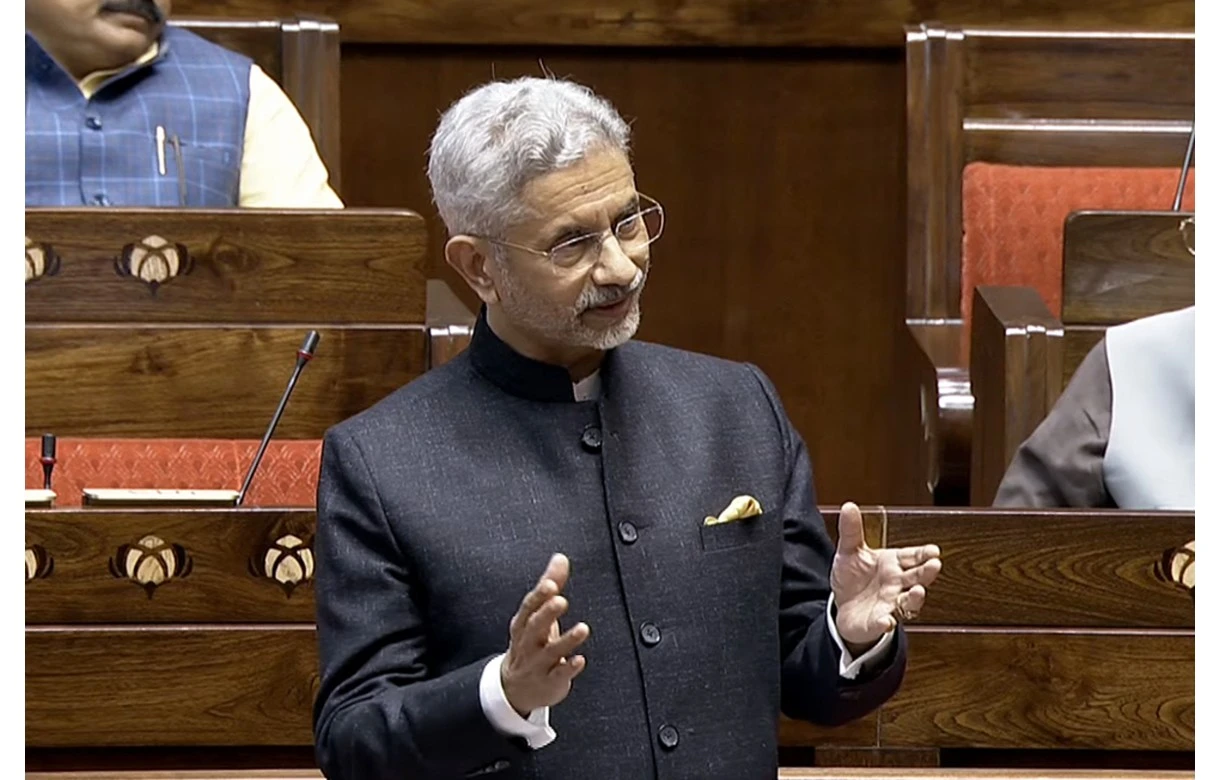
In a sharp rebuttal to US President Donald Trump’s recent assertion, External Affairs Minister S Jaishankar has dismissed claims that the ceasefire between India and Pakistan following Operation Sindoor was influenced by trade negotiations. Jaishankar clarified that there was no link between trade discussions and the diplomatic engagement surrounding the military escalation.

Speaking during a fireside chat hosted by a media platform in New York, Jaishankar recounted his presence during the crucial conversation between Prime Minister Narendra Modi and US Vice President JD Vance on the night of May 9. He asserted that the Indian side did not accept any form of nuclear or trade-related blackmail from Pakistan and was prepared to respond decisively to any aggression.

“I was in the room when Vice President Vance spoke to Prime Minister Modi,” Jaishankar said, emphasizing that Pakistan’s threats were met with firm resolve by the Indian leadership. He also noted that Pakistani forces launched a major assault later that night, which was countered swiftly by Indian troops.

Subsequent diplomatic conversations began the next morning, when Jaishankar spoke to US Secretary of State Marco Rubio. Rubio conveyed that Pakistan was ready for dialogue. That same afternoon, Pakistan’s military establishment reached out directly to India’s Director General of Military Operations seeking a ceasefire.

Jaishankar was unequivocal in stating, “So I can only tell you from my personal experience what happened,” countering Trump’s claim that he pressured both sides using the prospect of halting trade deals. Trump, during a press conference in The Hague, had claimed: “I ended that with a series of phone calls on trade.”

In contrast, Jaishankar stressed that India’s response was shaped by national security priorities, not trade concerns. “Trade and diplomacy function independently. The idea that trade was linked to our military decisions is just not accurate,” he said.

The Indian foreign minister also addressed the April 22 terror attack in Jammu and Kashmir’s Pahalgam, calling it an “act of economic warfare.” He highlighted that the assault by the Resistance Front, a Lashkar-e-Taiba affiliate, aimed to destabilize tourism and provoke communal violence by targeting people based on religious identity.

Jaishankar asserted that the Indian government could not let cross-border terrorism go unchallenged simply because the perpetrators operated from across the boundary. Operation Sindoor was launched as a direct response to the attack.

Refuting suggestions of a soft response, Jaishankar reiterated that India’s actions were driven by principle: “The idea that they are on that side of the border and therefore immune from retaliation is a proposition that we chose to challenge.”

Latest world news

Top US counterterrorism official resigns over Iran war, cites conscience

Joseph Kent steps down as US counterterrorism chief, questioning the justification for the Iran war and citing moral concerns.
Published

on

Trump official resigns

A senior US national security official has stepped down in protest against the ongoing war with Iran, citing moral concerns and disagreement with the administration’s decision.

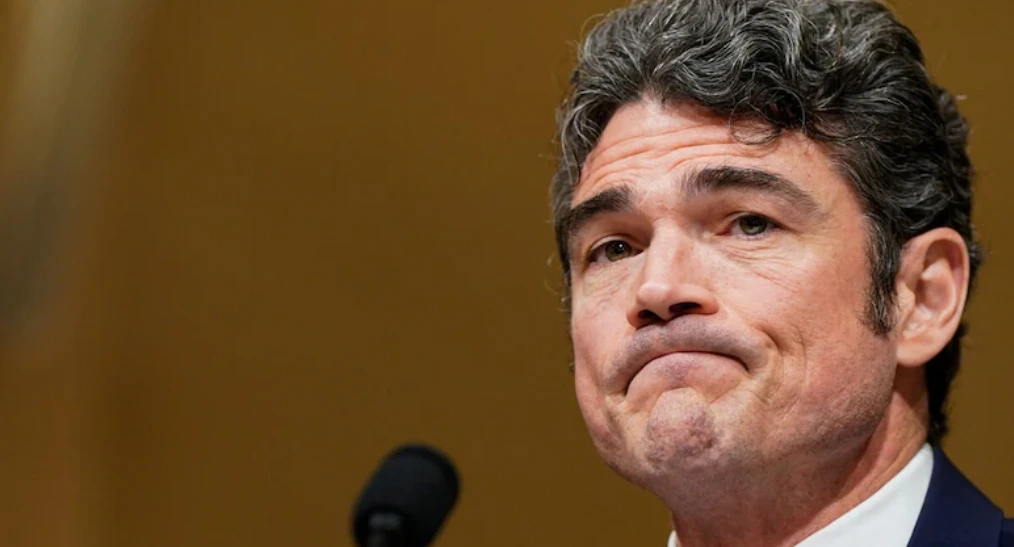
Joseph Kent, who headed the National Counterterrorism Center, resigned from his post, stating he could not support the conflict “in good conscience.” In his resignation letter, Kent argued that Iran did not pose an “imminent threat” to the United States.

He also alleged that external pressure, particularly from Israel and influential pro-war voices, played a role in shaping the decision to enter the conflict under President Donald Trump.

“I cannot in good conscience support the ongoing war in Iran,” Kent wrote, adding that the US had been drawn into the conflict despite a lack of direct threat.

Kent further claimed that a “misinformation campaign” by senior Israeli officials and sections of the American media contributed to building support for military action. According to him, this created an “echo chamber” that influenced the president’s perception of Iran as an immediate danger.

In his letter, Kent said that until mid-2025, Trump had acknowledged that prolonged wars in the Middle East had drained US resources and cost lives. However, he suggested that this position shifted under sustained pressure and messaging.

He urged the president to reconsider the course of action, warning that the conflict could push the country toward instability. “You can reverse course and chart a new path for our nation, or allow us to slip further toward decline and chaos,” he wrote.

Kent’s resignation marks the first high-level departure from the administration directly linked to the Iran war.

As head of the National Counterterrorism Center, Kent was responsible for analysing and monitoring terrorist threats. His tenure, however, had been controversial. He was confirmed to the role last year by a narrow Senate vote, facing strong opposition from Democrats over his past associations.

Critics had raised concerns about his links to far-right figures and his stance on conspiracy theories. During his earlier political campaign, Kent had professional associations with individuals connected to extremist groups, which became a point of contention during his confirmation hearings.

Continue Reading

Latest world news

Fire near Dubai International Airport after drone incident, flights temporarily suspended

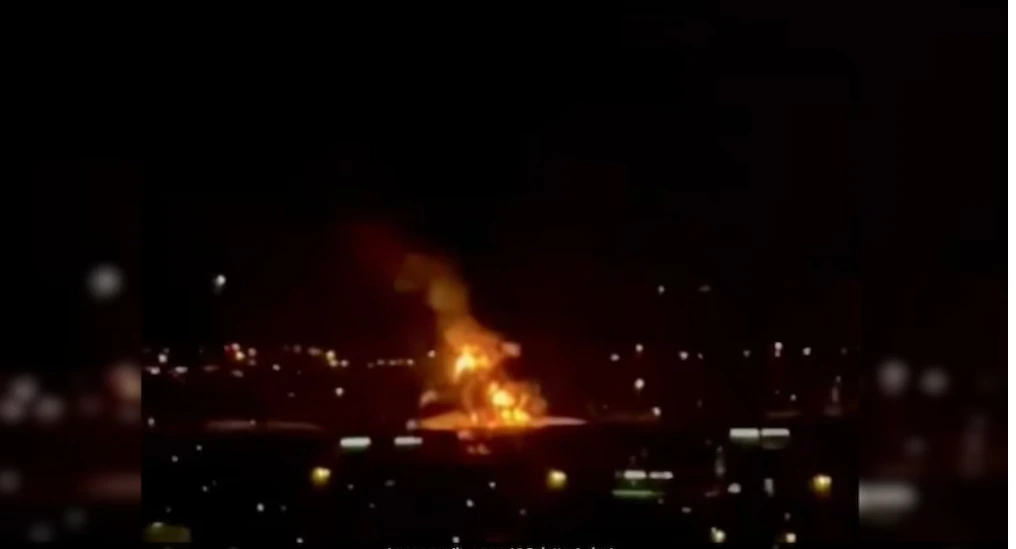
Flights at Dubai International Airport were temporarily suspended after a drone-related incident caused a fuel tank fire near the facility. Authorities confirmed the blaze was contained and no injuries were reported.
Published

on

Fire at Dubai international airport

A fire broke out near Dubai International Airport on Monday after a drone-related incident struck a fuel tank in the surrounding area, prompting authorities to suspend flights temporarily while emergency teams responded.

Officials said crews from Dubai Civil Defence were quickly deployed to control the blaze after the incident was reported near the airport. Authorities confirmed that no injuries were recorded and that safety protocols were immediately activated in the surrounding area.

The Dubai Media Office said in a post on X that a drone incident near the airport had affected one of the fuel tanks. Emergency teams moved rapidly to bring the fire under control.

Later, officials confirmed that the situation had been contained. According to authorities, civil defence teams successfully controlled the fire resulting from the impact on the fuel facility, and there were no casualties.

Authorities said response teams acted quickly while precautionary safety measures were implemented to safeguard residents, workers and airport operations in the area.

Flights temporarily suspended as precaution

Following the incident, the Dubai Civil Aviation Authority announced a temporary suspension of flights at Dubai International Airport to ensure passenger and staff safety.

Travellers were advised to contact their respective airlines for updated flight schedules as authorities assessed the situation and continued response operations.

Airport officials also confirmed that some flights were diverted to Al Maktoum International Airport during the temporary suspension.

Rising security concerns amid regional conflict

The incident comes amid heightened tensions in the region. Officials said Iran has fired more than 1,800 missiles and drones toward the United Arab Emirates since the start of the ongoing Middle East conflict.

Authorities said the UAE has become one of the most targeted countries during the escalation, though most projectiles have reportedly been intercepted by air defence systems.

The strikes have targeted both military and civilian infrastructure, including airports, ports and oil facilities across the Gulf after US-Israeli strikes reportedly hit Iranian leadership targets.

Meanwhile, the UAE’s defence ministry has reported six deaths linked to the conflict so far — four civilians and two military personnel. Officials said the soldiers died in a helicopter crash caused by a technical issue.

Continue Reading

Latest world news

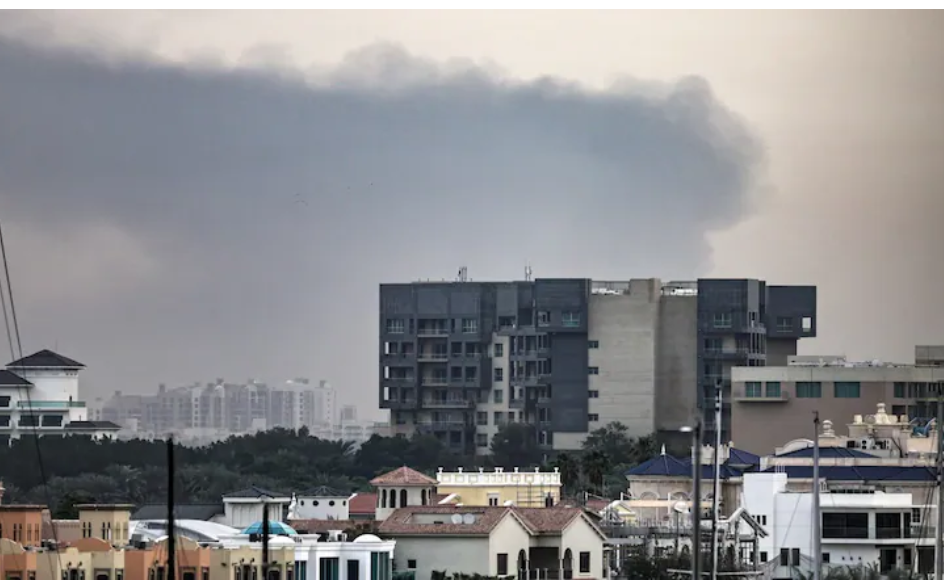
Dubai hit again within 24 hours as debris strikes building, drone targets US embassy in Baghdad

A building in Dubai’s financial hub was struck by debris from an intercepted attack while a drone targeted the US embassy in Baghdad, officials said.
Published

on

A building in the financial district of Dubai was struck by debris from an intercepted aerial attack on Friday, marking the second such incident reported in less than 24 hours as tensions continue during the ongoing conflict involving the United States, Israel and Iran.

Authorities confirmed that debris from a successful interception hit the façade of a building in central Dubai. According to an official statement shared by the Dubai Media Office on social media platform X, the situation was quickly brought under control. Officials also said there was no fire and no injuries reported in the incident.

Witnesses described hearing a powerful blast in the area around the Dubai International Financial Centre (DIFC), one of the emirate’s busiest financial hubs. A resident living nearby told media that the sound was the loudest they had ever heard and initially feared something catastrophic had happened.

Another correspondent reported hearing a massive double explosion that shook surrounding buildings and left a cloud of black smoke hanging over the district for some time before the situation stabilised.

Drone hits US embassy complex in Baghdad

In a separate development, a drone struck the United States Embassy Baghdad in Baghdad, according to Iraqi security officials. Media present near the area reported seeing smoke rising from inside the diplomatic compound after the strike.

Security sources confirmed that the drone attack directly targeted the embassy complex. Details about damage or casualties were not immediately available.

The attack occurred shortly after two strikes targeted positions linked to the Iran-backed group Kataeb Hezbollah. Security officials said the strikes killed two members of the group, including what was described as a key figure.

According to one security source, a missile hit a house used by the group at around 2:15 am local time. The source added that the strike resulted in the death of a senior member, while two others were wounded.

The incidents in Dubai and Baghdad come as the wider regional conflict involving the United States, Israel and Iran continues to escalate into its 15th day, raising concerns about the spread of hostilities across the Middle East.

Continue Reading

Trending

© Copyright 2022 APNLIVE.com