English हिन्दी
Connect with us

Latest world news

Jerusalem move: Ismail Haniyeh say US offered Abu Dis as alternate capital

Published

on

Jerusalem move: Ismail Haniyeh say US offered Abu Dis as alternate capital
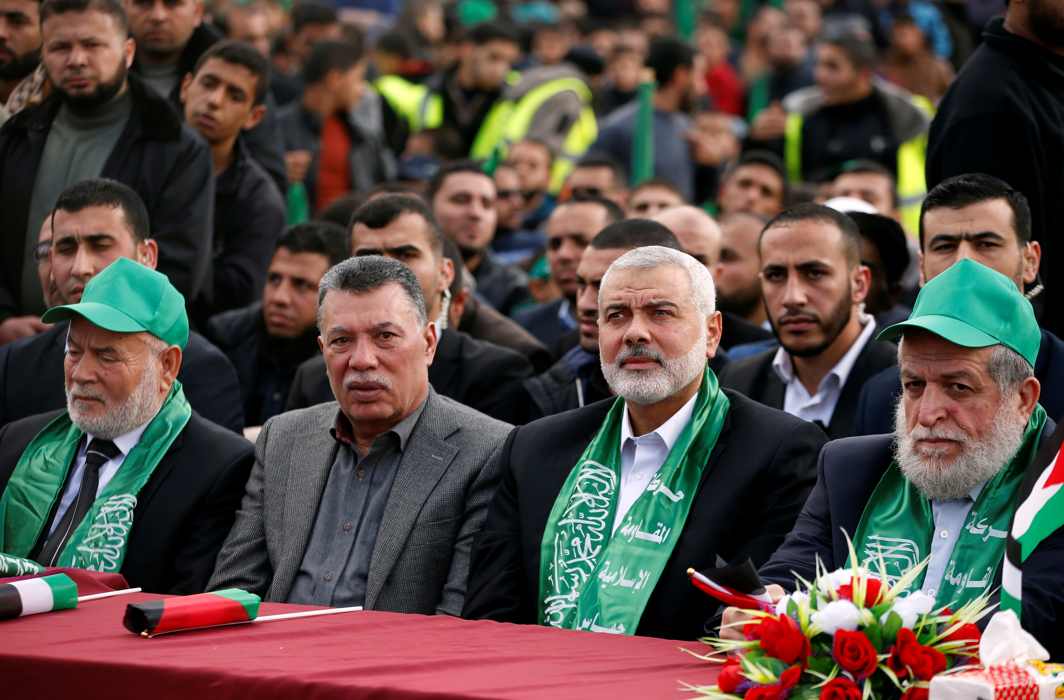
Asks to unite major Palestinian groups in national interest

The Trump’s Middle East plan is facing serious hurdles before its implementation. His recognition of Jerusalem as Israeli capital has triggered world-wide protests while Turkey and Malaysia have announced their intention of opening their missions in East Jerusalem as a mark of recognition of the city as capital of future State of Palestine.

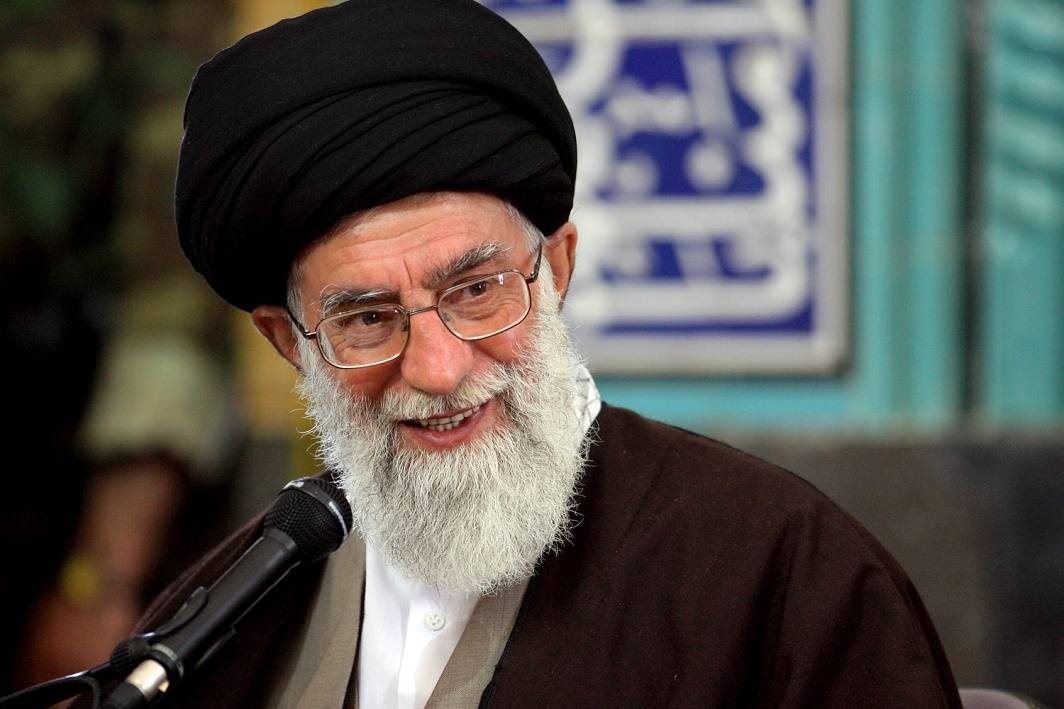
Now Hamas leader Ismail Haniyeh, the chairman of Hamas Political Bureau who was first elected Prime Minister of Palestine (2006 to 2014), has said that the US had offered Abu Dis, a Jerusalem suburb to Palestinian Authority government as an alternative to East Jerusalem for establishing the capital of a future Palestinian state.

According to Aljazeera, Haniyeh was speaking at a meeting with Palestinian clan leaders in the Gaza Strip on Tuesday. He labelled President Donald Trump’s recent Jerusalem move as a ploy to demolish the Palestinian cause in line with the so-called “deal of the century”.

“The US is still offering deals and continues to be on the side of the Palestinian Authority (PA) one way or another, in order to give them a capital or entity in the Abu Dis area, away from Jerusalem, with a bridge linking to al-Aqsa Mosque allowing for the freedom of prayer,” he said.

Haniyeh alleged that certain regional forces were seeking division of  the West Bank into three sections, which include creating a political entity in the Gaza Strip with its own controlling powers.

Turkish President Recep Tayyip Erdogan, who hosted OIC emergency summit on December 12 in Istanbul, has announced to open its embassy in East Jerusalem and appealed other nations to open their missions in the city to recognise as future capital of state of Palestine. Malaysia’s Deputy Prime Minister Ahmad Zahid Hamidi, has, on December 25, announced his government’s intention to open their embassy in East Jerusalem and recognize the city as the capital of Palestine.

On the other hand Israel Deputy Foreign Minister Tzipi Hotovely has told a public radio station Reshet Bet on Tuesday that a number of countries were considering following Trump’s decision to move its embassy to Jerusalem. She said that Israeli government is in talks “with more than 10 countries, but not many more” potentially planning to recognise Jerusalem as the capital of Israel.

Hamas is considered to be pro-Iran group seeking complete dismantling of Israel while Palestinian Authority President Mehmoud Abbas’ Fatah, which was earlier known as Palestinian Liberation Authority (PLO) is considered to be part of US-Israel plan seeking both Israel and Palestine to live together.

The government of the State of Palestine was split into two separate administrations. The Fatah-dominated Palestinian government of 2013 rules the West Bank areas A and B and is generally referred to as the Palestinian Authority. The Hamas government of 2012 was ruling the Gaza Strip. However, in September 2014 Hamas agreed to let the Palestinian Authority resume control over the Gaza Strip and its border crossings with Egypt and Israel.

Al Jazeera’s Wael al-Dahdouh based in Gaza City understands that Haniya cautioned local, regional and international players against working to implement US plan for the Middle East.

Jared Kushner, Trump’s son-in-law and a White Houser adviser, has been spearheading efforts to gauge the possibility of resuming the Israeli-Palestinian peace process. He is spearheading Trump’s Israel project which took him to Saudi Arabia last month.

This was followed by Palestinian President Mehmoud Abbas visit to Riyadh when he was asked to accept US plan and sign the desired documents. Abu Dis was also offered as alternate capital for the future Palestine state.

The Palestinian leader Haniyeh said the US decision to recognise Jerusalem as the capital of Israel introduces new risks that could affect the nature of the relationship between Palestine and Jordan.

He said that King Abdullah of Jordan, to whom he has spoken regarding alternative homeland for Palestinians and confederation between Jordan and Palestine, was supportive of the protests against Trump’s Jerusalem move.

While referring to the internal political issues between the two Palestinian groups, Fatah and Hamas, Haniya said that they need to be addressed quickly in order to devote it to major national issues.

He also emphasised on the need to faster implementation of the Egypt-brokered reconciliation agreement signed in October in Cairo by the two major groups.

Latest world news

Israel-Lebanon ceasefire to begin within hours as Trump announces 10-day truce

Israel and Lebanon may begin a 10-day ceasefire within hours after a proposal announced by Donald Trump amid ongoing tensions.

Published

on

Donald Trump

A temporary halt in hostilities between Israel and Lebanon is expected to begin within hours after US President Donald Trump announced a proposed 10-day ceasefire between the two sides, amid ongoing tensions in the region.

According to his statement, the ceasefire is likely to take effect around 5 p.m. Eastern Time, although independent confirmation from both sides is still awaited.

The development follows discussions involving Israeli Prime Minister Benjamin Netanyahu and Lebanese President Joseph Aoun, with mediation efforts led by the United States.

Officials indicated that the proposed truce is aimed at creating a limited window to reduce violence and potentially pave the way for broader diplomatic engagement. The situation along the Israel-Lebanon border has remained tense in recent weeks, with escalation linked to the activities of Hezbollah.

Diplomatic efforts have intensified in recent days, with discussions facilitated by the United States, including the involvement of US Secretary of State Marco Rubio. However, details of the agreement and the extent of coordination between the parties remain unclear.

The situation remains fluid, and the success of the ceasefire will depend on adherence by all sides involved. The conflict has already led to significant humanitarian and geopolitical consequences, including displacement and disruption in affected areas.

While the proposed ceasefire is being seen as an important step toward de-escalation, broader negotiations involving regional stakeholders are expected to be necessary for any lasting resolution.

Continue Reading

Latest world news

US ends oil sanctions waiver for Iran and Russia, impact likely on India’s energy imports

The US decision to end the Iran and Russia oil waiver may impact India’s oil imports, fuel prices and global energy markets.

Published

on

US oil tanker

The United States has decided not to extend a temporary sanctions waiver that allowed limited trade in Iranian and Russian oil, marking a shift towards stricter enforcement of economic restrictions.

The waiver, introduced in March 2026, had permitted the sale of oil already loaded on ships to stabilise global supply during heightened geopolitical tensions. However, it is now set to expire around mid-April without renewal.

US officials have indicated that the move is part of a broader strategy to increase pressure on both Iran and Russia amid ongoing conflicts and geopolitical tensions.

What the waiver did and why it mattered

The short-term waiver allowed millions of barrels of oil—estimated at around 140 million barrels—to enter global markets, helping ease supply shortages and prevent sharp price spikes.

It also enabled countries like India to purchase discounted crude oil from Russia and resume limited imports from Iran after years of restrictions.

Impact on India

India, one of the world’s largest oil importers, is expected to feel the impact of the decision in several ways:

  • Reduced access to discounted oil
    India had been buying cheaper Russian crude and recently resumed Iranian imports under the waiver. Its end may limit these options.
  • Potential rise in fuel costs
    With fewer discounted supplies available, India may need to rely more on costlier sources, which could increase domestic fuel prices.
  • Supply diversification pressure
    India may need to explore alternative suppliers in the Middle East, Africa, or the US to maintain energy security.
  • Geopolitical balancing challenge
    The move adds pressure on India to align with US sanctions while managing its own economic interests.

Global energy market concerns

The end of the waiver comes at a time when global oil markets are already under stress due to conflict in West Asia and disruptions in key routes like the Strait of Hormuz.

Analysts warn that tightening sanctions could:

  • Reduce global oil supply
  • Increase price volatility
  • Intensify competition among major buyers like India and China

Bigger picture

The US decision reflects a broader shift from temporary relief measures to stricter enforcement of sanctions, even if it risks tightening global energy markets.

For India, the development highlights a recurring challenge—balancing affordable energy access with geopolitical realities.

Continue Reading

Latest world news

Sanctioned tanker fails to breach US blockade, turns back near Strait of Hormuz

A US-sanctioned tanker failed to cross the Hormuz blockade and turned back, underscoring rising tensions and disruption in global shipping routes.

Published

on

A US-sanctioned oil tanker failed to break through a newly imposed American naval blockade and was forced to turn back near the Strait of Hormuz, highlighting growing tensions in the region.

The vessel, identified as the Rich Starry, reversed its course after attempting to exit the Gulf, according to shipping data. The development comes just days after the United States enforced restrictions on ships linked to Iranian ports.

The blockade was announced by Donald Trump following the collapse of recent diplomatic talks with Iran. The move aims to restrict maritime traffic associated with Iranian trade.

Officials said that during the first 24 hours of enforcement, no vessel successfully crossed the blockade. Several ships, including the sanctioned tanker, complied with instructions from US forces and turned back toward regional waters.

The tanker is reported to be linked to a Chinese company previously sanctioned for dealing with Iran. It was carrying a cargo of methanol loaded from the United Arab Emirates at the time of the incident.

The situation underscores the rising risks in one of the world’s most critical oil transit routes. The Strait of Hormuz typically handles a significant share of global energy shipments, but traffic has sharply declined due to ongoing geopolitical tensions.

The blockade, which applies specifically to vessels travelling to or from Iranian ports, has added further uncertainty for shipping companies, insurers and global energy markets.

Continue Reading

Trending

© Copyright 2022 APNLIVE.com