English हिन्दी
Connect with us

Latest world news

Lawrence Bishnoi gang kills Indian-origin industrialist in Canada, fires at singer’s home

Indian-origin industrialist Darshan Singh Sahasi was shot dead outside his home in Abbotsford, Canada, while the Lawrence Bishnoi gang also claimed responsibility for firing at Punjabi singer Channi Nattan’s house.

Published

on

Lawrence Vishnoia

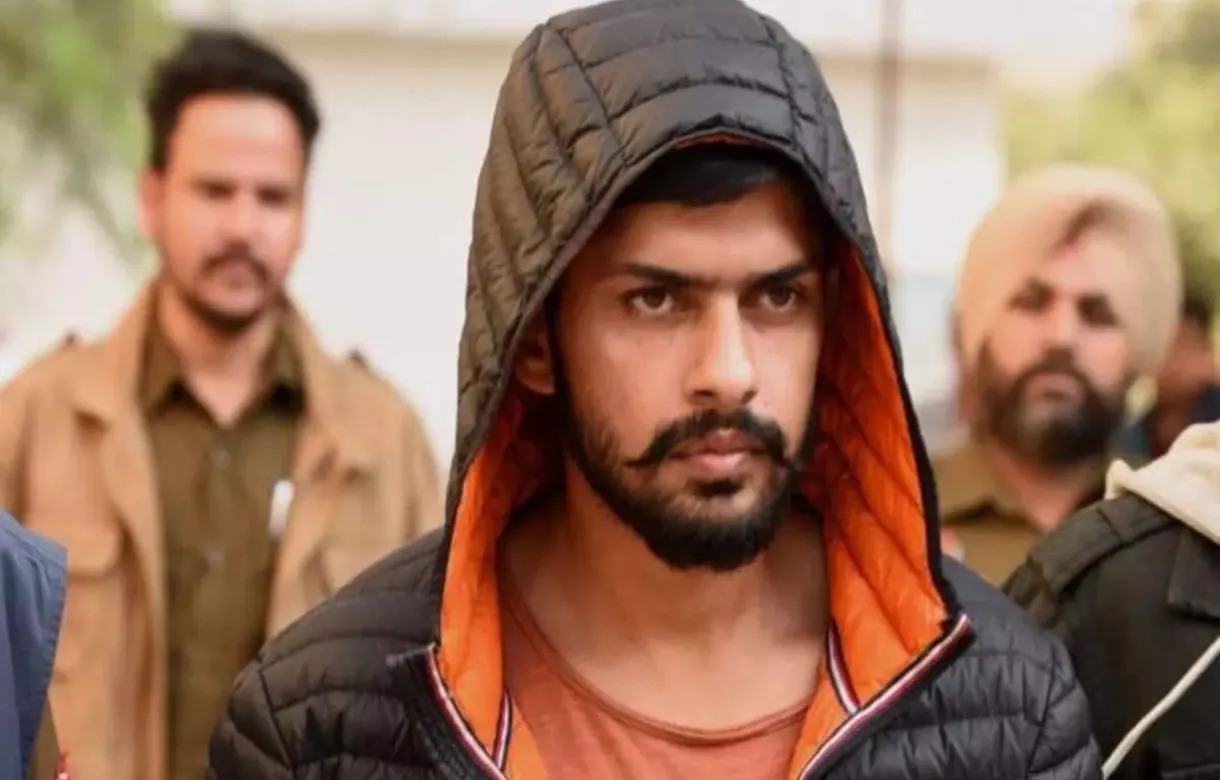
The Lawrence Bishnoi gang has once again made headlines after claiming responsibility for the killing of Indian-origin industrialist Darshan Singh Sahasi in Abbotsford, British Columbia, and for firing shots outside Punjabi singer Channi Nattan’s house.
Industrialist killed outside home

According to reports, Darshan Singh Sahasi, 68, was gunned down outside his home on Monday morning. Preliminary investigation revealed that the shooter had been waiting near Sahasi’s car parked outside his residence. As soon as he got into his vehicle, the assailant opened fire and fled the scene.

Sahasi was found critically injured when police arrived, but despite emergency efforts, he succumbed to his wounds. Authorities imposed precautionary lockdowns in three nearby schools under “shelter-in-place” protocols; no students were harmed.

Gang member Goldy Dhillon took to social media to claim responsibility for the killing, alleging that Sahasi was involved in a drug-related business and had refused to pay extortion money.

A self-made entrepreneur

Sahasi, the president of Canam International—a well-known textile recycling firm—moved to Canada in 1991. He began his journey with small jobs before transforming a struggling textile unit into a successful global business. Known for his philanthropy, Sahasi’s death has left the Punjabi community in Abbotsford in shock. Community leaders have urged authorities to take swift action to ensure the safety of Indian-origin residents in Canada.

Firing outside singer’s residence

In another incident, shots were fired outside the residence of Punjabi singer Channi Nattan. Goldy Dhillon also claimed responsibility for this act, stating it was a warning over Nattan’s growing association with another singer, Sardar Khera. The gang clarified that it held no personal grudge against Nattan but cautioned that any artist collaborating with Khera would face consequences.

The gang’s growing international reach

The Lawrence Bishnoi gang, designated as a terrorist organization by Canada, reportedly controls a network of over 700 shooters across multiple countries. The group has been linked to high-profile cases, including the killing of singer-turned-politician Sidhu Moosewala and threats against Bollywood actor Salman Khan.

Latest world news

Trump backs off Europe tariff threat after Greenland talks with NATO

Donald Trump has withdrawn his planned tariffs on European allies following talks with NATO, even as his remarks on Greenland continue to raise diplomatic concerns.

Published

on

donald-trump

President Donald Trump on Wednesday announced that he would not proceed with planned tariffs on European allies following discussions with NATO Secretary General Mark Rutte over Arctic security and Greenland.

In a post on his social media platform, Trump said the tariffs scheduled to take effect on February 1 would be cancelled after the two sides agreed on what he described as a “framework of a future deal”. He did not provide details of the agreement.

The decision marked a sharp reversal from Trump’s earlier remarks the same day, when he had reiterated his desire for the United States to acquire Greenland, insisting on “right, title and ownership” of the island, while claiming military force would not be used.

Greenland remarks trigger concern among allies

Speaking at the World Economic Forum in Davos, Trump described Greenland as strategically important for global security, citing threats in the Arctic region from Russia and China. He argued that the US had long protected Europe and suggested that acquiring Greenland was a reasonable demand in that context.

Trump said he did not intend to use military force, but warned that pressure could increase if negotiations failed. His comments raised concerns among European leaders and NATO members, as Greenland is a semi-autonomous territory under Danish sovereignty.

Denmark and other NATO allies have consistently stated that Greenland is not for sale. Danish officials have said they are open to discussions on security cooperation but stressed that sovereignty remains a non-negotiable issue.

Denmark and Greenland respond

After Trump’s speech, a Danish government official said Copenhagen was willing to discuss US security concerns, but made it clear that Denmark’s sovereignty over Greenland was a firm red line.

Greenland’s government, meanwhile, advised residents to be prepared for potential crises. Authorities released guidance urging citizens to keep basic supplies at home for several days. Some residents said they viewed Trump’s statements as threats but preferred to be cautious.

Local voices in Greenland expressed concern over the rhetoric, with residents describing the remarks as unsettling and dismissive of the island’s people and identity.

Tariff threat eased, tensions remain

Trump had earlier warned that the US could impose import tariffs starting at 10 percent on Denmark and seven other European allies, potentially rising to 25 percent by June, unless negotiations progressed. Those threats drew strong responses from European leaders, who warned of firm and united countermeasures if tariffs were imposed.

Economists cautioned that renewed trade tensions could disrupt economic stability on both sides of the Atlantic. Markets reacted nervously to the tariff threats before recovering later in the day.

Despite cancelling the immediate tariff plan, Trump continued to push for negotiations over Greenland, framing the issue as one of long-term national and international security.

Continue Reading

Latest world news

India withdraws diplomats’ families from Bangladesh amid rising security concerns

India has recalled the families of its diplomats posted in Bangladesh as a precautionary measure amid growing security concerns linked to extremist activity and political unrest.

Published

on

India has decided to withdraw the families and dependents of its diplomats posted in Bangladesh in view of growing security concerns linked to increased extremist activity in the country.

According to official sources, the decision applies to the Indian High Commission in Dhaka as well as other diplomatic posts across Bangladesh. The move comes weeks before the country is scheduled to hold parliamentary elections.

“Given the security situation, as a precautionary measure, we have advised the dependents of our officials in the high commission and other posts to return to India,” sources said, adding that all Indian missions in Bangladesh will continue to remain open and fully operational.

Non-family postings signal heightened alert

The advisory effectively places Indian diplomatic postings in Bangladesh under a “non-family” status, a step generally adopted in locations considered unstable or facing elevated security risks. However, there is no official clarity yet on the timeline for the withdrawal of families or when they may be allowed to return.

India currently maintains its high commission in Dhaka along with consulates in Chattogram, Khulna, Rajshahi, and Sylhet.

Strain in bilateral ties amid internal unrest

India-Bangladesh relations have faced strain since the interim government led by Muhammad Yunus assumed power in 2024 following the collapse of the Sheikh Hasina administration. Both countries have heightened security at their respective diplomatic missions in recent weeks amid protests and political unrest.

Concerns have also been raised over a spike in incidents of violence against minorities, particularly Hindus, following the death of student leader Sharif Osman Hadi on December 12.

India has repeatedly flagged these incidents with Bangladeshi authorities, urging firm action against communal violence.

“We continue to witness a disturbing pattern of recurring attacks on minorities as well as their homes and businesses by extremists,” the External Affairs Ministry spokesperson said, expressing concern over attempts to attribute such incidents to personal or political disputes.

New Delhi has maintained that such explanations risk emboldening perpetrators and deepening fear among minority communities.

Continue Reading

India News

PM Modi calls Nitin Nabin his boss as BJP gets new millennial national president

PM Modi praised newly elected BJP national president Nitin Nabin, calling him his boss in party matters and highlighting the generational shift in the party’s leadership.

Published

on

Nitin Nabin AND PM Modi

Prime Minister Narendra Modi on Tuesday congratulated Nitin Nabin on his election as the Bharatiya Janata Party’s new national president, describing the 45-year-old leader as a representative of a generation that has seen India transform across decades.

Addressing party workers at the BJP headquarters after the formal announcement, PM Modi underlined the organisational culture of the party by saying that in matters related to the organisation, the newly elected president would be his superior.

“When it comes to party matters, Mananiya Nitin Nabin ji is my boss. I am a worker,” the prime minister said, drawing applause from the gathering.

BJP leadership transition after Sanghatan Parv

Nitin Nabin was elected as BJP national president at the conclusion of the Sanghatan Parv, a wide-ranging organisational exercise that involved elections from the booth level up to the national leadership.

PM Modi said that as party president, Nabin’s role would go beyond managing the BJP’s internal affairs and would include ensuring coordination among National Democratic Alliance partners.

PM Modi highlights generational shift

Describing Nabin as a “millennial,” PM Modi said the new party chief belongs to a generation that grew up listening to news on the radio and is now comfortable using artificial intelligence.

According to the prime minister, this combination of adaptability, youthful energy and experience would be an asset for the party’s future.

“Nitin ji has youthful energy along with rich organisational experience,” PM Modi said.

Tracing BJP’s organisational journey

The prime minister also reflected on the BJP’s growth over the years, recalling its journey under different leaders.

He said the party rose from modest beginnings under leaders such as Atal Bihari Vajpayee, Lal Krishna Advani and Murali Manohar Joshi. In later years, leaders including M Venkaiah Naidu and Nitin Gadkari expanded the organisation further.

PM Modi noted that under Rajnath Singh’s leadership, the BJP secured a full majority at the Centre for the first time, while under Amit Shah, the party expanded its footprint across states and returned to power nationally for a second consecutive term.

He added that during JP Nadda’s tenure as president, the BJP strengthened its presence from panchayat-level bodies to Parliament.

Continue Reading

Trending

© Copyright 2022 APNLIVE.com