English हिन्दी
Connect with us

Latest world news

‘Let Americans leave, we will liberate our land in one week’

Published

on

Syria, Syrian Amnbassador, Riad Kamel Abbas, US strikes, sarin

[vc_row][vc_column][vc_column_text]The recent US air strikes in Syria after the alleged use of chemical weapons by Bashar al-Assad regime, has triggered another crisis, which may result in escalation of the civil war that is already raging in the country.  The U.S. administration has accused the Assad regime for using chemical weapons against its own citizens, while Russia has defended Damascus saying that Syrian Army might have attacked rebels’ arms depot containing chemical weapons.

A chemical attack on Khan Sheikhoun, a town in Idlib province, killed about 89 people and injured more than 300. Following the attack, on April 6, the United States carried out a missile attack on a Syrian air base suspected to house chemical weapons.

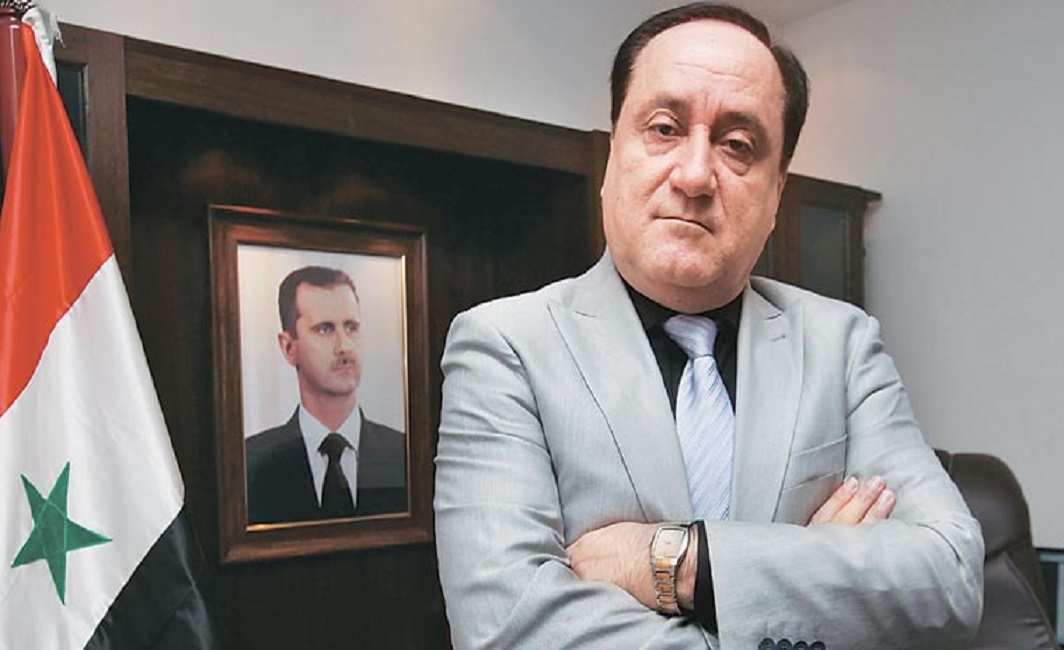
Dr Riad Kamel Abbas, the Ambassador of Syria to India, in an exclusive interview with M.Ahmed Kazmi of APN, explained the Syrian position on various issues. Excerpts from the interview:

The situation seems to be grim after the American strikes. In fact who was behind chemical attack?

Two weeks before the attack our government sent verbal request to United Nations informing that rebels have brought 12 vehicles loaded with chemical weapons through Turkish border. We shared our concern that the rebels  may use chemical weapons against Syrian army and civilians. United Nations did take any action based on the information.

Now the attack has taken place. There is a possibility that Syrian army might have attacked rebels’ ammunition depot storing chemical weapons.  We don’t possess chemical weapons. We demand that UN should send its military monitors to investigate the chemical weapon attack on the civilians.

There are instances of UN monitors visiting Syria at the request of Damascus but they have not submitted any report. After rebels used chemical weapons in Ghouta city, located near Damascus airport, we approached the UN, asking for investigation. Surprisingly, they have not come up with any report yet.  In some cases, use of chemical weapons was confirmed but UN did not make it public.  After involvement of Qatar and Saudi Arabia was proved in helping ISIS, US removed Emir of Qatar Sheikh Hamad bin Khalifa al-Thani in June 2013 and Bandar bin Sultan, the chief of Saudi spying agency in April 2014.

We will coordinate with our friendly countries, with BRICS states, Iran and others to tell the world about American support for terrorists in Syria.

Do you foresee the escalation of the crisis to international level?

At the moment we are in a very dangerous situation. America and its regional allies did not fulfill their commitment with Russia during Geneva and Astana peace talks.

Russia and Iran have recently announced that they were firmly standing behind Syria. We are not alone. We had earlier told that Syria is not Tunisia or Libya, it is different. The government in Syria enjoys mass support from its people.

The so-called opposition leaders participating in Geneva or Astana do not represent Syrian people. However, we will not leave any stone unturned for achieving peace. We understand that the opposition groups are not serious about restoring peace in Syria.

Islam is a religion of peace and they (ISIS) are doing everything but peace.

Has Damascus leadership reached out to friendly countries?

President Assad has spoken with his Iranian counterpart Hassan Rouhani. Our allies, including Russia and Iran, have decided that if America ventures to attack again, we will react immediately. The situation has entered a dangerous phase. It may lead to a regional or global war, or it may create a situation for a better understanding. We are constantly in touch with Russia and BRICS states.

How will the Idlib incident affect the future course of the war?

Idlib is close to Turkey border. We have chosen Idlib for the final assault against terrorists. Let them either get killed or move to Turkey. A large number of terrorists were foreigners and Turkey is their sponsor, let them go to Turkey.

Your government has been criticising US role in the Syrian crisis, while Washington claims to be leading anti-ISIS operations in the region.

We don’t need American help. Let them pull out and we will liberate our lands from ISIS and other terror groups within a week. They support the ISIS and were not hiding this fact. Former Secretary of State Hillary Clinton publically admitted of creating ISIS for use against the Syrian army. John Kerry, another former U.S. Secretary of State had admitted the same fact. They use ISIS against any country which is not following Washington’s instructions.

We are fighting against the ISIS and the US is attacking Syrian army.This is sufficient proof of American support to ISIS and al-Nusra group on the ground.

Americans attacked Syrian army in Serta Mountain, killing our soldiers last year. It was followed by ISIS capturing the area almost immediately. There is plenty of evidence that America has been supporting ISIS by providing aid and weapons through parachutes.

Recently a delegation of important officials from Trump administration has visited Damascus, which will never be reported by their media.

Why do not the radical Islamists hit Israel?  Why do they target Syria, Egypt, Iraq and Yemen? Turkish intelligence was operating on the ground and Israel is behind all of them.

Why is the ISIS engaged in ‘jihad’ in Syria, a Muslim country, instead of attacking Israel which has been occupying Palestine? In fact, ISIS terrorists follow Wahabi ideology which is not Islam.

What about the spate of regime changes in the region in the last five years?

Americans don’t need friends in the region. They need slaves and followers. The US removed America-friendly rulers through Arab spring in Egypt, Tunisia, Libya and Yemen. They claimed that it was to improve security. If that is democracy, we don’t need such a democracy. Why doesn’t the UN investigate about the 12 vehicles which came from Turkey?  Earlier, Turkey had announced the arrest of 12 persons for holding sarin gas. But nobody debated that.

Our army was advancing for liberating several cities from ISIS. Suddenly America attacked us.

How do you assess India’s policy towards Syrian crisis?

We have been happy with the consistent Indian stand on the Syrian crisis. I am supposed to see the concerned (MEA) officials soon. India has been following a balanced position as a BRICS member-state.

Any country which is not part of the conspiracy against Syria is our friend. Most of the foreign governments and media have been hostile to Damascus. Our government is fighting against terrorism on behalf of the whole world.[/vc_column_text][/vc_column][/vc_row]

Latest world news

Trump approves nearly $9 billion weapons sales to Israel, UAE and other allies amid Iran tensions

The US has fast-tracked nearly $9 billion in weapons sales to Israel, UAE and other allies as tensions linked to the Iran conflict continue despite a fragile ceasefire.

Published

on

Donald Trump statement

The United States has approved nearly $9 billion worth of weapons sales to key Middle Eastern allies, including Israel and the United Arab Emirates, amid ongoing tensions linked to the Iran conflict.

The decision, cleared by the administration of Donald Trump, includes expedited military transfers to Israel, the UAE, Qatar, and Kuwait. The approvals were granted under an emergency provision, allowing authorities to bypass the usual congressional review process.

Emergency clearance amid ongoing conflict

Officials said the move was necessary due to the evolving security situation in the region, particularly as the conflict involving Iran continues despite a fragile ceasefire. The war, which began earlier in 2026, has heightened instability across West Asia.

US Secretary of State Marco Rubio invoked emergency powers to fast-track the deals, citing urgent defence requirements for allied nations.

What the arms package includes

The approved package includes a mix of advanced defence systems and precision weapons:

  • Patriot missile defence replenishments worth over $4 billion for Qatar
  • Precision-guided weapon systems for multiple countries
  • Integrated battle command systems for Kuwait
  • Additional advanced weapons support for Israel and the UAE

The total value of these deals is estimated at over $8.6 billion, often rounded to nearly $9 billion.

Timing linked to iran war

The approval comes nearly nine weeks into the conflict involving the US, Israel, and Iran, with tensions still high despite a ceasefire that has been in place for several weeks.

Analysts note that the move signals continued US military backing for its regional allies, particularly in strengthening air defence and precision strike capabilities during uncertain conditions.

Criticism and concerns

The decision to bypass congressional oversight has drawn criticism from some quarters, particularly over transparency and the broader implications of increasing arms supplies in a conflict-prone region.

Continue Reading

Latest world news

Trump and Putin hold over 90-minute call, discuss Iran war and Ukraine conflict

Trump and Putin held a 90-minute call focusing on Iran tensions and the Ukraine conflict, with warnings over escalation and talks of ceasefire.

Published

on

Vladimir Putin and Donald Trump

US President Donald Trump and Russian President Vladimir Putin held a phone conversation lasting more than 90 minutes, focusing on escalating tensions in the Middle East and the ongoing war in Ukraine.

According to official statements, the discussion was described as “frank and businesslike,” with both leaders addressing key global security concerns. A major part of the conversation centred on the situation involving Iran and developments in the Persian Gulf.

Putin supported Trump’s decision to extend the ceasefire related to Iran, suggesting that continued restraint could create space for negotiations and help stabilise the region. However, he also issued a strong warning, stating that renewed military action by the United States or Israel could lead to “extremely damaging consequences” not only for Iran but for the wider international community.

Ukraine conflict also discussed

The leaders also discussed the ongoing war in Ukraine, which has continued for several years since Russia’s invasion in 2022. During the call, there were indications of potential efforts toward a temporary ceasefire, although no final agreement has been confirmed.

Reports suggest that the idea of a short-term pause in hostilities was explored, possibly linked to upcoming symbolic dates, but significant differences between the parties remain unresolved.

Focus on diplomacy amid global tensions

The call highlights ongoing diplomatic engagement between Washington and Moscow at a time of heightened geopolitical tensions involving both the Middle East and Eastern Europe.

While both sides acknowledged the importance of dialogue, the situation on the ground in both conflict zones remains complex, with no immediate resolution in sight.

Continue Reading

Latest world news

Trump rejects Iran peace plan as tensions rise, Tehran signals military readiness

Trump rejects Iran’s peace plan, keeping focus on nuclear concerns as Tehran signals readiness and tensions continue to rise.

Published

on

Donald Trump statement

U.S. President Donald Trump has rejected a proposal from Iran aimed at easing ongoing tensions, signaling a continued deadlock between the two countries.

The proposal reportedly included steps linked to easing restrictions around the Strait of Hormuz, a key global oil route. However, the United States declined the offer, maintaining that any agreement must address concerns related to Iran’s nuclear programme.

Washington has made it clear that resolving nuclear issues remains a priority and that partial measures without broader commitments will not be accepted.

Nuclear issue remains central

The U.S. position continues to focus on preventing Iran from advancing its nuclear capabilities. Officials believe that without a comprehensive agreement, temporary arrangements could delay a long-term resolution.

The rejection of the proposal indicates that negotiations remain stalled, with both sides holding firm on key demands.

Iran issues warning

Following the rejection, Iranian officials have issued strong statements, indicating readiness to respond if pressure from the U.S. continues.

Reports suggest that Iran has asserted its military preparedness, warning that any escalation could lead to serious consequences. The remarks reflect growing tensions as diplomatic efforts struggle to produce results.

Rising geopolitical tension

The situation remains volatile, with both countries engaged in a prolonged standoff. Measures such as restrictions on trade routes and strategic pressure points continue to impact the broader region.

The Strait of Hormuz remains a critical factor in the conflict, given its importance for global energy supplies.

Outlook uncertain

With no immediate breakthrough in sight, tensions between the United States and Iran are expected to persist. The lack of agreement on key issues, particularly the nuclear programme, continues to hinder progress toward de-escalation.

Continue Reading

Trending

© Copyright 2022 APNLIVE.com