
Latest world news
Pakistan:132 killed in two terror attacks on election rallies


Nawaz Sharif and daughter Maryam Sharif sent to jail on return
In one of the bloodiest days in Pakistan, around 132 people were killed and 180 injured in two separate terrorist attacks during election gatherings in Baluchistan and Khyber Pakhtunkhwa on Friday, the day when former PM Nawaz Sharif and his daughter Maryam Sharif were arrested on their arrival at Lahore airport.
The fast moving developments in the country are somehow related to the forthcoming general election for national assembly and state assemblies to be held on 25 July. Currently the federal and state governments are headed by caretaker Prime Minister and Chief Ministers.
Read More: Taliban kill 20 people in suicide attack in Peshawar
Nawabzada Siraj Raisani, the Baloshistan Awami Party (BAP) candidate for the provincial assembly seat was among 128 killed in the suicide attack on an election gathering in the Mastung area, 60 km south-west of Quetta.
In another terror attack four people died when remote-controlled explosive device was used to attack Akram Khan Durrani,a Muttahida Majlis-i-Amal (MMA) candidate for national assembly in Bannu in Khyber Pakhtunkhwa (KP). Thirty people were injured in the attack. Durrani survived the attack.
Reports say that the blast occurred when Durrani boarded his vehicle after addressing a public meeting. The explosive-rigged motorcycle was parked near his vehicle.
Read More: Pakistan placed on ‘grey list’, India welcomes FATF’s move
Nawabzada Siraj Rasani was the younger brother of Nawab Aslam Raisani, the former chief minister of Baloshistan. Elder brother is contesting for national assembly.
According to Dawn, Haji Lashkari Raisani, another brother of Siraj Rasani confirmed saying, “My younger brother has been martyred in the suicide attack” adding that he was critically injured in the attack and succumbed to his injuries while being taken to the hospital.
Tehreek-Taliban Pakistan’s Gazi force Lal Masjid” wing in a Whatsapp message has claimed responsibility for the suicide attack. All hospitals in Mastung and Quetta were kept on emergency to help the survivors.
A large number of people sitting in the gathering died on the spot and many were injured. The dead included some relatives of the slain BAP leader Siraj Raisani.
Qaim Lashkari, the Deputy Commissioner of Mastung said, “It was a suicide attack”. Another senior police official said, “It seems the target of the suicide attack was Siraj Raisani.”
An injured survivor said, “The suicide bomber blew himself up when local leaders were speaking at the gathering. The suicide bomber went near the stage where Siraj Raisani and other leaders were sitting and detonated the explosive-laden jacket he was wearing.”
Aslam Tareen, the Director General Civil Defence also confirmed that it was a suicide attack saying that around 8 kg explosives, ball bearing and nails were used in the suicide jacket saying “We have collected evidences from the explosive site.”
The bodies of the identified victims were handed over their relatives. However, large number of bodies remained unidentified. Allauddin Marri, the caretaker chief minister of Balochistan, has strongly condemned the suicide bombing and termed it a barbarian act. He said that terrorists involved in the attack would be brought to justice.
There have been several minor and moderate attacks on election related gatherings. However, the casualties remained highest in a single day on Friday. Rockets were reportedly fired at the house of Zahoor Buledi, another BAP candidate some two weeks ago.
Read More: Ousted Pakistan PM Nawaz Sharif sentenced to 10 years in prison
Meanwhile, former Prime Minister Nawaz Sharif and his daughter Maryam Nawaz were arrested by National Accountability Bureau (NAB) officials upon their arrival from London to Lahore on Friday night. They were subsequently whisked away to Islamabad on a chartered flight.

Nawaz and Maryam had been convicted by the accountability court in the Avenfield corruption reference last Friday and handed jail term of 10 years and seven years respectively. Former PM was found guilty of owing assets beyond known income, while his daughter was convicted for aiding and abetting her father in covering up a “conspiracy”.
Read More: Pakistan: Supreme Court disqualify Nawaz Sharif for life
At the time of conviction, both were in London for taking care of bed-ridden PM’s ailing wife. They announced that they would return to Pakistan to appeal against the sentence. Before leaving London Nawaz said that he had decided to return to the country to fulfil his pledge to ‘honour the vote’, “despite seeing the bars of prison in front of my eyes”.








Latest world news
Magnitude 7 earthquake strikes Tibet after floods
A magnitude 7 earthquake struck northern Tibet on Thursday, October 22. The tremor came weeks after deadly flash floods and landslides hit the mountainous region near the Nepal-China border. Initial reports did not confirm casualties or damage from the earthquake.


Latest world news
Macron rejects Trump’s immigration claims over France riots
French President Emmanuel Macron criticised Donald Trump and other foreign leaders over their comments on France’s recent unrest. Macron rejected claims that the country was being overrun by migrants and Islamists, calling such assertions false.

Latest world news
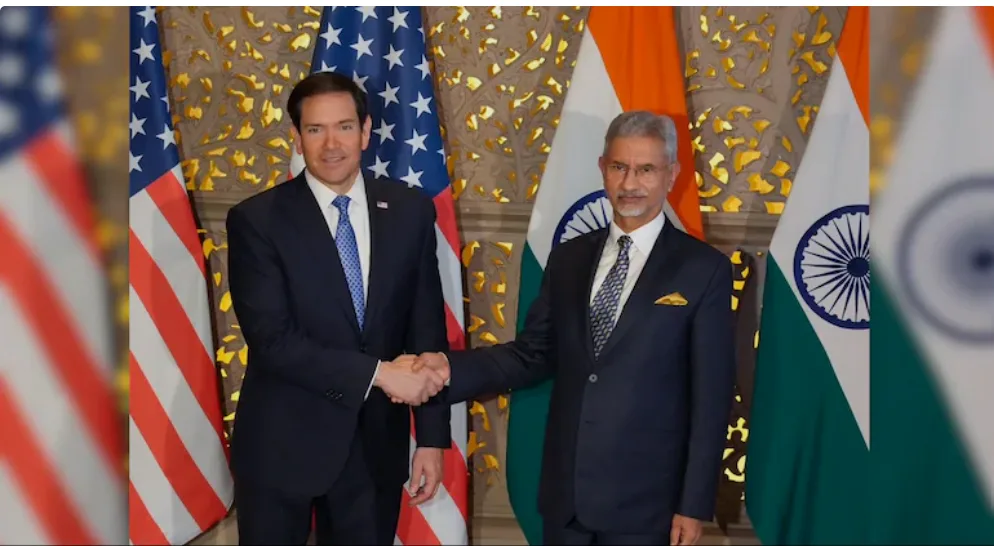
Marco Rubio says India and US share extraordinary alignment on key issues
US Secretary of State Marco Rubio said India and the United States share an extraordinary alignment on core issues, even though disagreements between the two countries may arise.

Punjab strike hits public services as 3 lakh employees and roadways workers protest

Two election commissioners complained against senior poll officer, RTI reveals

Om Prakash Mathur sworn in as Keralam Governor

PM Modi to inaugurate Rs 169-crore RBI data centre in Odisha on October 25

Delhi High Court rejects Neha Bora’s plea against peace bond notice

MEA responds after ITBP chief flags ongoing face-offs with China in Arunachal
Delhi High Court rejects Neha Bora’s plea against peace bond notice
PM Modi to inaugurate Rs 169-crore RBI data centre in Odisha on October 25
Om Prakash Mathur sworn in as Keralam Governor
Two election commissioners complained against senior poll officer, RTI reveals

Afghan Men Try To Hang With The Jet Engine Of The Aircraft in Kabul- Afghanistan News – Kabul News
Trending Top 10 News: 10000 Crore Fine on Flipkart, Apple to Launch Unique Feature, Hdfc Bank Job Ad

Trending Top 10 News: Nokia 6310, Apple sales, Bachpan ka Pyar Video Kid, Dainik Bhaskar IT Raid

Trending Top 10 News: Canada bans Indian flights, Rain in Delhi NCR, AIMIM Twitter hacked, Raj Kundra case

Trending Top 10 News: Shein India, Apple New Service, Pocket Oxygen, Oppo Launched New Phone
-
 India News19 hours ago
Punjab strike hits public services as 3 lakh employees and roadways workers protest
-
 India News19 hours ago
Two election commissioners complained against senior poll officer, RTI reveals
-
 India News8 hours ago
Om Prakash Mathur sworn in as Keralam Governor
-
 India News7 hours ago
PM Modi to inaugurate Rs 169-crore RBI data centre in Odisha on October 25
-
 India News6 hours ago
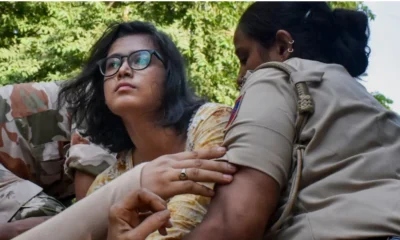
Delhi High Court rejects Neha Bora’s plea against peace bond notice
-
 India News6 hours ago
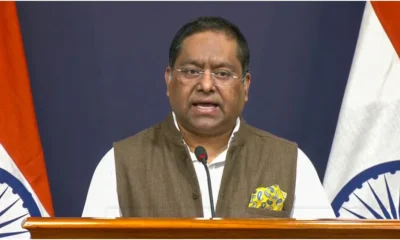
MEA responds after ITBP chief flags ongoing face-offs with China in Arunachal
