
Latest world news
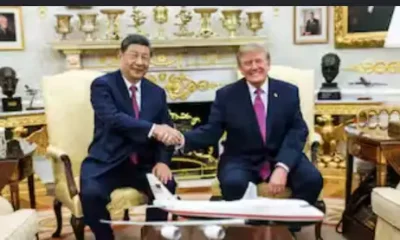
Trump-Putin Summit in Helsinki on Monday


US President Donald Trump and his Russian counterpart Vladimir Putin will hold summit meeting at the Presidential Palace in Finnish capital Helsinki, the on Monday July 16.
According to TASS, the Russian official news agency, President Vladimir Putin’s aide Yuri Ushakov told reporters on Friday “July 16, Helsinki, and the venue is the Presidential Palace. The itinerary says the summit starts at 13:00 hours.”
He recalled that Trump would arrive in Helsinki on the eve the meeting and Putin, right on Monday. He further said, “We don’t actually know how much time the discussion between the two Presidents will take up,” he said. “We don’t have any restrictions on our part.”
“It will kick off with a tete-a-tete conversation where only the interpreters will be present. After that, the Russian-US negotiations proper will begin and most probably they will have the format of a working breakfast, with some members of the delegations attending,” he said.

“After the negotiations, the Presidents are supposed to hold a news conference where each of them will make an address to the audience and will answer four questions – two questions from each side,” he said, making a note that this is a standard format for news conferences of this kind.
He did not attach importance to the formalities of diplomatic protocol, which suggest that a hall where the sides hold top-level negotiations should be assigned to one of them.
Read More: Trump was to hit Russian and Iranian targets in Syria
“This problem [whose territory the talks will take place on] is the easiest one and it looks like neither Russian side nor American side bothers much about it,” Ushakov said.
“Definite diplomatic efforts preceded the arrangements for the summit in Helsinki and they were made confidentially,” he said. “The two sides reached the necessary agreements and have coordinated all the details about how this will take place. Everyone is satisfied with the arrangements.”
Meanwhile, BBC quoted Dmitry Peskov, the Kremlin spokesman that the format of the summit does not stipulate that a joint declaration should be adopted.
Read More: China, Russia criticise US for Cold War mentality and Imperialism
He said, “No, a joint communiqué is not a necessary attribute of such meetings. The statements will be made by the two Presidents right after the summit,”
pointing out that the Kremlin had already made an announcement about a joint news conference of the two heads of state.”
Meanwhile White House spokeswoman Sarah Sanders has said that summit will go ahead as planned despite tension over Moscow’s alleged election meddling. The pair will meet for talks in the Finnish capital Helsinki on Monday.








Latest world news
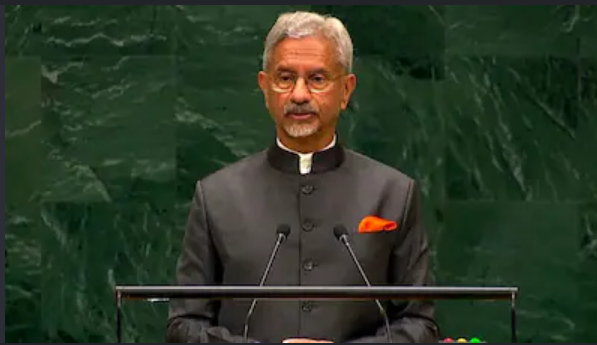
S Jaishankar says India is a natural option for Russia amid Europe tensions
External Affairs Minister S Jaishankar said India remained a natural option for Russia as Moscow increasingly turned towards Asia amid strained relations with Europe. He highlighted the continuity of India-Russia ties and their significance for the balance of power in Asia.


Latest world news
Putin praises PM Modi, says he has very good ideas on Ukraine war
Russian President Vladimir Putin has praised Prime Minister Narendra Modi for repeatedly raising the need to end the Ukraine war, describing his ideas for a settlement as “very good”.
Latest world news
S Jaishankar calls Pakistan a “serial practitioner of terrorism” at UN
S Jaishankar criticised Pakistan at the UN General Assembly, referring to a “serial practitioner of terrorism” and warning against attempts to normalise terrorism.

CJP leaders Saurav Das, Ashutosh Ranka, Ajinkya Shinde sent to 5-day judicial custody

PM Modi speaks to Mark Carney as India and Canada push to strengthen ties

S Jaishankar says India is a natural option for Russia amid Europe tensions

Meerut murder: Muskaan Rastogi and Sahil Shukla get death sentence

Rahul Gandhi joins India Gate protest by Ankita Bhandari’s parents

Supreme Court questions EC over missing records in Sringeri election dispute
Rahul Gandhi joins India Gate protest by Ankita Bhandari’s parents
Meerut murder: Muskaan Rastogi and Sahil Shukla get death sentence
PM Modi speaks to Mark Carney as India and Canada push to strengthen ties
S Jaishankar says India is a natural option for Russia amid Europe tensions

Afghan Men Try To Hang With The Jet Engine Of The Aircraft in Kabul- Afghanistan News – Kabul News
Trending Top 10 News: 10000 Crore Fine on Flipkart, Apple to Launch Unique Feature, Hdfc Bank Job Ad

Trending Top 10 News: Nokia 6310, Apple sales, Bachpan ka Pyar Video Kid, Dainik Bhaskar IT Raid

Trending Top 10 News: Canada bans Indian flights, Rain in Delhi NCR, AIMIM Twitter hacked, Raj Kundra case

Trending Top 10 News: Shein India, Apple New Service, Pocket Oxygen, Oppo Launched New Phone
-
 India News17 hours ago
CJP leaders Saurav Das, Ashutosh Ranka, Ajinkya Shinde sent to 5-day judicial custody
-
 India News16 hours ago
PM Modi speaks to Mark Carney as India and Canada push to strengthen ties
-
 Latest world news17 hours ago
S Jaishankar says India is a natural option for Russia amid Europe tensions
-
 India News6 hours ago
Meerut murder: Muskaan Rastogi and Sahil Shukla get death sentence
-
 India News5 hours ago
Rahul Gandhi joins India Gate protest by Ankita Bhandari’s parents
-
 India News5 hours ago
Supreme Court questions EC over missing records in Sringeri election dispute
