English हिन्दी
Connect with us

Latest world news

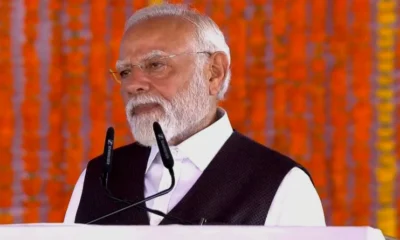
PM Modi meets US Defence Secretary Jim Mattis in Singapore

Published

on

PM Modi meets US Defence Secretary Jim Mattis in Singapore

Prime Minister Narendra Modi held a closed-door meeting with US Defence Secretary Jim Mattis and discussed all security related issues of mutual and global interest in Singapore on Saturday. PM was in Singapore on the last leg of his three-nation tour, which also took him to Indonesia and Malaysia.

The meeting took place days after the Pentagon renamed its Pacific Command as Indo-Pacific Command, a largely symbolic move to signal India’s importance to the US military. India was granted the ‘Major Defence Partner’ status by the previous Barack Obama Administration, providing for transfer of technology and deeper cooperation in the defence sector.

The meeting was held on the sidelines of the annual Shangri-La Dialogue which was addressed by the Modi Friday night asserting that “Asia of rivalry” will hold the region back while an Asia of cooperation will shape the current century. He had also suggested that Asia and the world will have a better future when India and China work together with trust and confidence while being sensitive to each other’s interests.

Read More: Trump and Modi developed close Chemistry

While delivering the keynote address PM said, “We should all have equal access as a right under international law to the use of common spaces on sea and in the air that would require freedom of navigation, unimpeded commerce and peaceful settlement of disputes in accordance with international law.”

Mattis also addressed the dialogue where he stressed upon freedom for all and “reaffirmation for rule based order”.

The meeting between PM Modi and Jim Mattis assumes significance as in his address US official stressed upon both the countries working together and with other nations for ensuring peace and security in the Indo-Pacific region. “It is only appropriate that waterways remain open for all nations,” Mattis said.

China claims almost all of the South China Sea. Vietnam, Philippines, Malaysia, Brunei and Taiwan have counter claims over the area. The US also rejects China’s claims of ownership of the area.

Read More: US: Trump respects Modi wisdom for his judgment on Pak

In 2016, India and the US had signed a crucial logistics defence pact enabling their militaries to use each other’s assets and bases for repair and replenishment of supplies, making joint operations more efficient. Soon after coming to power, the Trump administration had renamed Asia Pacific as Indo-Pacific and identified India as one bookend of the region.

Prime Minister Narendra Modi concluded his three-nation, five-day visit to Indonesia, Malaysia and Singapore on Saturday.

Latest world news

Pakistan faces domestic backlash after India secures lower tariffs in US trade deal

India’s US trade agreement has sparked criticism in Pakistan after Islamabad ended up with higher tariffs despite sustained outreach to Washington.

Published

on

PM Shehbaz Sharif

India’s recently concluded trade agreement with the United States has triggered strong domestic criticism in Pakistan, where opposition leaders, journalists and commentators are questioning Islamabad’s diplomatic strategy after the country ended up with higher tariffs than India.

Under the agreement announced on February 2, US tariffs on Indian exports have been set at 18 per cent, while Pakistani goods will face a 19 per cent rate. The outcome has drawn sharp reactions in Pakistan, especially given what critics describe as sustained efforts by its leadership to engage Washington in recent months.

New Delhi, by contrast, is widely seen as having resisted pressure from US President Donald Trump and negotiated from a position of economic leverage rather than personal diplomacy.

Social media reactions highlight public anger

Following the announcement, Trump shared images related to India, including India Gate and a magazine cover featuring Prime Minister Narendra Modi alongside himself, before confirming the revised tariff rate for Indian goods. The optics did not go unnoticed in Pakistan, where social media users questioned why India secured better terms without overt displays of political deference.

One widely circulated post by Pakistan-based X user Umar Ali used sharp language and imagery to criticise Pakistan’s approach, reflecting growing frustration among sections of the public over what they see as an unequal outcome despite extensive outreach efforts.

Opposition leaders question foreign policy approach

Former Pakistan Tehreek-e-Insaf minister Hammad Azhar described the outcome as a failure of strategy rather than circumstance. He argued that modern foreign policy depends on economic strength, market access and tariffs, not symbolic gestures or personal relationships, pointing to India’s recent trade agreements with both the US and the European Union as examples.

Other opposition figures echoed similar views, saying India negotiated with “strategic autonomy” while Pakistan relied too heavily on personal engagement with US leadership.

Journalists warn of economic consequences

Journalists in Pakistan also weighed in, warning that the tariff decision could deepen the country’s existing economic challenges. Concerns were raised about declining exports, falling foreign investment and reduced bargaining power on the global stage.

Commentator Imran Riaz Khan criticised what he termed a failed lobbying strategy, arguing that symbolic gestures cannot replace economic leverage in international negotiations. Digital creator Wajahat Khan similarly framed the outcome as a reflection of unequal negotiating positions, stating that India approached the talks as a partner, while Pakistan did not.

India’s trade deals expected to boost exports

India’s back-to-back trade agreements with the European Union and the United States are expected to provide a significant boost to exports. Estimates suggest these deals could add up to $150 billion in exports over the next decade, strengthening India’s economic standing and reinforcing its negotiating position in future global trade talks.

Continue Reading

Latest world news

New Delhi free to buy oil from any source, Russia says amid US deal claims

Russia has said India is free to purchase oil from any country, dismissing claims that New Delhi has agreed to stop buying Russian crude under a US trade deal.

Published

on

New Delhi free to buy oil from any source, Russia says amid US deal claims

Russia has said that India is free to purchase crude oil from any country, responding to claims by US President Donald Trump that New Delhi has agreed to stop buying Russian oil as part of a recent trade deal with Washington.

The Kremlin said Russia is not India’s only energy supplier and noted that India has long sourced crude oil from multiple countries. It added that there is nothing new in India’s efforts to diversify its oil imports.

Kremlin spokesperson Dmitry Peskov said that energy experts are well aware that India purchases oil and petroleum products from various global suppliers. He added that Moscow does not see any change in India’s approach to sourcing crude.

No official word from India on halting imports

A day earlier, Peskov said Russia has not received any official statement from India regarding the cessation of Russian oil purchases. Russia’s Foreign Ministry echoed the view, saying the hydrocarbon trade between the two countries remains mutually beneficial.

Foreign Ministry spokesperson Maria Zakharova said India’s purchase of Russian hydrocarbons contributes to stability in the global energy market and that Moscow remains ready to continue close cooperation with New Delhi in the energy sector.

Russian media also noted that, unlike the US president, Prime Minister Narendra Modi has not made any public statement indicating an agreement to stop Russian oil imports.

India’s oil imports from Russia

India has continued to import Russian crude even after the US imposed tariffs on Indian goods. According to global trade data provider Kpler, India has been importing around 1.5 million barrels of Russian crude per day, making it the second-largest buyer of Russian oil and accounting for more than one-third of India’s total crude imports.

India buys about 88 per cent of its crude oil needs from overseas, with roughly one-third sourced from Russia. At its peak, imports from Russia crossed 2 million barrels per day, before falling to around 1.3 million barrels per day in December. The volume is expected to remain broadly stable in the near term.

However, imports declined further to about 1.1 million barrels per day in the first three weeks of January following higher tariffs imposed by the US, including levies linked to purchases of Russian energy.

Complete switch unlikely, experts say

Energy experts believe Indian refiners cannot fully replace Russian crude with American oil. Igor Yushkov of the National Energy Security Fund said US shale oil is lighter in grade, while Russian Urals crude is heavier and contains more sulphur.

He explained that replacing Russian oil would require blending different grades, increasing costs for refiners. He added that the US is unlikely to be able to supply the volume currently exported by Russia to India.

Yushkov also recalled that when Russia redirected its oil exports from Western markets to India in 2022, it reduced production by about one million barrels per day, contributing to a sharp rise in global oil prices and record fuel prices in the US.

Continue Reading

Latest world news

Moscow says no word from India on stopping Russian oil purchases

Russia says it has received no confirmation from India on stopping Russian oil purchases, despite Donald Trump’s claim that the move was part of a new India-US trade deal.

Published

on

Vladimir Putin

The Kremlin on Tuesday said it has not received any official communication from India regarding a halt in Russian oil purchases, following claims by US President Donald Trump that New Delhi had agreed to stop buying Russian crude as part of a trade agreement with Washington.

Kremlin spokesperson Dmitry Peskov told reporters that Moscow had not heard any confirmation from Indian authorities on the matter.

“So far, we haven’t heard any statements from New Delhi on this matter,” Peskov said, responding to Trump’s remarks linking reduced US tariffs on Indian goods to an alleged commitment by India to end Russian oil imports.

Russia stresses importance of ties with India

Peskov said Russia respects bilateral relations between India and the United States but underlined the strategic importance of ties between Moscow and New Delhi.

“We respect bilateral US-Indian relations,” he said, adding that Russia places equal importance on its strategic partnership with India.
“This is the most important thing for us, and we intend to further develop our bilateral relations with Delhi.”

What Trump claimed

Trump announced the India-US trade deal on Monday, stating that tariffs on Indian goods had been reduced from 50 per cent to 18 per cent. He claimed the reduction was linked to India agreeing to stop purchasing Russian oil.

According to Trump, India would instead buy more oil from the United States and potentially from Venezuela. He also suggested that the move would help bring an end to the war in Ukraine.

“He agreed to stop buying Russian oil and to buy much more from the United States and, potentially, Venezuela,” Trump said, referring to Prime Minister Narendra Modi.

India’s reliance on Russian crude

India has emerged as one of the largest buyers of Russian crude since the start of the Ukraine conflict. It currently imports around 1.5 million barrels of Russian oil per day, accounting for more than one-third of its total oil imports, according to global trade data.

India is the second-largest purchaser of Russian crude globally. Even after earlier US tariff measures on Indian goods, New Delhi continued its Russian oil imports, citing energy security concerns.

The Indian government has consistently maintained that securing affordable energy supplies is critical, given the country’s heavy dependence on oil imports.

Shift in energy ties after Ukraine war

Historically, India’s relationship with Russia was centred more on defence cooperation than energy trade, with Russia supplying a majority of India’s military equipment while contributing only a small share of its oil imports.

After the invasion of Ukraine, India significantly increased purchases of discounted Russian oil. The move helped India boost energy supplies while providing Russia with much-needed revenue amid Western sanctions.

As recently as December 2025, Russian President Vladimir Putin said during a visit to New Delhi that Moscow was ready to ensure uninterrupted fuel supplies to India despite pressure from the United States.

Earlier US push for Indian energy imports

Trump had earlier said, following a meeting with Prime Minister Modi in February last year, that India would begin buying more American oil and natural gas. However, those discussions did not lead to a major shift in India’s energy sourcing.

Subsequent US tariff measures also failed to significantly alter India’s stance on Russian oil imports.

Continue Reading

Trending

© Copyright 2022 APNLIVE.com