
Latest world news
Putin’s three-nation, one-day tour may tilt balance towards Moscow

[vc_row][vc_column][vc_column_text]Signs $ 21 billion deal for a nuclear reactor in Egypt, supply S-400 missile defence system to Turkey
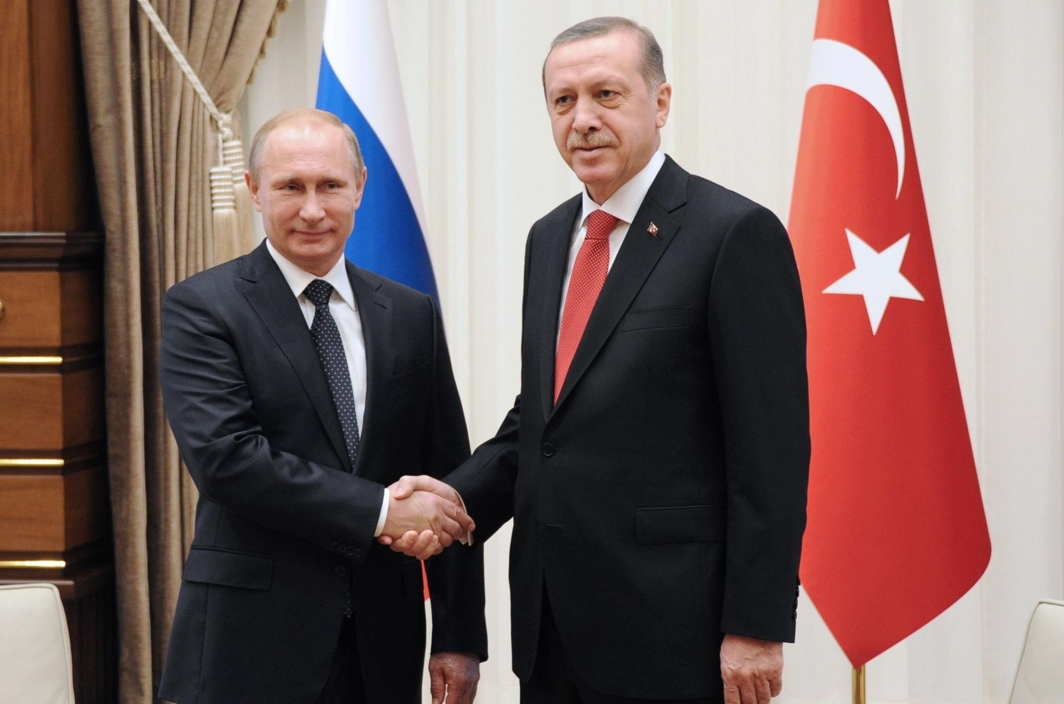
Amidst anti-US passions around the world for Washington’s Jerusalem move, Russian President Vladimir Putin visited Syria, Egypt and Turkey on Monday and shared views on Trump’s adventure paving way for strengthening bilateral ties with regional played in the Middle East.
According to Aljazeera, Russian President Vladimir Putin joined his Turkish counterpart RecepTayyip Erdogan in criticising US decision to recognise Jerusalem as Israel’s capital.
Putin, while speaking at a joint press conference with his Turkish counterpart in Ankara said that Jerusalem’s status should be settled through direct talks between Palestinians and Israel.
He was quoted saying, “Both Russia and Turkey think the decision of the US to recognise Jerusalem as the capital of Israel is not helping the situation in the Middle East. It is destabilising the region and wiping out the prospect of peace.”
On his part Erdogan said he was “pleased” by Putin’s stand, and condemned Israel over the deaths of Palestinians in the occupied territories during the protests against Trump’s plan.
Meanwhile, Ankara based Hurriyet Daily News, reports that Erdogan said that the “the purchase of the S-400 missile defense system from Russia will be finalized this week.”
The S-400 missile defence system can carry three types of missiles capable of destroying targets including ballistic and cruise missiles.
Erdogan also emphasised that trade relations between the two countries were getting “stronger “day by day”. He was quoted saying, “Our bilateral trade volume with Russia increased 30 percent in the first 10 months of 2017. We have a harmonious working environment at the political level.”
This was the eighth meeting between the two leaders this year. The Turkish President Erdoğan said Ankara and Moscow would hold a seventh High-Level Cooperation Council meeting in 2018.
Vladimir Putin’s visit came amid growing anger in the region and the Muslim world over US President Donald Trump’s decision of declaring Jerusalem as the Israeli capital and US policy shift was widely condemned by Washington’s allies.
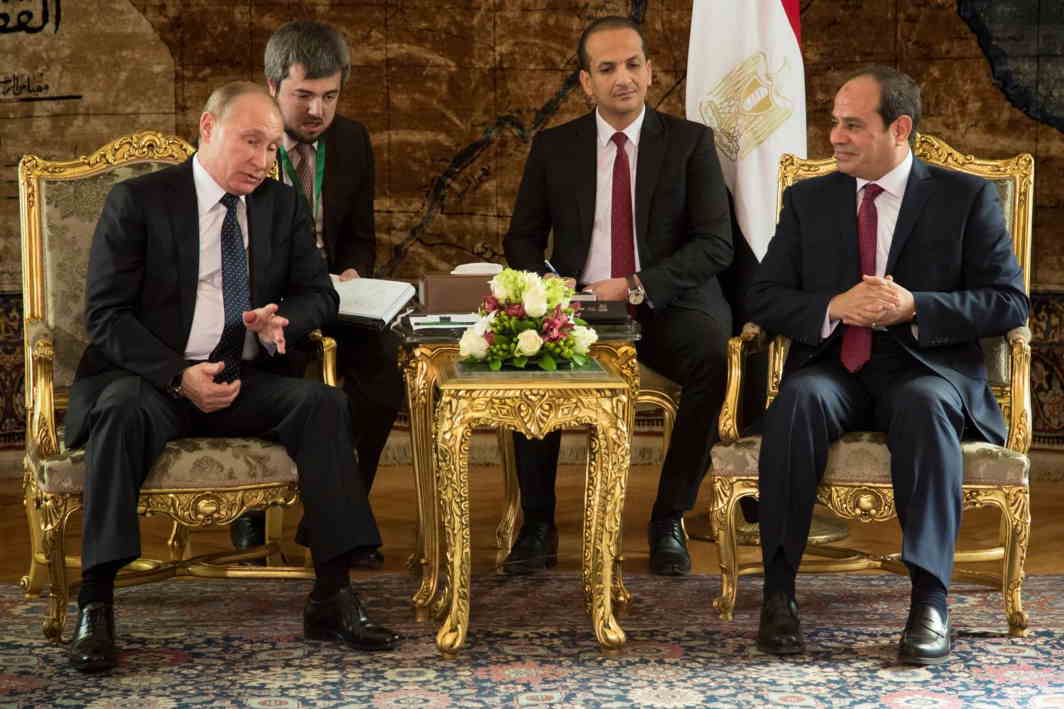
In Egyptian capital Cairo, President Vladimir Putin held talks with his counterpart Abdel Fattah al-Sisi and renewed Russian eagerness to resume work on Dabaa nuclear plant. The Egyptian and Russian ministers signed a $ 21 billion deal to start work on the nuclear plant which was initially agreed upon in 2015.
Earlier, Russian state nuclear company Rosatom had said that Dabaa nuclear station will have four reactors and cost up to $ 21 billion. The project will be completed by 2028-29.
Egypt is the second largest recipient of US military aid after Israel and a strategic US partner in the Middle East as it controls the Suez Canal.
During his Cairo stay, Putin also agreed to resume civilian flights which Moscow halted in 2015 after militants bombed Russian tourist jet killing 224 people on board.
“The Russian security services have reported to me that, on the whole, we are ready for opening the direct air link between Moscow and Cairo. This would require signing a corresponding intergovernmental protocol,” Putin said.
Before visiting Cairo and Ankara, Russian President Vladimir Putin had a short meeting with his Syrian counterpart Basher al-Assad at Khmeimim, a Syrian port used by Russian air force on Monday. He ordered Russian troops to withdraw from the war-torn city.
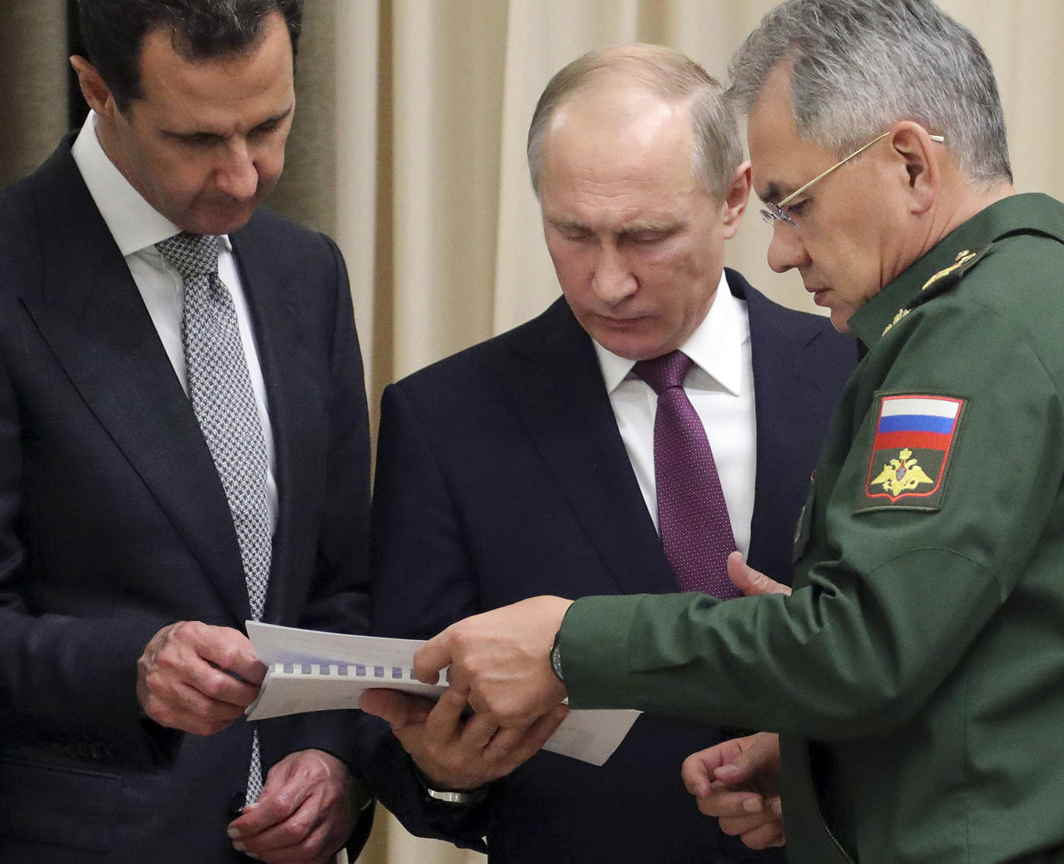
Official SANA news agency said, “Presidents al-Assad and Putin reviewed the military forces at the Khmeimim base in the presence of the Russian Defense Minister and Chief of Staff of the Syrian Arab Army.”
Analysts believe that Putin’s lightning visit to the region highlighted Russia’s expanding ties with key players in the Middle East.
Al Jazeera’s Mohammed Adow, reporting from Ankara, said Putin “has capitalised on the anti-Trump fervor in the region” with his three-leg regional tour.
Marwan Karbalam, another prominent analyst on Middle East affairs has also said Putin’s trip was aimed at “projecting power in the Middle East by visiting two US allies – Egypt and Turkey – who have grown closer to Russia over the past couple of years”.
Karbalam further said that Vladimir “tried to make use of the difficult relationship the US allies are having with their international patron in order to increase his influence”.
Putin has recently announced his intention of seeking a new term in presidential elections next year. Some Russian observers believe that the trip was a final step to convince the Russian public that Vladimir Putin is a strong leader and needs to be re-elected.[/vc_column_text][/vc_column][/vc_row]






Latest world news
Magnitude 7 earthquake strikes Tibet after floods
A magnitude 7 earthquake struck northern Tibet on Thursday, October 22. The tremor came weeks after deadly flash floods and landslides hit the mountainous region near the Nepal-China border. Initial reports did not confirm casualties or damage from the earthquake.


Latest world news
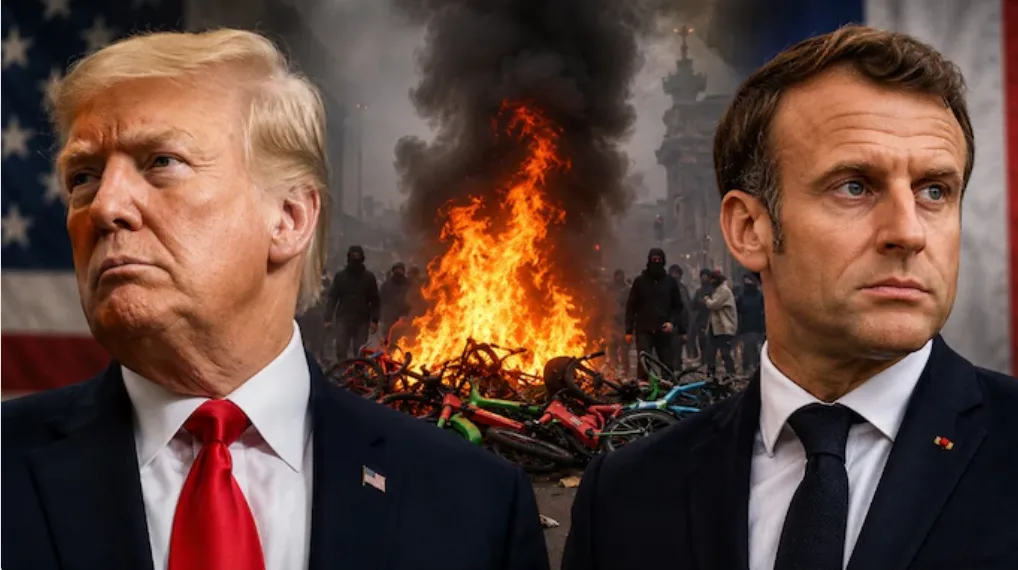
Macron rejects Trump’s immigration claims over France riots
French President Emmanuel Macron criticised Donald Trump and other foreign leaders over their comments on France’s recent unrest. Macron rejected claims that the country was being overrun by migrants and Islamists, calling such assertions false.
Latest world news
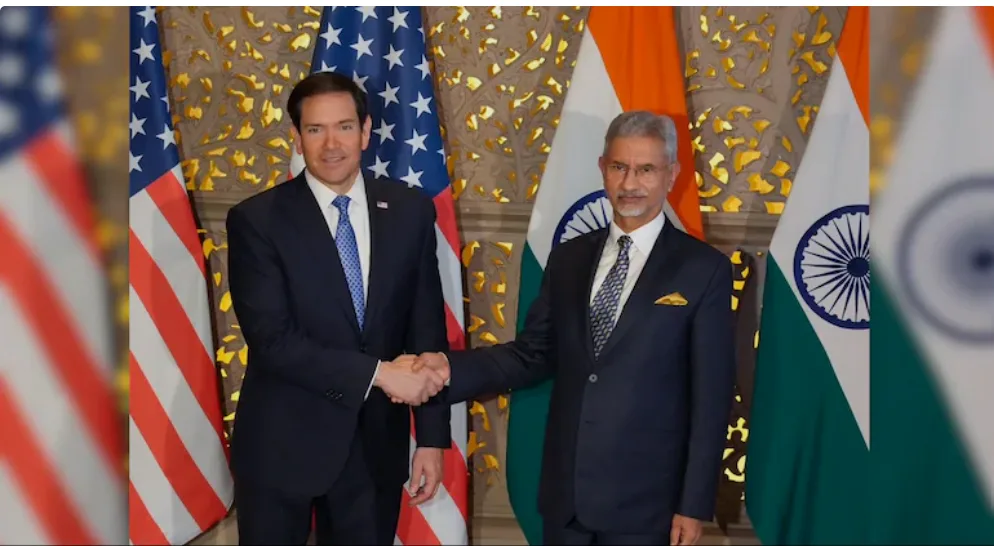
Marco Rubio says India and US share extraordinary alignment on key issues
US Secretary of State Marco Rubio said India and the United States share an extraordinary alignment on core issues, even though disagreements between the two countries may arise.

Punjab strike hits public services as 3 lakh employees and roadways workers protest

Two election commissioners complained against senior poll officer, RTI reveals

Om Prakash Mathur sworn in as Keralam Governor

PM Modi to inaugurate Rs 169-crore RBI data centre in Odisha on October 25

Delhi High Court rejects Neha Bora’s plea against peace bond notice

MEA responds after ITBP chief flags ongoing face-offs with China in Arunachal
Delhi High Court rejects Neha Bora’s plea against peace bond notice
PM Modi to inaugurate Rs 169-crore RBI data centre in Odisha on October 25
Om Prakash Mathur sworn in as Keralam Governor
Two election commissioners complained against senior poll officer, RTI reveals

Afghan Men Try To Hang With The Jet Engine Of The Aircraft in Kabul- Afghanistan News – Kabul News
Trending Top 10 News: 10000 Crore Fine on Flipkart, Apple to Launch Unique Feature, Hdfc Bank Job Ad

Trending Top 10 News: Nokia 6310, Apple sales, Bachpan ka Pyar Video Kid, Dainik Bhaskar IT Raid

Trending Top 10 News: Canada bans Indian flights, Rain in Delhi NCR, AIMIM Twitter hacked, Raj Kundra case

Trending Top 10 News: Shein India, Apple New Service, Pocket Oxygen, Oppo Launched New Phone
-
 India News24 hours ago
Punjab strike hits public services as 3 lakh employees and roadways workers protest
-
 India News23 hours ago
Two election commissioners complained against senior poll officer, RTI reveals
-
 India News12 hours ago
Om Prakash Mathur sworn in as Keralam Governor
-
 India News12 hours ago
PM Modi to inaugurate Rs 169-crore RBI data centre in Odisha on October 25
-
 India News11 hours ago
Delhi High Court rejects Neha Bora’s plea against peace bond notice
-
 India News10 hours ago
MEA responds after ITBP chief flags ongoing face-offs with China in Arunachal
