English हिन्दी
Connect with us

Latest world news

Ukrainian President Zelenskyy says Russia launched 40 missiles overnight

Throughout nearly three years of conflict with Ukraine, Russia has consistently targeted energy infrastructure, particularly during the harsh winter months.

Published

on

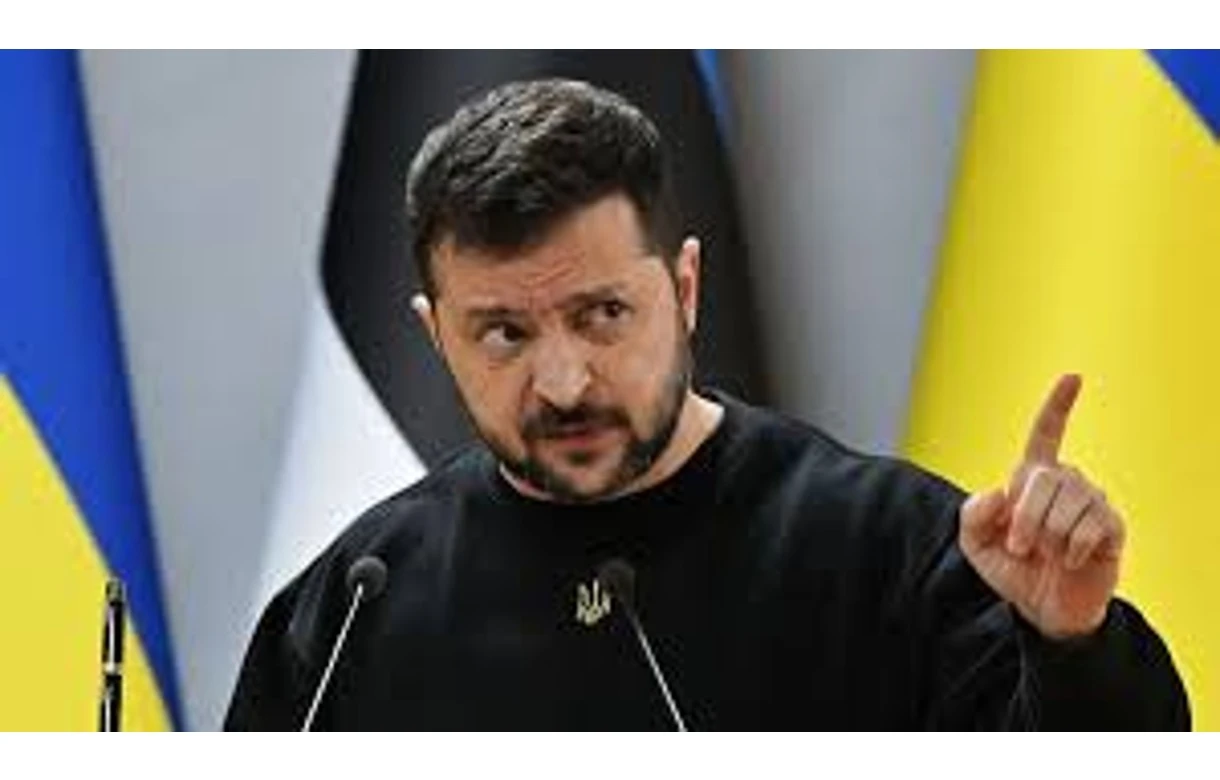
President Volodymyr Zelenskyy said that Russian forces launched over 40 missiles in a morning assault and deployed more than 70 drones overnight.

Ukrainian air defences successfully intercepted 30 missiles and 47 drones, according to the air force. Additionally, 27 drones were accounted for as “lost,” indicating that Kyiv utilized electronic warfare to redirect them.

“This is another massive Russian attack. It’s winter now, and the Russians continue to target our energy infrastructure,” Zelenskyy stated in a social media post on the platform X. “Their objectives included gas and energy facilities vital for sustaining normal life for our people.”

The capital, Kyiv, also faced attacks, with hundreds of residents seeking refuge in underground metro stations, sleeping on yoga mats and sitting on folding chairs alongside their pets.

The governor of Ukraine’s western Lviv region reported damage to two energy facilities in the Drohobych and Stryi districts. In neighbouring Ivano-Frankivsk, the governor noted that air defences were actively repelling Russian strikes on various facilities.

The air force confirmed that gas infrastructure in the Kharkiv region, located in northeastern Ukraine, was also under attack.

In response, the Russian Defense Ministry claimed that its forces targeted Ukrainian energy infrastructure and successfully hit all assigned objectives.

Zelenskyy, who is scheduled to visit neighbouring Poland on Wednesday, reiterated his appeals to Western allies for enhanced support for Ukraine’s air defence systems. “We have discussed obtaining licenses for the production of air defence systems and their missiles, which could provide effective security guarantees for Ukraine. This is both realistic and necessary to implement,” he emphasized.

Amidst the attacks, Ukraine’s national grid operator, Ukrenergo, informed emergency power outages in multiple regions following what it described as a “massive” Russian airstrike on its installations. Affected areas include Kharkiv, Sumy, Poltava, Zaporizhzhia, Dnipropetrovsk, and Kirovohrad.

In a separate statement, Ukrainian Energy Minister Herman Halushchenko indicated that “preventative measures” regarding the country’s energy distribution were also being enacted.

Earlier that morning, authorities issued a nationwide air alert, warning of incoming Russian cruise missiles. The Air Force advised residents of Kryvyi Rig to take cover, stating, “A missile from the south is headed in your direction!” It also warned of a “group of cruise missiles” approaching the capital, Kyiv.

Throughout nearly three years of conflict with Ukraine, Russia has consistently targeted energy infrastructure, particularly during the harsh winter months.

Continue Reading

Latest world news

Israel-Lebanon ceasefire to begin within hours as Trump announces 10-day truce

Israel and Lebanon may begin a 10-day ceasefire within hours after a proposal announced by Donald Trump amid ongoing tensions.

Published

on

Donald Trump

A temporary halt in hostilities between Israel and Lebanon is expected to begin within hours after US President Donald Trump announced a proposed 10-day ceasefire between the two sides, amid ongoing tensions in the region.

According to his statement, the ceasefire is likely to take effect around 5 p.m. Eastern Time, although independent confirmation from both sides is still awaited.

The development follows discussions involving Israeli Prime Minister Benjamin Netanyahu and Lebanese President Joseph Aoun, with mediation efforts led by the United States.

Officials indicated that the proposed truce is aimed at creating a limited window to reduce violence and potentially pave the way for broader diplomatic engagement. The situation along the Israel-Lebanon border has remained tense in recent weeks, with escalation linked to the activities of Hezbollah.

Diplomatic efforts have intensified in recent days, with discussions facilitated by the United States, including the involvement of US Secretary of State Marco Rubio. However, details of the agreement and the extent of coordination between the parties remain unclear.

The situation remains fluid, and the success of the ceasefire will depend on adherence by all sides involved. The conflict has already led to significant humanitarian and geopolitical consequences, including displacement and disruption in affected areas.

While the proposed ceasefire is being seen as an important step toward de-escalation, broader negotiations involving regional stakeholders are expected to be necessary for any lasting resolution.

Continue Reading

Latest world news

US ends oil sanctions waiver for Iran and Russia, impact likely on India’s energy imports

The US decision to end the Iran and Russia oil waiver may impact India’s oil imports, fuel prices and global energy markets.

Published

on

US oil tanker

The United States has decided not to extend a temporary sanctions waiver that allowed limited trade in Iranian and Russian oil, marking a shift towards stricter enforcement of economic restrictions.

The waiver, introduced in March 2026, had permitted the sale of oil already loaded on ships to stabilise global supply during heightened geopolitical tensions. However, it is now set to expire around mid-April without renewal.

US officials have indicated that the move is part of a broader strategy to increase pressure on both Iran and Russia amid ongoing conflicts and geopolitical tensions.

What the waiver did and why it mattered

The short-term waiver allowed millions of barrels of oil—estimated at around 140 million barrels—to enter global markets, helping ease supply shortages and prevent sharp price spikes.

It also enabled countries like India to purchase discounted crude oil from Russia and resume limited imports from Iran after years of restrictions.

Impact on India

India, one of the world’s largest oil importers, is expected to feel the impact of the decision in several ways:

  • Reduced access to discounted oil
    India had been buying cheaper Russian crude and recently resumed Iranian imports under the waiver. Its end may limit these options.
  • Potential rise in fuel costs
    With fewer discounted supplies available, India may need to rely more on costlier sources, which could increase domestic fuel prices.
  • Supply diversification pressure
    India may need to explore alternative suppliers in the Middle East, Africa, or the US to maintain energy security.
  • Geopolitical balancing challenge
    The move adds pressure on India to align with US sanctions while managing its own economic interests.

Global energy market concerns

The end of the waiver comes at a time when global oil markets are already under stress due to conflict in West Asia and disruptions in key routes like the Strait of Hormuz.

Analysts warn that tightening sanctions could:

  • Reduce global oil supply
  • Increase price volatility
  • Intensify competition among major buyers like India and China

Bigger picture

The US decision reflects a broader shift from temporary relief measures to stricter enforcement of sanctions, even if it risks tightening global energy markets.

For India, the development highlights a recurring challenge—balancing affordable energy access with geopolitical realities.

Continue Reading

Latest world news

Sanctioned tanker fails to breach US blockade, turns back near Strait of Hormuz

A US-sanctioned tanker failed to cross the Hormuz blockade and turned back, underscoring rising tensions and disruption in global shipping routes.

Published

on

A US-sanctioned oil tanker failed to break through a newly imposed American naval blockade and was forced to turn back near the Strait of Hormuz, highlighting growing tensions in the region.

The vessel, identified as the Rich Starry, reversed its course after attempting to exit the Gulf, according to shipping data. The development comes just days after the United States enforced restrictions on ships linked to Iranian ports.

The blockade was announced by Donald Trump following the collapse of recent diplomatic talks with Iran. The move aims to restrict maritime traffic associated with Iranian trade.

Officials said that during the first 24 hours of enforcement, no vessel successfully crossed the blockade. Several ships, including the sanctioned tanker, complied with instructions from US forces and turned back toward regional waters.

The tanker is reported to be linked to a Chinese company previously sanctioned for dealing with Iran. It was carrying a cargo of methanol loaded from the United Arab Emirates at the time of the incident.

The situation underscores the rising risks in one of the world’s most critical oil transit routes. The Strait of Hormuz typically handles a significant share of global energy shipments, but traffic has sharply declined due to ongoing geopolitical tensions.

The blockade, which applies specifically to vessels travelling to or from Iranian ports, has added further uncertainty for shipping companies, insurers and global energy markets.

Continue Reading

Trending

© Copyright 2022 APNLIVE.com