
Latest world news
Saudi Arabia Agrees To Pump More Oil to Maintain Balance


[vc_row][vc_column][vc_column_text]Following US suggestion to be ready to produce more oil for filling vacuum after closure of Iranian oil export, Saudi Arabia’s cabinet on Tuesday endorsed the kingdom’s readiness to pump more oil to maintain market balance and stability, the official Saudi Press Agency (SPA) said.
A statement issued after the cabinet meeting chaired by King Salman said, “The kingdom is prepared to utilise its spare production capacity when necessary to deal with any future changes in the levels of supply and demand.”
On Saturday, US President Donald Trump said Saudi Arabia’s King Salman has agreed to his request to increase oil output “maybe up to” two million barrels.[/vc_column_text][vc_raw_html]JTNDYmxvY2txdW90ZSUyMGNsYXNzJTNEJTIydHdpdHRlci10d2VldCUyMiUyMGRhdGEtbGFuZyUzRCUyMmVuJTIyJTNFJTNDcCUyMGxhbmclM0QlMjJlbiUyMiUyMGRpciUzRCUyMmx0ciUyMiUzRUp1c3QlMjBzcG9rZSUyMHRvJTIwS2luZyUyMFNhbG1hbiUyMG9mJTIwU2F1ZGklMjBBcmFiaWElMjBhbmQlMjBleHBsYWluZWQlMjB0byUyMGhpbSUyMHRoYXQlMkMlMjBiZWNhdXNlJTIwb2YlMjB0aGUlMjB0dXJtb2lsJTIwJTI2YW1wJTNCJTIwZGlzZnVuY3Rpb24lMjBpbiUyMElyYW4lMjBhbmQlMjBWZW5lenVlbGElMkMlMjBJJTIwYW0lMjBhc2tpbmclMjB0aGF0JTIwU2F1ZGklMjBBcmFiaWElMjBpbmNyZWFzZSUyMG9pbCUyMHByb2R1Y3Rpb24lMkMlMjBtYXliZSUyMHVwJTIwdG8lMjAyJTJDMDAwJTJDMDAwJTIwYmFycmVscyUyQyUyMHRvJTIwbWFrZSUyMHVwJTIwdGhlJTIwZGlmZmVyZW5jZS4uLlByaWNlcyUyMHRvJTIwaGlnaCUyMSUyMEhlJTIwaGFzJTIwYWdyZWVkJTIxJTNDJTJGcCUzRSUyNm1kYXNoJTNCJTIwRG9uYWxkJTIwSi4lMjBUcnVtcCUyMCUyOCU0MHJlYWxEb25hbGRUcnVtcCUyOSUyMCUzQ2ElMjBocmVmJTNEJTIyaHR0cHMlM0ElMkYlMkZ0d2l0dGVyLmNvbSUyRnJlYWxEb25hbGRUcnVtcCUyRnN0YXR1cyUyRjEwMTMwMjM2MDgwNDA1MTM1MzclM0ZyZWZfc3JjJTNEdHdzcmMlMjU1RXRmdyUyMiUzRUp1bmUlMjAzMCUyQyUyMDIwMTglM0MlMkZhJTNFJTNDJTJGYmxvY2txdW90ZSUzRSUwQSUzQ3NjcmlwdCUyMGFzeW5jJTIwc3JjJTNEJTIyaHR0cHMlM0ElMkYlMkZwbGF0Zm9ybS50d2l0dGVyLmNvbSUyRndpZGdldHMuanMlMjIlMjBjaGFyc2V0JTNEJTIydXRmLTglMjIlM0UlM0MlMkZzY3JpcHQlM0UlMEE=[/vc_raw_html][vc_column_text]Saudi Press Agency reported that both leaders also discussed “efforts by the oil-producing countries to compensate for any potential shortage in supplies.”
Read More: US asks nations to stop Iranian oil import by Nov.4 or face sanctions
Trump’s claim comes after the Organization of the Petroleum Exporting Countries (OPEC), a grouping of oil-producing states that includes Saudi Arabia, already agreed to ramp up production by a million barrels a day at a meeting earlier this month.
According to Organisation of Petroleum Exporting Countries (OPEC), Saudi Arabia produces approximately 10 million barrels of crude per day. The US Energy Information Administration label Saudi Arabia as the world’s top oil exporter and has usually kept at least 1.5 million to two million barrels per day of spare capacity.
The Trump administration has on June 26 asked international community to cut all imports of Iranian oil before November 4, when the US re-imposes sanctions against that country. Trump has withdrew from a 2015 multilateral nuclear deal signed by Iran and P5+1, five permanent members of UNSC plus Germany.
Read More: India under US pressure to cut oil imports from Iran, Govt says exploring all options
Washington has been pressing allies in Europe, Asia and the Middle East, including Saudi Arabia, to adhere to the sanctions, which are aimed at pressuring Iran to negotiate a new agreement to halt its nuclear programmes.

Meanwhile, Iran’s President Hassan Rouhani, has once again on Tuesday, lashed out American officials for threatening to stop Iran’s oil exports, saying they would never be able to carry out such a threat. He made these remarks in Bern in a joint press conference with his Swiss counterpart Alain Berset.
He said, “The US [officials’] statement in this regard is unilateralism…and a breach of all international rules and regulations in energy and trade sectors.” He added that it is “incorrect and unwise” to think that “one day all oil producing countries would export their surplus oil and Iran would be the only country that cannot export its oil.”
Read More: US urge Security Council to punish Iran for malign behaviour
President Rouhani also reaffirmed his country’s stance on Iran nuclear deal known as JCPOA after US withdrawal, saying that Tehran would stay in the deal as long as its interests are preserved.
On Sunday, Iran’s Vice President Eshaq Jahangiri said that the country was considering oil exports by the private sector in a bid to thwart US sanctions. He said, “The target of the US is firstly [to cut down Iran’s] oil [sales]. They want Iran’s oil not to be sold, which is impossible and such measures are taken in line with a psychological war.”[/vc_column_text][/vc_column][/vc_row]






Latest world news
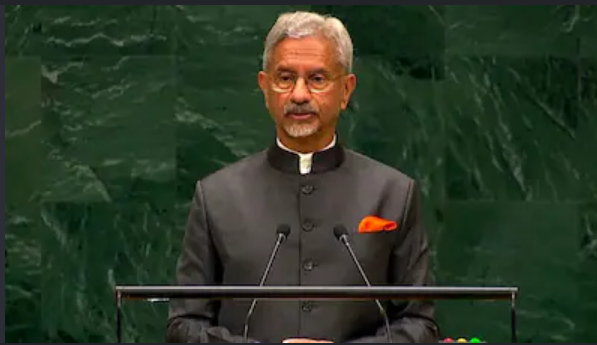
S Jaishankar says India is a natural option for Russia amid Europe tensions
External Affairs Minister S Jaishankar said India remained a natural option for Russia as Moscow increasingly turned towards Asia amid strained relations with Europe. He highlighted the continuity of India-Russia ties and their significance for the balance of power in Asia.


Latest world news
Putin praises PM Modi, says he has very good ideas on Ukraine war
Russian President Vladimir Putin has praised Prime Minister Narendra Modi for repeatedly raising the need to end the Ukraine war, describing his ideas for a settlement as “very good”.

Latest world news
S Jaishankar calls Pakistan a “serial practitioner of terrorism” at UN
S Jaishankar criticised Pakistan at the UN General Assembly, referring to a “serial practitioner of terrorism” and warning against attempts to normalise terrorism.

S Jaishankar says India is a natural option for Russia amid Europe tensions

PM Modi speaks to Mark Carney as India and Canada push to strengthen ties

Rahul Gandhi joins India Gate protest by Ankita Bhandari’s parents

Meerut murder: Muskaan Rastogi and Sahil Shukla get death sentence

Supreme Court questions EC over missing records in Sringeri election dispute
Supreme Court questions EC over missing records in Sringeri election dispute
Rahul Gandhi joins India Gate protest by Ankita Bhandari’s parents
Meerut murder: Muskaan Rastogi and Sahil Shukla get death sentence
PM Modi speaks to Mark Carney as India and Canada push to strengthen ties
S Jaishankar says India is a natural option for Russia amid Europe tensions

Afghan Men Try To Hang With The Jet Engine Of The Aircraft in Kabul- Afghanistan News – Kabul News
Trending Top 10 News: 10000 Crore Fine on Flipkart, Apple to Launch Unique Feature, Hdfc Bank Job Ad

Trending Top 10 News: Nokia 6310, Apple sales, Bachpan ka Pyar Video Kid, Dainik Bhaskar IT Raid

Trending Top 10 News: Canada bans Indian flights, Rain in Delhi NCR, AIMIM Twitter hacked, Raj Kundra case

Trending Top 10 News: Shein India, Apple New Service, Pocket Oxygen, Oppo Launched New Phone
-
 Latest world news24 hours ago
S Jaishankar says India is a natural option for Russia amid Europe tensions
-
 India News24 hours ago
PM Modi speaks to Mark Carney as India and Canada push to strengthen ties
-
 India News12 hours ago
Rahul Gandhi joins India Gate protest by Ankita Bhandari’s parents
-
 India News13 hours ago
Meerut murder: Muskaan Rastogi and Sahil Shukla get death sentence
-
 India News12 hours ago
Supreme Court questions EC over missing records in Sringeri election dispute
