English हिन्दी
Connect with us

Latest world news

Saudi Arabia: Anti Corruption campaign brings huge revenues

Published

on

Saudi Arabia: Anti Corruption campaign brings huge revenues
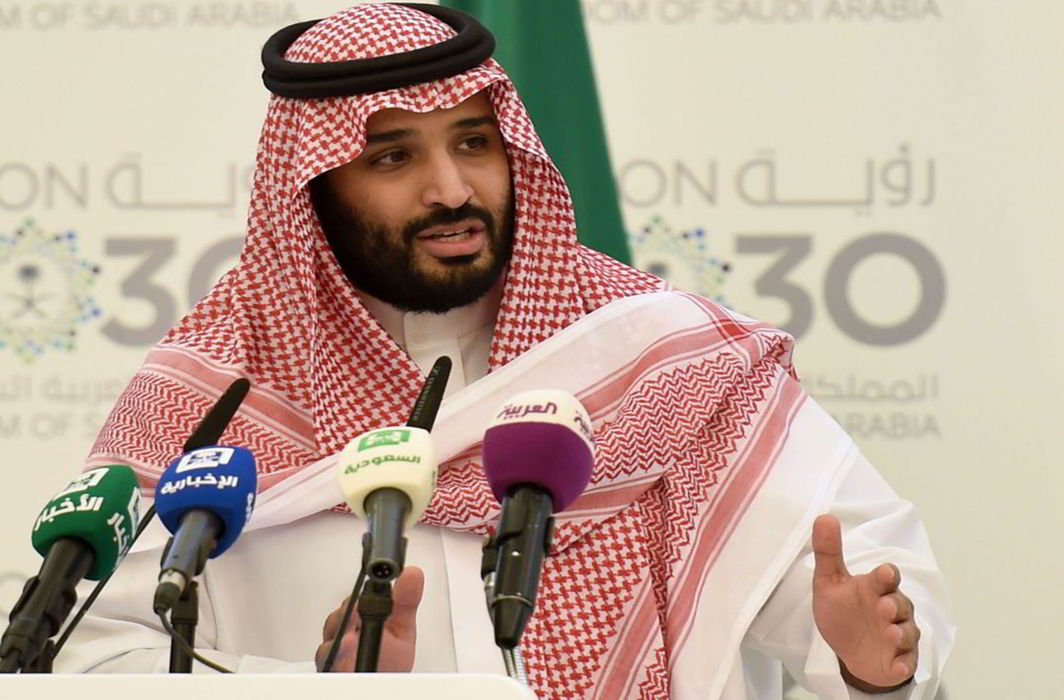
In a swift move, Saudi Arabian authorities have successfully settled anti-corruption charges by levying heavy cost from most of the detained royal family members and former ministers while remaining people may face long prosecution proceedings and imprisonment.

Reuters reports from Riyadh that Saudi Arabia’s public prosecutor said on Tuesday that most of the people detained in anti-corruption campaign have agreed to settlements. The allegations against the detained elite vary from kickbacks, inflating government contracts, extortion and bribery.

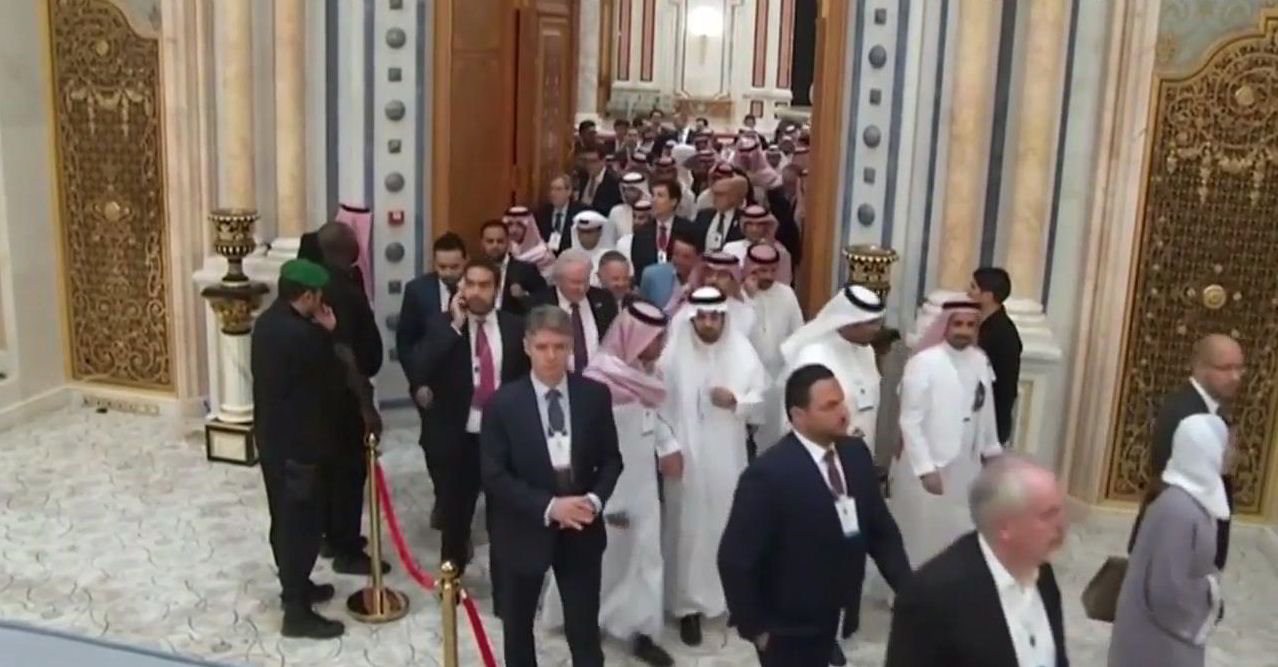
The number of the detainees was disclosed for the first time by the public prosecutor. He said a total of 320 people had been summoned to provide information about alleged graft while 159 remain in detention and “a number” of them have been referred for judicial action.Saudi Arabia: Anti Corruption campaign brings huge revenuesSaudi security forces had recently rounded up large number of political and business elite, including princes, business tycoons and even ministers and held them in a landmark Ritz Carlton hotel in the capital.
Crown Prince Mohammed bin Salman, who is running the country with his high handedness had ordered for the sweeping anti-corruption campaign. However, the authorities have claimed that the business operations of the detained tycoons will continue normally.

Recently a senior government official had disclosed that the arrests was now halted and the government was preparing to channel an estimated $50-$100 billion into economic development of the country.

A senior Prince Miteb bin Abdullah, cousin of Crown Prince Mohammad bin Salman, who was once a leading contender for the throne was being freed after agreeing to pay over $1 billion, officials said. That was the first financial settlements with the detained royals.

According to official sources, the settlement phase will end within a few weeks under the supervision of Crown Prince Mohammad bin Salman. Those who refuse to accept settlement offer are referred to the public prosecutor for investigation and prosecution.

The source clarified, “The Committee has followed internationally applied procedures by negotiating with the detainees and offering them a settlement that will facilitate recouping the State’s funds and assets, and eliminate the need for a prolonged litigation.”

Recently Crown Prince Mohammad bin Salman told New York Times that 95 percent of the detainees have agreed to settle the corruption charges while about one percent of detainees were able to prove their innocence and four percent wanted to go to court.
Latest world news

Canada softens stance on alleged Indian interference ahead of PM Carney’s India visit

Canada appears to ease its earlier allegations of Indian interference as PM Mark Carney heads to India to strengthen trade and strategic ties.
Published

on

Canada appears to be easing its earlier allegations of Indian interference as Prime Minister Mark Carney prepares for a key visit to India aimed at rebuilding commercial and diplomatic ties.

Senior officials in Ottawa indicated that the Canadian government maintains “mature and robust discussions” with the Government of India on concerns related to foreign interference. They also emphasised that Canada has strong safeguards in place to protect its democratic institutions.

According to officials quoted by media, the Prime Minister would likely not be travelling to India if Ottawa believed New Delhi was actively interfering in Canada’s democratic processes. The remarks suggest a noticeable shift from the strong accusations levelled last year.

Officials said there has been sustained engagement with the government of Narendra Modi at multiple levels, including senior officials, ministers and leadership-level interactions. They expressed confidence that the discussions provide a foundation for further constructive dialogue.

At the same time, a senior official reiterated that Canada maintains “no tolerance” for foreign interference in its domestic affairs.

From allegations to engagement

The recent comments contrast with statements made last June by the Canadian Security Intelligence Service (CSIS), which accused India of being among the primary actors involved in foreign interference and espionage activities in Canada.

CSIS had also described alleged links between Indian authorities and the 2023 killing of Hardeep Singh Nijjar in Vancouver as a “significant escalation” in India’s actions against the Khalistan movement.

India firmly rejected those accusations. The dispute triggered a diplomatic standoff, with both countries expelling senior diplomats from Ottawa and New Delhi in a tit-for-tat move.

Carney’s push to rebuild ties

Prime Minister Carney’s visit to India is being positioned as part of a broader Indo-Pacific outreach and a more pragmatic foreign policy approach. His trip will begin in Mumbai before he heads to New Delhi for talks with Prime Minister Modi.

The visit comes as both nations seek to stabilise relations that deteriorated sharply following Canada’s allegations over Nijjar’s killing — claims that New Delhi strongly denied.

Carney’s office has said discussions will centre on expanding cooperation in trade, energy, technology, artificial intelligence, talent mobility, culture and defence.

Growing trade partnership

India is currently Canada’s seventh-largest trading partner in goods and services. Annual bilateral trade exceeds $21 billion, according to Canadian government data.

The two sides had previously agreed to resume negotiations on a proposed free-trade agreement, targeting bilateral trade of $50 billion by 2030.

More than 600 Canadian companies operate in India across sectors such as information technology, banking, health sciences and financial services. Key Indian exports to Canada include pharmaceuticals, gems and jewellery, precious stones and seafood.

Diplomatic ties show signs of recovery

Canada hosts approximately 2.8 million people of Indian origin. Nearly 400,000 Indian students are enrolled in Canadian universities, making them the largest group of international students in the country.

Canada is also home to the largest Sikh population outside India, including some fringe separatist elements advocating for Khalistan.

Relations between the two countries began to improve after Carney assumed office in March 2025, with envoys restored and diplomatic engagement gradually resuming.

The upcoming visit is being viewed as a significant step toward stabilising ties and advancing economic cooperation amid shifting global trade dynamics and uncertainties linked to policies under US President Donald Trump.

Continue Reading

Latest world news

PM Modi reaffirms support for Israel, recalls 26/11 victims in Knesset address

Addressing Israel’s parliament, PM Narendra Modi reaffirmed India’s support for Israel, condemned terrorism, and recalled the 26/11 Mumbai attacks.
Published

on

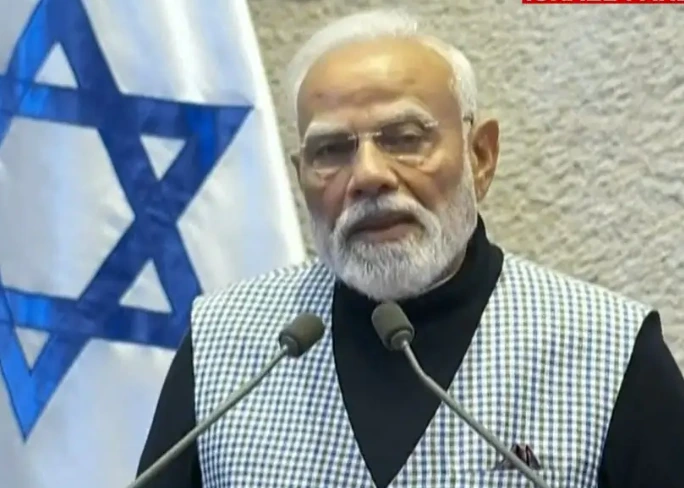
Prime Minister Narendra Modi on Wednesday addressed the Knesset, expressing solidarity with Israel and condemning terrorism, while highlighting the growing partnership between the two nations.

Calling it a rare honour, Mr Modi said he brought greetings from 1.4 billion Indians and described his address as a symbol of the warmth between the two democracies.

Condolences over October 7 attack

The Prime Minister conveyed condolences for the lives lost in the October 7 attack by Hamas. He said India shares Israel’s grief and stands firmly with the country “with full conviction in this moment and beyond”.

“Nothing can justify terrorism,” Mr Modi said, adding that India too has suffered from terror attacks for decades. He recalled the 26/11 Mumbai attacks and the innocent lives lost, including Israeli citizens, and reiterated India’s policy of zero tolerance towards terrorism without double standards.

Reference to Abraham Accords and regional hope

Referring to the Abraham Accords, Mr Modi said India had applauded the vision and courage shown at the time. While noting that the regional situation has since become more challenging, he stressed the importance of sustaining hope for peace.

Historic ties and expanding partnership

The Prime Minister said he was the first Indian Prime Minister to visit Israel nine years ago and expressed happiness at returning. He also noted that he shares his birth date — September 17, 1950 — with the day India formally recognised Israel.

Recalling his earlier visit to Israel as Gujarat Chief Minister in 2006 and his 2017 trip as Prime Minister, Mr Modi said bilateral ties were elevated to a Strategic Partnership during the latter visit. Since then, he added, engagement has broadened across sectors.

He pointed to cooperation in innovation, mentioning the inauguration of the iCreate Technology Business Incubator in 2018 with then Prime Minister Benjamin Netanyahu. The incubator, he said, has since supported nearly 900 start-ups.

Shared civilisational values

Mr Modi said Jewish communities have lived in India without fear of persecution and have preserved their faith while participating fully in society. He described this as a matter of pride.

Highlighting philosophical parallels, he referred to the Israeli concept of “Tikkun Olam”, meaning healing the world, and India’s belief in “Vasudhaiva Kutumbakam”, which sees the world as one family. Both traditions, he said, call for compassion and moral courage beyond immediate boundaries.

He also acknowledged the contribution of Indian caregivers and skilled workers in Israel, noting their courage and dedication, including during the October 7 crisis.

Continue Reading

Latest world news

India eyes Rs 8,000 crore mid-air refuelling aircraft deal as PM Modi begins Israel visit

India and Israel are in talks for a Rs 8,000 crore deal to convert six Boeing 767 jets into mid-air refuelling aircraft for the Indian Air Force.

Published

on

PM Modi

Prime Minister Narendra Modi began his two-day visit to Israel on Wednesday, with a key defence agreement expected to be among the major outcomes of the trip.

According to sources, India and Israel are in advanced negotiations for a deal involving six mid-air refuelling aircraft for the Indian Air Force (IAF). The proposed agreement, estimated at around Rs 8,000 crore, would significantly strengthen India’s aerial refuelling capability.

Under the plan, an Israeli government-owned corporation is expected to collaborate with Hindustan Aeronautics Limited (HAL) to convert six pre-owned Boeing 767 passenger aircraft into military tanker jets for the IAF.

IAF’s long-pending tanker requirement

The Indian Air Force currently operates six ageing Russian-origin IL-78 mid-air refuelling aircraft. Efforts to procure additional tanker aircraft have remained unsuccessful for nearly two decades, leaving the force dependent on its limited fleet and, at times, leased aircraft to meet operational requirements.

If finalised, the new agreement would mark a significant upgrade in India’s aerial refuelling capacity, which plays a crucial role in extending the operational range and endurance of fighter jets and other aircraft.

Sources indicated that negotiations are ongoing, and the agreement is likely to be formalised in 2026.

High-level engagements in Israel

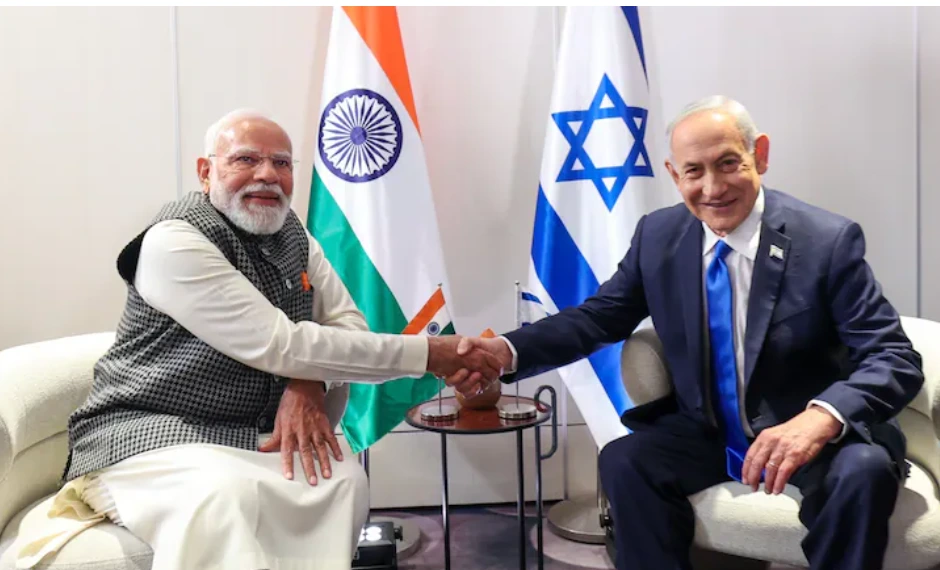
During his visit, Prime Minister Modi is scheduled to hold talks with his Israeli counterpart Benjamin Netanyahu. He will also address the Knesset and interact with members of the Indian diaspora.

In his departure statement, the Prime Minister described India and Israel’s relationship as a robust and multifaceted strategic partnership that has seen remarkable growth. He said he looks forward to discussions aimed at strengthening cooperation in areas such as science and technology, innovation, agriculture, water management, defence and security, trade and investment, and people-to-people ties.

The Prime Minister noted that his address to the Knesset would mark the first time an Indian Prime Minister addresses the Israeli Parliament.

Continue Reading

Trending

© Copyright 2022 APNLIVE.com