
Latest world news
Saudi Arabia hits MSF Cholera center in Yemen


Riyadh denies the allegation, instead allege Houthis for the attack
In yet another Saudi-led coalition act against helpless civilians in Yemen, a cholera treatment center in Abs district in Hajjah governorate was targeted. This was claimed by Doctors without Borders Organization on Monday.
A press release issued by the organization said, “A newly constructed cholera treatment center run by the international medical humanitarian organization doctors Without Borders/Medicins Sans Frontiers (MSF) in Abs, Yemen, was hit by an airstrike Monday at approximately 5.40 am.”
Joao Martins, the head of MSF mission in Yemen said in a statement, “This morning’s attack on an MSF cholera treatment center (CTC) by the Saudi and Emirati-led coalition (SELC) shows complete disrespect for medical facilities and patients. Whether intentional or a result of negligence, it is totally unacceptable.”

He further said,“The compound was clearly marked as a health facility and its coordinates were shared with the SELC. With only half of health facilities in Yemen fully functional, nearly 10 million people in acute need, and an anticipated outbreak of cholera, the CTC had been built to save lives. MSF has temporarily frozen its activities in Abs until the safety of its staff and patients is guaranteed.”
Read More: Yemen’s Houthi condemn Saudi Arabia for hitting Presidential Office
Sana’a based Al-Maseerah TV reports, “It is noteworthy that the US-Saudi aggression bombed facilities supported by Doctors Without Borders and other humanitarian organizations and displaced camps in Yemen, during more than three years of aggression dozens of times.”
The Houthi controlled network further said, “US-Saudi aggression deliberately targets all public, private and infrastructure installations in Yemen without discrimination since 26 March 2015.”
“After every bombardment, Doctors without Borders Organization receives assurances from the parties to the conflict and promises that it will not be repeated,” said Teresa Sankristoval, Director of the MSF Emergency Unit in August 2016.
Read More: Houthi warns: US and Saudi Arabia will regret in Yemen
According to Saudi Arabia’s official Al-Arabiya network, Colonel Turki al-Maliki, the spokesman for the Arab coalition in Yemen has denied that the coalition targeted any medical facility affiliated with Doctors Without Borders on Monday.

Instead, Turki al-Maliki condemned the Houthi threat against relief organisations and voiced the importance of protecting relief workers. He said that the Arab coalition has issued hundreds of decisions hot to strike any targets during relief operations out of concern for relief workers safety”.
The spokesman for the coalition further said that the “legitimate forces in Yemen” are preparing to cut the Houthis’ route of supplies towards Saada”. He also played a video showing the destruction of Houthi capabilities in Yemen including missile launcher in Saada and a factory to manufacture drones in Hajjah and targeting Houthis in Al-Jawf axis.
Read More: Saudi Arabia attacks Yemeni capital airport, target drones
Maliki also condemned Houthis for launching four ballistic missiles towards Saudi Arabia during past two months, adding that one of these missiles fell in Yemen.
Meanwhile, Mohamed Al-Houthi, the head of the Supreme Revolutionary Committee, said on Tuesday that US bears the responsibility of any escalation or threat to Hodeidah port. He said that failure and defeat is the only thing aggression will gain. He said, “If any such adventure happen, we promise, the aggression will only gain failure and defeat, by God willing.”
According to latest reports, the United Nations and the International Committee for the Red Cross withdrew their staff from the besieged Yemeni port city of Hodeidah, fearing that an attack by UAE led forces was imminent.
Read More: Saudi Arabia claims intercepting Yemen’s Houthi missiles
New York Times reports that frantic diplomacy to stave off an attack on the city of 600,000 people and avert a potential humanitarian disaster moved to the UN on Monday, where the Security Council held a closed-door briefing on the situation.
Antonia Guterresm the Secretary General at UN said on Monday, “We are, at the present moment, in intense consultation. There is a lull in the fighting to allow for them, and I hope that it will be possible to avoid a battle for Hudaydah.”
Read More: UN criticise Saudi Arabia for human rights violations in Yemen
There are reports that bipartisan efforts were underway in Washington that Senate should warn UAE, its ally in Yemen (the ousted government based in Riyadh) and Saudi Arabia that a military assault on Al Hudaydah could result in the US cutting off funding for aerial refueling, which has been crucial to the Saudi air campaign in Yemen.






Latest world news
S Jaishankar says India is a natural option for Russia amid Europe tensions
External Affairs Minister S Jaishankar said India remained a natural option for Russia as Moscow increasingly turned towards Asia amid strained relations with Europe. He highlighted the continuity of India-Russia ties and their significance for the balance of power in Asia.


Latest world news
Putin praises PM Modi, says he has very good ideas on Ukraine war
Russian President Vladimir Putin has praised Prime Minister Narendra Modi for repeatedly raising the need to end the Ukraine war, describing his ideas for a settlement as “very good”.

Latest world news
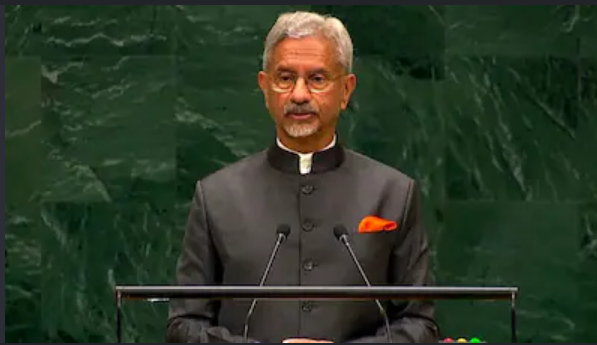
S Jaishankar calls Pakistan a “serial practitioner of terrorism” at UN
S Jaishankar criticised Pakistan at the UN General Assembly, referring to a “serial practitioner of terrorism” and warning against attempts to normalise terrorism.

Supreme Court stays defamation case against Rahul Gandhi over PM Modi remarks

Rahul Gandhi hosts high tea for INDIA bloc after Gyanesh Kumar protests

L Murugan quits Union ministry to strengthen BJP in Tamil Nadu

Amit Shah attacks Rahul Gandhi over Congress poll losses, questions SIR row

BJP focuses on religion as opposition pushes BDM strategy in UP

PM Modi speaks to Mark Carney as India and Canada push to strengthen ties

S Jaishankar says India is a natural option for Russia amid Europe tensions

CJP leaders Saurav Das, Ashutosh Ranka, Ajinkya Shinde sent to 5-day judicial custody
BJP focuses on religion as opposition pushes BDM strategy in UP
L Murugan quits Union ministry to strengthen BJP in Tamil Nadu

Afghan Men Try To Hang With The Jet Engine Of The Aircraft in Kabul- Afghanistan News – Kabul News
Trending Top 10 News: 10000 Crore Fine on Flipkart, Apple to Launch Unique Feature, Hdfc Bank Job Ad

Trending Top 10 News: Nokia 6310, Apple sales, Bachpan ka Pyar Video Kid, Dainik Bhaskar IT Raid

Trending Top 10 News: Canada bans Indian flights, Rain in Delhi NCR, AIMIM Twitter hacked, Raj Kundra case

Trending Top 10 News: Shein India, Apple New Service, Pocket Oxygen, Oppo Launched New Phone
-
 India News22 hours ago
Supreme Court stays defamation case against Rahul Gandhi over PM Modi remarks
-
 India News15 hours ago
Rahul Gandhi hosts high tea for INDIA bloc after Gyanesh Kumar protests
-
 India News14 hours ago
L Murugan quits Union ministry to strengthen BJP in Tamil Nadu
-
 India News14 hours ago
Amit Shah attacks Rahul Gandhi over Congress poll losses, questions SIR row
-
 India News13 hours ago
BJP focuses on religion as opposition pushes BDM strategy in UP
-
 India News2 hours ago
CJP leaders Saurav Das, Ashutosh Ranka, Ajinkya Shinde sent to 5-day judicial custody
-
 Latest world news2 hours ago
S Jaishankar says India is a natural option for Russia amid Europe tensions
-
 India News1 hour ago
PM Modi speaks to Mark Carney as India and Canada push to strengthen ties
