English हिन्दी
Connect with us

Latest world news

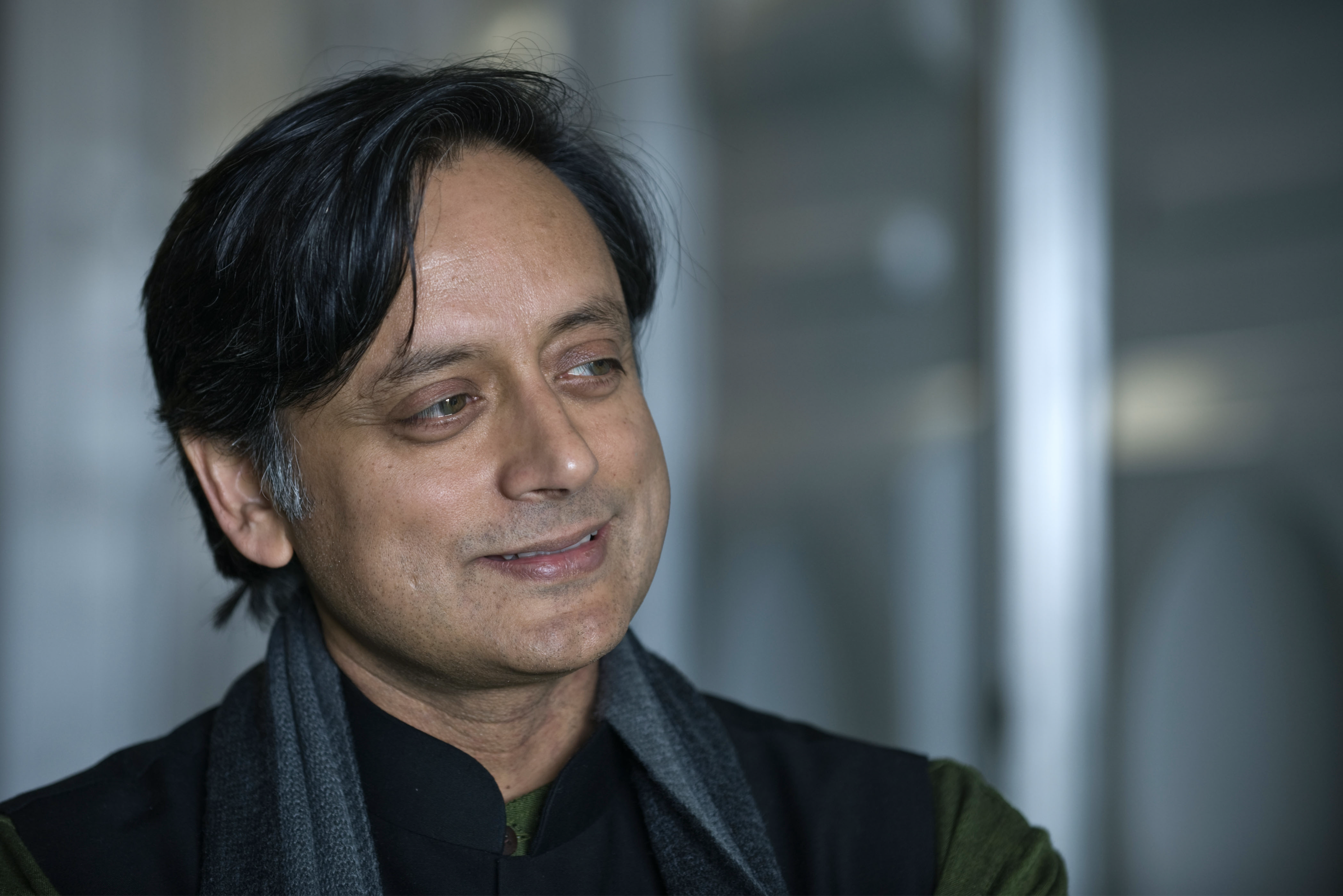
India-Colombia diplomatic friction: Shashi Tharoor rebukes Colombia’s stand on Operation Sindoor

During an official visit to Colombia, Congress MP Shashi Tharoor strongly criticised the country’s condolences to Pakistan after Operation Sindoor, reiterating India’s right to defend against terrorism.

Published

on

Congress MP Shashi Tharoor, currently on an official outreach visit to Colombia, has voiced disappointment over the Colombian government’s message of condolences to Pakistan following India’s Operation Sindoor. The operation, launched in retaliation to the April 22 terror attack in Pahalgam that left 26 civilians dead, has stirred diplomatic ripples as Colombia appeared to sympathise with Pakistan, prompting a sharp reaction from Tharoor.

No moral equivalence between terrorists and defenders, says Tharoor

While addressing the issue, Tharoor made it clear that there can be no comparison between those who sponsor terrorism and those who act in self-defence. “We were a little disappointed in the reaction of the Colombian government, which apparently expressed heartfelt condolences on the loss of lives in Pakistan after the Indian strikes, rather than sympathising with the victims of terrorism,” he said.

Tharoor’s remarks come at a time when India is actively engaging with global powers to consolidate support against cross-border terrorism. The delegation he leads includes parliamentarians from across party lines and was formed to represent India’s unified stand post-Pahalgam.

India stresses global terror impact, cites shared experiences

Drawing parallels with Colombia’s own history of facing insurgency and terror, Tharoor noted, “Just as Colombia has endured many terror attacks, so have we in India. We have endured a very large number of attacks for almost four decades.” He reaffirmed India’s evidence linking the Pahalgam massacre to Pakistan-sponsored groups and defended India’s subsequent response as a legitimate act of self-defence.

Highlighting external factors: Role of China in Pakistan’s militarisation

The Congress MP also pointed to the role of external players in exacerbating regional tensions, specifically citing China’s military support to Pakistan. “China supplies 81 per cent of all Pakistani defence equipment,” he said, adding that a significant part of this arsenal is not used for defence but aggression, implicitly referring to India-Pakistan border hostilities.

India’s diplomatic drive continues

Tharoor and the Indian delegation arrived in Colombia after visiting Panama and Guyana as part of India’s broader diplomatic effort to explain its anti-terror posture to 33 global capitals. In Bogota, the delegation is engaging with lawmakers, ministers, think tanks, and media professionals. This mission is one of seven such multi-party delegations mobilised by India in the wake of the deadly Pahalgam attack.

India’s swift and targeted military actions on May 7 were followed by retaliatory attempts by Pakistan over the next three days. However, hostilities subsided following direct military-level talks between both nations on May 10, leading to a mutual agreement to halt further escalation.

Latest world news

New Delhi free to buy oil from any source, Russia says amid US deal claims

Russia has said India is free to purchase oil from any country, dismissing claims that New Delhi has agreed to stop buying Russian crude under a US trade deal.

Published

on

New Delhi free to buy oil from any source, Russia says amid US deal claims

Russia has said that India is free to purchase crude oil from any country, responding to claims by US President Donald Trump that New Delhi has agreed to stop buying Russian oil as part of a recent trade deal with Washington.

The Kremlin said Russia is not India’s only energy supplier and noted that India has long sourced crude oil from multiple countries. It added that there is nothing new in India’s efforts to diversify its oil imports.

Kremlin spokesperson Dmitry Peskov said that energy experts are well aware that India purchases oil and petroleum products from various global suppliers. He added that Moscow does not see any change in India’s approach to sourcing crude.

No official word from India on halting imports

A day earlier, Peskov said Russia has not received any official statement from India regarding the cessation of Russian oil purchases. Russia’s Foreign Ministry echoed the view, saying the hydrocarbon trade between the two countries remains mutually beneficial.

Foreign Ministry spokesperson Maria Zakharova said India’s purchase of Russian hydrocarbons contributes to stability in the global energy market and that Moscow remains ready to continue close cooperation with New Delhi in the energy sector.

Russian media also noted that, unlike the US president, Prime Minister Narendra Modi has not made any public statement indicating an agreement to stop Russian oil imports.

India’s oil imports from Russia

India has continued to import Russian crude even after the US imposed tariffs on Indian goods. According to global trade data provider Kpler, India has been importing around 1.5 million barrels of Russian crude per day, making it the second-largest buyer of Russian oil and accounting for more than one-third of India’s total crude imports.

India buys about 88 per cent of its crude oil needs from overseas, with roughly one-third sourced from Russia. At its peak, imports from Russia crossed 2 million barrels per day, before falling to around 1.3 million barrels per day in December. The volume is expected to remain broadly stable in the near term.

However, imports declined further to about 1.1 million barrels per day in the first three weeks of January following higher tariffs imposed by the US, including levies linked to purchases of Russian energy.

Complete switch unlikely, experts say

Energy experts believe Indian refiners cannot fully replace Russian crude with American oil. Igor Yushkov of the National Energy Security Fund said US shale oil is lighter in grade, while Russian Urals crude is heavier and contains more sulphur.

He explained that replacing Russian oil would require blending different grades, increasing costs for refiners. He added that the US is unlikely to be able to supply the volume currently exported by Russia to India.

Yushkov also recalled that when Russia redirected its oil exports from Western markets to India in 2022, it reduced production by about one million barrels per day, contributing to a sharp rise in global oil prices and record fuel prices in the US.

Continue Reading

Latest world news

Moscow says no word from India on stopping Russian oil purchases

Russia says it has received no confirmation from India on stopping Russian oil purchases, despite Donald Trump’s claim that the move was part of a new India-US trade deal.

Published

on

Vladimir Putin

The Kremlin on Tuesday said it has not received any official communication from India regarding a halt in Russian oil purchases, following claims by US President Donald Trump that New Delhi had agreed to stop buying Russian crude as part of a trade agreement with Washington.

Kremlin spokesperson Dmitry Peskov told reporters that Moscow had not heard any confirmation from Indian authorities on the matter.

“So far, we haven’t heard any statements from New Delhi on this matter,” Peskov said, responding to Trump’s remarks linking reduced US tariffs on Indian goods to an alleged commitment by India to end Russian oil imports.

Russia stresses importance of ties with India

Peskov said Russia respects bilateral relations between India and the United States but underlined the strategic importance of ties between Moscow and New Delhi.

“We respect bilateral US-Indian relations,” he said, adding that Russia places equal importance on its strategic partnership with India.
“This is the most important thing for us, and we intend to further develop our bilateral relations with Delhi.”

What Trump claimed

Trump announced the India-US trade deal on Monday, stating that tariffs on Indian goods had been reduced from 50 per cent to 18 per cent. He claimed the reduction was linked to India agreeing to stop purchasing Russian oil.

According to Trump, India would instead buy more oil from the United States and potentially from Venezuela. He also suggested that the move would help bring an end to the war in Ukraine.

“He agreed to stop buying Russian oil and to buy much more from the United States and, potentially, Venezuela,” Trump said, referring to Prime Minister Narendra Modi.

India’s reliance on Russian crude

India has emerged as one of the largest buyers of Russian crude since the start of the Ukraine conflict. It currently imports around 1.5 million barrels of Russian oil per day, accounting for more than one-third of its total oil imports, according to global trade data.

India is the second-largest purchaser of Russian crude globally. Even after earlier US tariff measures on Indian goods, New Delhi continued its Russian oil imports, citing energy security concerns.

The Indian government has consistently maintained that securing affordable energy supplies is critical, given the country’s heavy dependence on oil imports.

Shift in energy ties after Ukraine war

Historically, India’s relationship with Russia was centred more on defence cooperation than energy trade, with Russia supplying a majority of India’s military equipment while contributing only a small share of its oil imports.

After the invasion of Ukraine, India significantly increased purchases of discounted Russian oil. The move helped India boost energy supplies while providing Russia with much-needed revenue amid Western sanctions.

As recently as December 2025, Russian President Vladimir Putin said during a visit to New Delhi that Moscow was ready to ensure uninterrupted fuel supplies to India despite pressure from the United States.

Earlier US push for Indian energy imports

Trump had earlier said, following a meeting with Prime Minister Modi in February last year, that India would begin buying more American oil and natural gas. However, those discussions did not lead to a major shift in India’s energy sourcing.

Subsequent US tariff measures also failed to significantly alter India’s stance on Russian oil imports.

Continue Reading

India News

Markets surge as Nifty jumps 750 points after India-US trade deal

Indian equity markets rallied sharply with Nifty and Sensex posting strong gains after the India-US trade agreement announcement.

Published

on

Sensex

The Indian equity markets opened sharply higher on Tuesday morning, buoyed by optimism following the announcement of a trade agreement between India and the United States.

In early trade, the Nifty jumped around 750 points, while the Sensex surged nearly 2,400 points, reflecting strong investor confidence hours after the deal was made public.

The rally came after US President Donald Trump announced that Washington would slash tariffs on Indian goods to 18 per cent from 50 per cent, as part of a broader trade agreement with New Delhi. In return, India agreed to halt purchases of Russian oil and lower trade barriers, according to the announcement.

President Trump shared the development in a post on his social media platform, calling it a major trade breakthrough. The announcement was followed by a message from Prime Minister Narendra Modi, who thanked the US President on behalf of the people of India for the decision.

Rupee opens stronger against dollar

The positive sentiment was also reflected in the currency market. The Indian rupee opened stronger at 90.40 against the US dollar, gaining 1.10 rupees in early trade, supported by expectations of increased foreign investor inflows following the deal.

Asian markets rebound

Asian markets also traded higher, adding to the positive global cues. Japan’s Nikkei rose about 2.5 per cent, recovering from previous losses, while South Korea’s KOSPI climbed nearly 4 per cent. Market sentiment was further supported by signs of improved US factory activity overnight.

Futures indicated a recovery in Hong Kong markets, while S&P 500 futures were up around 0.3 per cent, as investors tracked upcoming corporate earnings.

With global cues turning favourable and optimism surrounding the India-US trade agreement, Indian markets are expected to remain buoyant, with investors closely watching further developments during the trading session.

Continue Reading

Trending

© Copyright 2022 APNLIVE.com