
Latest world news
Syria begins final war against Terrorists in North-West


Amidst preparations for holding Damascus International Fair in the first week of September, Syrian Army has carried out intensive strikes on terrorists’ gatherings in the northern countryside of Hama and the southern countryside of Idlib causing heavy losses to the terrorists and their equipment.
According to official SANA news agency’s reporter in Hama, the army’s artillery bombarded fortified positions of the so called “Jaish al-Ezza” in the area surrounding Maarkaba in the northern countryside of Hama province, killing scores of terrorists.
Read More: Israel fires missiles on Syrian forces near Aleppo
Army’s raids also targeted terrorist groups affiliated to Jabhat al-Nusra on four towns and a number of villages along the south-eastern border of Idlib where large number terrorists were bussed in from Raqqa, Aleppo, Eastern Al-Ghouta, Sweida and other rareas. There are reports that the terrorists were enhancing their sites through digging trenches, building barriers and planting IEDs for protecting themselves from Syrian army.

Read More: Syria captures strategic hill near occupied Golan Heights
SANA reports that a number of terrorists’ fortified positions were destroyed due to the raids in addition to killing and injuring of many terrorists.
Meanwhile in the recently liberated Sweida province, adjacent to Israeli occupied Golan Heights, Syrian Army continued to close in on Daesh (ISIS) terrorists in al-Safa hills area in the eastern badiya (desert) of Sweida, destroying their hideouts and inflicting heavy losses upon them.
Read More: Syria: Terrorists Sent To North under Russian Mediated Agreement
Moreover, Syrian army with the backing of supporting forces, continued its operations in the areas al-Rahba, Tal al-Ghanem, Oum Marzakh, and Qabr al-Sheikh Hussein in the direction of al-Safa hills, closing in on the remaining Daesh terrorists.
Meanwhile, Farah Najjar, Aljazeera journalist writes, “Just weeks after scoring a major military victory in the south, Syrian President Bashar al-Assad appears set to fully open a new, more complex, front in the country’s war – now in its eighth year.”
Najjar further said that “The key north-western Idlib province is the Syrian opposition’s last major bastion in the country. It is currently home to nearly three million people, half of whom are internally displaced, and encloses what was once a major commercial highway linking Syria to Turkey and Jordan.”

Syrian government have been alleging several Arab new networks, including Qatar based Aljazeera and Saudi Arabia based Al-Arabia from the beginning of the war in 2011 for supporting anti-regime forces including Daesh, Jabhat-al-Nusra and others. Obviously, Aljazeera’s “internally displaced opposition” indicates presence of terror groups in Idlib.
Read More: Syria Thanks India, Invites For Rebuilding
Syria is hosting Damascus International Fair from September 5 to 16, where over 30 Indian companies, including infrastructure development, heavy machinery and pharmaceutical industry are participating. Other major participating countries are Russia, Belarus, Lebanon, Iran and Iraq.





Latest world news
S Jaishankar says India is a natural option for Russia amid Europe tensions
External Affairs Minister S Jaishankar said India remained a natural option for Russia as Moscow increasingly turned towards Asia amid strained relations with Europe. He highlighted the continuity of India-Russia ties and their significance for the balance of power in Asia.


Latest world news
Putin praises PM Modi, says he has very good ideas on Ukraine war
Russian President Vladimir Putin has praised Prime Minister Narendra Modi for repeatedly raising the need to end the Ukraine war, describing his ideas for a settlement as “very good”.

Latest world news
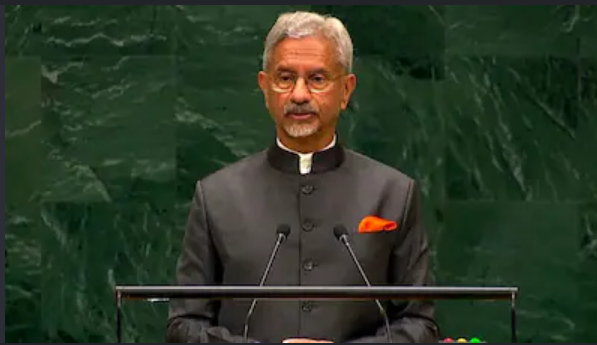
S Jaishankar calls Pakistan a “serial practitioner of terrorism” at UN
S Jaishankar criticised Pakistan at the UN General Assembly, referring to a “serial practitioner of terrorism” and warning against attempts to normalise terrorism.

CJP leaders Saurav Das, Ashutosh Ranka, Ajinkya Shinde sent to 5-day judicial custody

S Jaishankar says India is a natural option for Russia amid Europe tensions

PM Modi speaks to Mark Carney as India and Canada push to strengthen ties

Meerut murder: Muskaan Rastogi and Sahil Shukla get death sentence

Rahul Gandhi joins India Gate protest by Ankita Bhandari’s parents

Supreme Court questions EC over missing records in Sringeri election dispute
Rahul Gandhi joins India Gate protest by Ankita Bhandari’s parents
Meerut murder: Muskaan Rastogi and Sahil Shukla get death sentence
PM Modi speaks to Mark Carney as India and Canada push to strengthen ties
S Jaishankar says India is a natural option for Russia amid Europe tensions

Afghan Men Try To Hang With The Jet Engine Of The Aircraft in Kabul- Afghanistan News – Kabul News
Trending Top 10 News: 10000 Crore Fine on Flipkart, Apple to Launch Unique Feature, Hdfc Bank Job Ad

Trending Top 10 News: Nokia 6310, Apple sales, Bachpan ka Pyar Video Kid, Dainik Bhaskar IT Raid

Trending Top 10 News: Canada bans Indian flights, Rain in Delhi NCR, AIMIM Twitter hacked, Raj Kundra case

Trending Top 10 News: Shein India, Apple New Service, Pocket Oxygen, Oppo Launched New Phone
-
 India News22 hours ago
CJP leaders Saurav Das, Ashutosh Ranka, Ajinkya Shinde sent to 5-day judicial custody
-
 Latest world news22 hours ago
S Jaishankar says India is a natural option for Russia amid Europe tensions
-
 India News21 hours ago
PM Modi speaks to Mark Carney as India and Canada push to strengthen ties
-
 India News11 hours ago
Meerut murder: Muskaan Rastogi and Sahil Shukla get death sentence
-
 India News10 hours ago
Rahul Gandhi joins India Gate protest by Ankita Bhandari’s parents
-
 India News9 hours ago
Supreme Court questions EC over missing records in Sringeri election dispute
