
Latest world news
Syrian rebels attack Turkish and Russian forces


US backed YPG kills seven Trukish soldiers, al-Nusra shoots down Russian Sukhoi fighter
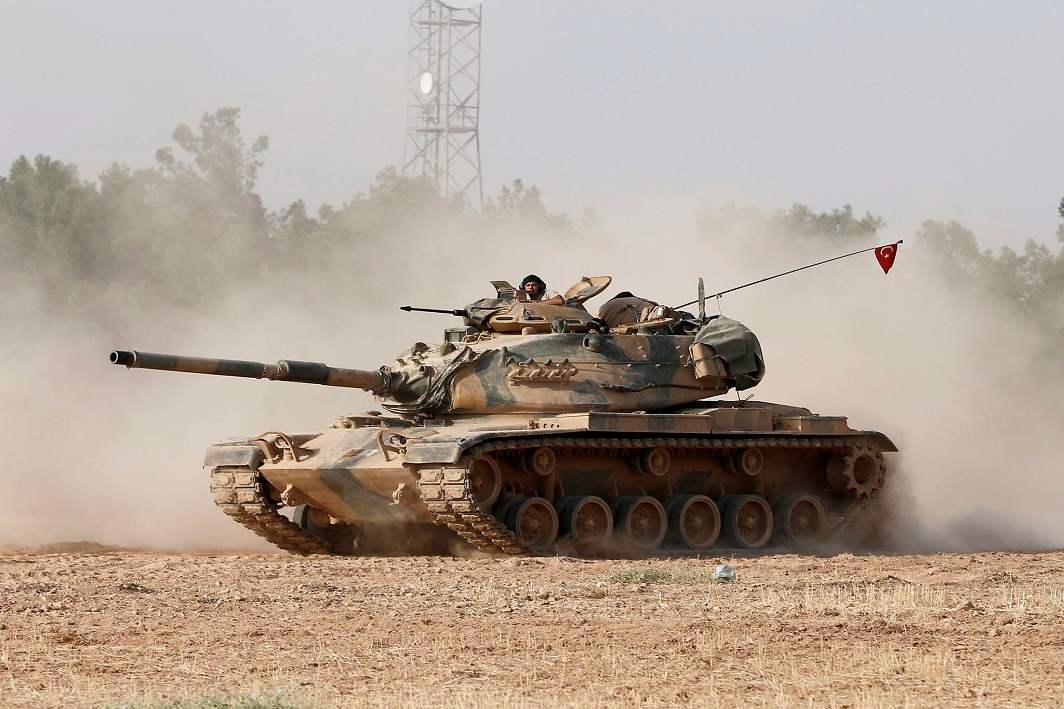
The US supported Syrian militant groups have expedited their attacks against Turkish and Russian forces in the fragile region situated in northern Syria on Saturday. At least seven Turkish soldiers were killed in Afrin province by US-backed YPG militia. Similarly, in a parallel incident Syrian rebels shot down a Russian warplane in Idlib province and killed its pilot who ejected in an attempt to save himself.
According to Turkish Anadolu news agency, five Turkish soldiers were killed when a tank was destroyed by missile in Sheikh Haruz, northeast of Afrin. Saturday proved to be deadliest day for Turkish force since they entered in the Syrian territory in an attempt to drive US backed YPG militia.
Moreover, two other Turkish soldiers were killed in different incidents while fighting against the militia group.
On January 20, Turkey launched “Operation Olive Branch” for ending YPG control of Afrin and the surrounding areas along the border.
The deadly attack on Turkish forces came within days of US President Donald Trump promised his Turkish counterpart Recep Tayyip Erdogan for stopping aid to YPG in a telephonic conversation.
Moreover, Saturday also witnessed Syrian rebels shooting down Russian Sukhoi-25 warplane in Idlib province. The pilot of the ill-fated jet fighter was killed when he landed in Jabhat-al-Nusra controlled area after getting ejected. Russian defense ministry confirmed the incident.
 Aljazeera reports that Hay’et Tahrir al-Sham, also known as Tahrir al-Sham (Liberation Syria) has claimed the responsibility of downing of the aircraft. The group is spearheaded by Jabhat-al-Nusra Front, an ally of Al-Qaeda.
The shooting down of the Russian jet fighter came at a time when Russian and Syrian air force were engaged in air raids on the area. Russian Defense Ministry confirmed the killing of at least 30 people in the raids on Saturday.
Meanwhile, Turkish Foreign Minister, while speaking to Aljazeera in an exclusive interview on Saturday has admitted that there is lack of trust in its ties with US. He flagged US support to YPG Syrian Kurdish separatists having links with PKK Turkish separatist Kurds and adhering to Turkish request to expel Fethullah Gulen, responsible for the 2016 coup d’état against President Recep Tayyip Erdogan.
Recently, the US and Turkey had expressed their differing opinion on the presence of US troops in Manbij. US top defense official was insisting for keeping his forces in the town in the northern Syria while Turkey was demanding their withdrawal for allowing Ankara to push Syrian Kurdish militia YPG who are considered to be associates of Turkish Kurdish PKK militia.






Latest world news
S Jaishankar says India is a natural option for Russia amid Europe tensions
External Affairs Minister S Jaishankar said India remained a natural option for Russia as Moscow increasingly turned towards Asia amid strained relations with Europe. He highlighted the continuity of India-Russia ties and their significance for the balance of power in Asia.


Latest world news
Putin praises PM Modi, says he has very good ideas on Ukraine war
Russian President Vladimir Putin has praised Prime Minister Narendra Modi for repeatedly raising the need to end the Ukraine war, describing his ideas for a settlement as “very good”.

Latest world news
S Jaishankar calls Pakistan a “serial practitioner of terrorism” at UN
S Jaishankar criticised Pakistan at the UN General Assembly, referring to a “serial practitioner of terrorism” and warning against attempts to normalise terrorism.


CJP leaders Saurav Das, Ashutosh Ranka, Ajinkya Shinde sent to 5-day judicial custody

S Jaishankar says India is a natural option for Russia amid Europe tensions

PM Modi speaks to Mark Carney as India and Canada push to strengthen ties

Meerut murder: Muskaan Rastogi and Sahil Shukla get death sentence

Rahul Gandhi joins India Gate protest by Ankita Bhandari’s parents

Supreme Court questions EC over missing records in Sringeri election dispute
Rahul Gandhi joins India Gate protest by Ankita Bhandari’s parents
Meerut murder: Muskaan Rastogi and Sahil Shukla get death sentence
PM Modi speaks to Mark Carney as India and Canada push to strengthen ties
S Jaishankar says India is a natural option for Russia amid Europe tensions

Afghan Men Try To Hang With The Jet Engine Of The Aircraft in Kabul- Afghanistan News – Kabul News
Trending Top 10 News: 10000 Crore Fine on Flipkart, Apple to Launch Unique Feature, Hdfc Bank Job Ad

Trending Top 10 News: Nokia 6310, Apple sales, Bachpan ka Pyar Video Kid, Dainik Bhaskar IT Raid

Trending Top 10 News: Canada bans Indian flights, Rain in Delhi NCR, AIMIM Twitter hacked, Raj Kundra case

Trending Top 10 News: Shein India, Apple New Service, Pocket Oxygen, Oppo Launched New Phone
-
 India News22 hours ago
CJP leaders Saurav Das, Ashutosh Ranka, Ajinkya Shinde sent to 5-day judicial custody
-
 Latest world news22 hours ago
S Jaishankar says India is a natural option for Russia amid Europe tensions
-
 India News22 hours ago
PM Modi speaks to Mark Carney as India and Canada push to strengthen ties
-
 India News11 hours ago
Meerut murder: Muskaan Rastogi and Sahil Shukla get death sentence
-
 India News10 hours ago
Rahul Gandhi joins India Gate protest by Ankita Bhandari’s parents
-
 India News10 hours ago
Supreme Court questions EC over missing records in Sringeri election dispute
