
Latest world news
UN condemns “excessive” Israeli force against Palestinians


The UN General Assembly has condemned Israel for excessive use of force against Palestinian civilians, in a resolution adopted by a strong majority of 120 countries on Wednesday.
According to reports, the 193-member world body rejected the United States’ efforts to blame Gaza’s Hamas rulers for the violence that has killed over 120 Palestinians in the past two and half months. The resolution deplores Israel’s use of “excessive, disproportionate and indiscriminate force” against Palestinians.
Presented by Algeria and Turkey on behalf of Arab and Muslim countries, the measure won a decisive 120 votes, with eight votes against and 45 abstentions. The UNGA resolutions are not legally binding but carry political weight.
The resolution, which came weeks after US vetoed a similar resolution at UNSC, was opposed by Israel, US, Australia, the Marshall Islands, Micronesia, Nauru, Solomon Islands and Togo.
According to Aljazeera, at least 129 Palestinians have been killed by Israeli forces in Gaza border protests since March 30 to commemorate 70 years since the Nakba (or Catastrophe), when about 750,000 Palestinians were driven out from their homes. The protests are part of the “Right to return” campaign.
 May 14, the day when US moved its embassy from Tel Aviv to Jerusalem, witnessed the largest number of deaths. Palestinians and their supporters said most protesters were unarmed civilians and Israel used excessive force against them.
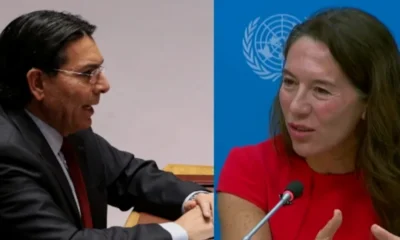
Palestinian UN envoy Riyad Mansour told the General Assembly before the vote,”We need protection of our civilian population,” and the resolution was “intended to contribute to a de-escalation of the volatile situation. We cannot remain silent in the face of the most violent crimes and human rights violations being systematically perpetrated against our people.”
Israel claims that many of the Palestinian protesters were armed and that the Israeli army was defending itself against attacks on the border fence with Gaza. US has maintained Israel’s right to defend itself.
The UN General Assembly resolution also asked UN chief Antonio Guterres to report back within 60 days on proposals “on ways and means for ensuring the safety, protection and well-being of the Palestinian civilian population under Israeli occupation, including … recommendations regarding an international protection mechanism.”
Meanwhile, the US Ambassador Nikki Haley has dismissed the resolution as “one-sided” and accused Arab countries of trying to score political points at home by seeking to condemn Israel at the United Nations. “For some, attacking Israel is their favourite political sport. That’s why we are here today,” Haley told the Assembly.
An amendment presented by the US that condemned Hamas for “inciting violence” along the border with Gaza failed to garner the two-thirds majority needed for adoption.
In December last year 128 countries defied US President Donald Trump and voted in favour of a UN General Assembly resolution calling for the US to drop its recognition of Jerusalem as Israel’s capital. Several protests took place in various countries opposing US decision to recognize Jerusalem as Israel’s capital and relocation of its embassy to the holy city.






Latest world news
S Jaishankar says India is a natural option for Russia amid Europe tensions
External Affairs Minister S Jaishankar said India remained a natural option for Russia as Moscow increasingly turned towards Asia amid strained relations with Europe. He highlighted the continuity of India-Russia ties and their significance for the balance of power in Asia.


Latest world news
Putin praises PM Modi, says he has very good ideas on Ukraine war
Russian President Vladimir Putin has praised Prime Minister Narendra Modi for repeatedly raising the need to end the Ukraine war, describing his ideas for a settlement as “very good”.

Latest world news
S Jaishankar calls Pakistan a “serial practitioner of terrorism” at UN
S Jaishankar criticised Pakistan at the UN General Assembly, referring to a “serial practitioner of terrorism” and warning against attempts to normalise terrorism.

Meerut murder: Muskaan Rastogi and Sahil Shukla get death sentence

Rahul Gandhi joins India Gate protest by Ankita Bhandari’s parents

Supreme Court questions EC over missing records in Sringeri election dispute

Dhruv Rathee gets fresh summons in 2018 BJP IT cell video case

Nobody can browbeat judiciary, Chief Justice warns over Rahul Gandhi’s march
Nobody can browbeat judiciary, Chief Justice warns over Rahul Gandhi’s march
Dhruv Rathee gets fresh summons in 2018 BJP IT cell video case
Supreme Court questions EC over missing records in Sringeri election dispute
Rahul Gandhi joins India Gate protest by Ankita Bhandari’s parents
Meerut murder: Muskaan Rastogi and Sahil Shukla get death sentence

Afghan Men Try To Hang With The Jet Engine Of The Aircraft in Kabul- Afghanistan News – Kabul News
Trending Top 10 News: 10000 Crore Fine on Flipkart, Apple to Launch Unique Feature, Hdfc Bank Job Ad

Trending Top 10 News: Nokia 6310, Apple sales, Bachpan ka Pyar Video Kid, Dainik Bhaskar IT Raid

Trending Top 10 News: Canada bans Indian flights, Rain in Delhi NCR, AIMIM Twitter hacked, Raj Kundra case

Trending Top 10 News: Shein India, Apple New Service, Pocket Oxygen, Oppo Launched New Phone
-
 India News17 hours ago
Meerut murder: Muskaan Rastogi and Sahil Shukla get death sentence
-
 India News16 hours ago
Rahul Gandhi joins India Gate protest by Ankita Bhandari’s parents
-
 India News16 hours ago
Supreme Court questions EC over missing records in Sringeri election dispute
-
 India News3 hours ago
Dhruv Rathee gets fresh summons in 2018 BJP IT cell video case
-
 India News13 mins ago
Nobody can browbeat judiciary, Chief Justice warns over Rahul Gandhi’s march
