English हिन्दी
Connect with us

India News

US Asks India to Assist Save Afghan Borders

Published

on

[vc_row][vc_column][vc_column_text]India likely to send troops to Kabul, say experts

By: Abu Turab

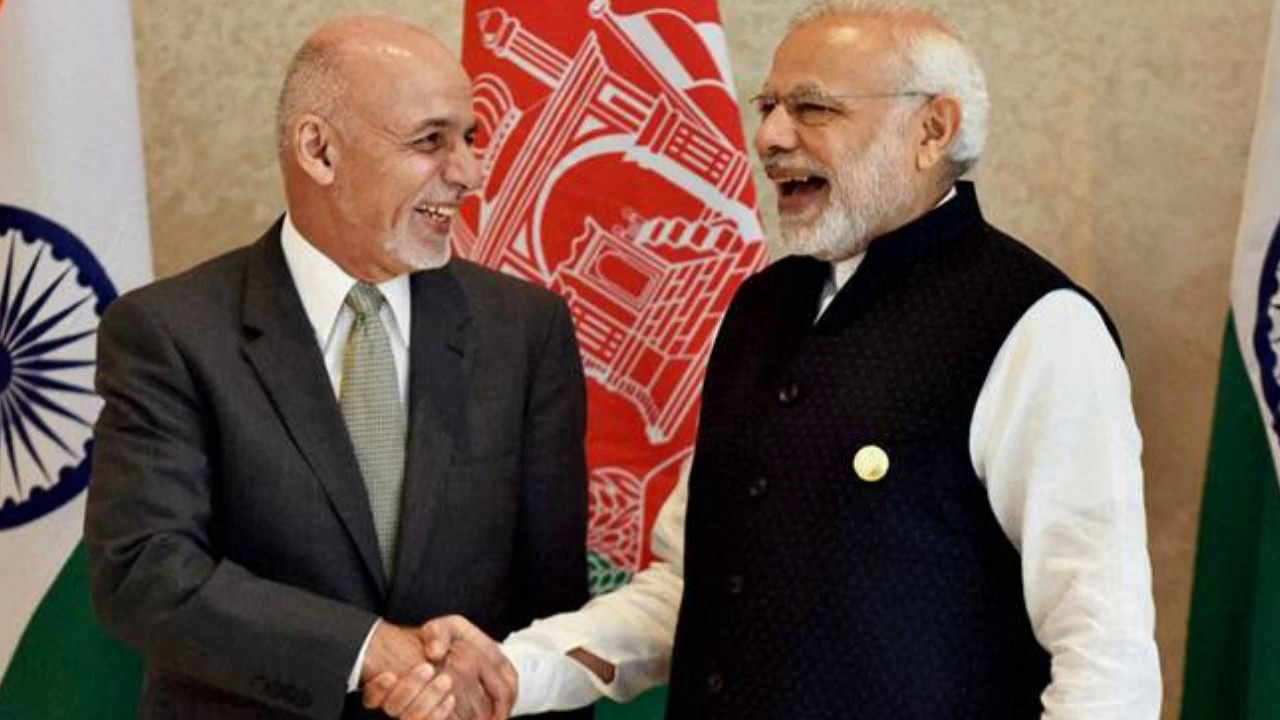
The India-US ties have been growing rapidly in the post Modi-Trump recent summit at White House. A powerful US Congressional committee has recommended that India, a regional major defense partner, is well suited to assist Kabul in its border security and New Delhi can work on trilateral basis.

The report attached with the National Defense Authorization Act (NDAA) 2018, the all powerful Senate Armed Service Committee said, “The committee also believes that timely actions by the Indian government to fill identified needs in Afghanistan would significantly benefit the short- and long-term security and stability of the region.”

According to reports from Washington, the Senate Committee headed by Senator John McCain said that US should leverage the capabilities of allies and partners to more effectively secure regional stability and security. “The committee believes that the US needs to recommit to the fight in Afghanistan and that India, as a major defense partner of the US and a contributor to regional security, has a critical role to play in this effort,” it said.

On last Friday, the US House of Representatives had passed a 621.5 billion dollar defense expenditure bill to advance cooperation with India. On the other hand, the House voted three legislative amendments to impose tougher conditions for reimbursement of 400 million dollars defense funding to Pakistan and made it conditional for “satisfactory progress” in fight against terrorism.

The Trump Administration and Pentagon has praised India’s present role in Afghanistan.

In February this year, General John W Nicholson, Commander of US Forces in Afghanistan had testified before the committee and appreciated India’s current role in that country. He said, “With over USD 2.0 billion development aid executed since 2002, and another USD 1.0 billion pledged in 2016, India’s significant investments in Afghan infrastructure, engineering, training, and humanitarian issues will help develop Afghan human capital and long-term stability”.

The Senate committee noted that General Nicholson highlighted the significant short-term material and training needs within the Afghan Air Force (AAF), and has personally urged India for its urgent support.

“This assistance could include logistical support; joint training; combined military planning; threat analysis; intelligence, materiel, and maintenance support for Afghan National Defense and Security Forces for humanitarian assistance, disaster relief, security assistance, and any other areas deemed appropriate,”  the Senate committee said.

On June 25, Business Line, quoted top official source in New Delhi saying, “The US is keen to see India playing a greater role in its commitment towards counter-terrorism and as a result it may be asked to play a more meaningful role in stabilizing Afghanistan by sending its men to fight the elements of terrorism there.”

The daily further quoted Nandan Unnikrishnan, the Vice President of New Delhi based Observer Research Foundation (ORF), a foreign policy think-tank saying, “Trump may tell India to put the boots on the ground now in Afghanistan. With India’s usual complaints of cross-border terrorism, US may like to see India contributing more militarily. The rise of Taliban in Afghanistan in today’s world is more of a concern for India than the US.”

India and Afghanistan had signed Strategic Partnership Agreement (SPA) in 2011. In December 2016, Prime Minister Narendra Modi visited Kabul and inaugurated the newly built Afghan Parliament with Indian assistance. He also gifted four Mi25 Attack helicopters to AAF. In year 2014-15 bilateral trade between the two countries stood at $ 684 million.

About two weeks ago, there were media reports emanating from Washington, Kabul and Islamabad that New Delhi may send 15,000 troops to Afghanistan.

This is not the first time when US is recommending more active role for Indian forces in US led operations overseas. In 2003, US had asked India to send its troops after the fall of Saddam Hussein regime in Iraq for stabilizing the situation. At that time Atal Bihari Vajpayee’s government had politely turned down the request.

Afghanistan has been witnessing trouble on its border with Pakistan. Tora Bora Mountains, where Osama bin Laden had reportedly remained absconding for years is situated in the same region. It is locally known as Spin Ghar which constitutes a cave complex, used by Al-Qaeda and Taliban for shelter.[/vc_column_text][/vc_column][/vc_row]

India News

Amit Shah counters delimitation concerns, says southern states to gain Lok Sabha seats

Amit Shah assures Parliament that southern states will gain Lok Sabha seats after delimitation, countering opposition criticism during the women’s reservation debate.

Published

on

Amit Shah

Union Home Minister Amit Shah on Thursday addressed concerns over the proposed delimitation exercise, asserting in the Lok Sabha that southern states will not lose representation but instead see an increase in their number of seats.

His remarks came during a heated debate linked to the implementation of women’s reservation, where opposition parties have raised fears that population-based delimitation could reduce the political weight of southern states.

Shah rejected these claims, calling them misleading, and said the proposed framework ensures fairness while expanding the overall strength of the Lok Sabha.

Seat count to rise with expansion of Lok Sabha

The government has indicated that the total number of Lok Sabha seats could increase significantly as part of the delimitation process. In this expanded House, the combined representation of southern states is expected to rise from 129 seats at present to around 195 seats.

Shah emphasised that no state will lose seats in absolute terms, and the exercise is designed to reflect population changes while maintaining balance across regions.

State-wise projections shared in Parliament

During his address, Shah also provided indicative figures for individual southern states, suggesting notable increases in representation. According to the projections:

  • Tamil Nadu could see its seats rise substantially
  • Kerala, Telangana, and Andhra Pradesh are also expected to gain additional seats
  • Karnataka’s representation may increase as well

These figures were presented to counter the argument that delimitation would disproportionately favour northern states.

Political debate intensifies over linkage with women’s quota

The delimitation exercise has been closely linked to the rollout of women’s reservation, which proposes one-third seats for women in Parliament and state assemblies.

Opposition leaders have questioned this linkage, arguing that tying reservation to delimitation could delay its implementation and raise federal concerns. Some leaders have also warned that the move could impact national unity if apprehensions among states are not addressed.

The government, however, maintains that the reforms are necessary to ensure equitable representation and to align the electoral system with demographic realities.

Centre dismisses ‘false narrative’ on southern states

Shah reiterated that concerns about southern states losing influence are unfounded. He said the delimitation process will increase representation across regions and described the criticism as a “false narrative” aimed at creating confusion.

The issue is expected to remain a key flashpoint as Parliament continues discussions on the women’s reservation framework and related legislative changes.

Continue Reading

India News

PM Modi assures no discrimination in women’s quota, delimitation debate intensifies in Parliament

PM Narendra Modi has assured that women’s reservation will be implemented without discrimination, amid a heated debate over delimitation in Parliament.

Published

on

PM modi

Prime Minister Narendra Modi has assured that there will be no discrimination in the implementation of women’s reservation, as Parliament witnessed a sharp debate over the proposed linkage between the quota and delimitation exercise.

During the ongoing special session, the government reiterated its commitment to ensuring fair representation while addressing concerns raised by opposition parties regarding the timing and structure of the legislation.

The proposed framework aims to reserve 33 percent of seats for women in the Lok Sabha and state assemblies. However, its implementation is tied to a fresh delimitation exercise, which is expected after the next census.

Opposition questions timing and intent

Opposition leaders have raised concerns that linking the women’s quota to delimitation could delay its implementation. They argue that the process of redrawing constituencies may push the actual rollout further into the future.

The issue has triggered a broader political confrontation, with multiple parties questioning whether the move could alter representation across states.

Some critics have also alleged that the delimitation exercise could disproportionately benefit certain regions based on population, a charge the government has rejected.

Government reiterates commitment to fair implementation

Responding to these concerns, the Centre has maintained that the reforms are necessary to ensure accurate and updated representation based on population data.

Leaders from the ruling side have repeatedly emphasized that the process will be carried out transparently and without bias. The assurance that there will be “no discrimination” is aimed at addressing fears among states and opposition parties.

The debate marks a key moment in Parliament, with both sides engaging in intense exchanges over one of the most significant electoral reforms in recent years.

Continue Reading

India News

Give all tickets to Muslim women, Amit Shah says, attacking Akhilesh Yadav on sub-quota demand

A sharp exchange between Amit Shah and Akhilesh Yadav in Parliament over sub-quota for Muslim women highlights key divisions on women’s reservation implementation.

Published

on

A heated exchange broke out in Parliament during discussions on the women’s reservation framework, with Union Home Minister Amit Shah and Samajwadi Party chief Akhilesh Yadav locking horns over the demand for a sub-quota for Muslim women.

The debate unfolded as the government pushed forward key legislative measures to implement 33% reservation for women in the Lok Sabha and state assemblies.

Akhilesh Yadav argued that the proposed reservation must ensure representation for women from marginalised communities, including Other Backward Classes (OBCs) and Muslim women. He said that without such provisions, large sections could remain excluded from political participation.

He also questioned the timing of the bill, alleging that the Centre was avoiding a caste census. According to him, a census would lead to renewed demands for caste-based reservations, which the government is reluctant to address.

Government rejects religion-based quota

Responding to the demand, Amit Shah made it clear that reservation based on religion is not permitted under the Constitution.

He stated that any proposal to provide quota to Muslims on religious grounds would be unconstitutional, firmly rejecting the idea of a separate sub-quota for Muslim women within the broader reservation framework.

The government has maintained that the existing framework already includes provisions for Scheduled Castes (SC) and Scheduled Tribes (ST) women within the overall reservation structure.

Wider political divide over implementation

The issue of sub-categorisation within the women’s quota has emerged as a major flashpoint, even as most opposition parties broadly support the idea of women’s reservation.

Samajwadi Party leaders reiterated that their support for the bill depends on inclusion of OBC and minority women, while the government continues to defend its constitutional position.

The debate is part of a broader discussion during the special Parliament session, where multiple bills linked to delimitation and implementation of the women’s quota are being taken up.

Continue Reading

Trending

© Copyright 2022 APNLIVE.com