
Latest world news
US designates three Pakistanis as global terrorists


Pak military top brass assures US for cooperation, discuss India’s “ceasefire violations”
Exerting further pressure on Pakistan, US administration has named three Pakistani nationals as designated global terrorists for their facilitators’ role by working closely with Shaykh Aminullah, considered to be a known supporter of Al Qaeda, Lashkar-e-Taiba (LeT) and Taliban.
According to Dawn report from Washington, the US Treasury, on Wednesday, placed Rahman Zeb Faqir Muhammad, Hizb Ullah Astam Khan and Dilawar Khan Nadir Khan on its blacklist of “Specially Designated Global Terrorists” for facilitating the terrorists. The move is aimed to disrupt the group’s ability to obtain and distribute finances for the terrorist organisations.
Shaykh Aminullah, has been on international terror blacklists since 2009. US officials allege that he turned the Ganj seminary in Peshawar into training and recruiting base for Al Qaeda, the Taliban and LeT.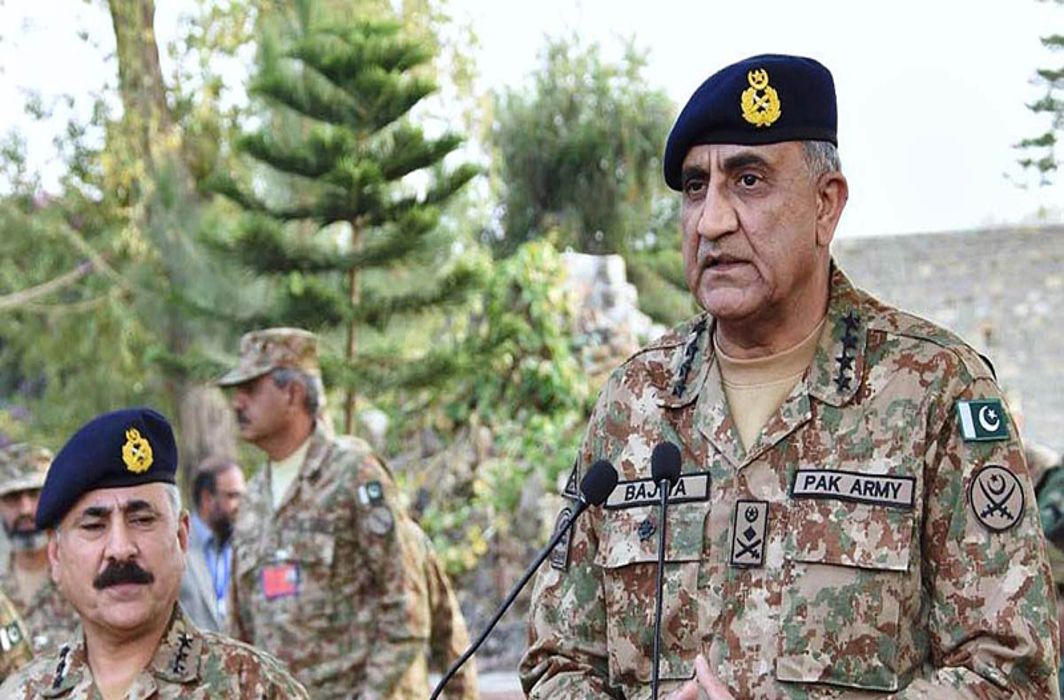
The US Treasury says that the three Pakistani nationals were involved in providing financial and logistical support, supplying explosives and technological aid to the three extremist groups based in Pakistan and Afghanistan.
According to the US officials, Rahman Zeb had been responsible for raising funds and materials for Lashkar-e-Taiba (LeT) in the Gulf region and helped Shaykh Aminullah to travel to that region in 2014.
Another designated terrorist Hizb Ullah was involved in Shaykh Aminullah’s seminary and helped him on various trips to the Gulf while Dilawar arranged Shaykh Aminullah’s travel around Pakistan and handled his correspondence and financial transactions.
Hafiz Saeed, the head of banned Jamaat-ud-Dawa (JuD) carries a bounty of USD 10 million for his terrorist activities. He was released from his house arrest in November last year by Lahore High Court. Saeed, the mastermind of Mumbai terror attacks 2008, is a designated terrorist by UN and US administration.
Meanwhile, another report from Islamabad says that on Wednesday, Pakistan military’s top brass, who participated at monthly Corps Commanders’ Conference in Rawalpindi, has signalled for cooperation with US and re-assured the countrymen of not compromising on the national interest.
According to Inter Services Public Relations (ISPR) readout, the military officials reviewed “geo-strategic and security environment” in the context of US policy towards the region. They also reviewed Operation Raddul Fasaad and increased “Indian Cease Fire Violations (CFV’s) were also discussed.”
The Operation Raddul Fasaad was launched on February 22 last year by Pakistan military in support of local law enforcement agencies “to disarm and eliminate the hidden sleeper cells across the country”.
The Corps Commanders’ Conference reiterated that “gains of year long counter terrorism efforts shall be consolidated to achieve enduring peace and stability both for Pakistan and the region”. It further said that “Indian CFVs are detrimental to peace, however, these of any Indian misadventure shall be responded effectively.”
Army Chief Gen Qamar Bajwa, who chaired the corps commanders meeting said, “National interest shall be kept at premium while cooperating with all other stakeholders for regional peace and stability.”







Latest world news
S Jaishankar says India is a natural option for Russia amid Europe tensions
External Affairs Minister S Jaishankar said India remained a natural option for Russia as Moscow increasingly turned towards Asia amid strained relations with Europe. He highlighted the continuity of India-Russia ties and their significance for the balance of power in Asia.


Latest world news
Putin praises PM Modi, says he has very good ideas on Ukraine war
Russian President Vladimir Putin has praised Prime Minister Narendra Modi for repeatedly raising the need to end the Ukraine war, describing his ideas for a settlement as “very good”.

Latest world news
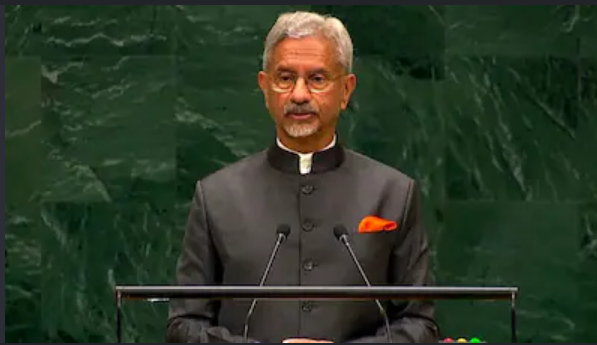
S Jaishankar calls Pakistan a “serial practitioner of terrorism” at UN
S Jaishankar criticised Pakistan at the UN General Assembly, referring to a “serial practitioner of terrorism” and warning against attempts to normalise terrorism.

Dhruv Rathee gets fresh summons in 2018 BJP IT cell video case

Nobody can browbeat judiciary, Chief Justice warns over Rahul Gandhi’s march

India-US trade deal first phase finalised, drafting underway

Election Commission orders voter roll revision in 17 states, UTs

Actor Imran Khan asked to leave India after CJP protest

Delhi Police offers 11-person limit for CJP’s Connaught Place protest
Actor Imran Khan asked to leave India after CJP protest
Election Commission orders voter roll revision in 17 states, UTs
India-US trade deal first phase finalised, drafting underway
Nobody can browbeat judiciary, Chief Justice warns over Rahul Gandhi’s march

Afghan Men Try To Hang With The Jet Engine Of The Aircraft in Kabul- Afghanistan News – Kabul News
Trending Top 10 News: 10000 Crore Fine on Flipkart, Apple to Launch Unique Feature, Hdfc Bank Job Ad

Trending Top 10 News: Nokia 6310, Apple sales, Bachpan ka Pyar Video Kid, Dainik Bhaskar IT Raid

Trending Top 10 News: Canada bans Indian flights, Rain in Delhi NCR, AIMIM Twitter hacked, Raj Kundra case

Trending Top 10 News: Shein India, Apple New Service, Pocket Oxygen, Oppo Launched New Phone
-
 India News15 hours ago
Dhruv Rathee gets fresh summons in 2018 BJP IT cell video case
-
 India News12 hours ago
Nobody can browbeat judiciary, Chief Justice warns over Rahul Gandhi’s march
-
 India News8 hours ago
India-US trade deal first phase finalised, drafting underway
-
 India News5 hours ago
Election Commission orders voter roll revision in 17 states, UTs
-
 India News5 hours ago
Actor Imran Khan asked to leave India after CJP protest
-
 India News4 hours ago
Delhi Police offers 11-person limit for CJP’s Connaught Place protest
