
Latest world news
US: Pakistan approach Afghanistan to resume Kabul-Delhi trade by road


In a major revelation, US Ambassador to Afghanistan has said that Pakistan had approached Afghanistan earlier this year and indicated its willingness to discuss resumption of trade between Afghanistan and India via Pakistan through the land route.
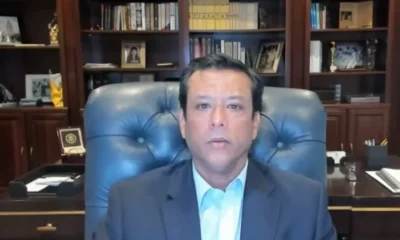
Ambassador John Bass told Economic Times in an interview on the sidelines of the India Afghanistan Trade Investment show in Mumbai said that Indian firms had been investing in Afghanistan’s growth and that last year’s trade show in Delhi had led to $27 million of investments at the event itself, and another $200 million of “prospective” investments from Indian companies, much of which had materialised.
The US diplomat said that Pakistani government had approached Afghanistan after looking at two developments. For years Pakistan has not allowed Indian goods to be transported to Afghanistan through its territory.
Read More: Afghanistan Slashes Customs Tariffs for Goods to India
He said, “We have seen an increase in exports from Afghanistan to India (through air cargo)… it is obviously one part of the export strategy but it is an important part… and I think part of the reason why, in addition to the economic relationship between Afghanistan and Uzbekistan, a couple of months ago for the first time the Pakistani government expressed a willingness to start talking with its Afghan counterparts for parameters to enabling trade between India and Afghanistan through Pakistan.”
 Bass opines that a political settlement in Afghanistan was in “Pakistan’s long-term interest”. He said, “Increased trade in both directions, increased connectivity through central and south Asia through Afghanistan – those are all missed opportunities if Pakistan has its sole focus on perpetuating the status quo.”
Responding to a question on discussions between India and US on sanctions against Iran, the envoy acknowledged that the Indian government had raised the issue of US sanctions and how it would impact Chabahar port when US secretary of state Mike Pompeo and defence secretary Jim Mattis were in India last week.
Read More: Afghanistan, Not India, Will Be Imran Khan’s Priority Until 2019
He said that the Indian government in the discussions conveyed it’s perspectives “on the importance of Chabahar as a means to expand bilateral trade and help improve Afghanistan’s connectivity with South Asia”.
The US diplomat further said, “We are processing and evaluating how best to re-impose sanctions on Iran, with the Irani regime’s malevolent behaviour and its activities in destabilising its neighbours. My government is still thinking through how Chabahar factors in the re-imposition of the toughest sanctions that we believe need to be put in place to hold the Iranian government accountable for its action.”
 To another question as to how should Afghanistan crisis be resolved, the Us ambassador said the US did not believe that the conflict in Afghanistan would end with a military victory.
Read More: India succeeds hurting Pakistan’s trade interest in Afghanistan
He said, “No one in the US government is saying at this point that we expect this conflict to end with a military victory. We believe that this conflict will end with a political settlement.”
Currently India and Afghanistan are connected for trade through two air corridors, between Kabul and New Delhi and Kabul and Mumbai and a sea route through Chabahar, the Iranian sea port. The first Kabul-New Delhi corridor was launched in June 2017, while Kabul-Mumbai corridor was inaugurated in December last year.
In October 2017, Chabahar became operational with the maiden shipment of wheat from India to Afghanistan. External Affairs Minister Sushma Swaraj, Foreign Minister of Afghanistan Salahuddin Rabbani and Iranian Foreign Minister Javad Zarif inaugurated through video conferencing.







Latest world news
Magnitude 7 earthquake strikes Russia’s Kamchatka Peninsula
A magnitude 7 earthquake struck Russia’s Kamchatka Peninsula region on Friday. The initial report placed the earthquake at a depth of 140 kilometres.


Latest world news
S Jaishankar says India is a natural option for Russia amid Europe tensions
External Affairs Minister S Jaishankar said India remained a natural option for Russia as Moscow increasingly turned towards Asia amid strained relations with Europe. He highlighted the continuity of India-Russia ties and their significance for the balance of power in Asia.

Latest world news
Putin praises PM Modi, says he has very good ideas on Ukraine war
Russian President Vladimir Putin has praised Prime Minister Narendra Modi for repeatedly raising the need to end the Ukraine war, describing his ideas for a settlement as “very good”.


Magnitude 7 earthquake strikes Russia’s Kamchatka Peninsula

Mallikarjun Kharge’s ‘Your Friends’ jab at Rahul Gandhi over congress exits

Delhi deploys 25,000 personnel, installs CCTV cameras ahead of CJP march

Abhijeet Dipke detained ahead of CJP’s national flag march in Delhi

Mallikarjun Kharge seeks all-party meeting with PM Modi on delimitation

Centre sends 3 letters to Punjab government after anti-drug activist’s killing
Mallikarjun Kharge seeks all-party meeting with PM Modi on delimitation
Abhijeet Dipke detained ahead of CJP’s national flag march in Delhi
Magnitude 7 earthquake strikes Russia’s Kamchatka Peninsula
Delhi deploys 25,000 personnel, installs CCTV cameras ahead of CJP march

Afghan Men Try To Hang With The Jet Engine Of The Aircraft in Kabul- Afghanistan News – Kabul News
Trending Top 10 News: 10000 Crore Fine on Flipkart, Apple to Launch Unique Feature, Hdfc Bank Job Ad

Trending Top 10 News: Nokia 6310, Apple sales, Bachpan ka Pyar Video Kid, Dainik Bhaskar IT Raid

Trending Top 10 News: Canada bans Indian flights, Rain in Delhi NCR, AIMIM Twitter hacked, Raj Kundra case

Trending Top 10 News: Shein India, Apple New Service, Pocket Oxygen, Oppo Launched New Phone
-
 Latest world news15 hours ago
Magnitude 7 earthquake strikes Russia’s Kamchatka Peninsula
-
 India News16 hours ago
Mallikarjun Kharge’s ‘Your Friends’ jab at Rahul Gandhi over congress exits
-
 India News15 hours ago
Delhi deploys 25,000 personnel, installs CCTV cameras ahead of CJP march
-
 India News6 hours ago
Abhijeet Dipke detained ahead of CJP’s national flag march in Delhi
-
 India News5 hours ago
Mallikarjun Kharge seeks all-party meeting with PM Modi on delimitation
-
 India News4 hours ago
Centre sends 3 letters to Punjab government after anti-drug activist’s killing
