
Latest world news
US Still Studying On Possible Iran Sanctions Waivers


US Secretary of State Mike Pompeo has said that his country is still studying possible waivers of sanctions against countries or businesses that continue commerce with Iran after November 4, the day when second layer of sanctions will come into force against Tehran.
According to AFP, Pompeo, while addressing a press conference said on Friday, “There are still a number of decisions pending before the November 4th deadline that we gotta make about waivers, potential waivers.”
However, at the same time he maintained the US administration’s firm position toward Tehran, which is accused of interference throughout the Middle East.
He further said, “Come November 4th, there will be a fundamentally different set of rules” regarding “anyone who deems it necessary to engage in economic activity with the Islamic Republic of Iran. It is a big important day.”
Replying to a question, Pompeo said he did not know if sanctions would hit managers of Swift, the international financial messaging system, if they continue to deal with Iran.
Read More: US: Contradictory reports on impact of anti-Iran sanctions on India
The European Union, which continues to back the Iran nuclear accord, has tried unsuccessfully to obtain widespread waivers and many of its bigger companies have already pulled out of the country for fear of US penalties.
 Moreover, Pompeo has also criticised his Obama-era predecessor John Kerry for “actively undermining” US policy on Iran by meeting several times recently with the Iranian foreign minister Mohammad Javad Zarif, who was his main interlocutor in the Iran nuclear deal negotiations.
He said Kerry’s meetings with Mohammad Javad Zarif were “unseemly and unprecedented” and “beyond inappropriate.”
President Donald Trump had late Thursday accused Kerry of holding “illegal meetings with the very hostile Iranian Regime, which can only serve to undercut our great work to the detriment of the American people.”
Washington seems to be still undecided on how to handle the situation and go ahead on imposing second layer of sanctions against Iran from November 4.
As recent as Thursday, Manish Singh, assistant secretary of state for economic and business affairs, told lawmakers during a Congressional hearing that US is prepared to take “strongest action” against countries and entities who are found not complying with the Iranian sanctions, including to zero the purchase of crude oil from Iran.
Read More: Iran’s Khamenei: US plots failed in Middle East
She said, “We are prepared to take the strongest actions possible on people who will not assist us in complying with this new range of sanctions that we are putting back into place,”
The US official said that US has told India and other countries to cut oil imports from Iran to “zero” by 4 November or face sanctions, making it clear that there would be no waivers to anyone.
Iran is India’s third largest oil supplier after Iraq and Saudi Arabia. Tehran supplied 18.4 million tonnes of crude oil during April 2017 and January this year.
She was responding to a question raised by Congressman Eliot Engel, asking “If any of the major buyers of Iranian crude, which is China, India, Japan, South Korea, and Europe, if they refuse to sharply cut their purchases, are we really prepared to cut their banks off from the global banking system, which is the penalty under the US sanctions? Are we really prepared for that?”
Manish Singh said, “In response, we are prepared to take the most serious actions possible on Iran. We need to demonstrate to the Iranian regime that we will not tolerate its development of a nuclear program for illicit purposes.”
“We are talking with all of our allies, including the countries that you mentioned, helping them to understand that the only way that we can achieve this global goal of Iran’s nuclear program not commencing is through partnership and cooperation with our allies as you have indicated,” she said.
Engel followed up another question saying, “China is Iran’s top, top oil purchaser. Will they get to zero by November?”
Manisha Singh responded saying that, “We are working with all countries, including China, to get them to zero. We’ve made it clear that unless we act as a global community, Iran’s behaviour is not going to change.”
 Recently India and US held 2+2 dialogue involving Minister of External Affairs Sushma Swaraj and Defence Minister Nirmala Sitharaman from India side with US Secretary of State Mike Popmeo and Defence Secretary James Mattis on September 6. However, pressure is being mounted from Washington, but final word has yet to come, as indicated by Pompeo himself on Friday.
Read More: India, US Sign Key Defense Agreement
US administration, after withdrawing from multilateral Iran nuclear deal, also known as JCPOA, in May this year, has imposed first layer of sanctions against Iran in August while the second layer of stricter sanctions will be imposed on November 5.
However, there are indications from Washington that their officials could not make a final formula on how to impose sanctions against Iran for bringing down its oil export to “Zero level”. Tehran has also warned that if Iranian oil movement will be stopped then no other country will be able to export oil from the region.






Latest world news
Putin praises PM Modi, says he has very good ideas on Ukraine war
Russian President Vladimir Putin has praised Prime Minister Narendra Modi for repeatedly raising the need to end the Ukraine war, describing his ideas for a settlement as “very good”.


Latest world news
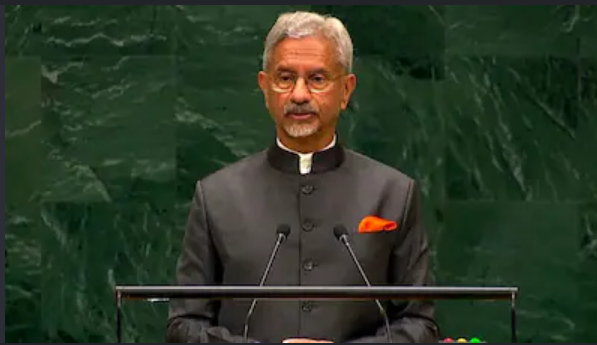
S Jaishankar calls Pakistan a “serial practitioner of terrorism” at UN
S Jaishankar criticised Pakistan at the UN General Assembly, referring to a “serial practitioner of terrorism” and warning against attempts to normalise terrorism.
Latest world news
Trump rejects Iran’s 7-day peace plan, says deal can come after US polls
US President Donald Trump rejected Iran’s seven-day proposal to end hostilities and indicated that a deal could come after the US midterm elections in November.

CJP claims Saurav Das, Ashutosh Ranka detained at Jantar Mantar

Supreme Court stays defamation case against Rahul Gandhi over PM Modi remarks

Rahul Gandhi hosts high tea for INDIA bloc after Gyanesh Kumar protests

L Murugan quits Union ministry to strengthen BJP in Tamil Nadu

Amit Shah attacks Rahul Gandhi over Congress poll losses, questions SIR row

BJP focuses on religion as opposition pushes BDM strategy in UP
L Murugan quits Union ministry to strengthen BJP in Tamil Nadu
Amit Shah attacks Rahul Gandhi over Congress poll losses, questions SIR row
Rahul Gandhi hosts high tea for INDIA bloc after Gyanesh Kumar protests
Supreme Court stays defamation case against Rahul Gandhi over PM Modi remarks

Afghan Men Try To Hang With The Jet Engine Of The Aircraft in Kabul- Afghanistan News – Kabul News
Trending Top 10 News: 10000 Crore Fine on Flipkart, Apple to Launch Unique Feature, Hdfc Bank Job Ad

Trending Top 10 News: Nokia 6310, Apple sales, Bachpan ka Pyar Video Kid, Dainik Bhaskar IT Raid

Trending Top 10 News: Canada bans Indian flights, Rain in Delhi NCR, AIMIM Twitter hacked, Raj Kundra case

Trending Top 10 News: Shein India, Apple New Service, Pocket Oxygen, Oppo Launched New Phone
-
 India News19 hours ago
CJP claims Saurav Das, Ashutosh Ranka detained at Jantar Mantar
-
 India News17 hours ago
Supreme Court stays defamation case against Rahul Gandhi over PM Modi remarks
-
 India News9 hours ago
Rahul Gandhi hosts high tea for INDIA bloc after Gyanesh Kumar protests
-
 India News8 hours ago
L Murugan quits Union ministry to strengthen BJP in Tamil Nadu
-
 India News9 hours ago
Amit Shah attacks Rahul Gandhi over Congress poll losses, questions SIR row
-
 India News7 hours ago
BJP focuses on religion as opposition pushes BDM strategy in UP
