
Latest world news
Venezuela throws out US diplomats for “conspiracies”


US denies recognition Maduro’s re-election as President, 14 countries recall envoys from Caracas
The diplomatic row over re-election of Venezuelan President Nicholas Maduro has been spreading like a wildfire in South America. Maduro’s government has ordered two US diplomatic representatives to leave the country in response to Washington’s latest round of sanctions imposed over recent election results.
US, Canada and several Latin American have denied approving Maduro’s re-election and recalled their envoys from Caracas. Reports say that 14 members of Lina Group have revealed that they will recall their envoys to protest against what it said was the country’s failure to hold a “free and fair” election.
The group consisting of Brizil, Argentina, Colombia, Canada, chile, Costa Rica, Guatemala, Guyana, Honduras, Mexico, Panama, Paraguay, Peru and Saint Lucia, in a statement said their diplomats in Caracas would return to their respective countries for consultations.
Read More: Venezuela: Nicolas Maduro re-elected as President
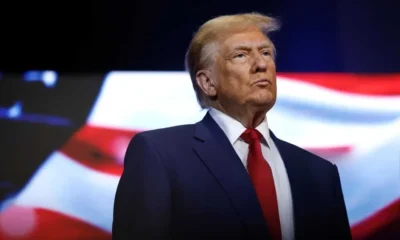
In a related development, US President Donald Trump has signed an executive order restricting Maduro’s government from selling off, or borrowing against, public assets.
 “We call for the Maduro regime to restore democracy, hold free and fair elections, release all political prisoners immediately and unconditionally, and end the repression and economic deprivation of the Venezuelan people,” Trump said in a statement.
Reacting to the ongoing developments, on Tuesday, Venezuelan President Nicolas Maduro ordered the expulsion of US charge d’affaires Todd Robinson and deputy head of mission Brian Naranjo and declared both of them “persona non grata.”
Read More: Trump Expands Travel Ban to North Korea, Venezuela And Chad
He said, “They must leave the country in 48 hours in protest and in defense of the dignity of the Venezuelan homeland… Enough of conspiracies!”
Maduro made the announcement via a nationally televised speech after being officially proclaimed the winner of Sunday’s election. “I repudiate all the sanctions that are sought against the Bolivarian Republic of Venezuela, because they harm it, they generate suffering for the people of Venezuela,” said Maduro.
He specifically spoke about US diplomat’s involvement in the conspiracies against the country saying, “We will present evidence to the country of the conspiracy in the military field of the United States charge d’affaires and his embassy, of the conspiracy in the economic field and of the conspiracy in the political field.”
Read More: Trump Faces Latin American States after Threats to Venezuela
The US administration also declined to recognize the election and said that it would actively consider oil sanctions on the country. Washington has already imposed sanctions against Venezuela and blamed Maduro’s government for the country’s acute economic crisis.
On Saturday, the US ramped up pressure on Caracas by imposing new sanctions against the government’s top officials.
Moreover the Venezuela’s foreign ministry released a statement referring to the US sanctions “a crime against humanity.” The statement said, “Venezuela once again condemns the systematic campaign of aggression and hostility by the US regime to punish the Venezuelan people for exercising their right to vote.”
Maduro’s government, however, said the US was using new sanctions to sabotage the election. It called Washington’s move as part of “a systematic campaign of aggression” by US administration and said they had no legal base.





Latest world news
S Jaishankar says India is a natural option for Russia amid Europe tensions
External Affairs Minister S Jaishankar said India remained a natural option for Russia as Moscow increasingly turned towards Asia amid strained relations with Europe. He highlighted the continuity of India-Russia ties and their significance for the balance of power in Asia.


Latest world news
Putin praises PM Modi, says he has very good ideas on Ukraine war
Russian President Vladimir Putin has praised Prime Minister Narendra Modi for repeatedly raising the need to end the Ukraine war, describing his ideas for a settlement as “very good”.

Latest world news
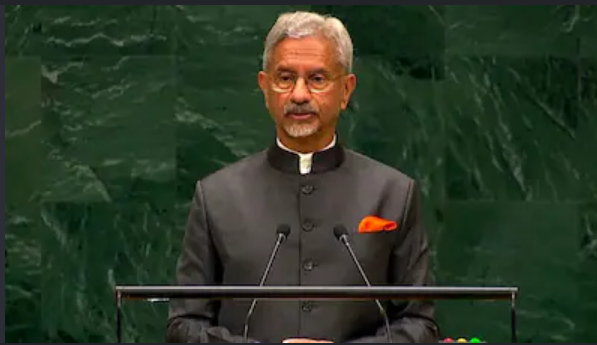
S Jaishankar calls Pakistan a “serial practitioner of terrorism” at UN
S Jaishankar criticised Pakistan at the UN General Assembly, referring to a “serial practitioner of terrorism” and warning against attempts to normalise terrorism.

Dhruv Rathee gets fresh summons in 2018 BJP IT cell video case

Nobody can browbeat judiciary, Chief Justice warns over Rahul Gandhi’s march

India-US trade deal first phase finalised, drafting underway

Election Commission orders voter roll revision in 17 states, UTs

Actor Imran Khan asked to leave India after CJP protest

Delhi Police offers 11-person limit for CJP’s Connaught Place protest
Actor Imran Khan asked to leave India after CJP protest
Election Commission orders voter roll revision in 17 states, UTs
India-US trade deal first phase finalised, drafting underway
Nobody can browbeat judiciary, Chief Justice warns over Rahul Gandhi’s march

Afghan Men Try To Hang With The Jet Engine Of The Aircraft in Kabul- Afghanistan News – Kabul News
Trending Top 10 News: 10000 Crore Fine on Flipkart, Apple to Launch Unique Feature, Hdfc Bank Job Ad

Trending Top 10 News: Nokia 6310, Apple sales, Bachpan ka Pyar Video Kid, Dainik Bhaskar IT Raid

Trending Top 10 News: Canada bans Indian flights, Rain in Delhi NCR, AIMIM Twitter hacked, Raj Kundra case

Trending Top 10 News: Shein India, Apple New Service, Pocket Oxygen, Oppo Launched New Phone
-
 India News12 hours ago
Dhruv Rathee gets fresh summons in 2018 BJP IT cell video case
-
 India News9 hours ago
Nobody can browbeat judiciary, Chief Justice warns over Rahul Gandhi’s march
-
 India News4 hours ago
India-US trade deal first phase finalised, drafting underway
-
 India News2 hours ago
Election Commission orders voter roll revision in 17 states, UTs
-
 India News2 hours ago
Actor Imran Khan asked to leave India after CJP protest
-
 India News42 mins ago
Delhi Police offers 11-person limit for CJP’s Connaught Place protest
