English हिन्दी
Connect with us

Latest world news

Why Trumpism faces testing times

Published

on

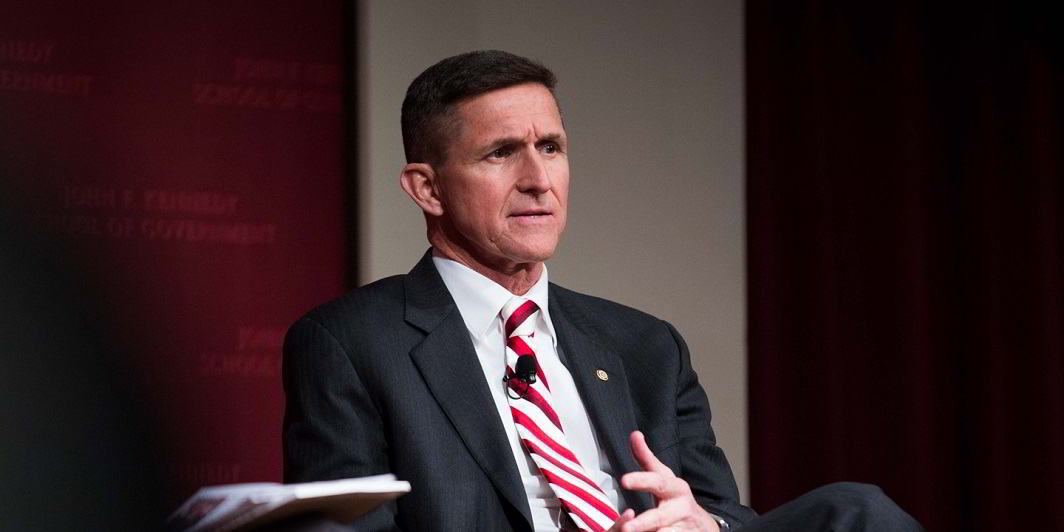
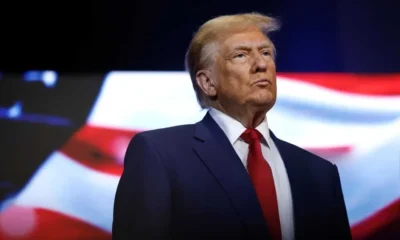
Flynn (above) resigned as the US national security adviser after reports that he misled Vice-President Pence over discussions with the Russian ambassador

[vc_row][vc_column][vc_column_text]Michael Flynn’s sudden exit as NSA puts The Donald in troubled waters 

By Sujit Bhar

The brouhaha over US President Donald Trump’s whimsical national policy decisions is facing what those policies were destined for—early death. His executive order on a travel ban from seven Muslim nations was virtually stubbed out by federal courts and even by a three-judge bench of the appellate court. And now his random senior appointments in key positions are coming in the line of fire.

The second part was apparent in the resignation of Trump’s National Security Adviser in the White House, Michael Flynn. He had no option when it was apparent from published reports that he had misled Trump’s team about his contacts with the Russian ambassador in the US and on his talks with him about the US sanctions on Russia.

Reports have maintained that Flynn’s loyalty to Trump was in no way a saviour for his links with Russia, causing the very Trump administration he was part of to be concerned. Russia, despite Trump’s pre-election exhortations, still remains pretty much the bogeyman in the White House and in the US in general.

Trump was certainly pitching in the dark about great relations with Vladimir Putin, disregarding complaints and allegations that Russia had a hacker’s hand in the US election process, making Trump king.

But when it came to an insider-job on information being passed, it was too much. It has now been revealed by a spokesman that Trump knew for weeks that Flynn wasn’t truthful about his Russian calls, leading to the conclusion that he couldn’t be trusted. That led to his firing.

This has left Trump in the unenviable position of having defended Putin, while failing to defend his own aide. The only way to get out this dilemma before this too assumed the huge proportion that his travel ban did, was to fire the man, he did just that.

What did Flynn do to earn his sacking? Flynn, an army general, had several telephonic discussions with Russian ambassador Sergei Kislyak during the administration of Barack Obama. That he had telephonic conversations wasn’t a secret, its contents were.

Before his appointment, Vice-President Mike Pence had asked him if he had discussed any special issues with Kislyak, specifically on the sanctions. Pence is a seasoned hand in the world of politics and his questioning was in order. It was only after Flynn had categorically said that none of the discussions had been on sensitive issues that Pence had recommended his name to Trump.

Later Flynn went back on his words and admitted to having had conversations on the sanctions. That made his position untenable.

Technically, this is none of Trump’s fault. Neither is it Pence’s. However, the aura of disquiet that Trump has already created has magnified this into a mega issue, with experts branding this as a potential security issue.

What Trump is facing today has little to do with the intransigence of Flynn. It has everything to do with the reckless and thoughtless posturing by Trump. Hence it will be Trump who will be left to pick up the pieces if the system collapses on itself.[/vc_column_text][/vc_column][/vc_row]

Latest world news

US lawmakers move resolution to roll back Trump’s 50% tariffs on Indian imports

Three US lawmakers have moved a resolution to end Trump’s emergency declaration that imposed 50% tariffs on Indian goods, calling the move illegal and harmful to trade ties.

Published

on

trump

Three members of the US House of Representatives have introduced a resolution seeking to end former President Donald Trump’s national emergency declaration that led to steep tariffs on imports from India. The lawmakers termed the duties illegal and warned that they have hurt American consumers, workers and long-standing India-US economic ties.

The resolution has been moved by Representatives Deborah Ross, Marc Veasey and Raja Krishnamoorthi. It aims to terminate the emergency powers used to impose import duties that cumulatively raised tariffs on several Indian-origin goods to 50 per cent.

What the resolution seeks to change

According to details shared by media, the proposal specifically seeks to rescind an additional 25 per cent “secondary” tariff imposed on August 27, 2025. This was levied over and above earlier reciprocal tariffs, taking the total duty to 50 per cent under the International Emergency Economic Powers Act.

The House move follows a separate bipartisan effort in the US Senate that targeted similar tariffs imposed on Brazil, signalling growing resistance in Congress to the use of emergency powers for trade actions.

Lawmakers flag impact on US economy and consumers

Congresswoman Deborah Ross highlighted the deep economic links between India and her home state of North Carolina, noting that Indian companies have invested over a billion dollars there, creating thousands of jobs in sectors such as technology and life sciences. She also pointed out that manufacturers from the state export hundreds of millions of dollars’ worth of goods to India each year.

Congressman Marc Veasey said the tariffs amount to a tax on American households already facing high costs, stressing that India remains an important cultural, economic and strategic partner for the United States.

Indian-American Congressman Raja Krishnamoorthi described the duties as counterproductive, saying they disrupt supply chains, harm American workers and push up prices for consumers. He added that rolling back the tariffs would help strengthen economic and security cooperation between the two countries.

Background of the tariff hike

Earlier in August 2025, the Trump administration imposed a 25 per cent tariff on Indian goods, which came into effect from August 1. This was followed days later by another 25 per cent increase, citing India’s continued purchase of Russian oil. The combined duties were justified by the administration as a measure linked to Moscow’s war efforts in Ukraine.

Wider push against unilateral trade actions

The latest resolution is part of a broader push by congressional Democrats to challenge unilateral trade measures and reassert Congress’ constitutional authority over trade policy. In October, the same lawmakers, along with several other members of Congress, had urged the President to reverse the tariff decisions and work towards repairing strained bilateral relations with India.

Continue Reading

Latest world news

Mexico imposes 50% tariff on Indian imports, auto exports maybe hit

Mexico’s approval of 50% import duties on select goods from India and other Asian countries threatens nearly $1 billion worth of Indian exports, especially in the automobile sector.

Published

on

Mexico has cleared steep import duties of up to 50% on several goods from Asian nations, a move that places nearly $1 billion worth of Indian exports at risk from January 1, 2026. The decision targets countries that do not have a trade agreement with Mexico, including India, South Korea, China, Thailand and Indonesia.

Mexico moves to shield domestic industry

The new duties—covering items such as automobiles, auto parts, textiles, plastics, steel, footwear, furniture, toys, appliances, leather goods, and cosmetics—are aimed at strengthening local manufacturing. Mexico says the tariff push is designed to reduce dependence on Asian imports and support domestic producers.

China stands to face the highest impact, with Mexican imports from the country touching $130 billion in 2024. According to Mexico, the revised tax structure is also expected to generate $3.8 billion in additional revenue.

Mexican President Claudia Sheinbaum has backed the decision, framing it as an investment in domestic employment creation. Analysts, however, believe the move may also align with the United States’ expectations ahead of the upcoming United States–Mexico–Canada (USMCA) review.

Impact on India’s automobile exports

The sharpest blow for India will fall on its automobile sector. Imports of passenger cars into Mexico will now face 50% duty instead of the earlier 20%, threatening the competitiveness of major exporters including Volkswagen, Hyundai, Nissan and Maruti Suzuki.

Industry estimates cited in a report say around $1 billion worth of Indian automobile shipments could be affected. Ahead of the tariff announcement, an industry body had urged the Indian government to engage with Mexican authorities to safeguard market access.

Mexico is currently India’s third-largest car export destination, trailing only South Africa and Saudi Arabia.

Continue Reading

Latest world news

Luthra brothers detained in Thailand after Goa nightclub fire tragedy

Delhi restaurateurs Saurabh and Gaurav Luthra, accused in the Goa nightclub fire that killed 25 people, have been detained in Thailand as India moves to secure their deportation.

Published

on

Delhi-based restaurateurs Saurabh and Gaurav Luthra, wanted in connection with the Goa nightclub fire that claimed 25 lives, have been detained in Thailand. Images circulating online show the brothers with their hands tied, holding their passports, as they stand beside Thai police officials.

Brothers held in Phuket as India seeks deportation

The Luthra brothers, who run the Romeo Lane chain across multiple cities and countries, left for Phuket just hours after a massive blaze gutted their ‘Birch by Romeo Lane’ nightclub in north Goa’s Arpora. They are facing charges including culpable homicide not amounting to murder and negligence. Indian agencies are now preparing to push for their deportation so they can be tried in Goa.

Deadly fire triggered by flammable decor and safety lapses

The late-night blaze erupted during a musical event attended by around 100 people, most of them tourists. The use of electric firecrackers during a performance is suspected to have triggered the fire. The venue’s heavy use of flammable décor and absence of functional fire extinguishers or alarms turned it into a death trap.

A narrow access road further delayed fire engines, forcing responders to park nearly 400 metres away, significantly hindering rescue operations. By the time the blaze was doused, 25 people — including five tourists and 20 staff members — had died, most due to toxic smoke inhalation in the basement.

Police pursuit and legal battle

Following the incident, four staff members were arrested and a search began for the Luthras. Investigators from Goa and Delhi discovered the brothers had booked their tickets soon after the fire and left the country within hours. Their business partner, Ajay Gupta, has already been arrested in Delhi.

The brothers have moved a Delhi court seeking anticipatory bail, arguing they were licensees, not owners, of the building. They claimed they were not present at the nightclub when the fire occurred and said their travel to Thailand was for a business meeting, not to evade investigation. Their plea seeks four weeks of protection from arrest upon their return to India.

Continue Reading

Trending

© Copyright 2022 APNLIVE.com