English हिन्दी
Connect with us

Latest world news

Trump warns of new tariffs on India over US rice dumping concerns

US President Donald Trump has suggested fresh tariffs on India’s rice exports, citing concerns from American farmers and ongoing trade negotiations.

Published

on

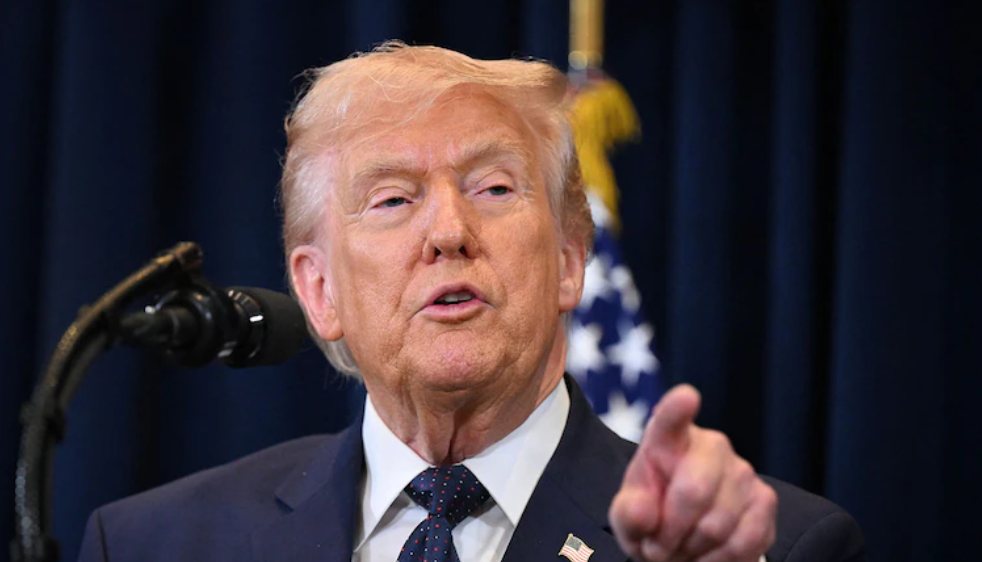
US President Donald Trump has signalled the possibility of fresh tariffs on agricultural imports from India, raising concerns over rice shipments that he says are hurting American farmers. His remarks came during a White House meeting where he unveiled a multi-billion-dollar relief package for domestic growers, while criticising imports from India and other Asian suppliers.

India cited during discussion on US rice market pressures

Trump referred directly to India after a Louisiana producer described imported rice as damaging to southern farmers. When informed that Indian companies owned two major retail rice brands in the US, Trump responded that tariffs could “solve the problem in two minutes,” reiterating his belief that some countries were “dumping” products unfairly.

He argued that such measures were necessary to stabilise America’s farm economy, stating that domestic growers were facing pressure from low commodity prices and inflation. The President said the administration’s farm assistance plan — worth USD 12 billion — would be funded by tariff revenues collected from trading partners.

Possible action on Canadian fertiliser imports

Along with India, Trump also indicated tariff action could extend to fertiliser imports from Canada, suggesting such steps would boost local production.

India–US farm trade continues to expand

India exports basmati rice, other rice varieties, spices and marine products to the US, while importing almonds, cotton and pulses. However, issues around subsidies, market access and WTO disputes — particularly those involving rice and sugar — have periodically strained trade negotiations.

Latest world news

Fresh tensions as Iran targets vessel despite ceasefire announcement

Iran fired at a vessel in the Strait of Hormuz shortly after a ceasefire announcement, raising concerns over regional stability.

Published

on

Attack on vessel highlights fragile situation in Strait of Hormuz despite renewed ceasefire push

Tensions in the Middle East escalated again after Iran opened fire on a commercial vessel in the Strait of Hormuz, just hours after US President Donald Trump announced a ceasefire extension.

According to maritime security officials, an Iranian Revolutionary Guard gunboat fired at a container ship early on April 22. The vessel was damaged in the incident, but no injuries or environmental damage were reported.

The attack comes amid already heightened tensions in the region, where the strategic Strait of Hormuz — a key global oil transit route — has seen severe disruptions in recent days.

Ceasefire efforts face immediate test

The firing incident occurred shortly after Trump signalled an extension of the ceasefire, reportedly aimed at creating space for renewed negotiations with Iran. However, the latest development has raised concerns about the durability of the truce.

Reports indicate that the Iranian action followed recent US military moves, including the seizure of vessels linked to Tehran and continued naval pressure in the region.

Shipping route remains volatile

The Strait of Hormuz remains a flashpoint, with shipping traffic significantly affected. In recent days, only a handful of vessels have been able to pass through the route, compared to normal volumes, leaving many ships stranded.

The waterway is critical for global energy supplies, handling a significant share of the world’s oil shipments. Any disruption has immediate implications for international markets.

No official response yet

Iran has not officially commented on the latest firing incident. Meanwhile, international observers and maritime agencies continue to monitor the situation closely, warning of risks to crew safety and global trade.

The latest escalation underscores the fragile nature of ongoing diplomatic efforts, with both sides yet to reach a stable agreement.

Continue Reading

Latest world news

Trump extends Iran ceasefire after Pakistan request, raises hopes for talks

The US extends its Iran ceasefire after Pakistan’s request, opening a window for diplomacy while tensions persist

Published

on

Donald Trump statement

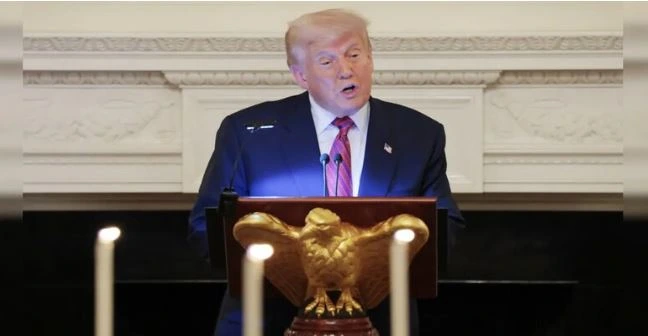
The United States has extended its ceasefire with Iran, with former US President Donald Trump stating that the decision came after a request from Pakistan’s leadership. The move comes just hours before the truce was due to expire, offering a temporary pause in escalating tensions.

Trump said the extension is intended to provide Iran additional time to present a “unified proposal” for a broader peace agreement, signalling a shift towards diplomacy even as pressure on Tehran continues.

Pakistan steps in as mediator

Pakistan has played a key role in facilitating the ceasefire extension. Its leadership, including top civil and military figures, urged the US to delay further action and allow diplomatic efforts to continue.

The development positions Pakistan as an emerging mediator in the crisis, with efforts underway to encourage dialogue between Washington and Tehran. The country has also indicated willingness to support or host discussions aimed at de-escalation.

Pressure remains despite pause

Despite the extension of the ceasefire, the situation remains tense. The US has not rolled back its strategic posture in the region.

Military readiness continues, and restrictions such as the naval blockade linked to Iran remain in place. This indicates that while direct confrontation has been paused, broader pressure tactics are still active.

What Pakistan could gain

Pakistan’s involvement in the ceasefire process could bring several advantages.

First, it enhances the country’s global diplomatic standing by placing it at the centre of a major international issue. Acting as a mediator between two adversaries can improve its credibility on the world stage.

Second, stability in the region is directly beneficial for Pakistan’s economic interests, particularly given its reliance on energy supplies linked to the broader Middle East.

Finally, successful mediation could strengthen Pakistan’s strategic influence, giving it a more prominent role in future geopolitical developments.

Uncertain road ahead

While the ceasefire extension has reduced immediate risks, uncertainty remains over how the situation will evolve. Much will depend on whether Iran presents a proposal acceptable to the US and whether negotiations can move forward.

For now, the extension reflects a temporary shift away from confrontation, but the underlying tensions remain unresolved.

Continue Reading

Latest world news

Trump may join Iran-US peace talks in Pakistan, attendance uncertain

Donald Trump could join Iran-US peace talks in Pakistan either in person or virtually, as discussions move forward amid uncertainty over participation.

Published

on

Donald Trump statement

Peace talks between the United States and Iran are being considered in Islamabad, with uncertainty over participation and format

Peace talks between the United States and Iran are being considered in Islamabad, according to media reports, with the possibility that former US President Donald Trump may participate either in person or virtually. However, no final decision on the venue, format or participation has been confirmed.

According to reports citing a Pakistani source, preparations for the talks are moving ahead as scheduled, and both sides are expected to engage in discussions aimed at resolving ongoing tensions.

The proposed talks come at a critical time, as diplomatic efforts continue to stabilise relations amid heightened geopolitical strain. Pakistan is expected to host or facilitate the discussions, hosting the discussions and coordinating with both Washington and Tehran to facilitate dialogue.

Officials familiar with the development indicated that Trump’s participation remains uncertain, with reports indicating he may attend either in person or virtually. His presence—either physically in Islamabad or through virtual means—would signal the importance of the outcome and potentially influence the direction of the talks.

Despite the progress in planning, uncertainty remains over the final composition of delegations and the level of participation from each side. Separate reports suggest that while preparations are underway, clarity over Iran’s attendance and broader engagement is still evolving.

The talks are expected to focus on easing tensions and exploring pathways toward a broader agreement, though key sticking points between the two sides remain unresolved.

Continue Reading

Trending

© Copyright 2022 APNLIVE.com