English हिन्दी
Connect with us

India News

Farmer unions stick to protest site as police try to muscle them out, Bengal resolution asks Centre to revoke farm laws

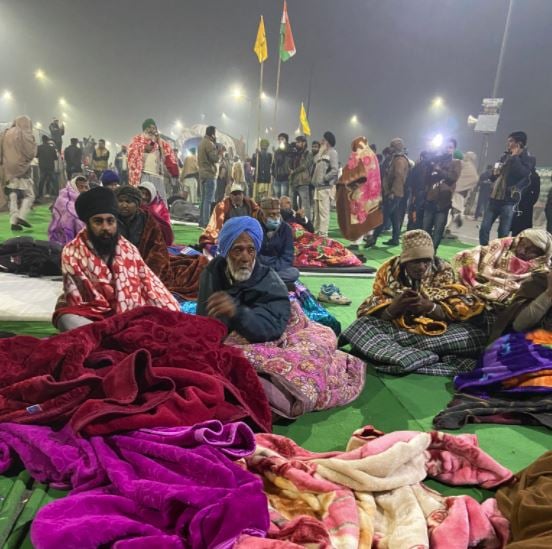
The situation at the border between Delhi and Uttar Pradesh remained tense on Thursday after the Ghaziabad administration issued orders to protesting farmers to vacate the protest sites by tonight

Published

on

farm-police-face-off

The situation at the border between Delhi and Uttar Pradesh remained tense on Thursday after the Ghaziabad administration issued orders to protesting farmers to vacate the protest sites by tonight. The Uttar Pradesh government issued an order to all district authorities to clear all protest sites in the state blocked by protesting farmers.

Further, a group of residents from Bakhtawarpur and Hamidpur on Thursday gathered at Delhi’s Singhu border to protest against the farmers camping there. They were carrying banners and placards condemning the violence by farmers on Republic Day.

The day began with Delhi Police finally naming actor Deep Sidhu and gangster turned-social activist Lakha Sidhana in an FIR in connection with the Red Fort incident during the tractor rally organized by protesting farmers. The police had named prominent farmer leaders in the FIR barring Sidhu prompting many theories of who supported whom and all. Farmers’ union leaders blamed Deep Sidhu for instigating protesters for violence and hoisting the Nishan Sahib flag.

In a total of 22 FIRs, 37 farmer leaders have been named over the violence that unfolded in Delhi on Tuesday. The FIR names Rakesh Tikait, psephologist-politician Yogendra Yadav and Narmada Bachao Andolan leader Medha Patkar and charges listed against them include attempt to murder, rioting and criminal conspiracy.

On the other hand, protesting farmers at Ghazipur refused to allow police to arrest Bharat Kisan Union spokesperson Rakesh Tikait. While addressing farmers, he said he is ready to face bullets but will not leave the protesters’ stage. He also claimed that power and water supply have been cut to the site.

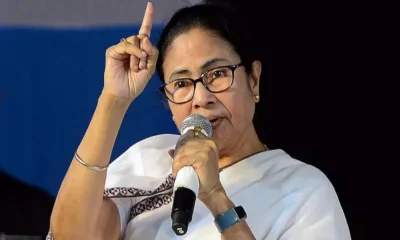
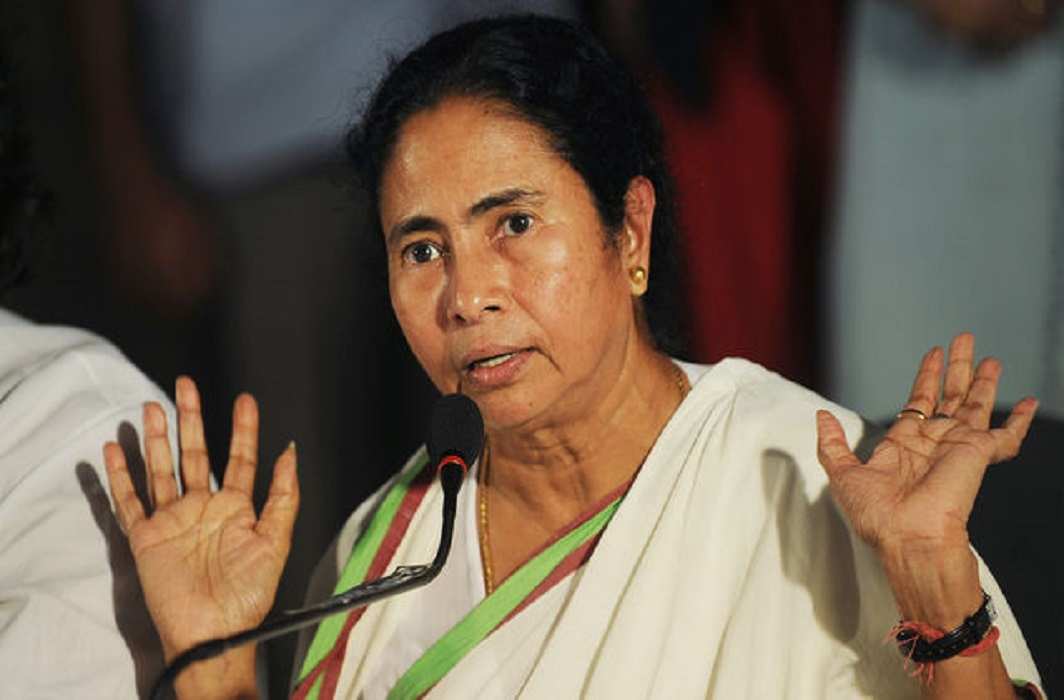
In a related development in Kolkata, West Bengal Chief Minister Mamata Banerjee said Delhi Police mishandled the farmers tractor parade which resulted in the situation going out of control. She also said it is a complete intelligence failure. It would not tolerate that farmers being branded as traitors. Farmers are the assets of this nation.

On Thursday, the West Bengal Assembly passed a resolution against the three farm laws passed by Parliament in September 2020. The resolution was moved by Parliamentary Affairs Minister Partha Chatterjee.

Also Read: Farmers protest: Delhi police serves notice to 20 farm leaders, Amit Shah meets injured cops

Speaking on the resolution, Banerjee said the Centre should either withdraw farm laws or step down. The Communist Party of India (Marxist) and the Congress supported the resolution but demanded the state government withdraw similar laws it had passed a few years back. BJP MLAs opposed the resolution and staged a walkout shouting Jai Shri Ram slogans.

India News

Delhi schools receive bomb threats, emails claim city will become Khalistan

Nine schools across Delhi received bomb threat emails containing Khalistan-related messages, prompting immediate security action.

Published

on

Delhi School bomb threat

Several schools across Delhi received bomb threat emails on Monday morning, prompting immediate security action by authorities. According to the Delhi Fire Service (DFS), the first distress call was received at around 8:33 am, following which fire tenders and bomb disposal teams were rushed to the affected locations.

At least nine schools across different parts of the city reported receiving similar threat messages. Security checks were carried out as a precautionary measure, and students and staff were kept under close supervision.

The schools that received the bomb threats include Loreto Convent School in Delhi Cantonment, Cambridge School in Srinivaspuri, Venkateshwar School in Rohini, CM School in Rohini, Bal Bharati School in Rohini, Cambridge School in New Friends Colony, The Indian School in Sadiq Nagar, and DTA School in the INA area.

Threatening emails contain provocative messages

The emails reportedly carried disturbing and provocative content, claiming that “Delhi will become Khalistan” and referring to “Punjab as Khalistan” while invoking the memory of Afzal Guru. The messages also alleged that a blast would take place inside Parliament on February 13 at 1:11 pm.

Authorities treated the threats seriously and initiated standard operating procedures to ensure safety. More schools were reported to be receiving similar emails as the day progressed.

Further details are awaited as investigations continue.

Continue Reading

India News

BJP’s Ritu Tawde set to become Mumbai mayor, Shiv Sena’s Sanjay Ghadi named deputy

BJP’s Ritu Tawde is set to take charge as Mumbai mayor, marking the first break in Shiv Sena’s 25-year dominance of the post. Shiv Sena’s Sanjay Ghadi will serve as deputy mayor.

Published

on

BJP corporator Ritu Tawde is set to take over as the next Mumbai mayor, marking a significant political shift in the Brihanmumbai Municipal Corporation (BMC). This will be the first time in 25 years that the mayor’s post will not be held by the Shiv Sena.

Tawde, who represents Ghatkopar, has previously served as chairperson of the BMC’s education committee. Her name was announced by BJP leader Amit Satam on Saturday.

Shiv Sena to hold deputy mayor’s post

Shiv Sena leader Sanjay Shankar Ghadi will be the Deputy Mayor of Mumbai. Elected from Ward No. 5 in the January 15 civic elections, Ghadi will serve a 15-month term. The Shiv Sena has decided to rotate the deputy mayor’s post among four of its corporators.

Ghadi was among the leaders who joined Maharashtra Deputy Chief Minister Eknath Shinde’s faction in 2022, a move that led to the collapse of the Maha Vikas Aghadi government.

The Shiv Sena announced Ghadi’s candidature through party leader Rahul Shewale.

BJP-led alliance crosses majority mark

In the 227-member civic body, the BJP emerged as the single largest party with 89 seats, while the Shiv Sena secured 29 seats. Together, the ruling alliance has 118 corporators, comfortably crossing the majority mark of 114 and ensuring control over the mayoral post.

The Shiv Sena (UBT), which governed the BMC continuously since 1997, won 65 seats. Its allies, the Maharashtra Navnirman Sena (MNS) and the Nationalist Congress Party (Sharad Pawar faction), secured six and one seats, respectively.

The Congress won 24 seats, AIMIM eight, the NCP (Ajit Pawar faction) three, and the Samajwadi Party two seats.

Civic polls held after nine-year gap

The high-stakes BMC elections were conducted after a nine-year gap. The civic body had been under a state-appointed administrator since March 7, 2022, following the end of the previous term.

The BMC remains the country’s richest civic body, with its budget for the 2025–26 financial year pegged at Rs 74,450 crore.

Continue Reading

India News

Trump lifts additional 25% tariff on India after deal on Russian oil imports

The United States has lifted an extra 25% tariff on Indian goods after India committed to stopping Russian oil imports as part of a new trade agreement.

Published

on

trump

US President Donald Trump has moved to remove an additional 25 percent tariff imposed on Indian goods following a trade agreement between the two countries, according to an executive order signed on Friday.

The extra duty, which had been levied over India’s purchases of Russian oil, will be lifted at 12:01 am Eastern Time on Saturday. The order states that India has committed to stopping the direct or indirect import of oil from the Russian Federation.

The decision comes days after Trump announced a broader trade deal with India, saying Prime Minister Narendra Modi had assured Washington that New Delhi would halt Russian oil purchases amid the ongoing Ukraine war.

As part of the agreement, India has also committed to buying energy products from the United States. The executive order further noted that New Delhi has recently agreed to a framework aimed at expanding defence cooperation between the two countries over the next decade.

Tariff reduction still to be rolled out

While the additional 25 percent tariff is being removed immediately, the wider reduction in so-called reciprocal tariffs is yet to be implemented. Under the agreement, US duties on Indian products are expected to be reduced to 18 percent from the earlier level of 25 percent.

Other provisions of the deal include the removal of tariffs on certain aircraft and aircraft parts. A separate joint statement released by the White House said India intends to purchase goods worth $500 billion from the United States over the next five years. These purchases are expected to include energy products, aircraft and parts, precious metals, technology products and coking coal.

The move marks a sharp decline in US tariff levels on Indian goods, which had stood at as high as 50 percent late last year. The agreement also helps ease months of strain between the two countries over India’s oil imports, which Washington has argued help finance the conflict in Ukraine.

The deal signals a reset in ties between Trump and Prime Minister Modi, whom the US President has previously described as one of his closest friends.

Trade experts have noted that the proposed 18 percent tariff rate could offer Indian exporters a slight advantage in the US market compared to regional competitors facing duties of around 19 to 20 percent.

Continue Reading

Trending

© Copyright 2022 APNLIVE.com