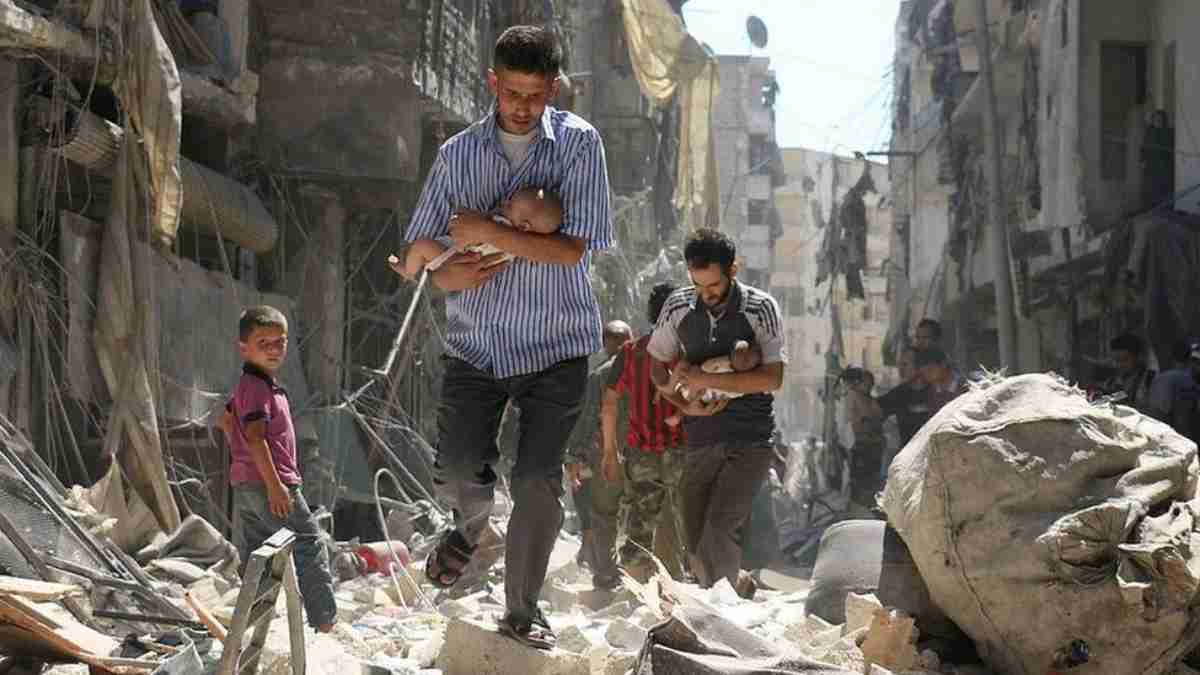
[vc_row][vc_column][vc_column_text]The recent US air strikes in Syria after the alleged use of chemical weapons by Bashar al-Assad regime, has triggered another crisis, which may result in escalation of the civil war that is already raging in the country. The U.S. administration has accused the Assad regime for using chemical weapons against its own citizens, while Russia has defended Damascus saying that Syrian Army might have attacked rebels’ arms depot containing chemical weapons.
A chemical attack on Khan Sheikhoun, a town in Idlib province, killed about 89 people and injured more than 300. Following the attack, on April 6, the United States carried out a missile attack on a Syrian air base suspected to house chemical weapons.
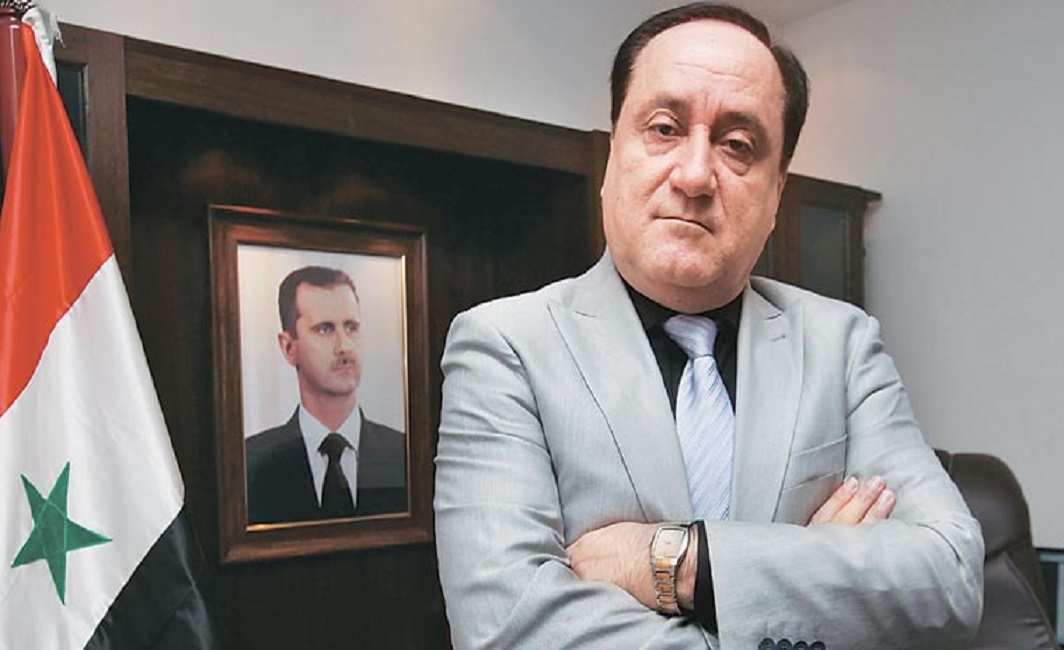
Dr Riad Kamel Abbas, the Ambassador of Syria to India, in an exclusive interview with M.Ahmed Kazmi of APN, explained the Syrian position on various issues. Excerpts from the interview:
The situation seems to be grim after the American strikes. In fact who was behind chemical attack?
Two weeks before the attack our government sent verbal request to United Nations informing that rebels have brought 12 vehicles loaded with chemical weapons through Turkish border. We shared our concern that the rebels may use chemical weapons against Syrian army and civilians. United Nations did take any action based on the information.
Now the attack has taken place. There is a possibility that Syrian army might have attacked rebels’ ammunition depot storing chemical weapons. We don’t possess chemical weapons. We demand that UN should send its military monitors to investigate the chemical weapon attack on the civilians.
There are instances of UN monitors visiting Syria at the request of Damascus but they have not submitted any report. After rebels used chemical weapons in Ghouta city, located near Damascus airport, we approached the UN, asking for investigation. Surprisingly, they have not come up with any report yet. In some cases, use of chemical weapons was confirmed but UN did not make it public. After involvement of Qatar and Saudi Arabia was proved in helping ISIS, US removed Emir of Qatar Sheikh Hamad bin Khalifa al-Thani in June 2013 and Bandar bin Sultan, the chief of Saudi spying agency in April 2014.
We will coordinate with our friendly countries, with BRICS states, Iran and others to tell the world about American support for terrorists in Syria.
Do you foresee the escalation of the crisis to international level?
At the moment we are in a very dangerous situation. America and its regional allies did not fulfill their commitment with Russia during Geneva and Astana peace talks.
Russia and Iran have recently announced that they were firmly standing behind Syria. We are not alone. We had earlier told that Syria is not Tunisia or Libya, it is different. The government in Syria enjoys mass support from its people.
The so-called opposition leaders participating in Geneva or Astana do not represent Syrian people. However, we will not leave any stone unturned for achieving peace. We understand that the opposition groups are not serious about restoring peace in Syria.
Islam is a religion of peace and they (ISIS) are doing everything but peace.
Has Damascus leadership reached out to friendly countries?
President Assad has spoken with his Iranian counterpart Hassan Rouhani. Our allies, including Russia and Iran, have decided that if America ventures to attack again, we will react immediately. The situation has entered a dangerous phase. It may lead to a regional or global war, or it may create a situation for a better understanding. We are constantly in touch with Russia and BRICS states.
How will the Idlib incident affect the future course of the war?
Idlib is close to Turkey border. We have chosen Idlib for the final assault against terrorists. Let them either get killed or move to Turkey. A large number of terrorists were foreigners and Turkey is their sponsor, let them go to Turkey.
Your government has been criticising US role in the Syrian crisis, while Washington claims to be leading anti-ISIS operations in the region.
We don’t need American help. Let them pull out and we will liberate our lands from ISIS and other terror groups within a week. They support the ISIS and were not hiding this fact. Former Secretary of State Hillary Clinton publically admitted of creating ISIS for use against the Syrian army. John Kerry, another former U.S. Secretary of State had admitted the same fact. They use ISIS against any country which is not following Washington’s instructions.
We are fighting against the ISIS and the US is attacking Syrian army.This is sufficient proof of American support to ISIS and al-Nusra group on the ground.
Americans attacked Syrian army in Serta Mountain, killing our soldiers last year. It was followed by ISIS capturing the area almost immediately. There is plenty of evidence that America has been supporting ISIS by providing aid and weapons through parachutes.
Recently a delegation of important officials from Trump administration has visited Damascus, which will never be reported by their media.
Why do not the radical Islamists hit Israel? Why do they target Syria, Egypt, Iraq and Yemen? Turkish intelligence was operating on the ground and Israel is behind all of them.
Why is the ISIS engaged in ‘jihad’ in Syria, a Muslim country, instead of attacking Israel which has been occupying Palestine? In fact, ISIS terrorists follow Wahabi ideology which is not Islam.
What about the spate of regime changes in the region in the last five years?
Americans don’t need friends in the region. They need slaves and followers. The US removed America-friendly rulers through Arab spring in Egypt, Tunisia, Libya and Yemen. They claimed that it was to improve security. If that is democracy, we don’t need such a democracy. Why doesn’t the UN investigate about the 12 vehicles which came from Turkey? Earlier, Turkey had announced the arrest of 12 persons for holding sarin gas. But nobody debated that.
Our army was advancing for liberating several cities from ISIS. Suddenly America attacked us.
How do you assess India’s policy towards Syrian crisis?
We have been happy with the consistent Indian stand on the Syrian crisis. I am supposed to see the concerned (MEA) officials soon. India has been following a balanced position as a BRICS member-state.
Any country which is not part of the conspiracy against Syria is our friend. Most of the foreign governments and media have been hostile to Damascus. Our government is fighting against terrorism on behalf of the whole world.[/vc_column_text][/vc_column][/vc_row]