
India News
With SC likely to pass verdict on J&K special status soon, Mehbooba Mufti drives to arch-rival Farooq for ‘guidance’

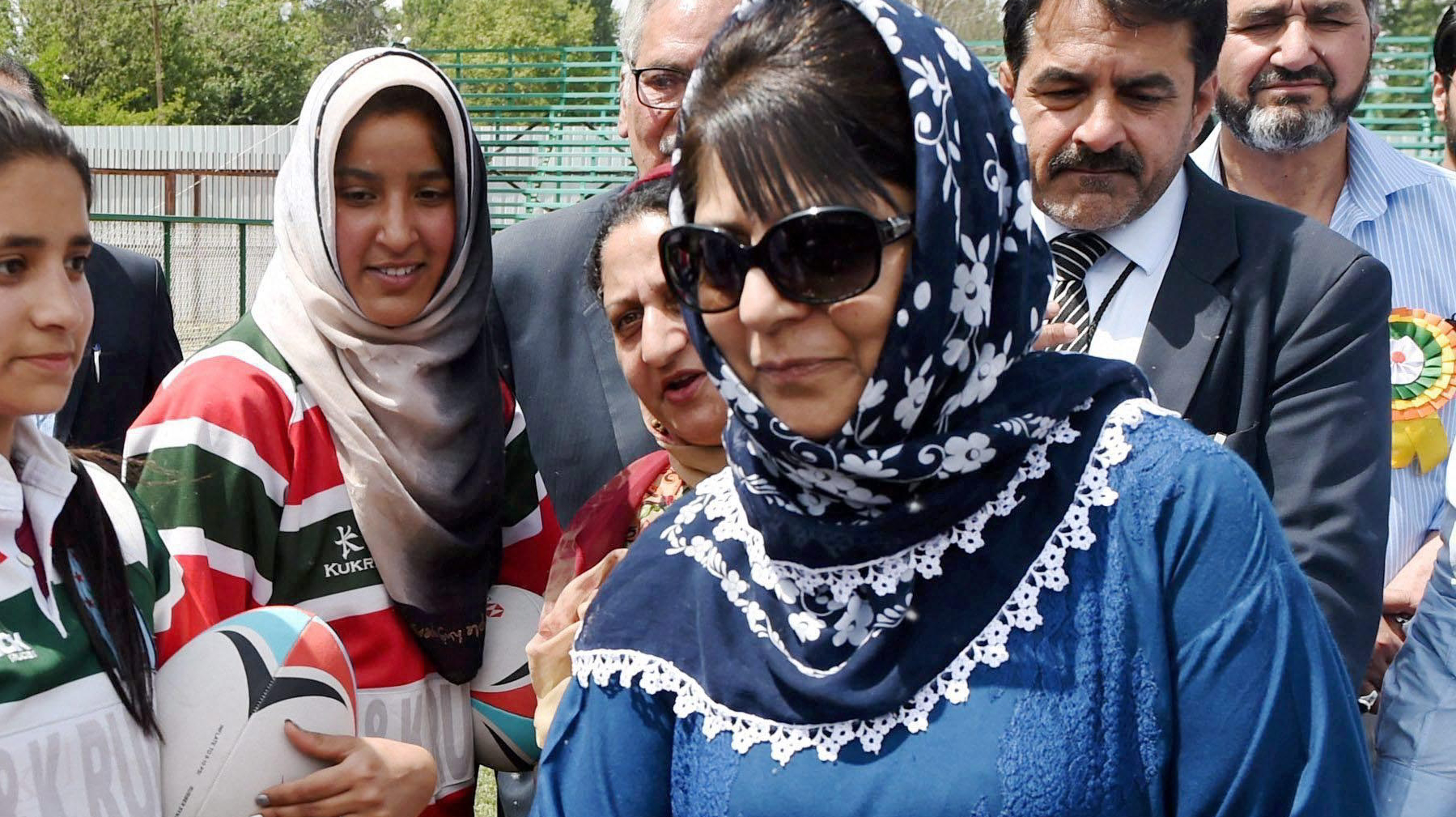
[vc_row][vc_column][vc_column_text]With the Supreme Court set to declare whether or not Article 35A that grants a special status to J&K among all Indian states should be quashed, chief minister Mehbooba Mufti stunned everyone by calling on National Conference chief Farooq Abdullah triggering rumours once again that all’s not well in her PDP-BJP coalition
In a move that has surprised political observers and common folk alike, Jammu and Kashmir chief minister Mehbooba Mufti, on Tuesday evening, drove to the residence of her principal political rival in the state – National Conference chief Farooq Abdullah – instead of meeting senior leaders in her alliance partner, the BJP, to discuss the crisis over the legality of Article 35A that grants a special status to her strife-torn state.
Article 35A is a provision in the Indian Constitution which saved the ‘pre-existing State Subject Law’ of permanent residents of the state and their special rights and privileges. It was added through the Constitution (Application to Jammu and Kashmir) Order, 1954, issued under Article 370 in 1954. According to the law, there is a complete ban on the acquisition of immovable property by the non-permanent residents of the state, like in Himachal Pradesh, Arunachal Pradesh, and some other states. The law defines permanent residents of Jammu and Kashmir, confers on them the special rights and privileges and also imposes restrictions on non-residents acquiring any property in the state.
The prevailing crisis over the legality of Article 35A – the abrogation of which Mehbooba has repeatedly warned against claiming that if such a decision is taken “there will be no one left in Kashmir to hold the Indian flag” – began when two Kashmiri women approached the Supreme Court in 2014 seeking quashing of the special provision as it had “disenfranchised their children”. The apex court is likely to pronounce its verdict in the case next month.
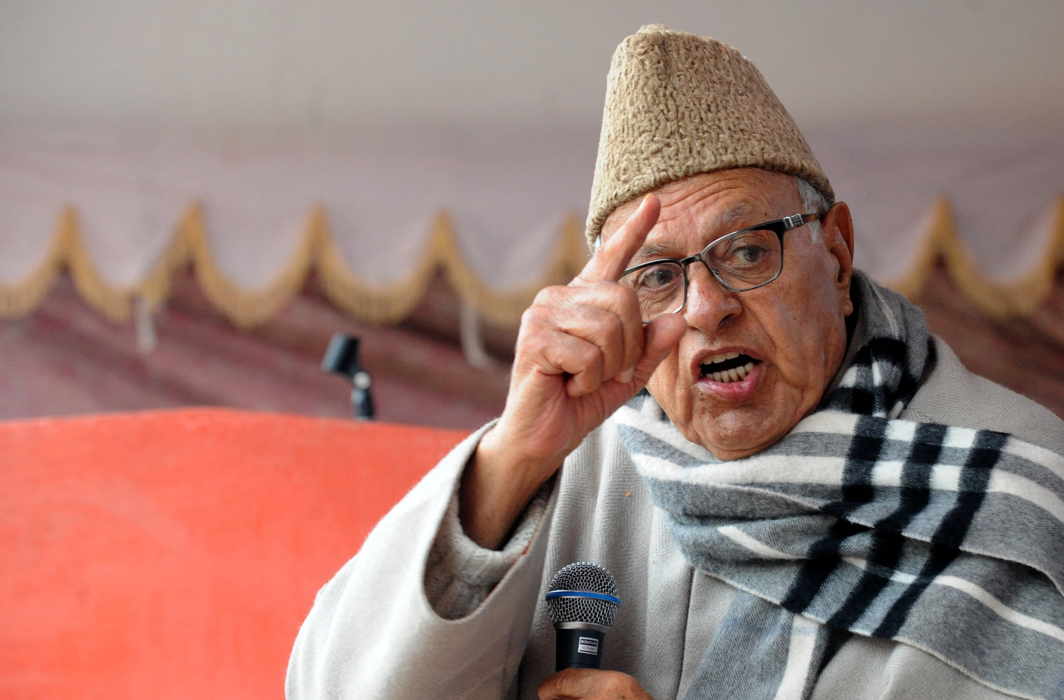
What seems to have triggered Mehbooba to make the hitherto unthinkable journey to Farooq Abdullah for his counsel is the Union government’s recent submission in the Supreme Court during a hearing in the case.
On July 17, Attorney General KK Venugopal had told a two-judge bench of the Supreme Court comprising Chief Justice JS Khehar and Justice DY Chandrachud that the petition against Article 35A raised “very sensitive” questions that required a “larger debate”, following which the court referred the matter to a three-judge Bench and set six weeks for final disposal.
Venugopal’s submission of the necessity of a ‘larger debate’ on the issue of abrogation of Article 370 was a departure from the stand that earlier governments – usually non-BJP – have taken on the sensitive subject as this was the first time that the Union was willing to put the matter up for a discussion instead of outrightly siding with the J&K government.
The Centre’s submission had immediately drawn criticism from political leaders of the National Conference and the Congress while Mehbooba had, in a belated reply, warned that any move to dilute Article 370 or quash it altogether would be the proverbial “last nail” in the Kashmir crisis and ensure that no Kashmiri ever holds the Indian tricolour.
That Venugopal naturally was communicating to the court the stand of the BJP government – a party with which Mehbooba is running an always-on-the-edge coalition in J&K – is the reason being ascribed to the PDP chief’s gesture towards her NC rival.
Abdullah has suggested to the chief minister that she should consult other parties with an aim to create a wider consensus among “like-minded parties in the battle to prevent Article 35A from being struck down in the Supreme Court.”
After her meeting with the NC president, Mehbooba said: “Dr Abdullah sahib is the senior most leader of our state and I went to him to seek his guidance and support on the issue of special status of our state which is under serious threat”.
“It (the case over Article 35A in SC) is a challenge for all political parties in J&K, who swear by J&K Constitution and the Constitution of India. There is hardly anything left in our special status and if Article 35(A) is tampered with, we will cease to exist,” Mehbooba added.
The NC president’s son and former chief minister Omar Abdullah – who on several earlier occasions has hit out at Mehbooba Mufti – said: “We cannot afford to have Article 35A remove… we believe that there is an urgent need to create a wider consensus among parties to fight this battle together,” after the PDP chief met Farooq Abdullah.
The Congress too came out in support of Mehbooba’s initiative with former union minister and senior poarty leader Saifuddin Soz asserting the same line as Mehbooba and Omar – of drawing a consensus on the legality of Article 35A and not repealing it.
With the threat of abrogation of Article 35A uniting the PDP, NC and Congress, political observers from the state wonder: Will the three parties along with other regional players who are anti-BJP come together to save the special status and state subject law. If developments in the Valley are any indicator, it is quite likely to happen as the anger against the mainstream political players is spreading like wildfire, especially in the past year that has seen prolonged widespread violence return to the region and an aggressive Indian Army willing to go to any extent to deal with civilians protesting on the streets.
Sources said Mehbooba had told her top party leaders that they should be ready for any eventuality if the article is struck down in the Supreme Court. That could well mean the end of the BJP-PDP alliance in the state.[/vc_column_text][/vc_column][/vc_row]







India News
Journalist files police complaint against Rahul Gandhi over push allegation
Journalist Richa Parashar has filed a criminal complaint against Rahul Gandhi and others, alleging that she was pushed while covering the Opposition’s march to the Supreme Court. The Congress has denied the allegation.

India News
Delhi court orders release of CJP founder Abhijeet Dipke
A Delhi court on Saturday ordered the conditional release of Cockroach Janta Party founder Abhijeet Dipke, who was detained and subsequently arrested ahead of a planned protest march at Connaught Place.
India News
Anirudh Ravichander to marry Kavya Maran in November, reception on November 21
Anirudh Ravichander and Kavya Maran are set to marry in November, with their Chennai wedding reception scheduled for November 21.


Anirudh Ravichander to marry Kavya Maran in November, reception on November 21

Journalist files police complaint against Rahul Gandhi over push allegation

Delhi court orders release of CJP founder Abhijeet Dipke
Journalist files police complaint against Rahul Gandhi over push allegation
Delhi court orders release of CJP founder Abhijeet Dipke
Anirudh Ravichander to marry Kavya Maran in November, reception on November 21

ED summons Pinarayi Vijayan in money laundering case

LK Advani, 98, hospitalised in Delhi with chest infection

Afghan Men Try To Hang With The Jet Engine Of The Aircraft in Kabul- Afghanistan News – Kabul News
Trending Top 10 News: 10000 Crore Fine on Flipkart, Apple to Launch Unique Feature, Hdfc Bank Job Ad

Trending Top 10 News: Nokia 6310, Apple sales, Bachpan ka Pyar Video Kid, Dainik Bhaskar IT Raid

Trending Top 10 News: Canada bans Indian flights, Rain in Delhi NCR, AIMIM Twitter hacked, Raj Kundra case




