English हिन्दी
Connect with us

Latest Politics News

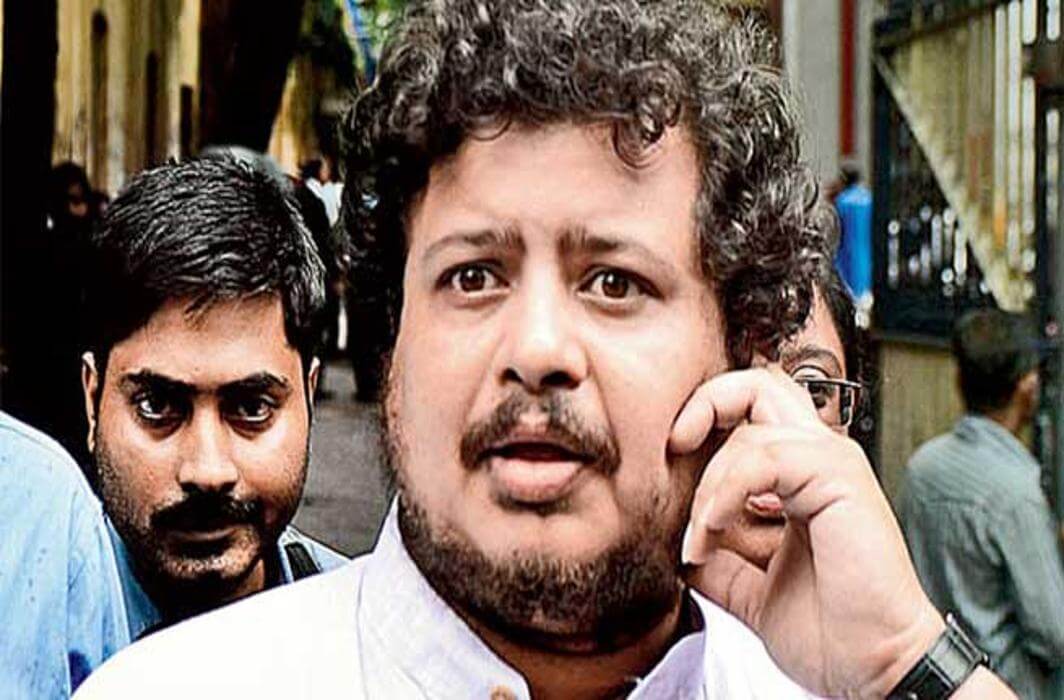
CPI (M) in Bengal cuts its nose to spite the face; expels young MP Ritabrata

Published

on

CPI (M) in Bengal cuts its nose to spite the face; expels young MP Ritabrata
 By Sujit Bhar

A failing party with a regressive attitude cannot expect to face the might of Mamata Banerjee’s Trinamool Congress

As it finally turned out, the expulsion on Wednesday (September 13), of its Rajya Sabha MP Ritabrata Banerjee from the party was the result of a factional feud within the CPI (M) and his three-month suspension, announced on June 2, was just a precursor to this expulsion.

Of course, Banerjee had gone to the popular local television channel ABP Ananda and poured his heart out about the reportedly pernicious nature of associations that the Prakash and Brinda Karat faction brought to the table – Banerjee is unapologetically in the Sitaram Yechury camp – but the initial impression that the Md Salim committee (which looked into the allegations against Banerjee) had given was that he was in the dock for his lavish lifestyle.

Banerjee called Salim the “agent” of the Karats in West Bengal. Such in-the-face comments aren’t what communist regimes are used to, but more than that, Salim’s influence within the party is considerable, and it is being viewed that the Buddhadev Bhattacharya group may be losing traction within the state committee. The Salim committee has maintained that this expulsion order need not be taken to the central committee of the party, since Banerjee has been a state committee member. Hence, this is an internal matter.

Apart from the fact that the very existence of the CPI (M) is at stake around the country, now the credibility of the party as a congress of erudite and bhadralok stalwarts is also in doubt. There have always been differences within the party and expulsions have happened all along the history of the party. But now possibly is a very wrong time to show to the world the cracks within. It is not a very bright idea.

The root of the communist movement in India – with beginnings dating back to MN Roy’s importing of the concept to the sub-continent – has been through trade union movements and farmers’ struggles. Even in the vastly changed scenario around the world today – economically, as well as socially – the seed within certain sections of the CPI (M), itself an offshoot of the CPI, seems to have remained unchanged.

The complexities of today’s society have had a retrograde effect on the party. With failings showing up starkly within the West Bengal chapter of the party, the Karat faction, lying low for long in the state, has reared its head and claimed its first victim. This cannot be good news. There is enough resentment within the youth of the party in Bengal – whatever is left of it – and in the expulsion of a popular youth leader this resentment will only grow. When the old leaders have not been able to show the way out of the current mess, is it advisable to retrace faded footprints in trying to recreate the pure-bred communist utopia that was once the dream?

The Kerala influence in Bengal politics is increasingly becoming stronger. With Kerala chief minister Pinarayi Vijayan now a staunch supporter of the Karat group, and boasting a government that the Bengal counterpart does not have, theirs is a voice more clearly heard today. In the 34 years that the CPI (M) ruled Bengal, there was no need to listen to anybody other than home-grown leaders for Bengal’s communists. The Kerala communists also have within its fold a number of top businessmen, who throw their weight behind the communists and the Congress almost alternatively. At this point the money purse belongs to the Kerala communists. Then, there is a huge complement Keralites in West Asia, with repatriation amounts totaling in the billions of dollars. They too, at this point of time, have chosen to support the communists. In the past, when it had suited them, they too had supported the Congress.

That apart, of course, there is the factor of Prakash Karat being a Keralite. He gains trust, despite his antediluvian ideals.

This triple whammy from Kerala was possibly too much for the likes of Banerjee and the Yechury faction to digest. Moreover, with the Trinamool Congress in West Bengal so strong that they can wipe out resistance by the BJP too, the local communists have little hope. This means the fangs of age-old communist traditions, given up across the globe, hold sway in Bengal.

Why else would a state committee member’s actions be made out to be openly against the party? Why was this not solved at the state level? Why did the state communists decide to cut the nose to spite the face?

The committee cites some special clause of the party constitution in saying: “In exceptional circumstances party committees in their discretion may resort to summary procedure in expelling members for grave anti-party activities.” What was so special about debate, of a different point of view? Why was it considered abhorrent?

If not the TMC, regression will kill the party in Bengal for sure.

India News

AAP dominates Punjab zila parishad polls, leads in most panchayat samiti zones

AAP has won 201 out of 317 declared zila parishad zones in Punjab so far and is leading in a majority of panchayat samiti seats, with counting still underway.

Published

on

Punjab Zila Parishad Polls

The ruling Aam Aadmi Party (AAP) has recorded a strong performance in the Punjab zila parishad elections and is leading in the majority of panchayat samiti zones, as per results declared so far on Thursday. The counting process is still underway and complete results are awaited, officials said.

Polling for the rural local bodies was held on December 14 to elect representatives across 347 zones of 22 zila parishads and 2,838 zones of 153 panchayat samitis in the state.

AAP secures clear edge in zila parishads

According to the available results, outcomes have been declared for 317 zila parishad zones so far. Of these, the AAP has won 201 zones, placing it well ahead of other parties.

The Congress emerged second with victories in 60 zones, followed by the Shiromani Akali Dal (SAD) with 39 zones. The BJP won four zones, the BSP secured three, while independents claimed 10 zones.

District-wise data shows that the AAP won 22 zones in Hoshiarpur, 19 each in Amritsar and Patiala, 17 each in Tarn Taran and Gurdaspur, and 15 zones in Sangrur. The Congress registered its best performances in Gurdaspur and Ludhiana with eight zones each, followed by Jalandhar with seven zones. The SAD performed strongly in Bathinda with 13 zones, while the BJP managed to win four zones in Pathankot.

AAP leads in panchayat samiti results

In the panchayat samiti elections, trends declared so far indicate that the AAP is leading in a majority of zones. However, officials clarified that counting is ongoing and the final picture will be clear only after all ballot papers are tallied.

Kejriwal, Mann reject opposition allegations

Reacting to the trends, AAP supremo Arvind Kejriwal said the party’s performance reflected strong rural support for the Bhagwant Mann government’s work. Addressing the media in Mohali along with Chief Minister Bhagwant Mann, Kejriwal dismissed allegations of irregularities raised by opposition parties.

He said the elections were conducted in a fair and free manner and claimed that the results so far showed a clear wave in favour of the AAP in rural Punjab. Kejriwal stated that nearly 70 per cent of the zila parishad and panchayat samiti seats had gone in favour of the party.

Congress, SAD question poll conduct

The Congress and the Shiromani Akali Dal, however, accused the ruling party of misusing official machinery. Punjab Congress chief Amrinder Singh Raja Warring alleged that the AAP had “stolen” the rural mandate and claimed that the results did not reflect genuine public support.

Opposition parties had earlier also accused the AAP government of high-handedness during the polling process, allegations that the ruling party has strongly denied.

Continue Reading

India News

Rahul Gandhi Attacks Centre over G RAM G bill, calls it an attack on MGNREGA’s core principles

Rahul Gandhi has strongly opposed the G RAM G bill, accusing the Modi government of undermining MGNREGA and shifting the financial burden of rural employment schemes onto states.

Published

on

Rahul-Gandhi

Congress MP and Leader of the Opposition Rahul Gandhi on Monday sharpened his attack on the Centre over the introduction of the G RAM G bill in the Lok Sabha, alleging that the proposed law weakens the foundations of the Mahatma Gandhi National Rural Employment Guarantee Act (MGNREGA) and undermines the rights of the rural poor.

The bill, formally titled the Viksit Bharat Guarantee for Rozgar and Ajeevika Mission (Gramin) Bill, 2025, has been brought in to replace MGNREGA, which was enacted in 2005 under the UPA government.

Reacting to the move, Rahul Gandhi described the legislation as an “insult to the ideals of Mahatma Gandhi” and accused the Narendra Modi-led government of attempting to dismantle a scheme that guarantees livelihood security to millions of rural households.

Rahul Gandhi’s sharp criticism of the G RAM G bill

In a post on X, Gandhi alleged that Prime Minister Modi has consistently opposed the ideas associated with Mahatma Gandhi and has been trying to weaken MGNREGA since coming to power in 2014. He asserted that the Congress would oppose any attempt to dilute or dismantle the employment guarantee framework.

“Modiji has a deep hatred for two things – the ideas of Mahatma Gandhi and the rights of the poor,” Gandhi said, calling MGNREGA a living embodiment of Gandhi’s vision of village self-rule. He also highlighted the role of the scheme as an economic shield for rural India, particularly during the COVID period.

According to Gandhi, the Centre is now “determined to wipe out MGNREGA completely” by replacing it with a new framework that centralises power and alters the funding structure.

Opposition protests in Parliament

The introduction of the G RAM G bill triggered protests from several opposition MPs inside and outside Parliament. Congress MPs, including Priyanka Gandhi Vadra and Shashi Tharoor, raised objections to key provisions of the bill, particularly the removal of Mahatma Gandhi’s name from the scheme.

Opposition leaders argued that MGNREGA is rooted in the right to employment, decentralised decision-making by villages, and a funding structure where the Centre bears the full wage cost and most of the material expenses.

How G RAM G differs from MGNREGA

Rahul Gandhi pointed out that under MGNREGA, the Centre pays 100 per cent of wages for unskilled workers and 75 per cent of material costs, ensuring steady employment based on demand.

The new G RAM G bill proposes a shift to normative funding, under which states will have to bear 40 per cent of the overall costs. Gandhi claimed this would reduce work availability once budgets are exhausted or during crop harvest seasons, leaving rural workers without employment for extended periods.

The funding ratio for northeastern and Himalayan states has been set at 90:10, while union territories will be fully funded by the Centre. Of the estimated annual expenditure of Rs 1.51 lakh crore, the central government’s share is projected at Rs 95,692 crore.

Leaders from several opposition parties, including those from a key BJP ally, have also expressed concerns over the increased financial burden on states.

Government’s defence of the bill

Government sources have maintained that the G RAM G bill aligns with the broader ‘Viksit Bharat 2047’ vision. According to them, the shift from a demand-based to a normative funding model brings the scheme in line with budgeting practices followed for other central government programmes.

However, the sharp political pushback indicates that the replacement of MGNREGA is set to remain a major flashpoint in Parliament in the coming days.

Continue Reading

India News

Bengal draft voter list revision removes 58 lakh names, triggers political row ahead of polls

The draft voter list published after West Bengal’s Special Intensive Revision shows 58 lakh names deleted, setting off a political storm ahead of the Assembly elections.

Published

on

mamta banerjee

The release of West Bengal’s draft voter list following the Special Intensive Revision (SIR) has set off a fresh political controversy, with 58 lakh names found missing from the rolls. The development comes months ahead of the Assembly elections and has sharpened the ongoing debate between the ruling Trinamool Congress and the opposition BJP.

According to the draft list, 24 lakh voters have been marked as deceased, 19 lakh as relocated, 12 lakh as missing and around 1.3 lakh as duplicate entries. The exercise aims to eliminate duplication and errors from the electoral database and marks the completion of the first phase of SIR, which was last conducted in the state in 2002.

Objection window opens, final list due in February

With the draft list now published, voters whose names have been excluded can file objections and seek corrections. The Election Commission is expected to address these claims before releasing the final voter list in February next year. The announcement of the West Bengal Assembly elections is likely only after the final list is made public.

Trinamool calls deletions injustice, sets up help booths

The Trinamool Congress has strongly objected to the scale of deletions. Party MP Saugata Roy described the removal of 58 lakh names as an injustice and alleged that legitimate voters were being targeted. He said the party has set up voter assistance booths to help people submit forms for re-inclusion of their names.

Chief Minister Mamata Banerjee has also opposed the SIR exercise, accusing the Centre and the Election Commission of attempting to strike off the names of eligible voters ahead of the polls. At a recent rally in Krishnanagar, she urged people to protest if their names were deleted from the rolls.

BJP defends SIR, targets Trinamool vote bank claims

The BJP has defended the revision exercise, accusing the Trinamool Congress of trying to shield illegal and fake voters. Leader of the Opposition in the Assembly Suvendu Adhikari claimed the Chief Minister’s opposition stemmed from fears of losing power as deceased, duplicate and illegal names were being removed from the voter list.

Earlier, Trinamool had also targeted the Election Commission over reports of Booth Level Officers facing extreme work pressure during the exercise. With the draft list now out, the political confrontation over SIR is expected to intensify further in the run-up to the elections.

Continue Reading

Trending

© Copyright 2022 APNLIVE.com