English हिन्दी
Connect with us

Latest world news

“I Would Have Been Killed, Along With My Father”

Published

on

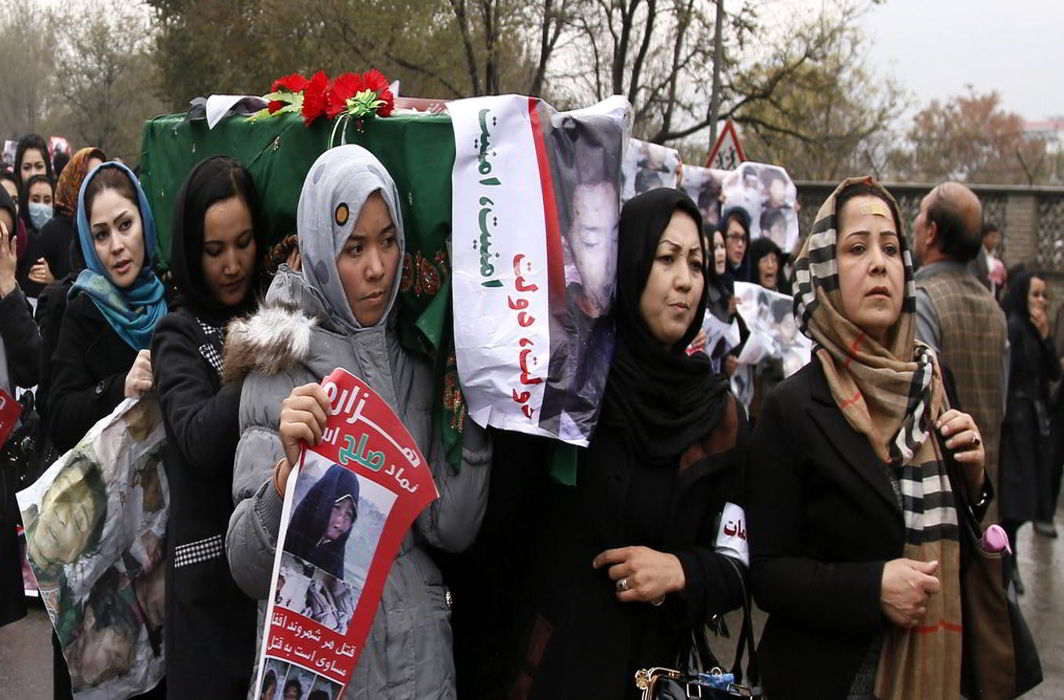
Afghans organise a protest march in Kabul demanding an end to terrorism and establishment of a political system that will ensure their safety. Photo Credit: The Conversation

How a U.S. Special Immigrant Visa program likely saved a life? Its continuation and expansion could save more

By Sher A. Nader

In July 2016, I welcomed my friend Muhammad Mihdi, his wife, and their 2-year-old son at San Francisco International Airport. They arrived here from Kabul, Afghanistan, on Special Immigrant Visas (SIVs) granted to those Afghans and Iraqis who have worked for or on behalf of the U.S. government in Afghanistan and Iraq and as a result are facing an ongoing threat in their country. I was accompanied by Barbara Preston, a retired doctor who is a volunteer for No One Left Behind (NOLB). NOLB is a nonprofit organization that supports and advocates for Afghan and Iraqi translators before and after their arrival in the U.S.

Mihdi worked for the U.S. Military in Khogyani, one of Afghanistan’s most volatile districts. It is in the southern part of Nangarhar province, which borders Pakistan. Although he knew that by working with Americans in Afghanistan he was putting his life and the lives of his family members at substantial risk, he never thought of giving up. In 2012, his work at Khogyani ended but the threats to his life followed him everywhere – even to his home in Kabul.

Every time I talked to Mihdi while he was still in Afghanistan, his descriptions of the security situation worried me greatly.

“Before leaving for work in the morning, I can’t stop hugging and giving love to my little son, as I know there’s no guarantee I will get back home in the evening,” Mihdi told me a few months before his visa was issued. His voice conveyed a sense of the danger he faced daily.

When he received his SIV, he immediately arranged to travel to the U.S. He was lucky. If he hadn’t received his visa at that time, he might not be alive today. In his own words, “I would have been killed, along with my father, some months later.”

On March 8, 2017, a suicide blast destroyed the back entrance to Sardar Daud Khan Military Hospital, allowing five heavily armed terrorists disguised as medical staff to enter Afghanistan’s largest military hospital, in the heart of Kabul.

The attack began at 9 a.m. For the next seven hours, the gunmen went from ward to ward, killing everyone in their sight – including doctors and patients. At least 100 people were killed and hundreds of others injured.

Mihdi’s father had been admitted to the same hospital a few days earlier after doctors found his asthma was getting worse. His ward was on the fourth floor. “My mother and brother-in-law were there, too. They took him food and remained there to help him through most of the day, every day,” Mihdi told me when I visited him at his home a day after the attack. “There were 15 more people in the same ward.”

As soon as Mihdi learned of the attack he tried to reach his parents by phone. “The truth,” Mihdi learned, “was that my father had been killed and my mother was injured. I couldn’t believe my mother was alive until I heard her voice on the phone. Thankfully, my brother-in-law was unhurt.”

A few days after the incident, when I called and spoke to Mihdi’s mother, she still sounded shocked and terrified. “As soon as we heard the first explosion, we closed the ward’s entrance and took positions under the beds,” Mihdi’s mother explained while sobbing.

“We continued to hear explosions and gunfire for hours but no one entered our ward. Around 2 p.m., all of a sudden, there was absolute silence and we thought the attack was over,” she recalled. “Then one of the men in the ward moved toward the door to open it. Others urged him to wait for the arrival of security forces, but he didn’t listen.

“As soon as he opened the door, a bullet pierced through his head. It seemed as if the gunman had been waiting behind the door. He started shooting everyone he saw,” Mihdi’s mother said.

Mihdi’s father was shot in chest, and his mother in the leg. His brother-in-law was uninjured – Mihdi’s mother had covered him by putting herself over him. What she did was nothing short of heroic.

“I saw my husband dying in front my eyes but couldn’t do anything. I was bleeding severely,” Mihdi’s mother recalled. The incident left her with serious psychological problems. For the next few weeks, she would scream in her sleep several times during the night and remain restless throughout the day. She hasn’t fully recovered yet.

When Mihdi was living in Afghanistan, he would help his father and take him food whenever his father got sick and was admitted to hospital. Had he not come to the U.S., Mihdi would likely have been in that room with his father at the time of the attack. He would likely have been killed or seriously injured. If Mihdi were able to bring his parents along with him to the U.S., today his father would likely be alive and his mother would be healthy, enjoying their time with their newly born grandson.

Since December 2014, 11,000 SIVs have been awarded to Afghan applicants by the U.S. State Department. Thousands more were awarded in previous years dating back to the program’s creation in 2009. Some of these visa recipients, and others from Iraq, might not be alive now had their visas been denied or even delayed. For others like Mihdi who risked their lives in the service of the U.S. missions in Afghanistan and Iraq, the continuance of this visa program can be the primary lifeline to truly ensure that no one is left behind.

Sher A. Nader is a freelance writer based in California, USA. He can be reached @ [email protected]

Latest world news

Trump says Iran agrees to never have nuclear weapons, rejects $300 billion fund claim

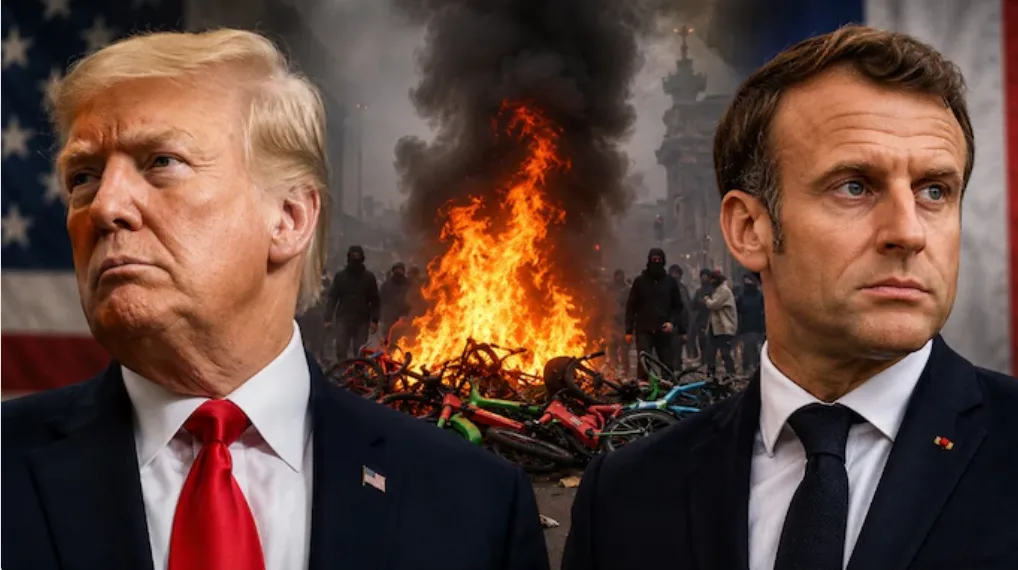
Donald Trump said Iran has agreed to never possess nuclear weapons under a proposed framework, while dismissing reports that the US would provide Tehran with a $300 billion reconstruction fund.

Published

on

Donald Trump statement

US President Donald Trump has said that Iran has agreed to a commitment that it will never develop or possess nuclear weapons, describing it as a central element of a proposed understanding between Washington and Tehran.

Speaking about the ongoing diplomatic efforts, Trump also rejected reports suggesting that the United States planned to provide Iran with a reconstruction or investment package worth $300 billion. He described such claims as false and said no such arrangement had been agreed.

The remarks come as discussions continue over a broader framework aimed at easing tensions between the two countries. According to Trump, the understanding would ensure that Iran remains without nuclear weapons while opening the door for future engagement if the terms are respected.

Questions remain over final agreement details

Despite Trump’s comments, several aspects of the proposed arrangement remain unclear because the full text of the agreement has not yet been made public.

Reports indicate that negotiations have involved discussions on sanctions relief, access to frozen assets and potential economic measures linked to Iran’s compliance with future commitments. However, the exact scope of these provisions has not been officially confirmed.

Another key issue is how compliance would be monitored. Details regarding inspections, verification mechanisms and the handling of Iran’s existing nuclear materials have yet to be fully explained.

Further negotiations expected

Officials have suggested that discussions on technical nuclear matters could continue even after the signing of an initial memorandum of understanding. Such talks would likely focus on implementation and verification measures.

The proposed framework is being closely watched internationally, as any agreement between the United States and Iran could have significant implications for regional stability and global non-proliferation efforts.

For now, Trump has maintained that the core objective remains clear: ensuring that Iran never acquires a nuclear weapon while denying reports that Washington has committed to a multibillion-dollar reconstruction fund.

Continue Reading

LATEST SPORTS NEWS

USA start FIFA World Cup 2026 with dominant 4-1 victory over Paraguay

The USA opened their FIFA World Cup 2026 journey with a dominant 4-1 victory against Paraguay, earning three valuable points in Group D.

Published

on

The United States kicked off their FIFA World Cup 2026 campaign in impressive fashion, securing a commanding 4-1 victory over Paraguay in their Group D opener at SoFi Stadium in Los Angeles.

Playing in front of a passionate home crowd, the hosts delivered an attacking display to collect all three points and make an early statement in the tournament. The match also marked a significant occasion as the USA hosted part of the World Cup opening festivities before turning attention to the action on the pitch.

The Americans took control early and maintained pressure on Paraguay throughout the contest. Their attacking movement and clinical finishing helped them establish a comfortable lead, while Paraguay struggled to contain the hosts’ pace and creativity in the final third.

USA seize control after fast start

The United States settled quickly and found success going forward, creating several opportunities through quick passing and aggressive pressing. Their attacking approach paid off as they built momentum and gradually stretched Paraguay’s defence.

Paraguay attempted to respond and managed to get on the scoresheet, but the South American side found it difficult to match the intensity shown by the hosts. The USA continued to create chances and added further goals to put the result beyond doubt.

With the victory, the United States moved to the top section of Group D and gained an important boost in confidence ahead of their upcoming fixtures in the tournament.

Strong opening result for hosts

A winning start is particularly important in a World Cup campaign, and the USA achieved exactly that with a comprehensive performance. The result gives the hosts valuable momentum as they prepare for the next stage of group play.

For Paraguay, the defeat means they will need a strong response in their remaining group matches to keep their hopes of progressing to the knockout rounds alive.

The FIFA World Cup 2026 is being jointly hosted by the United States, Canada and Mexico, with the tournament featuring an expanded format and more participating teams than previous editions.

Continue Reading

Latest world news

Jaishankar raises deaths of three Indian sailors with Marco Rubio, lodges strong protest

External Affairs Minister S Jaishankar conveyed India’s strong protest to US Secretary of State Marco Rubio over an attack that killed three Indian sailors, stressing that lethal action against commercial shipping is unjustified.

Published

on

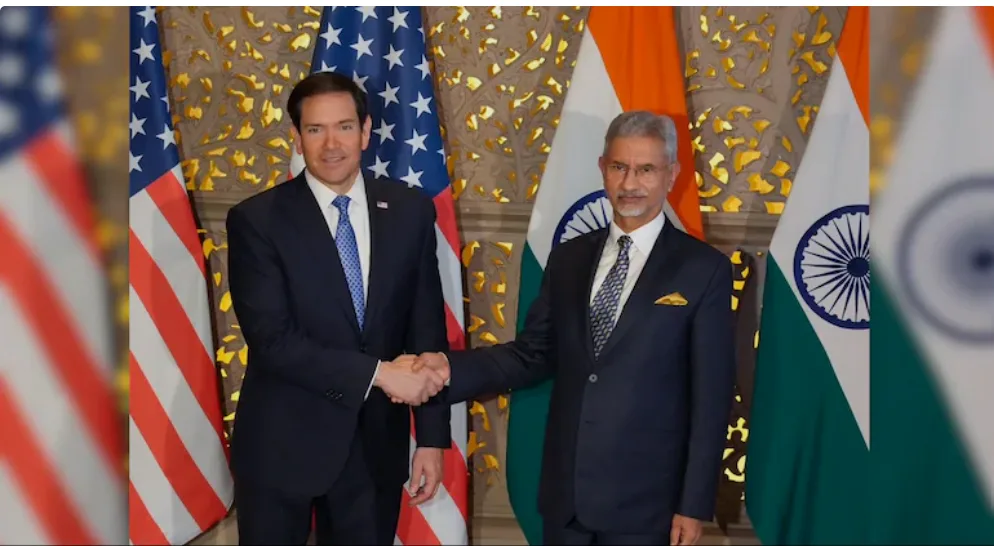
External Affairs Minister S. Jaishankar on Saturday spoke with Marco Rubio and conveyed India’s strong protest over recent attacks on commercial vessels in the Gulf that resulted in the deaths of three Indian sailors.

According to reports, Jaishankar told Rubio that the use of lethal force against commercial shipping was not justified and underlined India’s serious concerns regarding the safety of civilian seafarers operating in the region. The conversation came days after three Indian mariners were killed in an attack on the Palau-flagged tanker Settebello near the Oman coast.

The incident has triggered diplomatic engagement between New Delhi and Washington. India had earlier summoned a senior US diplomat to register its concerns and seek accountability following the attack. The Ministry of External Affairs has emphasized that actions endangering civilian shipping undermine maritime safety and stability in a strategically important region.

India reiterates concern over maritime safety

India has stressed the importance of protecting civilian seafarers and ensuring the security of international maritime commerce. Officials have expressed concern over multiple incidents involving Indian crew members in West Asian waters in recent days.

The deaths of the three sailors have also sparked calls within India for stronger diplomatic efforts to safeguard Indian nationals working aboard commercial vessels in conflict-affected maritime zones.

Background of the incident

The attack involved the tanker Settebello, which was operating near Oman when it was struck during ongoing tensions linked to the conflict involving Iran and maritime operations in the Gulf region. Initial reports indicated that Indian crew members were among those affected, and later confirmations established that three Indian sailors had died in the incident.

India has maintained that civilian shipping should not become a target and has continued diplomatic outreach to ensure the safety and welfare of Indian seafarers working across global shipping routes.

Continue Reading

Trending

© Copyright 2022 APNLIVE.com