English हिन्दी
Connect with us

India News

Eye on Gujarat’s Rajputs votes, BJP and Congress unite against Bhansali’s Padmavati

Published

on

Eye on Gujarat’s Rajputs votes, BJP and Congress unite against Bhansali’s Padmavati

[vc_row][vc_column][vc_column_text]Congress, BJP want the Deepika Padukone-starrer to be banned in Gujarat or its release deferred till elections are over, say distortion of history shouldn’t be allowed

Even as the Congress and BJP engage in a high-pitched diatribe against each other in poll-bound Gujarat, here’s an issue that seems to have united the two political parties – Sanjay Leela Bhansali’s opulent multi-starrer Padmavati.

With doubts being raised on whether the film stays true to the “historical facts” of the siege of Chittor by Alauddin Khilji, the BJP and Congress both fear that any “distortion of history” by the makers of Padmavati might rile the Rajput community of Gujarat and cause a law and order situation. The Deepika Padukone-starrer film is slated for a December 1 release while Gujarat is scheduled to go for a two phase election on December 9 and 14.

The BJP has demanded that the Election Commission must intervene in the issue and either defer the release of Padmavati to a date after the Gujarat polls or ban the release of the film in the state. The Congress on the other hand has said that the film should be banned if it “distorts history”.

The demands by the BJP and the Congress – both parties are eyeing to capture the state’s substantial Kshatriya/Rajput vote which holds the key to winning around two dozen of the state’s 182 assembly seats – comes days after former chief minister Shankersinh Vaghela (a Kshatriya leader) threatened “violent protests” across the state if the film was released in Gujarat without being pre-screened for Hindu, and specifically Kshatriya, community leaders and being approved by them. Vaghela, who had quit the BJP over two decades ago to join the Congress but quit the grand-old party earlier this year, has announced a ‘third front’ to take challenge the Congress and the BJP in the largely bi-polar state.

Gujarat is a prestige battle for the BJP which has ruled the state for the past 22 years. It is also the home state of www.apnlive.com/topic/narendra-modiand the party’s national president Amit Shah. With Modi no longer the chief minister of Gujarat and the incumbent Vijay Rupani government facing an uphill electoral battle due to anti-incumbency and agitated Patel, Dalit, Adivasi and Minority communities, the Congress is hoping to finally end its exile from power in the state. In such a situation, every seat and every endorsement by members of different castes who comprise the Gujarat electorate counts.

While on the face of it, the BJP and Congress’ opposition to Padmavati may seem trivial, but in its backdrop lies a greater political battle for the two political parties.

Expectedly then, the state BJP’s spokesperson IK Jadeja said that his party “would prefer that Padmavati is either banned or its release.” A Kshatriya leader himself, Jadeja said: “We have received representations from Khastriya, Rajput communities opposing any purported distortion of history and character of Rani Padmavati in the movie.”

Senior Congress leader and also a chief ministerial hopeful, Shaktisinh Gohil echoed views that were strikingly similar to his political rival though he did seek to put the BJP in a spot too. “With elections round the corner, a minister from the BJP has written to the Election Commission seeking a ban on ‘Padmavati’ till the elections are over. It is your (BJP) government, write to the PM (sic),” Gohil said. The Congress leader added: “Postponing the release of the movie will not assuage the feelings of a community. We demand that if there has been distortion of history as some people have claimed, the movie should not be released at all.”

What is hilarious, though also disturbing, about the controversy over Padmavati is the fact that the “historical accuracy” that opponents of the film have been talking about is itself highly suspect. Several noted historians have rubbished the claims put forth by a section of self-anointed Rajput and Hindu scholars with regard to the siege of Chittor and the characters of Rani Padmavati (depicted in the film by Deepika Padukone) and Raja Rattan Singh (portrayed by Shahid Kapoor).

The character of Rani Padmavati was a creation of the 16th Century Sufi poet Malik Muhammad Jayasi who is known for his epic poem Padmavat. Written around 1540 AD, Padmavat introduced the character of Rani Padmavati to history. The legend that Alauddin Khilji got smitten by the beauty of the brave and immensely beautiful queen Padmavati and laid siege on Chittor to capture her was Jayasi’s creation – it was written over 200 years after Khilji’s actual conquest of Chittor in Rajasthan. In the years after 1540, the legend was strengthened by Hindu and Kshatriya scholars to establish Rani Padmavati as a ‘real historical character’ though her existence doesn’t really find any mention in the texts of the time when Chittor was actually conquered by Khilji.

Yet, the theatrical revival of the legend of Padmavati has caused a flutter in India today, leaving radical Hindu and Kshatriya groups riled. While Bhansali himself was attacked by goons of the Hindu right-wing outfit Karni Sena in January this year during the making of the film, in October members of the same fringe outfit destroyed a Surat-based local artist’s painstaking 48-hour-long effort at creating a ‘rangoli’ depicting Deepika Padukone as Padmavati.[/vc_column_text][/vc_column][/vc_row]

India News

G RAM G bill replacing MGNREGA passes Parliament amid opposition walkout and protests

The G RAM G Bill replacing MGNREGA has been passed by Parliament after overnight debate in the Rajya Sabha, triggering protests and walkouts by opposition parties.

Published

on

Parliament

Parliament has cleared the Viksit Bharat Guarantee for Employment and Livelihood Mission (Rural) Bill, commonly referred to as the G RAM G Bill, paving the way for the replacement of the Mahatma Gandhi National Rural Employment Guarantee Act (MGNREGA). The legislation was passed within two days amid sharp political confrontation, walkouts and overnight protests by opposition parties.

The bill was approved by the Lok Sabha despite repeated disruptions and protests. In the Rajya Sabha, the debate stretched beyond midnight, with voting held around 12.15 am. The bill was eventually passed by a voice vote after opposition members staged a walkout, leaving the ruling alliance members present in the House.

Opposition objects to name change and provisions

The Congress and other opposition parties mounted a strong challenge to the bill, objecting both to the change in the scheme’s name and its revised framework. A key point of contention was the removal of Mahatma Gandhi’s name from the legislation, which opposition leaders said reflected an ideological shift rather than a policy necessity.

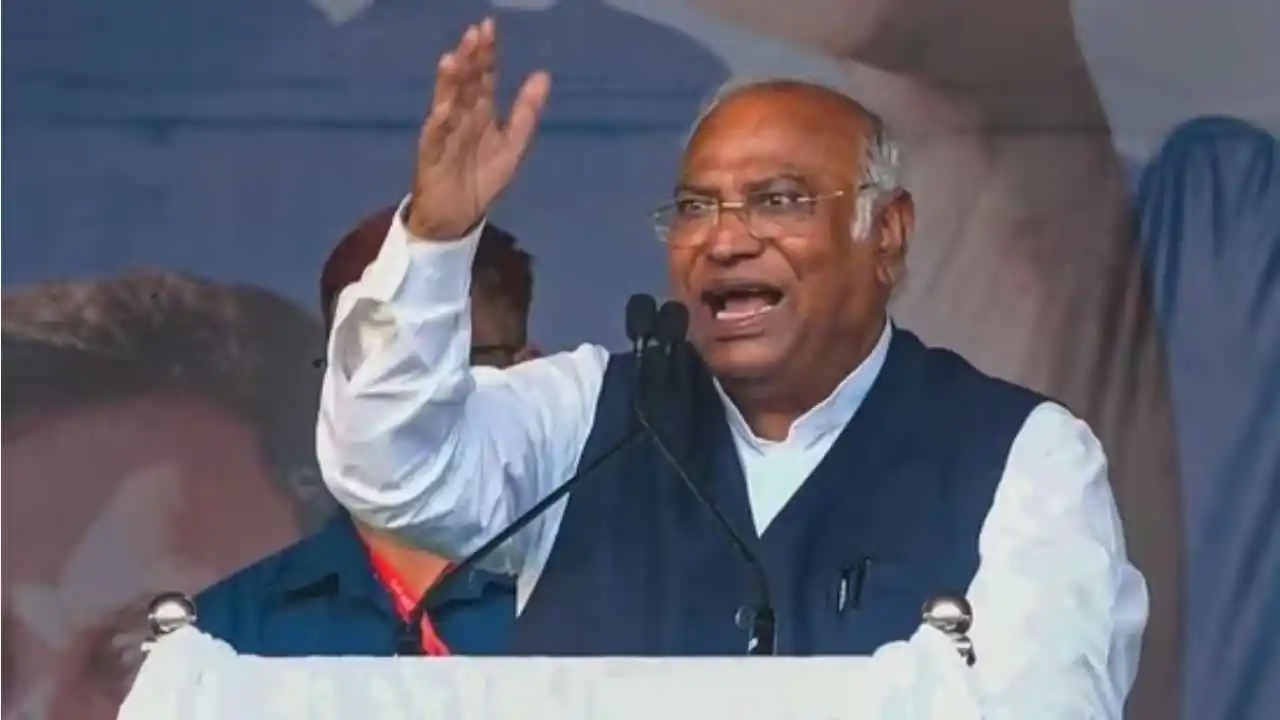
Congress president Mallikarjun Kharge launched a sharp attack during the Rajya Sabha debate, urging the government to withdraw the bill and warning that it would harm the rural poor. He accused the government of speaking in the name of welfare while undermining the interests of vulnerable communities, making an emotional appeal to reconsider the legislation.

Several opposition members initially demanded that the bill be referred to a standing committee for detailed scrutiny. When that demand was not accepted, they called for the bill’s withdrawal and later staged a walkout. Members of the Trinamool Congress and other parties subsequently sat on a dharna within Parliament premises.

Heated exchanges in the Upper House

The debate witnessed intense exchanges between the treasury benches and the opposition. Trinamool Congress MP Derek O’Brien linked the passage of the bill with developments in West Bengal, alleging that the Centre’s actions had consequences for the implementation of rural employment schemes in the state. He also referred to the state government’s decision to rename its employment initiative following the Lok Sabha vote.

As Rural Development Minister Shivraj Singh Chouhan rose to reply, opposition members raised slogans demanding the withdrawal of what they termed a “black bill”. When the protests continued, opposition MPs walked out, allowing the bill to be passed without their presence.

Responding sharply, Chouhan criticised the walkout and accused the opposition of refusing to engage in debate. He defended the government’s move, arguing that the earlier scheme had suffered from corruption and inefficiencies, and said the new law was drafted after consultations with stakeholders.

Government defends overhaul of rural employment scheme

The government has maintained that updating the two-decade-old MGNREGA framework was necessary to address structural shortcomings and align it with current rural needs. According to the provisions outlined, the new law increases the guaranteed days of work from 100 to 125 while retaining key elements of the earlier scheme.

However, critics have pointed out that employment under the new framework will be based on pre-approved plans rather than demand-driven applications at the gram panchayat level. The work categories have also been streamlined into four segments—water security, core rural infrastructure, livelihood-related assets, and climate resilience—raising concerns that local flexibility may be reduced.

Opposition leaders have argued that these changes dilute the original spirit of MGNREGA, which was designed as a rights-based, demand-driven employment guarantee programme.

Protests continue after passage

Following the bill’s passage, opposition parties reiterated their charge that the legislation weakens the guarantee, livelihood assurance and social security that formed the core of the original programme introduced in 2005. Despite these objections, the government’s numerical strength ensured the bill’s smooth passage through both Houses.

With parliamentary approval now secured, the G RAM G Bill is set to replace MGNREGA, marking a significant shift in India’s rural employment policy framework amid continuing political debate.

Continue Reading

India News

Priyanka Gandhi meets Nitin Gadkari over Kerala road projects, light moments mark discussion

Priyanka Gandhi met Nitin Gadkari in Parliament to discuss road projects in Kerala, with the meeting marked by humour, political remarks and an informal food tasting.

Published

on

Priyanka Gandhi meets Nitin Gadkari (1)

Congress MP Priyanka Gandhi Vadra on Thursday met Union Road Transport and Highways Minister Nitin Gadkari at his office in Parliament to raise issues related to road infrastructure projects passing through Kerala. The meeting combined formal discussions with lighter moments, including a humorous exchange and an unexpected food tasting session.

Kerala road projects discussed at Parliament meeting

Priyanka Gandhi, the Member of Parliament from Wayanad in Kerala, discussed six road projects that pass through the state. During the interaction, Nitin Gadkari clarified that some of these projects fall under the jurisdiction of the Kerala government and therefore cannot be directly handled by the Centre. However, he assured the Congress leader that the remaining proposals would be examined.

According to those present, the discussion remained cordial, with both sides acknowledging administrative limitations while exploring possible ways forward.

‘Bhai ka kaam ho gaya’ remark draws laughter

The meeting also saw a light-hearted moment when Gadkari referred to a recent interaction with Rahul Gandhi, the Leader of the Opposition in the Lok Sabha. He said Rahul Gandhi had met him earlier regarding road-related concerns in Rae Bareli.

In a humorous remark, Gadkari said that if work was done for the brother but not for the sister, it could lead to complaints. The comment prompted laughter from Priyanka Gandhi and others present in the room.

Congress confident of future action in Kerala

During the conversation, Priyanka Gandhi expressed confidence about the Congress party’s prospects in the upcoming Kerala Assembly elections. She indicated that proposals currently under the purview of the Left Front government in the state would be taken forward once Congress comes to power.

Her remarks reflected political confidence while keeping the focus on infrastructure needs in Kerala.

A homemade dish adds informal touch

Apart from policy discussions, the meeting included an informal culinary moment. Nitin Gadkari had prepared a rice-based dish after learning the recipe from online videos. Visitors to his office were offered rice balls served with chutney.

Gadkari encouraged Priyanka Gandhi to taste the dish, and she, along with Congress leader Deepender Singh Hooda, was seen sampling the food while continuing their conversation with the minister.

Continue Reading

India News

AAP dominates Punjab zila parishad polls, leads in most panchayat samiti zones

AAP has won 201 out of 317 declared zila parishad zones in Punjab so far and is leading in a majority of panchayat samiti seats, with counting still underway.

Published

on

Punjab Zila Parishad Polls

The ruling Aam Aadmi Party (AAP) has recorded a strong performance in the Punjab zila parishad elections and is leading in the majority of panchayat samiti zones, as per results declared so far on Thursday. The counting process is still underway and complete results are awaited, officials said.

Polling for the rural local bodies was held on December 14 to elect representatives across 347 zones of 22 zila parishads and 2,838 zones of 153 panchayat samitis in the state.

AAP secures clear edge in zila parishads

According to the available results, outcomes have been declared for 317 zila parishad zones so far. Of these, the AAP has won 201 zones, placing it well ahead of other parties.

The Congress emerged second with victories in 60 zones, followed by the Shiromani Akali Dal (SAD) with 39 zones. The BJP won four zones, the BSP secured three, while independents claimed 10 zones.

District-wise data shows that the AAP won 22 zones in Hoshiarpur, 19 each in Amritsar and Patiala, 17 each in Tarn Taran and Gurdaspur, and 15 zones in Sangrur. The Congress registered its best performances in Gurdaspur and Ludhiana with eight zones each, followed by Jalandhar with seven zones. The SAD performed strongly in Bathinda with 13 zones, while the BJP managed to win four zones in Pathankot.

AAP leads in panchayat samiti results

In the panchayat samiti elections, trends declared so far indicate that the AAP is leading in a majority of zones. However, officials clarified that counting is ongoing and the final picture will be clear only after all ballot papers are tallied.

Kejriwal, Mann reject opposition allegations

Reacting to the trends, AAP supremo Arvind Kejriwal said the party’s performance reflected strong rural support for the Bhagwant Mann government’s work. Addressing the media in Mohali along with Chief Minister Bhagwant Mann, Kejriwal dismissed allegations of irregularities raised by opposition parties.

He said the elections were conducted in a fair and free manner and claimed that the results so far showed a clear wave in favour of the AAP in rural Punjab. Kejriwal stated that nearly 70 per cent of the zila parishad and panchayat samiti seats had gone in favour of the party.

Congress, SAD question poll conduct

The Congress and the Shiromani Akali Dal, however, accused the ruling party of misusing official machinery. Punjab Congress chief Amrinder Singh Raja Warring alleged that the AAP had “stolen” the rural mandate and claimed that the results did not reflect genuine public support.

Opposition parties had earlier also accused the AAP government of high-handedness during the polling process, allegations that the ruling party has strongly denied.

Continue Reading

Trending

© Copyright 2022 APNLIVE.com