English हिन्दी
Connect with us

India News

Parliament passes bill to allow 100% foreign investment in insurance sector

Parliament has cleared the Sabka Bima Sabki Raksha Bill, allowing 100% foreign investment in insurance companies, with the government assuring strong safeguards for policyholders.

Published

on

Nirmala Sitharaman

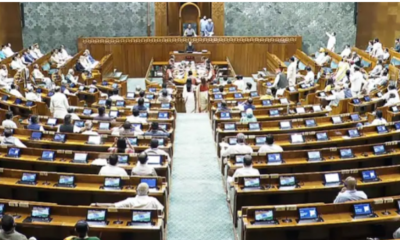
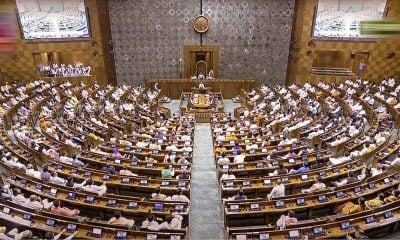
Parliament on Wednesday cleared a major amendment to insurance laws, paving the way for 100 per cent foreign direct investment (FDI) in insurance companies, up from the earlier cap of 74 per cent. The Rajya Sabha passed the Sabka Bima Sabki Raksha (Amendment of Insurance Laws) Bill, 2025, a day after it was approved by the Lok Sabha.

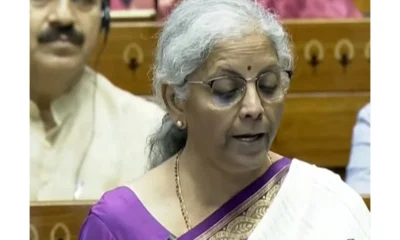
Replying to the debate, Finance Minister Nirmala Sitharaman said the move is aimed at attracting new insurers, intermediaries and allied service providers, which would expand the insurance ecosystem and lead to net employment generation.

Safeguards for policyholders highlighted

Addressing concerns over policyholder protection, Sitharaman said the Insurance Regulatory and Development Authority of India (IRDAI) has mandated a minimum solvency ratio of 1.5 for all insurance companies, meaning their assets must be at least one-and-a-half times their liabilities.

She added that insurers are also required to make provisions for liabilities classified as “incurred but not reported” and “incurred but not enough reported,” and profits can be calculated only after accounting for these obligations. According to the minister, these norms ensure adequate safeguards for policyholders.

LIC performance cited amid reforms

The finance minister said the government continues to strengthen the Life Insurance Corporation of India (LIC), citing its performance in the last financial year. LIC’s total assets under management rose by 6.45 per cent to ₹54.52 lakh crore in FY 2024-25, while its solvency margin improved to 2.11 from 1.98. The net value of new business also increased to ₹10,011 crore from ₹9,583 crore a year earlier.

Employment and consultation process

Sitharaman rejected claims that the amendments would hurt employment, stating that a deeper insurance market would benefit agents, brokers and intermediaries through wider outreach and more products.

She also countered opposition allegations that the bill was rushed, noting that consultations began in November 2024 with states and Union Territories. Inputs were also sought from insurers, regulators, industry bodies and the public, with over 13,000 responses received through the department’s website.

Wider changes under the bill

The legislation raises the FDI limit in insurance companies to 100 per cent and reduces the net-owned fund requirement for foreign reinsurance companies operating in India from ₹5,000 crore to ₹1,000 crore. It also broadens the definition of intermediaries to include managing general agents and insurance repositories.

The bill amends the Insurance Act, 1938, the LIC Act, 1956, and the IRDAI Act, 1999. Sitharaman said the changes align with the government’s long-term goal of achieving “Insurance for All by 2047” and improving ease of doing business.

Under the new framework, all insurance companies and intermediaries will be required to include the word “insurance” in their names for greater customer clarity. The amendments also introduce the provision for suspension of intermediary licences instead of immediate cancellation, allowing time for compliance.

Opposition voices concerns

Several opposition members opposed the bill in the Rajya Sabha, alleging it weakens accountability and prioritises shareholders over policyholders. They argued that insurance should primarily function as a social security mechanism rather than just an investment avenue.

Despite the criticism, the government maintained that the reforms would strengthen regulation, expand coverage, and support the growth of affordable insurance, especially in rural areas.

India News

Vijay appoints astrologer Radhan Pandit as OSD, sparks criticism from allies

Published

on

Actor vijay

Tamil Nadu Chief Minister C. Joseph Vijay has appointed astrologer and TVK spokesperson Radhan Pandit Vettrivel as Officer on Special Duty (OSD) to the Chief Minister, a move that has sparked criticism from allies and opposition leaders.

Radhan Pandit, who had publicly predicted a major electoral victory for Vijay and the Tamilaga Vettri Kazhagam (TVK) ahead of the 2026 Tamil Nadu Assembly elections, has been considered a close aide of the Chief Minister during the party’s election campaign.

The appointment drew sharp reactions from leaders within the Congress and Left parties. Congress MP Sasikanth Senthil questioned the decision in a post on X, asking why an astrologer required an OSD position in government.

Leaders from the Viduthalai Chiruthaigal Katchi (VCK) and CPI(M) also criticised the move, arguing that such appointments go against the principles of scientific temper and secular governance.

According to reports, Radhan Pandit was among the first people to visit Vijay’s residence after TVK’s strong performance in the assembly elections. He has also been associated with the party as a spokesperson and political commentator.

The controversy comes amid rapid political developments in Tamil Nadu following the formation of the new TVK-led government.

Continue Reading

India News

Maharashtra opposition seeks all-party meeting over PM Modi’s austerity appeal

Published

on

Sharad Pawar

Maharashtra opposition parties on Tuesday demanded an all-party meeting after Prime Minister Narendra Modi appealed to citizens to adopt austerity measures amid rising concerns over the ongoing West Asia crisis.

The prime minister recently urged people to avoid non-essential gold purchases, reduce petrol and diesel usage, postpone foreign travel and consider work-from-home practices to help minimise the economic impact of global uncertainty.

Leaders from opposition parties in Maharashtra said the Centre should hold detailed discussions with political parties and explain the broader economic situation to the public. They raised concerns over the possible impact of geopolitical tensions on fuel prices, inflation and the overall economy.

Some opposition leaders also questioned the timing of the austerity appeal, saying citizens deserve greater clarity on the government’s plans to tackle any economic challenges arising from the crisis in West Asia.

Meanwhile, BJP leaders defended the prime minister’s remarks, describing them as precautionary steps aimed at reducing pressure on foreign exchange reserves and controlling inflationary risks linked to global supply disruptions.

The debate comes as concerns grow globally over energy supplies and rising crude oil prices due to tensions in West Asia.

Continue Reading

India News

India has 69 days of crude oil and LNG reserves, 45 days of LPG stock, says Hardeep Puri amid West Asia crisis

Published

on

Hardeep singh puri

India has sufficient fuel reserves and there is no supply shortage despite the ongoing conflict in West Asia, Union Petroleum and Natural Gas Minister Hardeep Singh Puri said on Tuesday.

Addressing the CII Annual Business Summit, the minister said the country currently has crude oil and LNG reserves that can last for 69 days, while LPG stocks are sufficient for 45 days.

Puri also said LPG production has been increased from around 35,000-36,000 tonnes per day to nearly 54,000 tonnes per day to ensure uninterrupted supply during the ongoing geopolitical tensions in West Asia.

The minister dismissed fears of any immediate restrictions or disruption in fuel availability and said there is “no supply issue” in the country.

His remarks came after Prime Minister Narendra Modi urged citizens to reduce unnecessary fuel consumption and avoid non-essential foreign travel to help conserve foreign exchange reserves amid rising global energy prices linked to the West Asia conflict.

The government has also said there are no plans for fuel rationing and that India’s energy supply position remains stable.

Continue Reading

Trending

© Copyright 2022 APNLIVE.com