English हिन्दी
Connect with us

Latest world news

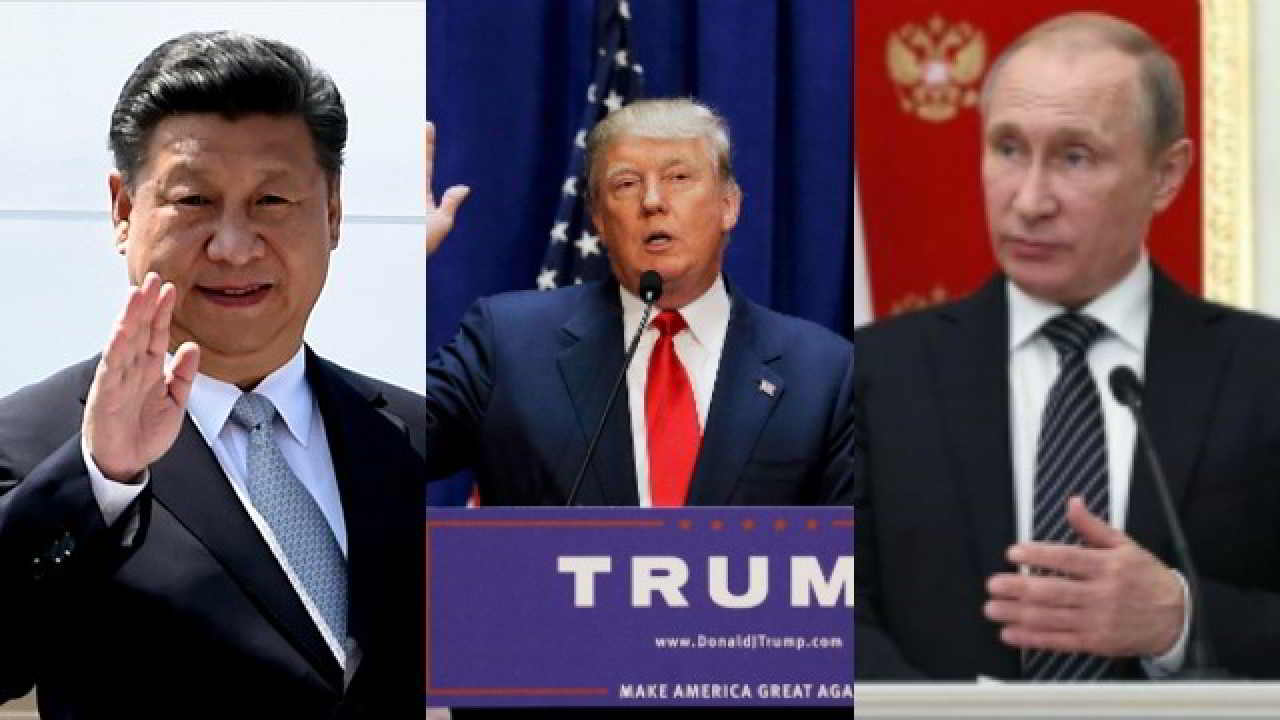
China, Russia criticise US for Cold War mentality and Imperialism

Published

on

Donald Trump

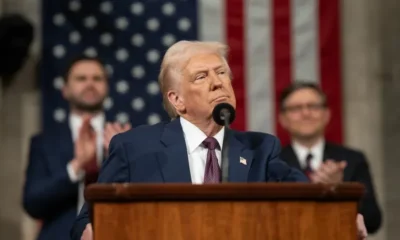
[vc_row][vc_column][vc_column_text]The Trump upheavals in the world politics are continuing. Several countries who received friendly gestures by the US President in recent months are now forced to express displeasure on the new National Security Strategy (NSS) unveiled by the same leader on Monday.

In a sharp reaction to the Washington’s move, China and Russia have criticised US for its new National Security Strategy (NSS) labelling both the countries as “competitors” challenging American interests.

Beijing has said that “Cold War mentality” was being demonstrated by US. Foreign ministry spokeswomen Hua Chunying said in Beijing on Tuesday, “We urge the US side to stop deliberately distorting China’s strategic intentions and abandon such outdated concepts as the Cold War mentality and the zero-sum game – otherwise it will only end up harming itself as well as others.”

“We hope that the United States can correspond with the trend of the times and the will of the people, put the world and China-US relations in perspective, honour the relevant commitments, and join hands with China to uphold the sound and steady growth of China-US relations,” she added. 

“This is the right choice that serves the interests of the two peoples – and people around the world. We always believe that as the largest developing country and developed country and the top two largest economies in the world, China and the United States shoulder important responsibilities and have extensive common interests in upholding world peace and stability and promoting global development and prosperity,” said the spokeswomen.

“Cooperation is the only right choice for China and the United States, and win-win cooperation can lead to a better future.” She added.

Meanwhile Russia has characterised the US new NSS with its “imperialist character.”  Kremlin spokesman Dmitry Peskov told reporters that “A quick read of the parts of the strategy that mention our country … [shows] an imperialist character”. Peskov is the Deputy Chief of Staff of the Presidential Administration and also holds presidential press secretary’s office.

Peskov said Russia also does not see itself as a threat to US interests. He said that the new US security strategy shows “an unwillingness to give up the idea of a unipolar world – moreover, an insistent unwillingness, disregard for a multipolar world. We cannot agree with an attitude that sees our country as a threat to the United States,” said added.

On Monday, Trump unveiled his new National Security Strategy promising to prioritise US economic interests and “pursue peace through strength”. He named China and Russia as “rivals” that seek to “challenge American power, influence, and interests” and attempt “to erode American security and prosperity”.

Recently Russian President Vladimir Putin thanked US for CIA’s cooperation in thwarting terrorist attack in St. Petersburg. Both leaders are considered to be intending to create better ties.

Similarly Donald Trump, during his November visit to Beijing, praised Chinese president for the “huge” trade deficit between the two largest economies.

In the new NSS, Trump has described India as a “leading global power” while he asked Pakistan to take “decisive action” against terrorist groups.

Pakistan has criticised the US efforts to prop India as a regional power and advised that countries should be given statuses on the basis of their “constructive contributions.”[/vc_column_text][/vc_column][/vc_row]

Latest world news

Trump calls PM Modi friend, says had very good conversation amid West Asia tensions

Trump described PM Modi as a friend after a 40-minute call focusing on Iran tensions, trade and strategic ties.

Published

on

Donald Trump statement

US President Donald Trump described Prime Minister Narendra Modi as a “friend” and said the two leaders had a “very good conversation” during a recent phone call held amid rising tensions in West Asia.

The call, which lasted around 40 minutes, comes shortly after developments in the ongoing Iran-related conflict and diplomatic efforts in the region. During the conversation, both leaders discussed key issues including regional security, trade, and bilateral cooperation.

The interaction marks one of the first high-level engagements between the two leaders following recent ceasefire-related developments involving the United States and Iran. The evolving situation in West Asia, including concerns around stability and global energy routes, was a significant focus of the discussion.

Officials indicated that the leaders also reviewed progress in India-US ties and reiterated their commitment to strengthening the strategic partnership across multiple sectors.

The phone call reflects continued coordination between New Delhi and Washington as geopolitical tensions persist in the Middle East, with both sides maintaining close communication on global and regional issues.

Continue Reading

Latest world news

Israel-Lebanon ceasefire to begin within hours as Trump announces 10-day truce

Israel and Lebanon may begin a 10-day ceasefire within hours after a proposal announced by Donald Trump amid ongoing tensions.

Published

on

Donald Trump

A temporary halt in hostilities between Israel and Lebanon is expected to begin within hours after US President Donald Trump announced a proposed 10-day ceasefire between the two sides, amid ongoing tensions in the region.

According to his statement, the ceasefire is likely to take effect around 5 p.m. Eastern Time, although independent confirmation from both sides is still awaited.

The development follows discussions involving Israeli Prime Minister Benjamin Netanyahu and Lebanese President Joseph Aoun, with mediation efforts led by the United States.

Officials indicated that the proposed truce is aimed at creating a limited window to reduce violence and potentially pave the way for broader diplomatic engagement. The situation along the Israel-Lebanon border has remained tense in recent weeks, with escalation linked to the activities of Hezbollah.

Diplomatic efforts have intensified in recent days, with discussions facilitated by the United States, including the involvement of US Secretary of State Marco Rubio. However, details of the agreement and the extent of coordination between the parties remain unclear.

The situation remains fluid, and the success of the ceasefire will depend on adherence by all sides involved. The conflict has already led to significant humanitarian and geopolitical consequences, including displacement and disruption in affected areas.

While the proposed ceasefire is being seen as an important step toward de-escalation, broader negotiations involving regional stakeholders are expected to be necessary for any lasting resolution.

Continue Reading

Latest world news

US ends oil sanctions waiver for Iran and Russia, impact likely on India’s energy imports

The US decision to end the Iran and Russia oil waiver may impact India’s oil imports, fuel prices and global energy markets.

Published

on

US oil tanker

The United States has decided not to extend a temporary sanctions waiver that allowed limited trade in Iranian and Russian oil, marking a shift towards stricter enforcement of economic restrictions.

The waiver, introduced in March 2026, had permitted the sale of oil already loaded on ships to stabilise global supply during heightened geopolitical tensions. However, it is now set to expire around mid-April without renewal.

US officials have indicated that the move is part of a broader strategy to increase pressure on both Iran and Russia amid ongoing conflicts and geopolitical tensions.

What the waiver did and why it mattered

The short-term waiver allowed millions of barrels of oil—estimated at around 140 million barrels—to enter global markets, helping ease supply shortages and prevent sharp price spikes.

It also enabled countries like India to purchase discounted crude oil from Russia and resume limited imports from Iran after years of restrictions.

Impact on India

India, one of the world’s largest oil importers, is expected to feel the impact of the decision in several ways:

  • Reduced access to discounted oil
    India had been buying cheaper Russian crude and recently resumed Iranian imports under the waiver. Its end may limit these options.
  • Potential rise in fuel costs
    With fewer discounted supplies available, India may need to rely more on costlier sources, which could increase domestic fuel prices.
  • Supply diversification pressure
    India may need to explore alternative suppliers in the Middle East, Africa, or the US to maintain energy security.
  • Geopolitical balancing challenge
    The move adds pressure on India to align with US sanctions while managing its own economic interests.

Global energy market concerns

The end of the waiver comes at a time when global oil markets are already under stress due to conflict in West Asia and disruptions in key routes like the Strait of Hormuz.

Analysts warn that tightening sanctions could:

  • Reduce global oil supply
  • Increase price volatility
  • Intensify competition among major buyers like India and China

Bigger picture

The US decision reflects a broader shift from temporary relief measures to stricter enforcement of sanctions, even if it risks tightening global energy markets.

For India, the development highlights a recurring challenge—balancing affordable energy access with geopolitical realities.

Continue Reading

Trending

© Copyright 2022 APNLIVE.com