English हिन्दी
Connect with us

Latest world news

India succeeds hurting Pakistan’s trade interest in Afghanistan

Published

on

List of banks that revised interest rates on FD in first week of April

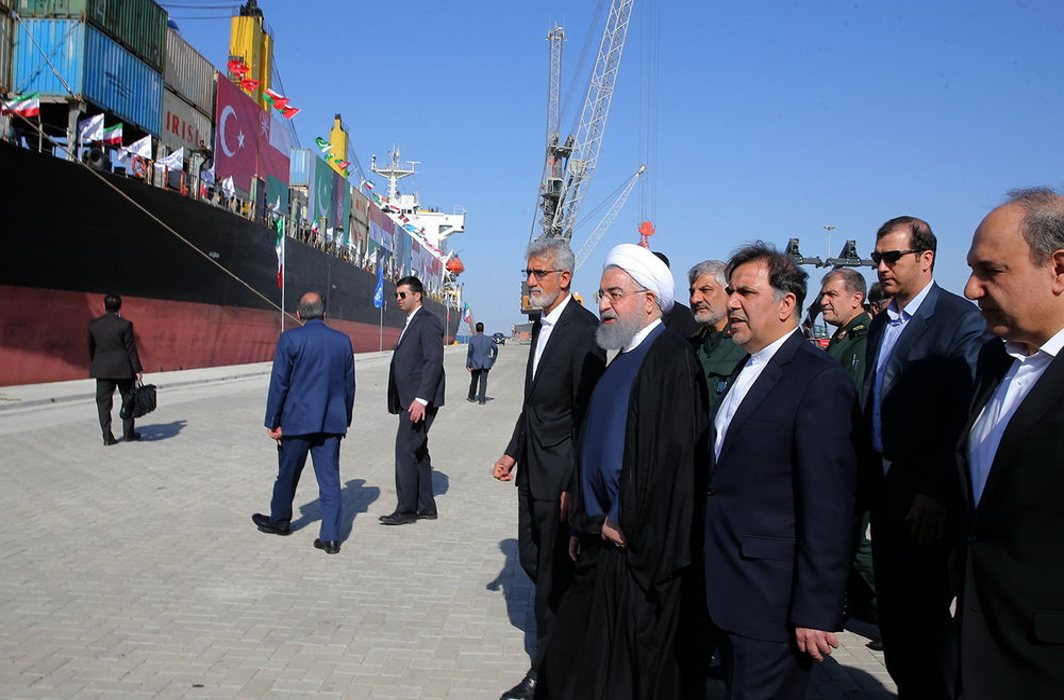
Development of Iranian port Chabahar and connecting road to Afghanistan by India has started showing results causing huge trade deficit for Pakistan. A senior Pakistani official has acknowledged that India has succeeded to penetrate in Kabul declining their market share by more than 50 per cent falling to $ 1.2 billion from $ 2.7 billion during last two years.

According to Dawn, Zubain Motiwala, Chairman Pakistan-Afghanistan Joint Chamber of Commerce and Industry who recently visited Kabul said on Friday that the penetration of India and China into Afghan market has limited Pakistan’s option to retain its market share. He said that India subsidises heavily on its exports. Pakistan has been losing even the traditional markets of flour, men and women’s clothes and red meat.

According to Motiwala, India has been providing goods at subsidised rates to capture the market and are providing air tickets with a 75pc rebate. Afghans find it easy to travel to India with cheap tickets and free multiple visas without police checks.

According to Pakistan Bureau of Statistics, exports to Afghanistan dropped to $1.271bn in FY17 from $1.437bn in FY16. Exports in the first quarter of 2017-18 stood at $319 million. Traditionally Kabul was natural market for Pakistani exports which is now changing because of cheaper products from China and India.

Rising India’s medical tourism has also affected Pakistan. Earlier thousands of Afghans used to visit Peshawar for medical treatment but now they prefer going to India due to cheaper treatments. “Medical tourism of Peshawar, which was mainly due to Afghans, is now at zero level; hospitals in Hayatabad are empty,” Motiwala added.

Large numbers of Peshawar traders have also lost their business. Out of 200 flour mills, about 100 have been closed down due to a drastic fall in the export of flour to Afghanistan.

Movement of containers’ traffic from Karachi port to Kabul have also decreased from average 70,000 to just 7000 which reflects the change of trading route for imported goods to Afghanistan.

Dawn report further says that Pakistan was the biggest supplier of shalwar qameez suits to Kabul which is now shifted to the supplies from India and China. This was a traditional Pakistani item in Afghan market.

India succeeds hurting Pakistan’s trade interest in Afghanistan

Earlier on February 9, Eurasian Times had reported that over 80% of Afghanistan’s cargo traffic has shifted from Karachi seaport to Bandar Abbas and Chabahar ports in Iran. The move comes as a result to Pakistan’s new trade tariffs and inauguration of Chabahar port, which is expected to greatly impact the Pakistan’s role in trade transit for Afghanistan.

In October last year, India shipped its first consignment of wheat to Afghanistan by sea through Chabahar port, launching a trade route bypassing Pakistan. The shipment was sent from Kandla seaport. The shipment was taken by trucks to Afghanistan from the Iranian port.

In May 2016, India, Iran, and Afghanistan had signed a historic three-nation deal to develop the strategic Chabahar port and build a transport and trade corridor through Afghanistan that could halve the time and cost of doing business with Europe.

Since 2001 US-led military operation to remove Taliban government in Afghanistan, militant groups used to attack coalition cargo travelling from Karachi to Kabul in Baluchistan province for black mailing US administration and exerting pressure on Pakistan government.
Latest world news

India flags attacks on Hindus in Bangladesh as worrisome after recent lynchings

India has reacted sharply to recent lynchings of Hindu men in Bangladesh, calling the attacks on minorities worrisome and urging that those responsible be brought to justice.

Published

on

Randhir Jaiswal

India has expressed strong concern over a series of violent incidents targeting members of minority communities in Bangladesh, following the lynching of two Hindu men in separate incidents. The Ministry of External Affairs said such attacks are “worrisome” and cannot be ignored, stressing that those responsible must be held accountable.

Speaking on Friday, External Affairs Ministry spokesperson Randhir Jaiswal said New Delhi has taken serious note of the developments across the border and is closely monitoring the law and order situation. He underlined that continued violence against minorities, including Hindus, Christians and Buddhists, remains a matter of grave concern for India.

“The unremitting hostility against minorities in Bangladesh at the hands of extremists is deeply troubling,” Jaiswal said, while condemning the recent killing of a Hindu youth in Mymensingh. He added that incidents of violence cannot be dismissed as exaggeration and expressed hope that perpetrators would be identified and punished.

According to the ministry, over 2,900 incidents of violence against minorities — including killings, arson and land-related crimes — have been documented by independent sources during the tenure of Bangladesh’s interim government. These developments, India said, cannot be brushed aside.

Rajbari killing under investigation

The latest incident took place on Wednesday in Pangsha upazila of Rajbari district, around 145 km west of Dhaka. As per police accounts quoted by media, the victim, identified as Amrit Mondal, was beaten to death by local residents following allegations of extortion.

Police said Mondal was suspected of leading a criminal gang and had allegedly attempted to extort money from a local resident along with his associates. Locals confronted the group and assaulted Mondal, leaving him critically injured. He was later taken to a hospital, where doctors declared him dead in the early hours of the morning.

Mondal’s body was sent to Rajbari Sadar Hospital for post-mortem examination. While most of his alleged associates fled, police said one person was arrested and firearms were recovered. Investigators also noted that Mondal had multiple criminal cases registered against him, including a murder case.

Lynching in Mymensingh sparks outrage

The Rajbari incident came days after another Hindu man was lynched in Mymensingh, triggering widespread outrage. The victim, identified as Dipu Das, also referred to as Dipu Chandra Das, was a factory worker in the city, located about 112 km north of Dhaka.

According to police and local reports, Das was attacked by a mob over allegations of blasphemy. He was first beaten outside a factory and later hanged from a tree. After the killing, his body was left along the Dhaka-Mymensingh highway and set on fire, leading to traffic disruption. Videos of the incident circulated widely on social media, fuelling anger and concern.

Interim government responds

Bangladesh’s interim government, led by Chief Adviser Muhammad Yunus, condemned the killing and said it does not support illegal activities, mob violence or mass beatings. At the same time, it maintained that the Rajbari incident was not communal in nature, describing it as a violent episode linked to alleged extortion and criminal activities. The administration said legal action would be taken against all those directly or indirectly involved.

India, however, reiterated that violence against minorities is a serious issue and called for effective action to ensure justice and safety for vulnerable communities.

Continue Reading

Latest world news

Khaleda son Tarique Rahman arrives to rapturous welcome in Bangladesh

Tarique Rahman returned to Bangladesh after 17 years and, in his first speech, invoked Martin Luther King while outlining what he called a plan for the country’s future.

Published

on

Khalida Zia son

Bangladesh Nationalist Party (BNP) acting chairman Tarique Rahman, who returned to Bangladesh on Thursday after 17 years in exile, outlined his political vision in his first public address, drawing a comparison with American civil rights leader Martin Luther King Jr.’s famous “I have a dream” speech.

Addressing a massive gathering in Dhaka, Rahman said that just as Martin Luther King spoke of a dream, he wished to speak of a concrete plan for Bangladesh. He referred to the country as “Beloved Bangladesh” and thanked party leaders, workers and citizens who stood by the BNP during his absence.

Rahman, the son of former President Ziaur Rahman and former Prime Minister Khaleda Zia, said that his plan would succeed only with public support and urged citizens to participate actively in nation-building.

Parallels drawn with 1971 and 2024 movements

In his speech, Rahman linked the 1971 Liberation War with the 2024 uprising against the government of former Prime Minister Sheikh Hasina. He said those who lost their lives in these movements should be honoured by building the country they had envisioned.

“We liberated Bangladesh in 1971, and we liberated it again in 2024,” he said, adding that the events of 2024 were about defending the country’s independence and sovereignty. He stressed the need to “repay the blood debt of the martyrs” through responsible governance.

Emphasis on tolerance, safety and economic rights

Touching upon Bangladesh’s social fabric, Rahman said the country belongs to everyone, irrespective of religion or geography, and underlined the importance of tolerance. He spoke about creating a safe environment where women, men and children can move freely without fear.

He also said the BNP would focus on peace, political reform and strengthening the economy. Referring to student leader Sharif Osman Hadi, Rahman said he had dreamt of a democratic Bangladesh and promised justice in connection with his killing, along with restoring people’s economic rights.

Call to youth and visit to Khaleda Zia

Rahman called upon the younger generation to take responsibility for development and stability, stressing that collective effort would be crucial to implementing his plan for Bangladesh.

After the address, he left to visit his ailing mother, Khaleda Zia, who is undergoing treatment at Evercare Hospital.

Rahman has been living in exile since 2008 following convictions in multiple corruption cases, which he has described as politically motivated. He has also alleged that the previous government attempted to assassinate him through torture.

With the Awami League barred from contesting elections, the political landscape has narrowed significantly. The BNP now holds a dominant position, and Rahman’s return has added fresh momentum and uncertainty to Bangladesh’s political future.

Continue Reading

Latest world news

Tarique Rahman returns to Dhaka after 17 years, massive crowd greets BNP leader

Tarique Rahman returned to Bangladesh after more than 17 years in exile, with thousands of BNP supporters gathering in Dhaka to welcome the party’s acting chairman.

Published

on

Tariq Rahman

Thousands of people poured onto the streets of Dhaka on Thursday as Bangladesh Nationalist Party (BNP) acting chairman Tarique Rahman returned to the country after more than 17 years in self-imposed exile in the United Kingdom. Rahman, who is the son of former prime minister Khaleda Zia, landed in the capital along with his wife Zubaida Rahman and daughter Zaima Rahman.

Supporters and party leaders marched from the Banani Airport Road towards Dhaka airport to welcome him, turning the stretch into a sea of BNP flags and slogans. Rahman was later escorted in a bulletproof vehicle as part of heightened security arrangements for his high-profile return.

Bulletproof convoy and reception in Purbachal

After arriving at the airport, Rahman was received by senior BNP leaders before heading to a large reception organised in the Purbachal area. Party workers and leaders lined both sides of the road to greet him during the journey. According to party expectations, a very large gathering assembled at the venue, where Rahman was scheduled to address supporters.

BNP leaders said only Rahman would speak at the event, while other senior figures remained present on the stage. His return is being closely watched as he has emerged as a key political figure ahead of Bangladesh’s upcoming general elections.

Visit to ailing mother and family residence

Following the public address, Rahman was expected to visit Evercare Hospital to meet his mother, former prime minister Khaleda Zia, who has been undergoing treatment there for over a month. After the hospital visit, the family was scheduled to go to Firoza, the Zia family residence in Gulshan.

Security across Dhaka was tightened during Rahman’s movement, with police deploying additional forces to prevent any untoward incident amid recent political tensions in the country.

Political backdrop of the return

Rahman’s return comes at a time when the BNP is seen to be gaining political ground following the ouster of former prime minister Sheikh Hasina in a student-led uprising last year. Surveys conducted in December indicate the BNP could secure the largest number of seats in the upcoming parliamentary elections, while other parties, including Islamist groups, are also in the fray.

Alongside political developments, personal reasons have also played a role in Rahman’s decision to return, particularly his mother’s prolonged illness, which party sources describe as a key factor behind the move.

Continue Reading

Trending

© Copyright 2022 APNLIVE.com