English हिन्दी
Connect with us

Latest Politics News

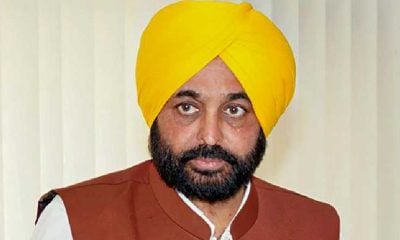
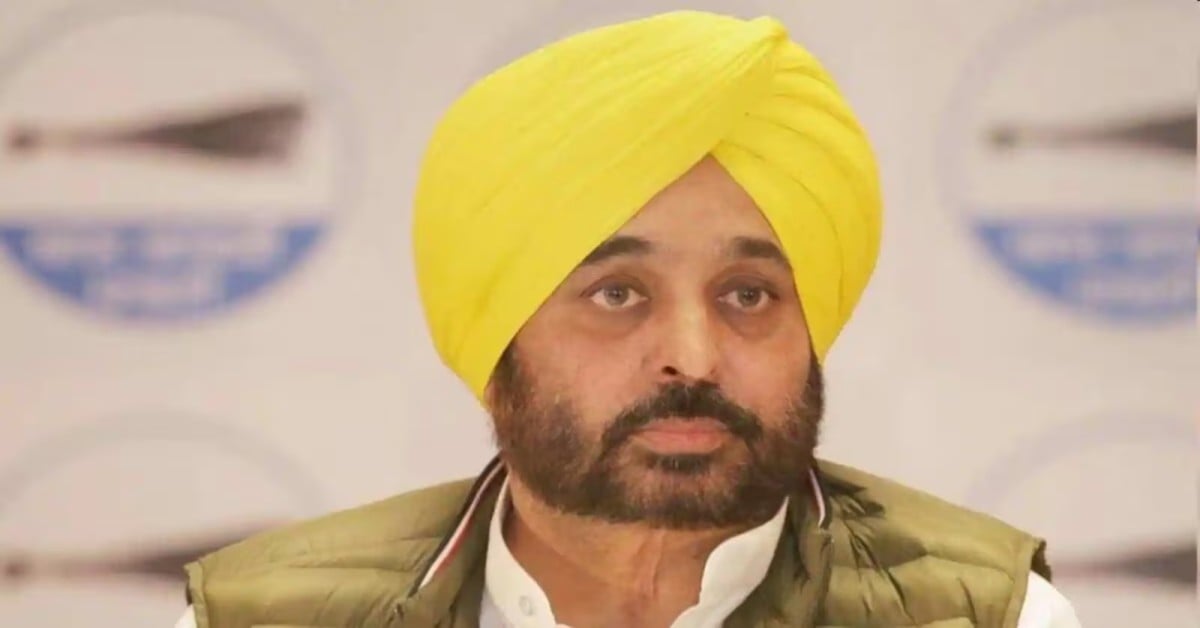
Punjab: Bhagwant Mann govt completes 14 months, here’s what it got right

A former stage artist with only 10 years in active politics, Bhagwant Mann’s elevation to rule the state came as a surprise to many.

Published

on

Punjab: Bhagwant Mann govt completes 14 months, here's what it got right

The Bhagwant Mann-led Aam Aadmi Party government in Punjab has completed 14 months in office. AAP came to power breaking the state’s five-decades’ tradition alternating between the Congress and the Akalis, becoming the first non-Congress, non-Akali party to form a government in Punjab.

In the 2022 Punjab Assembly elections, AAP won 92 seats of the total 117 seats in the state. The victory was AAP’s first-ever government formation outside Delhi.

The landslide sent out a message that Delhi Chief Minister Arvind Kejriwal’s popularity was increasing across the country, which was a point of concern for the national parties.

A former stage artist with only 10 years in active politics, Bhagwant Mann’s elevation to rule the state came as a surprise to many.
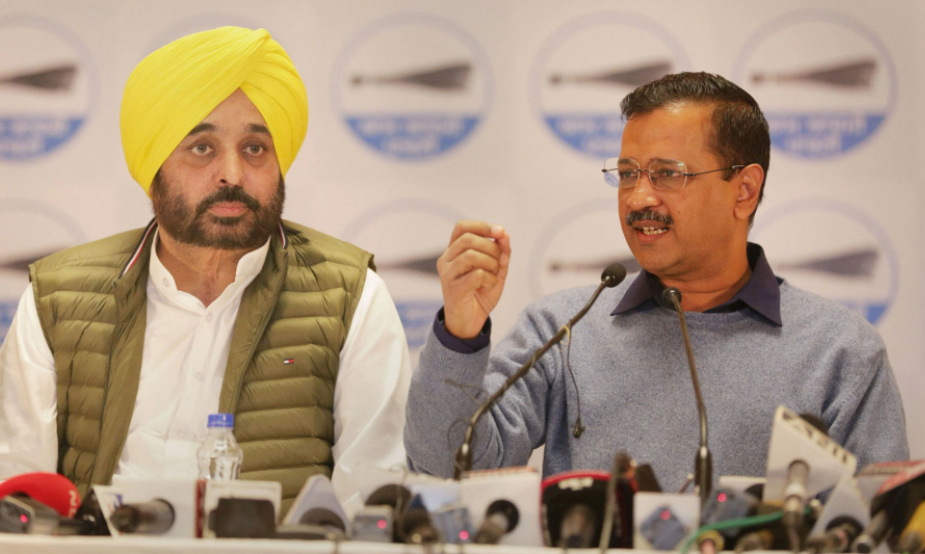
After Mann was declared AAP’s chief ministerial candidate, a large group of experts said Kejriwal had made a huge mistake in handling the responsibilities to Mann, who had no background in running an administration.

Political experts used to say, Mann is being handed with a state that has 23 districts, 237 towns, and 12581 villages. But the Punjab CM has come away looking the victor against these doubts of experts. Punjab faces many challenges, the biggest being sharing the border with Pakistan, a channel that is used to smuggle drugs, illegal arms and exports, a big threat for the state and for the country.

As Mann completes 14 months as Chief Minister, he seems to have had a clear thought to change all these narratives that were in the air linked to his name.

Let’s take a look on how Mann and his government has thrived so far

Tough on corruption

CM Mann has made a space for himself among the people and is often tagged as a man who is tough when it comes to acting against corruption.

Clean governance and taking a clear stand against corruption is what his government is known for, especially after the sacking of then Health Minister Vijay Singla, when corruption charges were levelled against him. And it was not just one man shown the door for corruption, another Punjab Minister Fauja Singh Sarari was also forced to resign over graft.

Mann has won wide-spread popularity for his government’s zero-tolerance policy against corruption. From political leaders to senior government officials, no one is spared in his regime even at the assistant inspector general of the police level, people have been sent to jail.

Agriculture

The recent passed budget of the government increased an outlay for crop diversification in the state, which was seen a major step taken in favour of the agriculture sector.

CM Mann also promised to include Moong dal under the Minimum Support Price (MSP) scheme benefiting farmers growing the pulse.

Free Electricity

In just four months after coming to power, the government also fulfilled the manifesto promise of 300 units of free electricity.

Some of the other major decisions that have helped the Punjab governement get a pat on its back was introducing one MLA, one pension scheme, scrapping of load enhancement fee on tubewells, launching Aam Aadmi Clinics (a replica of the Mohalla clinics in Delhi) and such.

Mann re-introduced the old pension scheme scrapped in 2004, under which a retiree is entitled for 50-percent of his last drawn salary, a step that wooed the working government staff and the retired staff across Punjab.

The Mann government has also been decisive on clearing possession of illegally encroached government lands. Reports said the Punjab government has till now freed some 10,000 acres of encroached land.

On Friday, Mann announced another drive against illegal occupation on government encroached lands starting from June 1.

The Mann government is often charged by the opposition for leaving the administrative control of the state in Delhi (read Kejriwal) instead of keeping it in Punjab.

The Bhagwant Mann government’s good performance is crucial for the Aam Aadmi Party to expand its national footprint in the 2024 Lok Sabha Polls. It wants to do well in Punjab for Lok Sabha and the Haryana Assembly elections next year, which the AAP has been eyeing for long and expects a Punjab-like outcome as they are neighbouring states.

India News

Karnataka Power Shift: What Siddaramaiah–DK Shivakumar compromise formula means

A closer look at the emerging ‘compromise formula’ between Karnataka’s top leaders Siddaramaiah and DK Shivakumar, and how it may shape the state’s political future.

Published

on

A possible settlement between Karnataka Chief Minister Siddaramaiah and Deputy Chief Minister DK Shivakumar has emerged, signalling a calmer phase in the leadership tussle within the state Congress. While the final decision rests with the party leadership in Delhi, details of the so-called “compromise formula” are gradually becoming clearer.

Breakfast diplomacy calms tensions

After weeks of speculation over friction between the two top leaders, Siddaramaiah and Shivakumar met over breakfast today. The meeting, aimed at projecting unity, served as a symbolic reset after their strained ties over the chief ministership question.

Analysts believe the optics were crucial — the Congress successfully avoided a public showdown by diffusing tensions before they escalated further.

A transition of power likely, say analysts

According to political observers, the compromise indicates a strong possibility of Shivakumar taking over as Chief Minister in a smooth transition, potentially as early as March–April 2026.
For now, sources say the arrangement requires Shivakumar to continue as Deputy Chief Minister without pushing for immediate change.

In return, the formula reportedly includes more cabinet positions for leaders loyal to Shivakumar and continuation of his role as the state Congress chief. Siddaramaiah is also expected to back Shivakumar as the party’s face for the 2028 Assembly election.

Why the Congress prefers this route

Replacing Siddaramaiah abruptly would not only upset internal balance but could also weaken the party, given his stature and mass appeal. Shivakumar, despite his influence, does not have the numbers within the legislature to force a takeover, making compromise the most viable path.

Siddaramaiah has already stated that this will be his final term as Chief Minister. With his legacy secure and his position as one of Karnataka’s tallest leaders intact, he appears willing to enable a dignified transition when the time comes.

Variables that could shape the final outcome

The success of the formula depends on three key factors:

1. Trust between the two leaders

Whether Shivakumar believes Siddaramaiah will keep his word remains uncertain. Karnataka’s political history is full of last-minute shifts, giving rise to the phrase “natak in Karnataka”.

2. Decision-making by the Congress high command

Delhi’s leadership must ensure the transition happens on time and without internal resistance, especially in the run-up to the 2028 Assembly polls.

3. Caste equations and political alignment

Siddaramaiah is the strongest face of the AHINDA bloc, while Shivakumar represents the OBC Vokkaliga community. The Congress cannot afford to alienate either group, making the timing and execution of any transition extremely delicate.

Continue Reading

India News

Siddaramaiah invites DK Shivakumar for breakfast amid power-sharing row in Karnataka

Amid a growing political rift in Karnataka, CM Siddaramaiah has invited Deputy CM DK Shivakumar for a breakfast meeting following intervention from the Congress high command.

Published

on

Amid escalating tensions between Karnataka Chief Minister Siddaramaiah and Deputy Chief Minister DK Shivakumar, the Congress high command has intervened, urging both leaders to resolve their differences. Following this push, Siddaramaiah has invited Shivakumar for a breakfast meeting tomorrow to discuss the ongoing rift.

High command steps in as leaders trade cryptic remarks

The disagreement between the two senior leaders became publicly visible after an exchange of indirect remarks on social media. DK Shivakumar posted a message stressing the importance of “keeping one’s word”, which was widely interpreted as a reminder of the rumoured 2023 “rotational chief minister formula”. According to that supposed understanding — never officially confirmed — Shivakumar was expected to take over as Chief Minister after 2.5 years.

Responding soon after, Siddaramaiah wrote that a “word is not power unless it betters the world for the people”, calling the mandate a full five-year responsibility. Sources said such public exchanges did not sit well with the party’s senior leadership.

Breakfast meet likely to ease tensions

Confirming that the high command had intervened, Siddaramaiah said he had called Shivakumar for a breakfast discussion. “When he comes for breakfast, we will discuss this. Both of us have said we will follow whatever the high command decides,” he stated. He also expressed willingness to travel to Delhi if called for talks.

Shivakumar, meanwhile, downplayed any urgency from his end. “I am not in a hurry. The party will take all decisions,” he told reporters, insisting that he wanted nothing for himself.

Rumoured formula resurfaces as government reaches halfway mark

Speculation around the power-sharing formula has intensified since the Congress government crossed its halfway point on November 20. The topic gained further attention after Shivakumar hinted at a “secret deal” involving senior leaders, although he refrained from revealing details.

Recent moves by some Congress legislators backing Shivakumar — including a visit to Delhi — also fuelled speculation, though Shivakumar claimed he was unaware of their purpose.

Continue Reading

India News

Rahul Gandhi terms Delhi air pollution a health emergency, questions PM Modi’s silence

Rahul Gandhi has called Delhi’s worsening air pollution a health emergency, demanding a Parliament debate and questioning PM Modi’s silence on the crisis.

Published

on

Congress leader Rahul Gandhi on Friday called the worsening air pollution in Delhi a “health emergency” and urged the Centre to present a strict, enforceable action plan to tackle the crisis. He also questioned Prime Minister Narendra Modi’s silence as toxic air continues to choke residents of the national capital.

Gandhi said he met several mothers who expressed fear and frustration over their children growing up in severely polluted air. Sharing a video of his conversation with them, he said many families felt helpless as the situation persisted.

Seeks accountability, detailed action plan

In a post on X, the Leader of Opposition said the government was showing “no urgency, no plan, no accountability” despite the alarming conditions. He demanded an immediate debate in Parliament on the pollution emergency and stressed that India’s children deserved clean air instead of “excuses and distractions”.

Gandhi also asked why the government was not taking responsibility for the prolonged deterioration in air quality across the national capital region.

Delhi’s air quality remains in ‘very poor’ to ‘severe’ range

Delhi has been struggling with very poor air quality for nearly two weeks. Forecasts by the Air Quality Early Warning System indicate that the pollution levels are expected to stay in the ‘very poor’ category over the coming week as well.

With pollution-linked ailments rising, doctors have advised regular diagnostic screening, especially for asthma patients, children, smokers and those with cardiac or respiratory conditions. Experts warn that toxic air can worsen inflammation, reduce lung capacity and aggravate pre-existing diseases.

Continue Reading

Trending

© Copyright 2022 APNLIVE.com