English हिन्दी
Connect with us

Latest business news

Rupee slide against dollar continues, reaching new lows: touches 71 a dollar

Published

on

Rupee slide against dollar continues, reaching new lows: touches 71 a dollar

The Indian rupee continues its downward slide against the dollar, slumping to a fresh record low of 71 against the dollar on Friday, August 31, for the first time ever.

The rupee slipped 26 paise today, reported news agency PTI, on persistent demand for the US currency amid rising crude prices.

Weakness in almost all other Asian peers also gave a boost to the dollar today. Indian rupee was trading at 70.93/94 per dollar and skidded to 71 per dollar in opening deals before recovering slightly on the back of dollar sales by state-run banks, said reports.

At the Interbank Foreign Exchange (Forex) market, the local currency opened lower at 70.95 a dollar and slipped further to hit its lifetime low of 71 from its previous close of 70.74. Forex dealers said besides robust month-end demand for the American currency from oil importers, dollar’s strength against its rival currencies on expectations of rising interest rates amid lingering Sino-US trade tensions, weighed on the domestic currency.

Growing fears about rising inflation and consistent outflow of foreign funds from the domestic equity market also impacted the domestic currency trading today.

“Indian rupee has depreciated around 11 per cent year to date. Higher crude oil prices, demand from defense and oil marketing firms have contributed to the latest bout of weakness. Rupee was overvalued on trade weighted real effective exchange rate. Robust FDI flows in e-commerce companies, healthy forex reserves may limit the downside of the rupee,” said VK Sharma, Head Private Client Group & Capital Market Strategy, HDFC Securities, according to an NDTV report.

Reserve Bank of India (RBI) was likely sporadically selling dollars through state-run banks to prevent a sudden sharp fall but traders do not expect any major intervention as the fall has been in line with fundamentals, said Reuters.

On Thursday, the rupee slid by 15 paise to close at 70.74 to the dollar, marking the weakest closing level for the rupee against the US currency.

Meanwhile, domestic market indices opened at a cautious note on Friday, ahead of the release of key GDP (Gross Domestic Product) data scheduled later in the day.

Globally, oil prices slipped slightly after hitting their highest levels in more than a month the previous day on growing evidence of disruptions to crude supply from Iran and Venezuela and after a fall in US inventories.

Asian shares came under renewed pressure today as a report that US President Donald Trump was preparing to step up a trade war with Beijing sent Chinese stocks lower and partially erased gains made in this week’s global rally, NDTV report said.

The rupee has significantly slid in its value over the last few months. The value of the rupee against the dollar has fallen by more than 6 percent since the beginning of 2018, and the fall has gained further momentum in the last few days, hitting life-time lows, said a report on News18 portal.

Most of the world’s currencies are bought and sold based on flexible exchange rates, meaning their prices fluctuate based on the supply and demand in the foreign exchange market. A high demand for a currency or a shortage in its supply will cause an increase in price, explained News18.

One of the primary reasons linked to the fall is the US Federal Reserve being expected to tighten its monetary policy stance further in the coming months by taking steps towards slowing down the growth in US money supply.

A slowdown in US money supply growth affects the value of rupee in two ways. Firstly, interest rates in the US will begin to rise as the Fed’s demand for various assets begins to drop. This causes a rush among investors to sell their assets in other parts of the world and invest the money in the US, where they could earn higher returns. The consequent flow of capital from the emerging markets to the US increases selling pressure on emerging market currencies and buying pressure on the dollar.

Secondly, as the Fed begins to tighten money supply, the availability of dollars in the global market is likely to turn scarce, compared to other currencies.

Both these factors increase demand for dollar and raise the price at which it is bought using other currencies.

Impact of falling rupee:

The weakening rupee will make crude oil, fertilisers, medicines and iron ore, which India imports in large quantities, costlier.

These are not items of daily consumption, but they impact an individual’s finances indirectly and lead to overall price rise: costlier crude oil will lead to rise in petrol and diesel prices (see below); pulses and oil, which account for a large part of India’s imports, will also be affected; students who have taken loans to fund their foreign degrees will also bear the brunt. Education loans are usually in rupees, but as students pay their expenses in a foreign currency, the cost of education and stay will increase. Transport of goods, automobile prices and items using imported parts will all become expensive.

Petrol and diesel prices shoot up, Diesel crosses Rs.70/litre mark for the first time in Delhi

Fuel prices shot up again on Friday and, with a surge of 28 paise per litre, diesel is selling above the 70-mark for the first time in Delhi at Rs 70.21 per litre, said a report in the India Today.

For Mumbai and Kolkata, diesel has increased to Rs 74.54 per litre and Rs 73.06 per litre.

Petrol prices have gone up by around 21 paise per litre to Rs 78.52 in Delhi, Rs 81.44 in Kolkata and Rs 85.93 in Mumbai.

India News

Modi says right time to invest in Indian shipping sector; meets global CEOs

Published

on

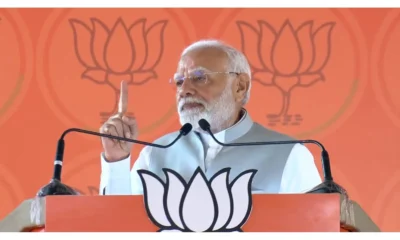
Prime Minister Narendra Modi on Wednesday exhorted global investors to take bets on the Indian shipping sector, pointing out that this is the “right time” for such a move.

The Prime Minister also met a select chief executives of global majors, including DP World and APM, at a specially convened meeting on the sidelines of the India Maritime Week 2025 held here.

“For all of you hailing from different countries, this is the right time to work in the Indian shipping sector and also expand (your presence),” Modi said during a public address before the closed-door meeting with CEOs.

Modi listed several targets being chased by India in the maritime sector over the next few years, and underlined the importance of the global community in the same.

“You all are an important partner who will help us achieve all our aims. We welcome your ideas, innovations and investments,” Modi said.

He said that India allows 100 per cent foreign direct investment in the shipping and ports sector, and also provides incentives under the “Make In India, and Make For The World” vision.

Addressing an audience, including leaders of various companies, the Prime Minister affirmed India’s commitment to strengthening the supply chain resilience at a global level.

He also said that India is engaged in creating world-class mega ports, and cited the work undertaken on the Vadhavan Port to the north of the financial capital, which entered the top-10 firms in the world on the first day.

The government is also looking to grow the capacity at 12 major ports by four times and increase India’s share in containerised cargo at the global level.

Later, Modi held a meeting with top CEOs of shipping sector companies from across the world.

As per people in the know, he met AP Moller-Maersk Chairman Robert Maersk Uggla, DP World Group Chairman Sultan Ahmed bin Sulayem, Mediterranean Shipping Company Chief Executive Soren Toft, Adani Ports and SEZ Managing Director Karan Adani and French company CMA-CGM’s Senior Vice President Ludovic Renou.

The participation from over 85 countries in the IMW sends a strong message, Modi said, noting the presence of CEOs of major shipping giants, startups, policymakers, and innovators at the event.

The Prime Minister also thanked Port of Singapore (PSA) for the nearly Rs 8,000 crore investment in the Jawaharlal Nehru Port Authority’s fourth terminal, pointing out that this is also the largest FDI in the port sector in India.

Modi said more than 150 new initiatives have been launched under the ‘Maritime India Vision’, resulting in nearly doubling the capacity of major ports, a substantial reduction in turnaround time, and a new momentum in cruise tourism.

—PTI

Continue Reading

Economy news

ITR filing last date today: What taxpayers must know about penalties and delays

The deadline for ITR filing ends today, September 15. Missing it may lead to penalties, interest charges, refund delays, and loss of tax benefits.

Published

on

Income Tax Return

The deadline to file Income Tax Returns (ITR) for most taxpayers, including salaried individuals, pensioners, and small businesses not requiring audit, ends today, September 15. Those who miss the due date face penalties, interest charges, and loss of certain tax benefits.

Penalties for late filing

If the return is not filed by the deadline, taxpayers can still file a belated return until December 31. However, under Section 234F of the Income Tax Act, late filing attracts penalties.

  • For income up to Rs5 lakh: penalty is capped at Rs1,000.
  • For income above Rs5 lakh: penalty increases to Rs5,000.

Additionally, if any tax remains unpaid, Section 234A imposes an interest of 1% per month (or part thereof) until the return is filed.

Consequences of missing deadline

  • Loss of certain tax benefits: Belated filers cannot carry forward specific losses such as business or capital losses.
  • Restrictions on tax regime change: Taxpayers lose the option to switch between old and new tax regimes after the deadline.
  • Refund delays: Those eligible for refunds will face delays compared to timely filers.

Steps to file before time runs out

  • Gather documents: Form 16, Form 26AS, Annual Information Statement (AIS), bank interest certificates, and proofs of investments or deductions.
  • Use the e-filing portal: File immediately to avoid last-minute portal congestion.
  • Verify your return: Ensure the ITR is verified electronically or physically for it to be considered valid.

Continue Reading

Economy news

India’s GDP surges 7.8% in Q1, outpaces estimates and China

India’s GDP surged 7.8% in Q1 2025-26, the highest in five quarters, driven by strong services and agriculture sector growth, according to NSO data.

Published

on

GDP Growth

India’s economy recorded a sharp growth of 7.8% in the April-June quarter (Q1) of 2025-26, surpassing the earlier estimate of 6.5% and outpacing China’s 5.2% growth in the same period. The figure also marks a notable rise from the 6.5% growth in the corresponding quarter last year, making it the fastest expansion in the last five quarters.

Strong performance across key sectors

According to data released by the National Statistical Office (NSO), the surge was driven primarily by the services sector, which expanded 9.3% compared to 6.8% a year ago, and the agriculture sector, which rose 3.7% against 1.5% last year.

The construction sector, however, witnessed a slowdown, growing 7.6% compared to 10.1% in the same quarter of the previous fiscal.

RBI’s earlier forecast

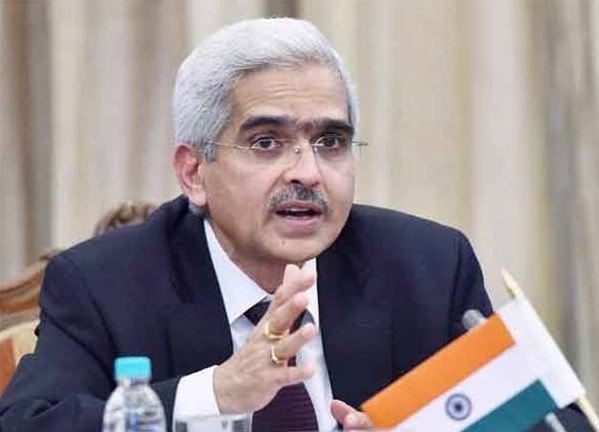
Earlier this month, the Reserve Bank of India (RBI) had projected a more modest Q1 growth of 6.5%, with overall real GDP growth for 2025-26 expected at 6.5%. RBI Governor Sanjay Malhotra attributed the positive outlook to favorable conditions, including a good monsoon, lower inflation, and strong government capital expenditure.

He said, “The above normal southwest monsoon, lower inflation, rising capacity utilisation and congenial financial conditions continue to support domestic economic activity. The supportive monetary, regulatory and fiscal policies, including robust government capital expenditure, should also boost demand. The services sector is expected to remain buoyant, with sustained growth in construction and trade in the coming months.”

India remains fastest-growing major economy

With China reporting 5.2% growth in April-June, India has retained its position as the world’s fastest-growing major economy. The latest figures highlight resilience in the face of external pressures, including recent US tariffs on Indian imports.

Continue Reading

Trending

© Copyright 2022 APNLIVE.com