English हिन्दी
Connect with us

Top Stories

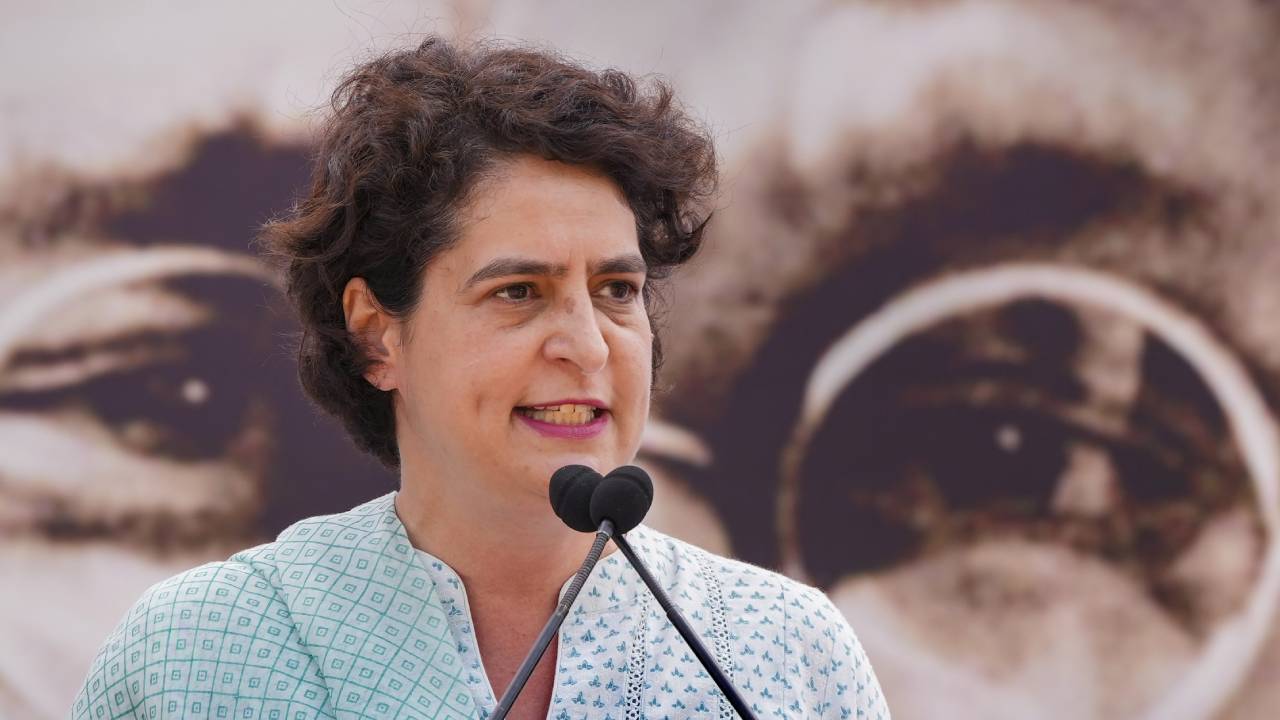
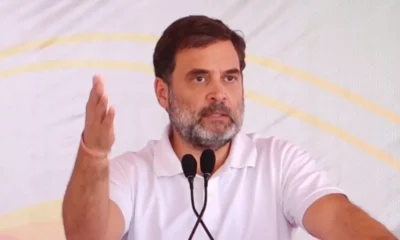
Priyanka Gandhi speaks on Unnao rape, Sambhal violence in first Lok Sabha speech

Published

on

Priyanka Gandhi

Congress leader Priyanka Gandhi Vadra delivered a powerful debut speech in the Lok Sabha on Friday, raising critical issues such as the Unnao rape case and the recent violence in Sambhal. Her remarks came as a pointed response to Defence Minister Rajnath Singh’s opening address, which set the tone for a contentious two-day debate on the Constitution.

Ms. Gandhi Vadra took center stage as she led the opposition’s charge, addressing a mixed response of applause and dissent from the House. Her speech critiqued the BJP’s alleged efforts to “redefine” the Constitution while bringing to light pressing social issues that have gripped the nation.

Ms. Gandhi Vadra began her address by sharing a poignant story from the Sambhal violence. “A few days ago, members of the bereaved families from Sambhal came to meet us. Among them were two boys, Adnan and Uzair. One was my son’s age (24) and the other was 17. Their father, a tailor, had a simple dream: to see his sons educated,” she said.

“The police shot their father dead,” she continued. “Adnan told me he would become a doctor to fulfill his father’s dream—a dream shaped by the ideals enshrined in the Constitution of India.”

The Congress MP’s speech also criticized the BJP for what she described as an attempt to undermine the nation’s founding document. While addressing the House, she highlighted the importance of safeguarding constitutional values amidst allegations of growing authoritarianism.

Her maiden speech not only marked a significant moment in her parliamentary career but also underscored her party’s commitment to addressing human rights issues and holding the ruling party accountable for alleged injustices.

The two-day debate is expected to continue with fiery exchanges between the opposition and the government, as the Lok Sabha addresses pressing constitutional and societal concerns.

India News

Parliament Budget Session 2026 set to begin with Lok Sabha debate on President’s address

The Parliament Budget Session 2026 is set to begin with the Lok Sabha scheduled to debate President Droupadi Murmu’s address for 18 hours.

Published

on

Parliament

The Parliament Budget Session 2026 is set to begin on Monday, with the Lok Sabha scheduled to take up discussions on President Droupadi Murmu’s address, a day after Finance Minister Nirmala Sitharaman presented the Union Budget 2026-27 in the House.

The Lok Sabha is scheduled to meet at 11:00 am for a busy day of proceedings. A total of 18 hours has been allocated for the debate on the President’s address, which lays out the government’s policy priorities and broad agenda.

Prime Minister Narendra Modi is slated to reply to the discussion on February 4, while Finance Minister Nirmala Sitharaman is expected to respond on February 11.

As per the session calendar, the Budget Session will comprise 30 sittings spread over 65 days and is scheduled to conclude on April 2. Both the Lok Sabha and the Rajya Sabha will adjourn for a recess on February 13 and reconvene on March 9. During the recess period, Standing Committees are expected to examine the Demands for Grants of various ministries and departments.

In addition to legislative business, Budget documents tabled in Parliament are set to provide a detailed break-up of government revenues and expenditure, outlining how funds are raised and allocated.

The opening of the Budget Session also comes amid discussions on the government’s economic approach, including measures announced in the Union Budget aimed at supporting key sectors and addressing global trade challenges.

Continue Reading

Cricket news

Pakistan’s India boycott at T20 World Cup 2026 puts team at risk of ICC action

Pakistan’s boycott of its India clash at the T20 World Cup 2026 has sparked a major row, with the ICC warning of sanctions that could impact the team’s future.

Published

on

Pakistan

Pakistan’s decision to boycott its group-stage match against India at the T20 World Cup 2026 has triggered a major controversy, with the International Cricket Council (ICC) warning of possible punitive action that could impact Pakistan’s participation in global cricket.

The Pakistan cricket team is set to take part in the tournament but will not take the field against India in the February 15 match scheduled in Colombo. The move was approved by the Pakistan government and announced publicly through a social media post, which confirmed participation in the event while excluding the India fixture.

Why Pakistan decided to boycott the India match

The decision follows the ICC’s removal of Bangladesh from the T20 World Cup 2026. Bangladesh had requested a venue change for their matches citing security concerns, but the request was turned down by the ICC, eventually leading to their exclusion from the tournament. Pakistan’s government cited this development while taking the call to skip the India game.

ICC responds with strong warning

Reacting to Pakistan’s stance, the ICC said selective participation undermines the integrity and fairness of global tournaments. In its official statement, the governing body stressed that ICC events are built on sporting integrity, competitiveness and consistency, adding that such decisions are not in the interest of the global game or fans, including those in Pakistan.

The ICC also clarified that it has not yet received any formal communication from the Pakistan Cricket Board regarding the boycott decision.

Sanctions Pakistan could face

According to developments surrounding the issue, Pakistan could face a range of consequences if the boycott is enforced. These may include financial penalties, a possible ban from the current or future ICC events, and resistance from top cricketing nations in scheduling bilateral series. There is also a risk that overseas players could be barred from participating in the Pakistan Super League if sanctions escalate.

The situation remains fluid as the ICC is expected to take a final call after official communication from Pakistan’s cricket board.

Continue Reading

India News

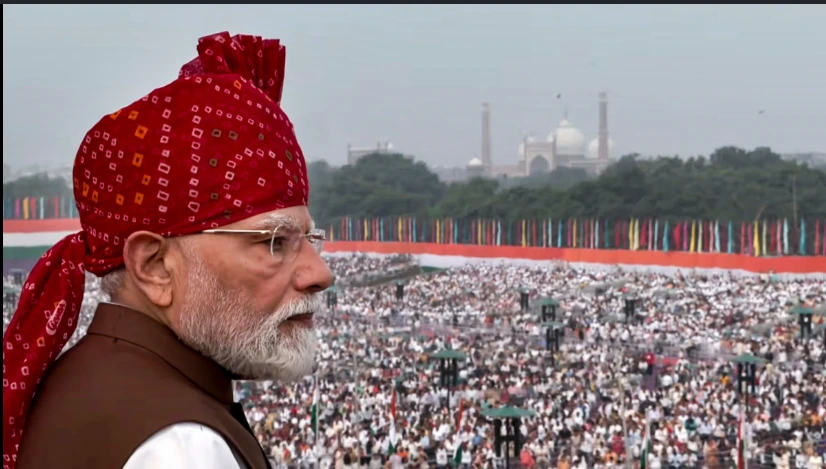
Budget 2026 balances high capex and growth, says PM Modi

Prime Minister Narendra Modi said Union Budget 2026 strikes a balance between high capital expenditure and strong growth while reinforcing reforms and fiscal discipline.

Published

on

pm modi

Prime Minister Narendra Modi on Saturday said the Union Budget 2026 strikes a fine balance between high capital expenditure and sustained economic growth, calling it a roadmap for long-term national development.

Speaking after Finance Minister Nirmala Sitharaman presented her ninth consecutive Budget, the prime minister said the proposals reflect a vision of trust-based governance and a human-centric economic framework. He added that India is not just focused on being the fastest-growing economy but is working towards becoming the world’s third-largest economy.

PM Modi said the Budget also reinforces India’s strong global standing and will provide fresh momentum to the country’s reform agenda. According to him, the measures announced will energise what he described as India’s “reform express”.

The prime minister highlighted the Budget’s focus on promoting tourism in the northeastern region, noting that it would create new opportunities and support regional development.

On fiscal management, the finance minister retained the states’ share in the divisible pool of central taxes at 41 per cent. She announced that Rs 1.4 lakh crore has been provided to states as Finance Commission grants for 2026–27, in line with the recommendations of the commission.

The Finance Commission, chaired by Arvind Panagariya, had submitted its report to the President in November 2025 after consultations with states and Union Territories, several of which had sought a higher share.

Sitharaman pegged the fiscal deficit for 2026–27 at 4.3 per cent of GDP, lower than the revised estimate of 4.4 per cent for 2025–26. She also said the debt-to-GDP ratio is projected to decline to 55.6 per cent in 2026–27 from 56.1 per cent in the previous fiscal.

A gradual reduction in the debt burden will help free up resources for priority sectors by lowering interest outgo, the finance minister said.

Continue Reading

Trending

© Copyright 2022 APNLIVE.com