English हिन्दी
Connect with us

India News

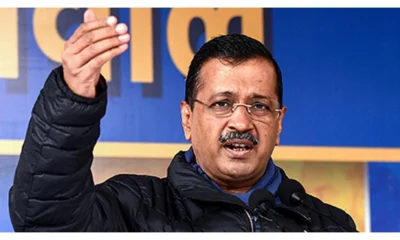
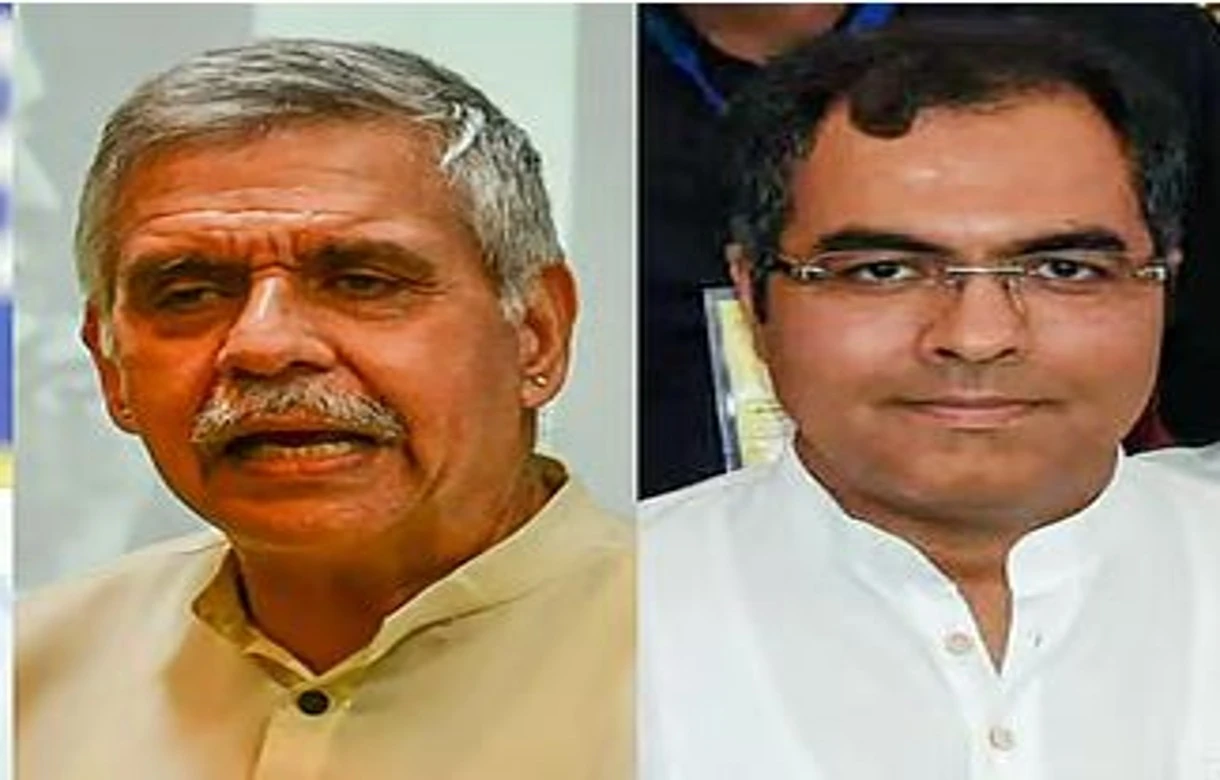
Congress’s Sandeep Dikshit congratulates BJP’s Parvesh Verma for winning New Delhi seat

The Delhi assembly election results mark a turning point in the capital’s politics, with the BJP reclaiming power after more than two decades and AAP facing its most significant electoral challenge since its inception.

Published

on

Congress leader Sandeep Dikshit congratulated BJP’s Parvesh Verma, who emerged victorious over Aam Aadmi Party (AAP) chief Arvind Kejriwal in the New Delhi assembly constituency, marking a significant shift in Delhi’s political landscape. Kejriwal, who faced a nail-biting race with fluctuating leads, ultimately lost by a margin of 4,089 votes, signalling a major setback for AAP.

Dikshit, who finished third in the race, gracefully acknowledged Verma’s win and took personal responsibility for his party’s defeat. In a heartfelt message on social media, Dikshit expressed gratitude to the Congress leadership and his supporters while reflecting on the loss.

“I am thankful to the top leadership of the Congress party for their trust in me and the opportunity to contest this election. However, I, and only I, am personally responsible for this humiliating defeat in the New Delhi seat. The people of Delhi wanted change, and I failed to meet their expectations,” Dikshit wrote on X.

He extended his appreciation to the party workers and volunteers who campaigned tirelessly, as well as to the voters who supported the Congress. “I am deeply grateful to all the workers and volunteers who worked day and night during this election. I also thank the people of New Delhi for the love and respect they showed me, even though I could not secure their votes in large numbers,” he added.

The New Delhi constituency witnessed a fierce battle, with Verma securing 30,088 votes against Kejriwal’s 25,999. In another significant upset, BJP’s Tarvinder Singh Marwah narrowly defeated AAP’s Manish Sisodia in the Jangpura constituency by a slim margin of 675 votes. These victories underscore the BJP’s resurgence in Delhi, where it is leading in 48 of the 70 assembly seats, effectively ending AAP’s 12-year dominance in the capital.

Delhi BJP president Virendraa Sachdeva hailed the results as a triumph of Prime Minister Narendra Modi’s leadership and vision. “This victory is a testament to the people’s faith in PM Modi’s development agenda and their trust in his leadership. We raised critical issues like corruption in the Jal Board, the Sheeshmahal scandal, and the liquor scam, but AAP failed to provide any answers. Arvind Kejriwal consistently avoided addressing these concerns, and the people have now ousted him from power,” Sachdeva stated.

The election results have sparked criticism from leaders of the INDIA alliance, who argued that a united front between AAP and Congress could have prevented the BJP’s sweep. Rohit Pawar of the NCP attributed the division to “ego and arrogance,” claiming that a coalition would have limited the BJP to fewer seats. Shiv Sena’s Sanjay Raut echoed similar sentiments, citing irregularities in voter lists and leadership challenges as factors contributing to AAP’s downfall.

Despite being part of the INDIA alliance, AAP and Congress chose to contest the Delhi elections separately, a decision that appears to have cost them dearly. As the BJP celebrates its historic victory, the focus now shifts to how AAP and Congress will regroup and strategize for future electoral battles.

The Delhi assembly election results mark a turning point in the capital’s politics, with the BJP reclaiming power after more than two decades and AAP facing its most significant electoral challenge since its inception.
India News

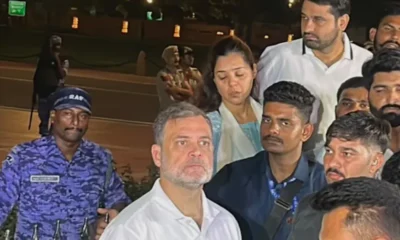
Nobody can browbeat judiciary, Chief Justice warns over Rahul Gandhi’s march

The Supreme Court issued notices to opposition leaders, including Rahul Gandhi and Akhilesh Yadav, over their march to the court on October 12 concerning irregularities in the Special Intensive Revision of electoral rolls.

Published

on

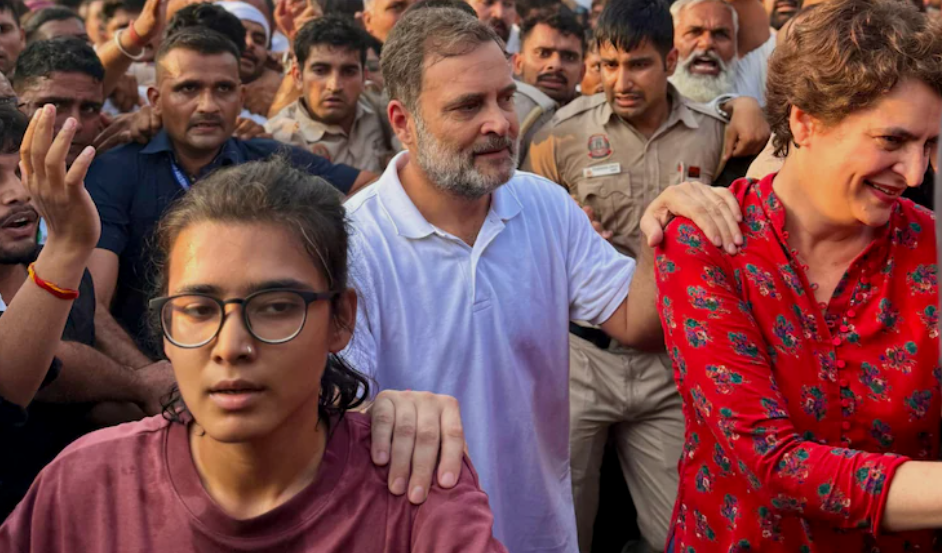
The Supreme Court has issued notices to Congress leader Rahul Gandhi, Samajwadi Party chief Akhilesh Yadav and other protesters over the opposition’s October 12 march to the apex court. The march was organised to raise concerns about alleged irregularities in the Special Intensive Revision (SIR) of electoral rolls.

The court’s remarks that nobody can browbeat the judiciary have brought the focus back to the dispute over the opposition’s protest and the appropriate way to raise grievances before the court.

Why the opposition marched to the Supreme Court

The march was part of the opposition’s campaign against what it described as irregularities in the voter-list revision process. The opposition has raised concerns over alleged electoral malpractice and demanded action concerning the Election Commission and the revision of electoral rolls.

Rahul Gandhi had led the march to the Supreme Court after Chief Justice of India Surya Kant declined a request to meet opposition leaders, including Gandhi and Congress president Mallikarjun Kharge.

The Chief Justice had advised the leaders to approach the court through the judicial process rather than seek an administrative meeting to discuss issues already pending before the Supreme Court.

Chief Justice’s position on approaching the court

The Chief Justice had said that the Supreme Court’s doors were open to every citizen and that people could approach it through petitions. He also indicated that matters affecting citizens would be considered in accordance with the law.

The distinction between the administrative and judicial functions of the court was central to the disagreement over the opposition leaders’ request for a meeting. The Chief Justice’s position was that pending legal issues should be addressed through judicial proceedings.

Supreme Court issues notices over the march

The Supreme Court issued notices to Rahul Gandhi, Akhilesh Yadav and other protesters concerning the October 12 march. The proceedings relate to the protest over irregularities in the Special Intensive Revision of electoral rolls.

The opposition’s allegations about the voter-list revision remain allegations and should not be treated as established findings merely because the matter has reached the court.

The developments have placed the opposition’s protest, its concerns over electoral rolls and the judiciary’s role in addressing such disputes at the centre of the ongoing debate.

Continue Reading

India News

Dhruv Rathee gets fresh summons in 2018 BJP IT cell video case

YouTuber Dhruv Rathee has received fresh summons from a Delhi court in a 2018 criminal defamation case filed by Vikas Pandey over a video concerning the BJP IT Cell. The matter will next be heard on October 17.

Published

on

Dhruv Rathi

YouTuber Dhruv Rathee has received fresh summons from a Delhi court in a criminal defamation case linked to his 2018 video titled “BJP IT Cell Part 2”. The complaint was filed by Vikas Pandey, who alleged that the video contained defamatory claims about him.

The latest court action follows renewed efforts to serve Rathee with the summons while he is in India. The matter is scheduled to be heard next on October 17.

Judicial Magistrate Rahul Jain of the Saket District Court passed the order on October 12. The fresh summons were issued after the complainant’s lawyer informed the court that Rathee, who usually resides abroad, was in India in connection with the ongoing Cockroach Janta Party (CJP) protests in Delhi.

What is the case against Dhruv Rathee?

The criminal defamation complaint concerns Rathee’s video, “BJP IT Cell Part 2”, which was published in 2018.

Pandey, who founded the social media page “I Support Narendra Modi”, alleged that Rathee’s video accused him of being associated with the BJP IT Cell and offering Rs 50 lakh through an intermediary to Mahavir Prasad. According to the complaint, the money was allegedly offered to persuade Prasad to withdraw allegations that the BJP IT Cell spreads fake news.

These claims form part of the complainant’s allegations. The court’s issuance of summons does not establish that the allegations against Rathee are true or amount to a finding of guilt.

Why has the court issued fresh summons?

According to the court proceedings, the complainant’s side had been attempting to serve Rathee with summons for several years. The court had initially summoned him through an order dated July 23, 2019, but the process of serving the summons had faced delays.

The complainant’s lawyer sought an earlier hearing after learning that Rathee was in India. The application argued that his presence in the country offered an opportunity to complete the service of summons without further delay.

The court subsequently directed that fresh summons be issued. The latest report states that the summons were served at Rathee’s Gurugram residence during his visit to India.

How is Arvind Kejriwal linked to the case?

The case also involved Aam Aadmi Party (AAP) leader Arvind Kejriwal, who had re-shared Rathee’s video on X, then known as Twitter, in 2018.

Pandey filed a separate complaint against Kejriwal over the re-sharing of the video. The Delhi High Court later declined to quash the summons issued to Kejriwal.

In February 2024, the Supreme Court stayed the trial court proceedings against Kejriwal in the matter. During the proceedings, his lawyer told the court that Kejriwal acknowledged making a mistake by re-tweeting the video.

The proceedings against Rathee continued, leading to the fresh summons issued by the Saket court.

What happens next?

The case is scheduled for its next hearing on October 17. The proceedings concern the pending criminal defamation complaint and the steps taken to serve Rathee with the court’s summons.

The allegations in the complaint remain allegations unless established through the legal process.

Continue Reading

India News

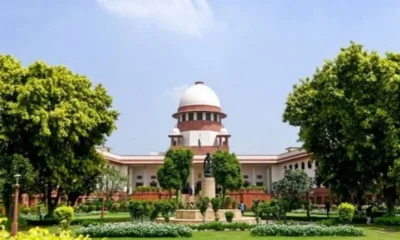
Supreme Court questions EC over missing records in Sringeri election dispute

The Supreme Court questioned the Election Commission over missing video footage of the 2023 counting in Karnataka’s Sringeri constituency. The case involves a revised result following a recount of postal ballots.
Published

on

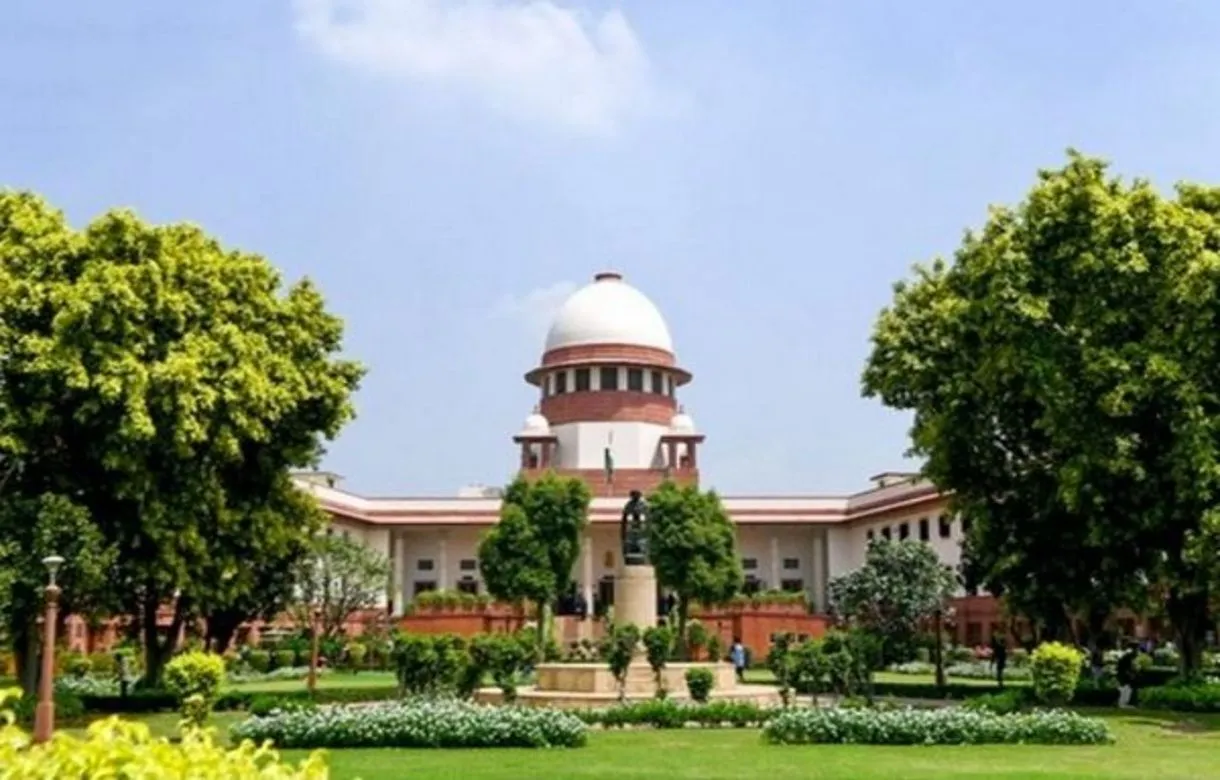
The Supreme Court on Wednesday questioned the Election Commission of India (ECI) over its inability to locate video recordings of the original vote counting in Karnataka’s Sringeri Assembly constituency in 2023. The court said it would not accept what it described as “lame excuses” and directed the poll body to produce whatever records are available at the next hearing.

A bench of Justices Sanjay Kumar and Sanjeev Sachdeva expressed displeasure after the Election Commission’s counsel informed it that the footage of the original counting could not be traced.

The bench also warned that it could draw an adverse inference if the required documents were not produced.

Questioning how the poll body could lose records relating to an election it had conducted, the judges stressed that maintaining election documentation was central to its responsibilities.

“How can the Election Commission of India say that it has lost the records? Your whole purpose is to hold an election, and you need to have a document. Where is the question of you saying we are trying to trace it?” the bench asked.

“We will not accept these kinds of lame excuses,” it added.

What is the Sringeri election dispute?

The case stems from the 2023 Karnataka Assembly election in Sringeri, where Congress leader TD Rajegowda was initially declared the winner.

The result was challenged by BJP candidate Jeevaraj before the Karnataka High Court. The High Court later ordered a recount of postal ballots, including the reverification of 279 rejected postal votes.

Following the recount, the Returning Officer declared a revised result in which Jeevaraj was declared the winner. Rajegowda then approached the Supreme Court to challenge the revised outcome.

In May, the Supreme Court granted interim relief to Rajegowda, directing that he continue as the Member of the Legislative Assembly while his plea remained pending.

Rajegowda seeks counting records and observer’s report

Rajegowda has sought access to the election observer’s report and video recordings of both the original counting conducted in 2023 and the recount held this year.

The missing original counting footage became a point of concern during Wednesday’s hearing, with the bench questioning the Election Commission’s inability to trace the recording.

The court directed the Commission to submit whatever records it possesses at the next hearing. Its warning about a possible adverse inference underscores the importance the bench attached to the production of the requested documents.

The court has scheduled the next hearing for February 15, 2027.

Continue Reading

Trending

© Copyright 2022 APNLIVE.com