English हिन्दी
Connect with us

India News

9 Pakistani aircraft destroyed in India’s Operation Sindoor after Pahalgam attack, sources

India’s Operation Sindoor targeted key Pakistani military assets including fighter jets, drones, and surveillance aircraft following the Pahalgam terror attack, sources confirm.

Published

on

Operation Sindoor

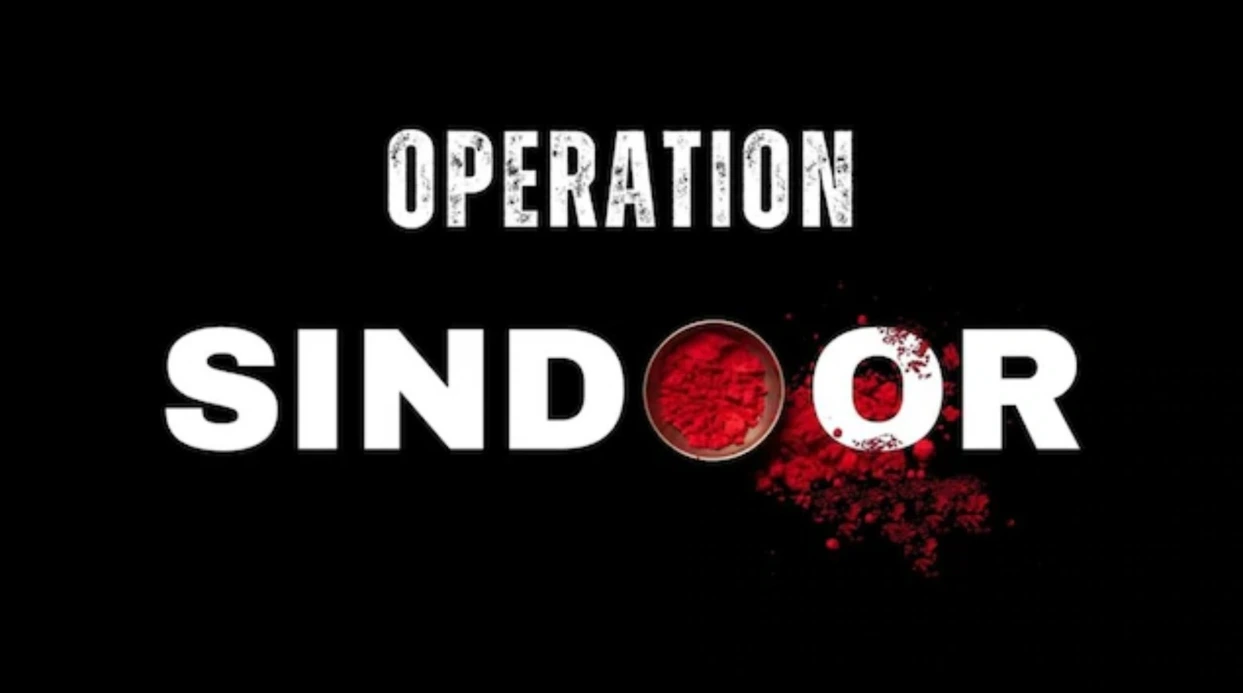
In a significant military retaliation following the deadly Pahalgam terror attack that claimed 26 Indian lives, India carried out a series of precision airstrikes under the codename Operation Sindoor, resulting in the destruction of key Pakistani aerial and ground assets, sources have revealed.

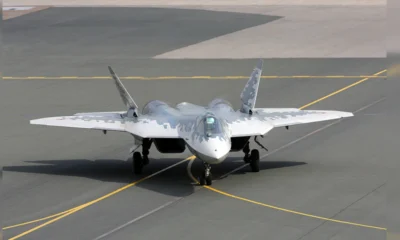
According to post-conflict assessments conducted by Indian defence units, a total of six Pakistan Air Force (PAF) fighter jets, two surveillance aircraft, and a C-130 Hercules transport plane were destroyed during the four-day operation that unfolded in early May. Additionally, over ten armed drones were neutralised in the targeted offensive.

PAF jets downed during aerial engagement

Indian defence sources confirm that the six PAF fighter jets were taken down during air-to-air combat engagements. These took place over areas in Pakistani Punjab and parts of Pakistan-occupied Jammu and Kashmir (PoJK). Radar tracking and thermal imaging by Indian airborne and ground-based systems provided confirmation of successful hits, as the aircraft vanished from surveillance grids post-impact.

Surveillance aircraft and drone hubs targeted

One of the major blows to Pakistan’s defence infrastructure was the neutralisation of two high-value surveillance aircraft. The first was reportedly an electronic warfare or AEW&C aircraft hit from an estimated 300 km range using India’s Sudarshan long-range strike system. The second, of Swedish origin and stationed at Pakistan’s Bholari airbase, was destroyed in a cruise missile attack that also demolished the aircraft’s hangar, confirmed via satellite imagery.

C-130 Hercules and drones eliminated

A separate drone-led strike took out a PAF C-130 Hercules transport aircraft at a base near Multan. The aircraft was being used for logistical movements. Moreover, a hangar containing over ten Chinese-origin Wing Loong series unmanned combat aerial vehicles (UCAVs) was targeted and destroyed by Indian fighter jets during coordinated air missions. Several additional Pakistani drones were intercepted and downed over Indian regions in Jammu and Kashmir and Rajasthan during the conflict.

Indian strike depth extended beyond initial targets

Emerging evidence from a Pakistani military dossier suggests that India’s reach extended far deeper than earlier acknowledged. Indian strikes reportedly hit strategic locations across Peshawar, Jhang, Hyderabad (Sindh), Gujrat, Bahawalnagar, Attock, and Chor—regions housing military or dual-use assets. These operations were not included in India’s initial official briefing.

India had initially focused its strikes on terror bases in Pakistani Punjab and PoJK, including Jaish-e-Mohammed’s Bahawalpur headquarters and Lashkar-e-Taiba’s Muridke camp. However, Pakistan’s response with drone and missile attacks targeting Indian civilian and military locations triggered an expanded Indian offensive against 11 Pakistani air bases.

Ceasefire follows intense engagement

On May 10, after heavy battlefield losses and diplomatic outreach, Pakistan’s Director General of Military Operations (DGMO), Major General Kashif Abdullah, reached out to Indian DGMO Lieutenant General Rajiv Ghai seeking a ceasefire. India agreed to halt operations but warned that any further provocation would be met with proportionate force.

India News

Pawan Khera faces fresh setback as Supreme Court refuses relief in passport row case

Congress leader Pawan Khera faces fresh setback as Supreme Court refuses interim relief and directs him to seek bail from Guwahati High Court.

Published

on

Pawan Khera

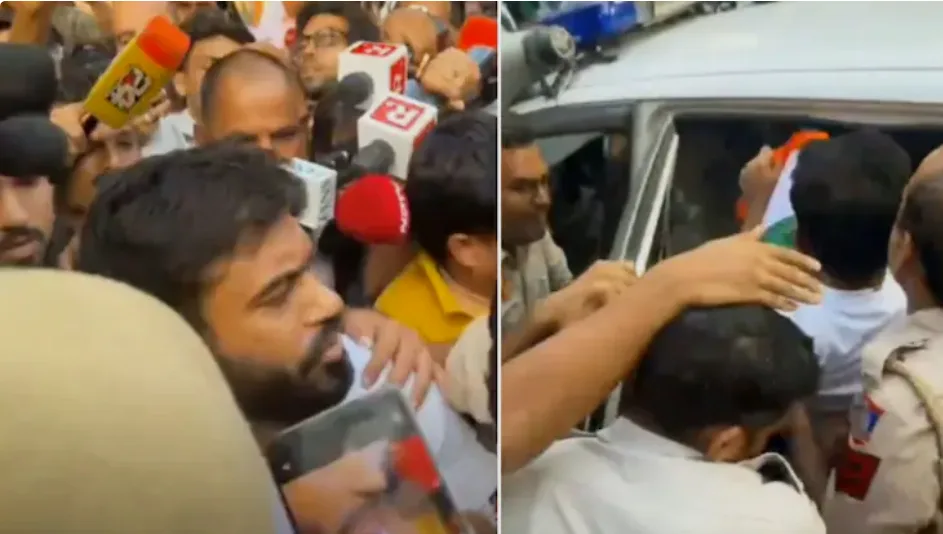
Congress leader Pawan Khera suffered another legal setback on Friday after the Supreme Court of India declined to extend protection in a case linked to his remarks about Himanta Biswa Sarma’s wife.

A bench of the apex court refused to interfere with an earlier order that had stayed the transit anticipatory bail granted to Khera by the Telangana High Court. This decision leaves the Congress leader open to possible arrest by Assam Police in connection with the case.

During the hearing, Khera’s counsel sought interim protection, but the court declined the request and advised him to approach the appropriate court in Assam for relief. The bench clarified that the Guwahati High Court should decide any bail plea independently and on its merits.

“Am I a terrorist?” remark during hearing

While seeking protection, Khera’s legal team expressed concern over the urgency of the situation. In court, his counsel remarked, “Am I a terrorist?” highlighting the plea for temporary relief until a fresh bail application could be filed.

The Supreme Court also raised concerns over the submission of incorrect documents during the proceedings, adding another layer to the legal complications faced by the Congress leader.

Case linked to remarks on CM’s wife

The case stems from a press conference held earlier this month, where Khera made allegations regarding the citizenship status and financial assets of the Assam Chief Minister’s wife, Riniki Bhuyan Sharma.

He had claimed that she possessed multiple passports and owned undisclosed overseas properties. These allegations were strongly denied by the Chief Minister’s family, who termed them fabricated and misleading.

Legal battle intensifies

Earlier, the Telangana High Court had granted Khera temporary transit anticipatory bail, allowing him time to seek relief from a competent court in Assam. However, the Supreme Court stayed that order following a challenge by Assam authorities, escalating the legal battle.

With the latest ruling, Khera is now expected to move the Guwahati High Court for anticipatory bail as the case continues to unfold.

Continue Reading

India News

Congress suspends 5 Haryana MLAs over cross-voting in Rajya Sabha polls

Congress suspends five Haryana MLAs for cross-voting in Rajya Sabha elections, citing serious indiscipline and anti-party activities.

Published

on

The Congress has suspended five of its MLAs in Haryana for cross-voting during the recent Rajya Sabha elections, taking disciplinary action over what it described as “anti-party activities”.

The move came after the state unit reviewed the conduct of certain legislators during the polls, where some were found to have voted against the party’s authorised candidate.

Five MLAs suspended after disciplinary process

According to party sources, the MLAs were issued show-cause notices seeking an explanation for their actions. After reviewing their responses, the Congress disciplinary committee recommended suspension.

The decision was approved by the party leadership, including Congress president Mallikarjun Kharge, and has been implemented with immediate effect.

Party calls it ‘grave indiscipline’

Haryana Congress chief Udai Bhan said the action was necessary to uphold party discipline, stressing that defying the official party line during elections weakens organisational unity.

He said the party takes such violations seriously and will continue to act against any form of indiscipline.

Leadership backs strict action

Senior Congress leader and Leader of Opposition Bhupinder Singh Hooda supported the decision, saying it was taken after due consideration.

He noted that while Rajya Sabha elections are conducted through an open ballot system, allowing legislators some flexibility, the party retains the authority to initiate internal disciplinary action in cases of deviation.

Background

The action follows cross-voting reported during the recent Rajya Sabha elections in Haryana, which led to internal concerns within the party. The development has highlighted organisational challenges and prompted the leadership to take corrective steps to reinforce discipline.

Continue Reading

India News

Harivansh set to be elected Rajya Sabha Deputy Chairperson unopposed

Harivansh is set to be elected unopposed as Rajya Sabha Deputy Chairman after no opposition nominations were filed before the deadline.

Published

on

Former Rajya Sabha Deputy Chairman Harivansh is set to be re-elected to the same post unopposed in the election due to be held later today.
The date has been fixed by the Chairman under the relevant rules governing the conduct of business in the Upper House.
According to sources, the deadline for submitting motions for the election was 12 noon on April 16. A total of five notices were received within the stipulated time, all proposing Harivansh for the post.

Multiple nominations, single candidate
The motions were submitted by members across parties, including Jagat Prakash Nadda, Nitin Nabin, Nirmala Sitharaman, Sanjay Kumar Jha, and Jayant Chaudhary, each backed by seconding members.
All five motions explicitly state that Harivansh be chosen as the Deputy Chairman of the Rajya Sabha.

No opposition nomination filed

Notably, no motion was submitted by the Opposition before the deadline. This effectively clears the path for a unanimous election, as there is no contest for the position.
As per parliamentary procedure, motions will be taken up one by one. Once any one motion is adopted by the House, the remaining motions will not be put to vote.

Likely to be elected by voice vote
In line with established practice, the first motion — expected to be moved by Nadda — may be adopted through a voice vote. Following this, the Chairman will formally declare Harivansh as elected Deputy Chairman.
After the declaration, Harivansh will be escorted to the Chair by members from both the Treasury and Opposition benches, adhering to parliamentary convention.

Continue Reading

Trending

© Copyright 2022 APNLIVE.com