
Latest Politics News
Amid Rafale row, a ROFL moment as BJP leaders blindly retweet tampered IT Cell messages


It was a shock for BJP and a hilarious moment for others to find ministers of Narendra Modi government and various BJP followers go on a virtual campaign against their revered leader on social media.
Modi govt has not made inclusive development the focal point of its functioning, they said. Dishonesty and lack of transparency is the hallmark of New India under Modi, they fumed. Working for the middle class is low on the agenda of Modi govt, they observed.
All of this originated from BJP IT Cell platform and, as it always happens, was tweeted and retweeted blindly by all faithful followers.


BJP IT Cell, the mainstay of party’s propaganda machinery, surpasses every other in the country in its reach and volume of messages that propagate its agenda and seek to mould public opinion in favour of Prime Minister Narendra Modi and Hindutva and malign opponents.
Yesterday (Wednesday, Feb 13), however, the BJP got hoisted on its own petard. Fake news buster Pratik Sinha, who runs the portal AltNews, told the TV channel “Mirror Now” that while checking for messages being circulated, the BJP IT Cell had left its Google document – which puts out these messages – unlocked. He opened it and made some alterations.
The document, shared by the IT cell with BJP affiliates and which Sinha broke into, was meant to provide easily tweet-able content to fuel a pro-Modi hashtag trend.
Soon, those messages were circulating all over, copied and pasted by every loyalist without a thought.
One among several such tweets by Pon Radhakrishnan, union minister of state for finance and shipping, said that “working for the middle class is low on the agenda” for Modi. The official handle of the BJP in the state of Assam tweeted that the government “has not made inclusive development as the focal point of its functioning.”
The messages went viral and the results were humiliating for the BJP. As NDTV said, “A massacre followed on Twitter.” But both NDTV and Times Now were wrong to say the BJP IT Cell was hacked: there was no hacking involved. It was open to all who cared to go to it.
Pratik Sinha, posting a video of how he did it, tweeted: “How do you get a Union Minister to tweet what you want? Well, you go and edit the trending document made by BJP IT cell, and then you control what they tweet.”

And another:

And earlier:

What the behaviour of the ministers and the BJP followers indicates is the clout of the BJP IT Cell over them: it obviously has the blessings of the top echelons which, in that party today, means just two men. Or perhaps the leader in charge of BJP communication and propaganda.
Pratik Sinha said: “While it might seem like a laughing matter, the purpose here is to demonstrate that a non government entity sitting in BJP’s office is controlling what a Union Minister is tweeting.”
Sinha’s Twitter thread shows screenshots of tweets by politicians and others who seem to have blithely copy-pasted from the document without noticing that the tweets had been edited.
One among several such tweets by Pon Radhakrishnan, union minister of state for finance and shipping, said that “working for the middle class is low on the agenda” for Modi. The official handle of the BJP in the state of Assam tweeted that the government “has not made inclusive development as the focal point of its functioning.”
Over the years, the BJP has relentlessly worked on its messaging on Twitter, Facebook, and even WhatsApp, strategically timing its posts and deftly managing their spread, noted a QuartzIndia report.
A key tool it has used for this is a Google document called “Trend Alert,” which Sinha got access to, the QuartzIndia report said. Trend Alert is used to coordinate and fuel hashtag trends on Twitter. “What happens is that someone in the IT cell will create one document, which has the hashtag and, say, 15 or 20 tweets on the issue,” Shivam Shankar Singh, a former member of the BJP’s data analytics team, told Quartz. “And they forward it out into different WhatsApp groups and into different Facebook groups, and to some ministers and big social media accounts that can get it trending. And then people usually just copy/paste the tweets and tweet it out.”
The IT cell also uses Trend Alerts to mobilise supporters online in different ways, Singh said, including by linking them to political Twitter polls and telling them which way to vote.
How do you get a Union Minister to tweet what you want? Well, you go and edit the trending document made by BJP IT cell, and then you control what they tweet. Thread.
Here’s the video of this morning when their trending document got automagically updated 🙂
1/n pic.twitter.com/6DLwDPg2CV
— Pratik Sinha (@free_thinker) February 13, 2019










India News
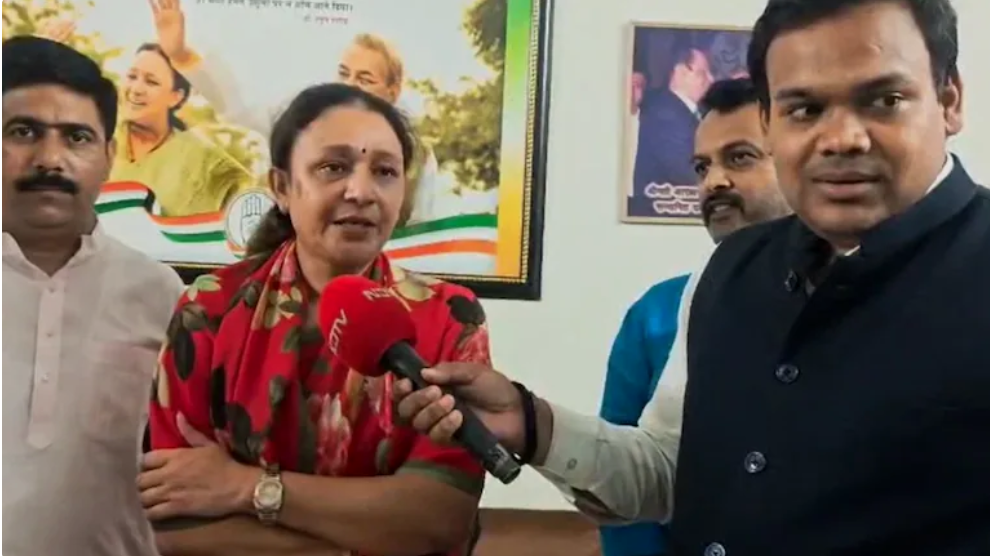
New UP Congress chief Aradhana Mishra backs stronger alliance with SP
Newly appointed UP Congress chief Aradhana Mishra said the party would strengthen its alliance with the Samajwadi Party ahead of the 2027 Assembly election.

India News
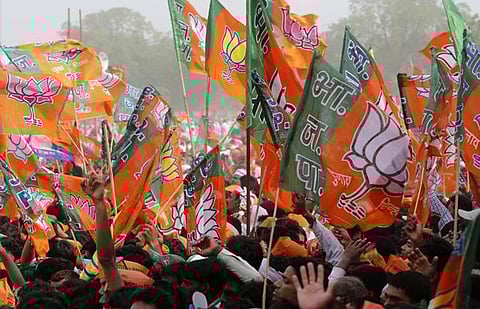
BJP may drop over 100 UP MLAs, focus shifts to voters and fix internal rifts
The BJP is considering major changes to its Uttar Pradesh candidates, with more than 100 sitting MLAs potentially facing ticket cuts as the party works to address internal rifts and voter concerns.
India News
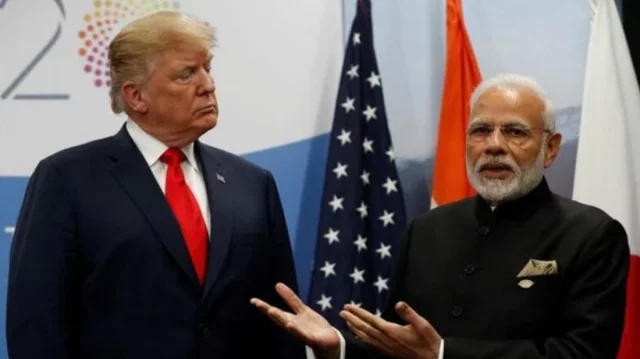
PM Modi speaks to Trump, reviews India-US trade and defence ties
Prime Minister Narendra Modi spoke with US President Donald Trump and reviewed India-US bilateral cooperation, including trade and defence.

MK Stalin attacks Vijay government over hindi signboard in Tamil Nadu

700 detained as Delhi, Mumbai see protests against Gyanesh Kumar

New UP Congress chief Aradhana Mishra backs stronger alliance with SP

CJP announces October 10 Delhi protest against Gyanesh Kumar

India beat Pakistan by 19 runs to win Asian Games cricket gold
India beat Pakistan by 19 runs to win Asian Games cricket gold
New UP Congress chief Aradhana Mishra backs stronger alliance with SP
CJP announces October 10 Delhi protest against Gyanesh Kumar
MK Stalin attacks Vijay government over hindi signboard in Tamil Nadu
700 detained as Delhi, Mumbai see protests against Gyanesh Kumar

Afghan Men Try To Hang With The Jet Engine Of The Aircraft in Kabul- Afghanistan News – Kabul News
Trending Top 10 News: 10000 Crore Fine on Flipkart, Apple to Launch Unique Feature, Hdfc Bank Job Ad

Trending Top 10 News: Nokia 6310, Apple sales, Bachpan ka Pyar Video Kid, Dainik Bhaskar IT Raid

Trending Top 10 News: Canada bans Indian flights, Rain in Delhi NCR, AIMIM Twitter hacked, Raj Kundra case

Trending Top 10 News: Shein India, Apple New Service, Pocket Oxygen, Oppo Launched New Phone
-
 India News20 hours ago
MK Stalin attacks Vijay government over hindi signboard in Tamil Nadu
-
 India News20 hours ago
700 detained as Delhi, Mumbai see protests against Gyanesh Kumar
-
 India News7 hours ago
New UP Congress chief Aradhana Mishra backs stronger alliance with SP
-
 India News7 hours ago
CJP announces October 10 Delhi protest against Gyanesh Kumar
-
 Cricket news53 mins ago
India beat Pakistan by 19 runs to win Asian Games cricket gold
