English हिन्दी
Connect with us

Latest Science News

World welcomes roll-out of a Malaria vaccine; it is only partly effective, though

Published

on

World welcomes roll-out of a Malaria vaccine; it is only partly effective, though

The World Health Organisation (WHO) has welcomed a pilot project in Malawi, Africa, of administering a malaria vaccine to children below the age of 2 years, covering a total 3,60,000 children across three African countries — Malawi, Ghana and Kenya — to protect them from the mosquito-borne disease that causes 435,000 people global deaths each year.

The RTS,S/AS01 (trade name Mosquirix) is an injectible recombinant protein-based vaccine that acts against P. falciparum, the most prevalent malaria strain in Africa. It has been in development by GSK, the former GlaxoSmithKline, for more than 30 years.

Children under five years are at the greatest risk of death, with at least 250,000 children dying of the disease in Africa each year. Finding new weapons is crucial but making a malaria vaccine has proved challenging in the extreme. Surviving the disease does not provide lasting immunity. People who suffer numerous bouts in childhood become able to tolerate new infections, but if they leave the area for even a few years, their immunity wanes and a later infection can kill them.

The new vaccine has many weaknesses, pointed out a New York Times (NYT) report. It is inconvenient: A child must receive four injections before age 2, sometimes at intervals that do not match the routine vaccine schedules for most other diseases. And it is only partly effective. Testing in more than 10,000 African children from 2009 to 2014 showed that, even after four doses, the vaccine prevented only about 40 percent of detectable malaria infections.

The vaccine reduced the occurrence of severe malaria by about 30 percent, and the occurrence of severe anaemia — a complication that often kills children — by about 60 percent. It did not protect well against parasite strains that were poor genetic matches, raising a concern that, over time, parasites could evolve resistance to the vaccine as they have to drugs.

WHO’s Strategic Advisory Group of Experts will assess the results of each high-transmission season for at least three years, watching to see in particular whether parents bring in their children for all four doses and whether any rare but threatening side effects appear.

During earlier trials, some children developed high fevers and seizures soon after being immunized, but they recovered. A few children later developed life-threatening meningitis, but it was not clear that the vaccine was to blame, reported NYT.

If there is a substantial increase in overall survival rates among vaccinated children, the WHO may recommend rolling out the vaccine in more locations.

With India reducing malaria cases by 24% in 2017 over the previous year using conventional methods, such as to “test-treat-track” all cases and distributing free insecticide-treated bed nets in endemic areas, the vaccine is unlikely to be made part of India’s public health programme, said a report by The Hindustan Times (HT) quoting experts.

In the sharpest global reduction in malaria in a year, cases India fell from 1,087,285 cases in 2016 to 844,558 in 2017, according to the World Malaria Report 2018, HT reported.

“Defeating malaria demands high-impact country-led and owned approaches,” said Dr Poonam Khetrapal Singh, WHO regional director for South-East Asia Region (SEARO), where cases have halved in two years using conventional methods. “Between 2015 and 2017, the (SEARO) region reduced its estimated malaria caseload by 56%, from 25.5 million to 11.3 million, with cases presumed and confirmed decreasing by 25% and more than halving of deaths. Maldives and Sri Lanka remain malaria-free, while seven of the region’s nine malaria endemic countries, including India, set to have reduced case incidence by 40% by 2020,” said Khetrapal Singh.

The rest of the world, however, has not been performing as well. After a reduction in global malaria deaths by 62% and cases by 41% between 2000 and 2015, cases went up from 217 million in 2016 to 219 million in 2017, according to the World Malaria Report 2018.

With around 95% of the under-5 malaria deaths taking place in Africa, the benefits for a vaccine that protects children will be far greater there, say ministry officials.

“India has reduced malaria by scaling up a diagnostic testing, treatment and surveillance and ensuring an uninterrupted drug and diagnostics supply chain, training community workers to test all fever cases and provide medicines, and distributing medicated bed-nets for prevention. With cost-effective conventional methods working for India, the government is unlikely to invest in a vaccine as part of the public health programme,” an unnamed health ministry official told HT.

“India’s strategy is to wait and watch how the roll-out in the public health setting shapes up in Africa. If the learning from the Africa experience is good and the cost implications low the vaccination may mainstreamed in few years. It will anyway take two to three years can go to scale, by when several states in India would have anyway eliminated the disease,” said Pratik Kumar, country director, Malaria No More, an international not-for-profit that is working closely with the state government of Odisha, which reported a 80% decline in malaria cases and deaths in 2017 over the previous year.

Latest Science News

Astronaut Shubhanshu Shukla to meet PM Modi after return from historic space mission

Astronaut Shubhanshu Shukla, who recently returned from the ISS as part of the Axiom-4 mission, will meet PM Modi this evening. Parliament will also hold a special discussion on his historic journey.

Published

on

Subhanshu shukla

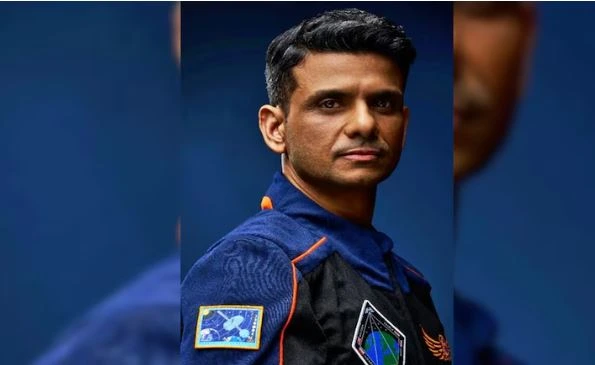
Indian astronaut Group Captain Shubhanshu Shukla, the first Indian to visit the International Space Station (ISS), will meet Prime Minister Narendra Modi this evening at his official residence in New Delhi.

PM Modi to host meeting with astronaut

According to officials, the meeting at 7 Lok Kalyan Marg is expected to take place between 5 pm and 5:30 pm. Shukla, who arrived in India on Sunday, will also be part of the National Space Day celebrations scheduled for August 23.

Warm welcome in India

The astronaut was greeted at the airport by his family, Science and Technology Minister Jitendra Singh, Delhi Chief Minister Rekha Gupta, and hundreds of citizens waving the national flag. Shukla had been in the United States for a year, preparing for the Axiom-4 mission, which launched from Florida on June 25 and docked at the ISS the next day. He served as the mission’s pilot.

Emotional note from Shukla

Before his return, Shukla shared an emotional post on Instagram, expressing mixed feelings of leaving his space colleagues while being eager to meet his loved ones and people of India. He also quoted a song from the film Swades, which he had chosen as his anthem on the launch day.

Parliament session on India’s space journey

In honour of Shukla’s mission, the Lok Sabha is holding a special session today to discuss “India’s first astronaut aboard the ISS – critical role of space programme for Viksit Bharat by 2047.” Union minister Kiren Rijiju said the discussion would highlight the importance of India’s space achievements and future goals.

Continue Reading

India News

Shubhanshu Shukla pens emotional note as he returns to India after space mission

Indian astronaut Shubhanshu Shukla penned an emotional Instagram post as he returned to India after his 18-day ISS mission, marking a milestone in India’s space journey.

Published

on

Indian astronaut Group Captain Shubhanshu Shukla has shared an emotional Instagram post as he heads back home after completing his 18-day mission aboard the International Space Station (ISS).

Astronaut reflects on mixed emotions

In his heartfelt message, written from the aircraft, Shukla expressed the whirlwind of emotions he felt while leaving behind his fellow astronauts, who had been his family during the mission. “As I sit on the plane to come back to India, I have a mix of emotions running through my heart. I feel sad leaving a fantastic group of people behind who were my friends and family for the past year during this mission. I am also excited about meeting all my friends, family and everyone in the country for the first time post mission. I guess this is what life is — everything all at once,” he wrote.

Acknowledges support and inspiration

The astronaut thanked everyone for the love and support he received throughout his journey. He also recalled the words of his commander Peggy Whitson, saying, “Goodbyes are hard, but we need to keep moving in life. As my commander Peggy Whitson fondly says, ‘The only constant in spaceflight is change’. I believe that applies to life as well.”

Shukla ended his note with a line from the song Yun Hi Chala Chal from the film Swades, reflecting his spirit of resilience.

Link to India’s space ambitions

Shukla’s return comes at a crucial time as India advances its space programme. Prime Minister Narendra Modi had earlier mentioned that the astronaut would soon return and that he was tasked with documenting his training and ISS stay. This record will serve as a valuable reference for Gaganyaan, India’s first human spaceflight mission.

Over the past year, Shukla trained extensively at NASA, Axiom, and SpaceX facilities. His flight to the ISS as part of the Axiom 4 mission marked a milestone in India’s preparations for future human space exploration.

The Gaganyaan project aims to send Indian astronauts into orbit aboard an indigenous rocket. The government has also outlined plans for a Bharatiya Antariksh Station by 2035 and a crewed mission to the moon by 2040.

Continue Reading

Latest Science News

Shubhanshu Shukla becomes second Indian in space, lifts off for ISS aboard Axiom-4 mission

Group Captain Shubhanshu Shukla becomes the second Indian astronaut to travel to space after four decades, aboard the Axiom-4 mission to the International Space Station.

Published

on

subhanshu shukla

Group Captain Shubhanshu Shukla of the Indian Air Force has etched his name in history as the second Indian astronaut to travel to space. Launching aboard the SpaceX Crew Dragon on the Axiom-4 mission, Shukla began his journey from NASA’s Kennedy Space Center in Florida, from the very launchpad that propelled Neil Armstrong’s Apollo 11 moon mission in 1969.

Four decades after Wing Commander Rakesh Sharma became the first Indian to journey into space in 1984, Shukla’s mission marks a monumental milestone for India’s space ambitions. Speaking ahead of the mission, Shukla expressed the emotional weight of the moment, saying, “I carry with me not just instruments and equipment, but the hopes and dreams of a billion hearts.”

A multinational crew on a scientific journey

Group Captain Shukla is joined by Commander Peggy Whitson from the US, Slawosz Uznanski-Wisniewski from Poland, and Tibor Kapu from Hungary. The four-member crew is on a mission to the International Space Station (ISS), where they are scheduled to arrive after a 28-hour journey and dock around 4:30 pm tomorrow.

The fortnight-long mission includes the execution of 60 scientific experiments, with seven of them designed by Indian researchers. Shukla is also expected to engage in an interaction with a VIP from space during the mission, adding a special human touch to this scientific voyage.

A mission delayed, but not denied

The Axiom-4 launch had faced multiple delays due to unfavorable weather and technical complications. June 25 finally saw the successful launch, marking NASA’s sixth official date announcement for the mission.

Before lift-off, Shukla shared a heartfelt message with his family: “Just wait for me, I’m coming.” The Indian pilot had been under quarantine for over a month in preparation, ensuring he was in optimal health for the journey.

As the spacecraft orbits Earth en route to the ISS, India watches with pride and anticipation, inspired once again by the courage of its space pioneers.

Continue Reading

Trending

© Copyright 2022 APNLIVE.com