
India News
Legal Leadership Conclave on Arbitration & Mediation: minimal state or judicial intervention needed


The need for autonomy of Arbitration and Mediation process and keep it free from interference or intervention by state and judiciary was stressed upon by judges and lawyers who spoke in the first technical session of the Legal Leadership Conclave on Challenges and Future of Arbitration and Mediation in India organised in Bengaluru by India Legal magazine and ENC group.
The session was chaired by former Chief Justice of India, Justice TS Thakur and co-chaired by former Supreme Court judge Justice M Shivraj Patil.
Speaking at the session, former Supreme Court judge, Justice BN Srikrishna talked about “Challenges and Reforms in Indian Arbitration and Mediation System – Way Forward”. He emphasized on the need for arbitration process to have autonomy.
The lesser the interference by the state authorities the better is the spirit of Arbitration, he said. “Unfortunately in this country arbitration scenario is dominated by judges,” said Justice Srikrishna. The council should be independent in the sense it should not be dominated by any court or judge.
Mediation and Arbitration are the ideas whose time has come. Now if ultimately all resolution of dispute happens as result of Artificial Intelligence, the only place where natural intelligence can play is the human touch which is why arbitration must be as informal as possible.
AS Uday Holla, former Advocate General of Karnataka, spoke on Global trends in institutional arbitration and what are the challenges.
Arguing against judicial intervention in arbitration, he said, “Why do people go to Singapore Arbitration centre or Paris? It is because the judicial interventions are very meager and very less.”
“It is in this context that the chairman very rightly said, there is a need of change of mindset among the judges. Yes there are cases where arbitral awards are absolutely bad but then not in every case can the arbitral awards be set aside,” he said.
Also Read: Legal Leadership Conclave on Challenges and Future of Arbitration begins in Bangalore
He spoke of the need to adapt to new technology and said Arbitration is a process where technology can be used more abundantly than in courts.
Observing that ultimately the need of the hour is justice at the earliest, he said “it is this context that arbitration is a forum which all of us think is the most efficient and most time efficient forum for dispensation of justice.”
Justice Alok Aradhe, speaking on Challenges to Arbitral awards – Commercial courts and need for Training of judges, pointed out the cost of commercial dispute resolution has gone down from Rs 10 lakhs to 3 lakhs.
He said arbitration jurisdictions like Singapore and Stockholm are most successful because of sufficient support from the government and a skilled panel of arbitrators, besides the time-bound approach in the dispute resolution process.
Also Read: Legal Leadership Conclave on Arbitration & Mediation: the need and the problems
Speaking about growing trend towards mediation and arbitration, Justice Aradhe said it has been seen lately that parties directly approach arbitration centres. He said It is a positive outcome as it reduces case overload in the judiciary besides the individual dispute getting resolved amicably.
He said Mumbai’s international arbitration centre opened in July and a lot is hoped to be achieved through it.
He also had a word about courts intervention in arbitration process, sayinh, “Judges must consider the adverse implication of modifying or interfering with an arbitral award as it plays into the ethos of the ADR mechanism. Our country should be in sync with global standards. Arbitral awards thus should be upheld with the same sanctity as a judgment from the courts.”
Justice V Jagannathan, speaking about Arbitration as an effective tool for ADR process , pointed to the massive pendency of cases in judiciary. “According to National Judicial date published recently, 3 crore cases are pending in India and 65 lakh cases pending in the last 5 years. If this trend continues, the system itself will collapse like building collapsed in flood recently in Uttarkhand,” he said.
To address the issue, arbitration as the means for alternative dispute resolution has come as a boon for the people of India and particularly for investors who want to make investment and make India economically very strong.
He stated some reasons why the Arbitration Act needs to be implemented forcefully:
Dependency and pressure on the courts are so much that the courts are unable to dispose cases within a short time. To address these pending cases and make people enjoy the fruit of their litigations, Arbitration consideration Act 1940 was modified and comprehensively made into 1996 Act which made many provisions to curtail the cost. As of now, 2019 Amendment Act was passed only on August 8. He said there are surely some loopholes in the act which needs to be changed.
If the country is to improve, all stake holders – lawyers, judges and arbitrators and all concerned will have to take serious steps to ensure people of the country get access to justice and justice is delivered in time.
Also Read: Mediation will find pride of place as a tool to allay Injustice: Ex CJI Venkatachaliah
“We have witnessed Industrial Revolution, green revolution in the country; we are now in for Arbitration Revolution. This conclave/ conference should be the beginning of Arbitration Revolution to alter judicial scenario of the country and let people enjoy the fruits of going to courts and let foreign investors come to India – make India a Hub of Arbitration,” said Justice Jagannathan.
Avinash Ambale, an expert on Artificial Intelligence, spoke about Use of Artificial Intelligence in conflict Resolution. He pointed out that Artificial Intelligence (AI) does not understand language. It understands codes. AI can do a semantic search, or a statistical analysis of words, much like the Google translate. In the legal system, AI can function through the LKIF(Legal Knowledge Interchange Format).
At present, he said there are gaps in data collation due to an absence of an exhaustive law lexicon, or a legal semantic dictionary that will tell the AI a single meaning attributed to each word. The AI can capture the literal meaning. “However, there is pre-eminence of content that has interpretative value which will be lost in translation to the AI system<” he pointed out. The single biggest thing lacking in AI is “adversarial inference”.
“AI presents a one-sided forward probability, but gets stumped if asked to judge between two opposing probabilities with opposing bulk of evidences and opposing bulk of arguments pitted against one another. That can be called the AI logic of tomorrow, as technology is continuously evolving to reach there,” he said.
AI today is capable of deriving causal inference, he said. Citing an instance of application of AI in legal process, he mentioned “Heneghan v Manchester Dry Docks” where all factors were presented to the courts in a fair trial process and to the AI to arrive at a judgment simultaneously. The compensation awarded was nearly the same and it speaks for AI’s efficiency in the judicial system, said Ambale.
However, he said in conclusion, “AIs are hyper-rational agents and “arbitration with a human touch” is something that AI hasn’t attained yet. Currently, AI is incapable of “equitable distribution to all” which an ADR forum intends to achieve. AI is completely data driven and can be fully relied upon for objective reasoning. A lot is still left for AI to achieve.”







India News
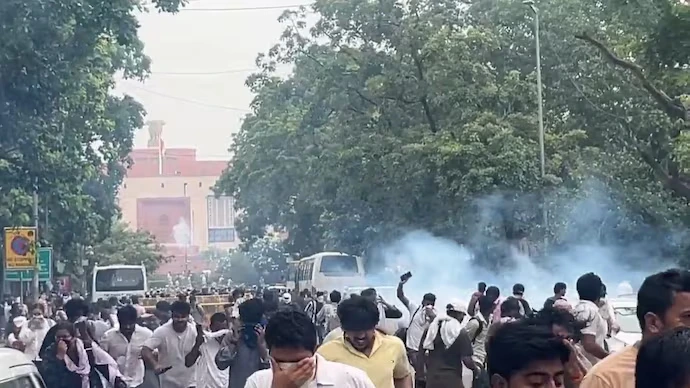
Delhi deploys 25,000 personnel, installs CCTV cameras ahead of CJP march
More than 25,000 police and paramilitary personnel have been deployed in Delhi ahead of the CJP’s planned protest march at Connaught Place. Authorities have also imposed restrictions and stepped up CCTV surveillance.

India News
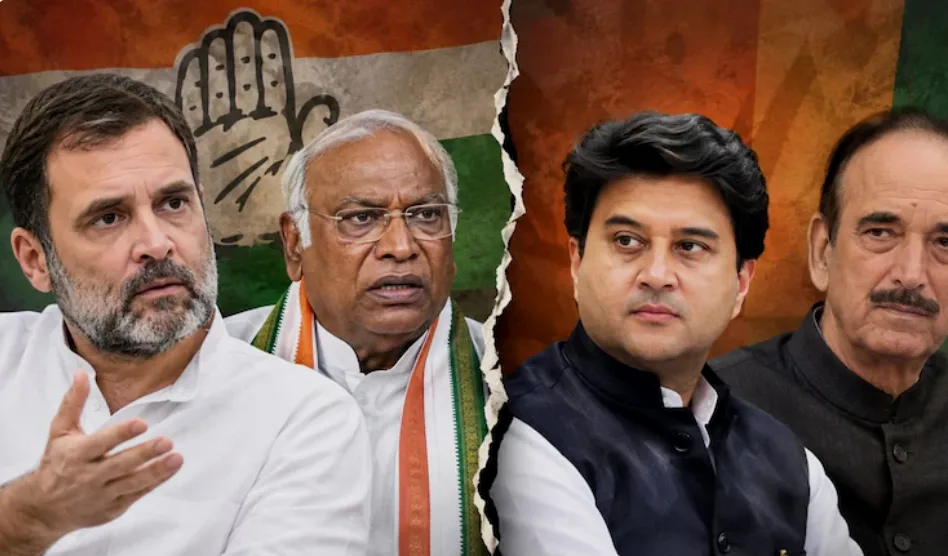
Mallikarjun Kharge’s ‘Your Friends’ jab at Rahul Gandhi over congress exits
Congress president Mallikarjun Kharge took a dig at Rahul Gandhi after the Leader of the Opposition reportedly described former party leaders Jyotiraditya Scindia and Ghulam Nabi Azad as among those who had left the Congress.
India News
Delhi Police offers 11-person limit for CJP’s Connaught Place protest
Delhi Police has offered to facilitate a group of 11 people at Central Park in Connaught Place for the Cockroach Janata Party’s October 16 protest, while warning that violations of prohibitory orders could invite legal action.


Election Commission orders voter roll revision in 17 states, UTs

Actor Imran Khan asked to leave India after CJP protest

Delhi Police offers 11-person limit for CJP’s Connaught Place protest

Mallikarjun Kharge’s ‘Your Friends’ jab at Rahul Gandhi over congress exits

Delhi deploys 25,000 personnel, installs CCTV cameras ahead of CJP march

Magnitude 7 earthquake strikes Russia’s Kamchatka Peninsula
Delhi deploys 25,000 personnel, installs CCTV cameras ahead of CJP march
Mallikarjun Kharge’s ‘Your Friends’ jab at Rahul Gandhi over congress exits
Delhi Police offers 11-person limit for CJP’s Connaught Place protest
Actor Imran Khan asked to leave India after CJP protest

Afghan Men Try To Hang With The Jet Engine Of The Aircraft in Kabul- Afghanistan News – Kabul News
Trending Top 10 News: 10000 Crore Fine on Flipkart, Apple to Launch Unique Feature, Hdfc Bank Job Ad

Trending Top 10 News: Nokia 6310, Apple sales, Bachpan ka Pyar Video Kid, Dainik Bhaskar IT Raid

Trending Top 10 News: Canada bans Indian flights, Rain in Delhi NCR, AIMIM Twitter hacked, Raj Kundra case

Trending Top 10 News: Shein India, Apple New Service, Pocket Oxygen, Oppo Launched New Phone
-
 India News22 hours ago
Election Commission orders voter roll revision in 17 states, UTs
-
 India News22 hours ago
Actor Imran Khan asked to leave India after CJP protest
-
 India News21 hours ago
Delhi Police offers 11-person limit for CJP’s Connaught Place protest
-
 India News9 hours ago
Mallikarjun Kharge’s ‘Your Friends’ jab at Rahul Gandhi over congress exits
-
 India News9 hours ago
Delhi deploys 25,000 personnel, installs CCTV cameras ahead of CJP march
-
 Latest world news9 hours ago
Magnitude 7 earthquake strikes Russia’s Kamchatka Peninsula
